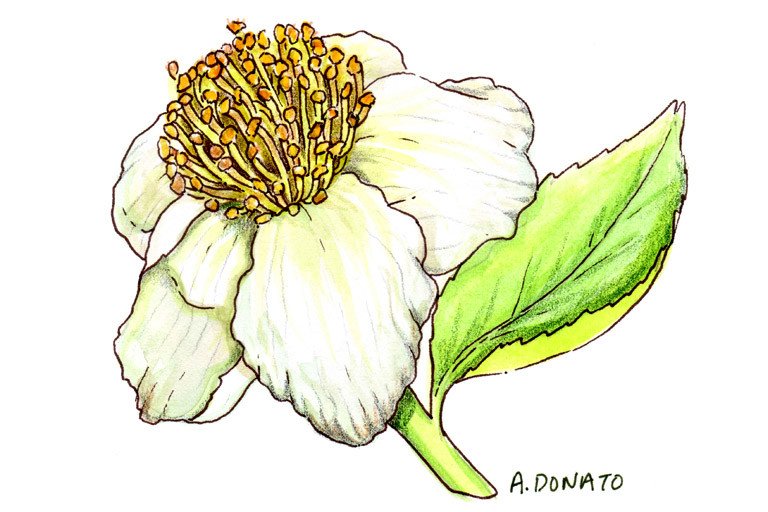
Common Names
- Chinese tea
- Green tea extract
- Green tea polyphenols
- Epigallocatechin gallate (EGCG)
For Patients & Caregivers
Tell your healthcare providers about any dietary supplements you’re taking, such as herbs, vitamins, minerals, and natural or home remedies. This will help them manage your care and keep you safe.
Green tea is a drink made from the Camellia sinensis plant. Fresh leaves are cut from this plant and steamed to make the tea.
You can drink green tea or take it orally (by mouth) in a pill or tablet as a dietary supplement. You can also use green tea extract on your skin as a cream.
Green tea is used to:
- Prevent heart disease
- Help lose weight
Green tea also has other uses that haven’t been studied by doctors to see if they work.
It’s generally safe to drink green tea and use it in food. Talk with your healthcare providers before taking green tea supplements. Herbal supplements are stronger than the herbs you would use in cooking.
Supplements can also interact with some medications and affect how they work. For more information, read the “What else do I need to know?” section below.
Side effects of taking green tea supplements may include:
- Nausea (feeling like you’re going to throw up)
- Stomach pain
- Drinking too much green tea can disrupt your sleep, and can also give you headaches
- Talk to your doctor if you’re taking iron supplements. Green tea can affect the way iron is absorbed in the body.
- Don’t drink green tea if you’re pregnant or breastfeeding. Green tea has caffeine in it that may cause your baby to have trouble sleeping.
- Avoid drinking green tea if you have a stomach ulcer (sore in the lining of your stomach). Green tea may make your ulcer worse.
- Green tea may lower the risk of some types of cancers, but there is no clear evidence of its effectiveness.
For Healthcare Professionals
Green tea is a beverage derived from the unfermented leaves of a plant native to Asia. Green tea extract is marketed as an antioxidant and dietary supplement to support cardiovascular, metabolic, cognitive, and cellular health. Active constituents include the polyphenol epigallocatechin-3-gallate (EGCG), caffeine, and theanine.
Green tea consumption may reduce risk for dementia (1) (80) hypertension (2), cardiovascular disease (63), small vessel stroke (71), and all-cause but not cancer-related mortality (3) (4) although data are conflicting (81). Findings are also mixed on whether it can reduce risk of gastric and esophageal cancers (5) (6) (7). Other data suggest preventive benefits with green tea and its active compounds against oral premalignant lesions (8) and for those at high risk of developing liver or colorectal cancers (9) (10) but not colorectal adenomas (64) although risk reduction was reported in individuals with nonvariant carriers of the transporter SLCO1A2 (82). There is no association between green tea and risk for malignant lymphoma or multiple myeloma (11), but intake may reduce risk for myelodysplastic syndrome (12) and kidney cancer (65). Green tea-based mouth rinse improved oral health in advanced head and neck cancer patients (83).
In prostate cancer patients, a blend of green tea, pomegranate, broccoli, and curcumin had a protective effect following post-radical treatment (13). Green tea consumption also decreased PSA levels in patients prior to prostatectomy (14). However, combination supplementation with the highest nontoxic doses of green tea catechins, selenium, and lycopene was associated with an elevated incidence of prostate cancer in high-risk patients (15), and long-term intake of an EGCG product did not reduce prostate cancer risk (16).
Other limited data suggest oral EGCG may induce a biologic response in patients with chronic lymphocytic leukemia (17) or reduce radiation-induced esophagitis in lung cancer patients (18), but did not prevent recurrence in advanced ovarian cancer (19). Topical EGCG may help relieve radiation-induced dermatitis in breast cancer patients (20) (21), but these results are also preliminary.
Green tea reduced the risk of recurrence in breast cancer patients (72), but regular consumption may elevate the risk in some postmenopausal women (22). Future studies are needed to resolve this ambiguity and to determine whether there are potential benefits on overall cancer risk (23).
Additional studies suggest positive effects of green tea on lipid profiles (73) and glycemic control in type-2 diabetes patients (66), for weight reduction in obese/overweight adults (74) and in women with polycystic ovary syndrome (67), for sarcopenia in older adults (75), and for patients with acne (76).
Moderate green tea consumption was not associated with increased risk of kidney stone formation (24), but the caffeinated form may cause insomnia and nausea. Animal models suggest use of green tea extract during fasting may increase toxicity risk (25). Clinical data show that EGCG 200 mg twice daily for one year is safe (26), whereas 800 mg daily was associated with elevated liver enzymes (27).
- Cardiovascular support
- Weight loss
Green tea may confer cardiovascular protection by increasing HDL and lowering LDL and triglyceride levels (28). Blood pressure modulation may be mediated by EGCG which induces NO production that results in vasodilation (29). Neurocognitive benefits with green tea extract may occur from enhanced brain connectivity during working memory processing (30), and EGCG may inhibit tau protein aggregation to reduce toxicity in neuronal model cells (31).
Chemopreventive properties are attributed to polyphenols, particularly EGCG which may inhibit enzymes involved in cell replication and DNA synthesis (32). In vitro data suggest concentrations of 30 mcg/mL of EGCG and EGC inhibit arachidonic acid metabolism by 30–75%, which may reduce colon cancer risk (33). Other studies in human colon cancer cell lines suggest EGCG inhibits topoisomerase I but not II (34). It also inhibited DNA replication in leukemia cancer cell lines (35), and modulated VEGF leading to apoptosis in leukemic cells (36). An early animal study identified caffeine in green tea as an important component for inhibition of UVB light-induced carcinogenesis (37).
-
The United States Pharmacopeia included this cautionary labeling requirement in its Powdered Decaffeinated Green Tea Extract monograph (38):
“Do not take on an empty stomach. Take with food. Do not use if you have a liver problem and discontinue use and consult a healthcare practitioner if you develop symptoms of liver trouble, such as abdominal pain, dark urine, or jaundice (yellowing of the skin or eyes).”
- Green tea is generally considered safe, but excessive consumption can disrupt sleep and cause headaches because of its caffeine content.
- EGCG 200 mg twice daily with food for 1 year appeared to be safe in men at higher risk for prostate cancer (26).
Reactions with high doses reported in clinical trials
- Nausea, abdominal pain, and transaminitis: With EGCG 2000 mg twice daily (17).
- Weight gain, indigestion, insomnia: With EGCG 1200 mg daily (39).
- Elevated liver enzymes: With green tea extract 800 mg (27) or EGCG 843 mg–1600 mg (39) (40) daily.
- Rectal bleeding: With EGCG 800mg daily (39).
Case reports
- Hepatotoxicity: With green tea extracts containing high EGCG levels (41) (42) (43) (44) (45) (68) (84).
- Pruritic swelling/darkening of lower lip: In a 40-year-old woman following excessive long-term green tea consumption (46).
- Thrombotic thrombocytopenic purpura: In a 38-year-old woman after taking a green tea supplement for weight loss (47).
- Autoimmune hepatitis: In a 42-year-old female with type-2 diabetes mellitus after consuming a green tea product for weight loss (69).
- Anticoagulants / antiplatelets: Theoretically, consuming large amounts of green tea (.5–1 gallon/day) may provide enough vitamin K to antagonize effects of these agents (48).
- Bortezomib: EGCG and other polyphenols can inhibit the therapeutic effect of bortezomib and other boronic acid-based proteasome inhibitors (49).
- Tamoxifen: EGCG increased oral bioavailability of tamoxifen, increasing the potential for interactions (50). However, there was no interaction observed in a clinical trial of breast cancer patients (79).
- Verapamil: EGCG increased verapamil bioavailability, likely via P-glycoprotein inhibition (51).
- Irinotecan: A study found EGCG to inhibit transport of irinotecan and its metabolite SN-38 into biliary elimination, resulting in their prolonged half-life which can increase toxicity (52).
- CYP3A4 substrates: Green tea extract inhibits CYP 3A4 and can affect the intracellular concentration of drugs metabolized by this enzyme (41) (53) (54).
- UGT substrates: Green tea modulates UGT enzymes in vitro and can increase the side effects of drugs metabolized by them (55).
- Acetaminophen: Green tea increased acetaminophen-induced hepatotoxicity in mice when administered following acetaminophen (56).
- Nadolol: Green tea extract inhibits OATP1A2 transporter and can reduce the absorption and plasma concentration of substrate drugs like nadolol (57).
- Palbociclib: The bioavailability of palbociclib decreased following administration of green tea extract in a murine model (58). Clinical relevance has yet to be determined.
- Ticagrelor: Green tea polyphenols inhibited ticagrelor metabolism in vitro. Clinical relevance has yet to be determined (59).
- Atorvastatin: Green tea limited hepatic drug uptake and increased plasma exposure to atorvastatin in a murine model. Clinical significance is not known (60).
- Rosuvastatin: Repeated administration of green tea extract significantly lowered systemic exposure of rosuvastatin in healthy volunteers (61).
- Ziprasidone: A 23-year-old man stable for several months on ziprasidone became psychotic within days following use of a green tea extract for weight loss (62).
- Nintedanib: A clinical study of patients with pulmonary fibrosis found concomitant use of green tea to lower bioavailability of nintedanib by 21% (70).
- Raloxifene: Concurrent use of green tea decreased systemic exposure of raloxifene in a study of healthy adults (77).
- Nadolol: A 37-year-old woman treated with high-dose nadolol for catecholaminergic polymorphic ventricular tachycardia experienced a relapse of cardiac rhythm disorders, and testing showed a dramatic decrease in plasma nadolol concentrations, following green tea consumption. Symptoms resolved after stopping intake (78).