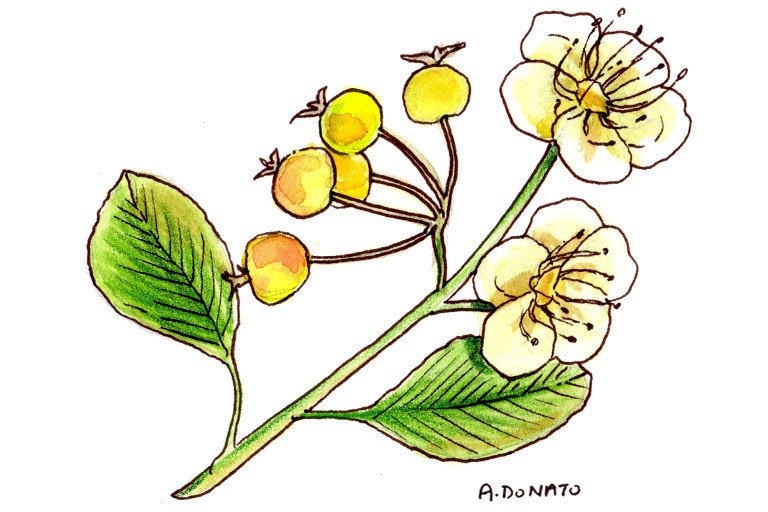
Common Names
- May flower
- Shan Zha
- Crataegus berries
- Quickthorn
- Whitehorn
For Patients & Caregivers
Tell your healthcare providers about any dietary supplements you’re taking, such as herbs, vitamins, minerals, and natural or home remedies. This will help them manage your care and keep you safe.
Hawthorn may be helpful in some patients with heart failure. Definitive data are needed on safety and efficacy.
Derived from the flower, leaves, and fruits of the plant, hawthorn is also known in Asia as Shan Zha. It is used in traditional Chinese medicine to improve digestion and treat heart problems. Hawthorn also has a long history in European medicine as a heart tonic.
Studies in the lab suggest a range of anti-inflammation, heart-protective, and digestion-improving properties. Studies in humans show benefits in patients with congestive heart failure, although a few trials did not.
More studies are needed to confirm safety and effectiveness of hawthorn. In addition, it should not be used in place of conventional heart failure therapies and its use should be monitored by the treating physician.
-
To improve digestion
Hawthorn is used to relieve indigestion in traditional Chinese medicine, but clinical studies are lacking. -
To treat heart disease
In some studies, hawthorn extract used as add-on therapy was found to be beneficial in heart failure patients. More definitive data are needed. -
To lower high blood pressure
Data are conflicting. More research is needed.
- Generally well tolerated
- Most common: Dizziness
- Infrequent or mild: Nausea, cardiac and gastrointestinal complaints
- Overdose: Low blood pressure, irregular heart beat
Do Not Take if:
- You are pregnant.
- You are taking antiplatelets or anticoagulants: A lab study suggests hawthorn may increase the side effects of these drugs. Although clinical relevance has yet to be determined, patients taking heart failure medications should only use hawthorn under direction and monitoring by the treating physician.
Special Point:
Hawthorn should not be used in place of proven conventional therapies for heart failure, and its use should be monitored by the treating physician.
For Healthcare Professionals
Derived from the flower, leaves, and fruits of the plant, hawthorn is also popularly referred to as Shan Zha in Asia. It is used in traditional Chinese medicine to improve digestion, stimulate appetite, treat cardiovascular conditions and hyperlipidemia, and invigorate blood (20) (21). Hawthorn extract also has a long history in European medicine as a cardiotonic (22).
In vivo and in vitro studies suggest a broad range of pharmacological properties including anti-inflammatory, gastroprotective, antimicrobial, and cardioprotective effects (15) (20) (23) (24). Clinical studies have shown benefits in patients with congestive heart failure (10) (12) (14), and larger long-term studies of adjunctive hawthorn also suggest benefits (25) (26). In addition, a systematic review concluded that adjunctive hawthorn improved physiological outcomes and symptom control in CHF patients (27). However two smaller trials did not find benefit (28), one of which suggested an increased early risk of disease progression (29). Studies that evaluate the hypotensive effects of hawthorn are mixed (13) (18).
Although data suggest a lack of notable interactions, definitive safety data are needed (22). Hawthorn also should not be used in place of conventional heart failure therapies and its use should be monitored by the treating physician (22).
- Cardiovascular disease
- Digestion
- Hypertension
Pharmacologic activities of hawthorn flower, leaf, and berry extracts are attributed to constituents such as flavonoids and oligomeric procyanidins (17) (22). Laboratory experiments suggest cardiac action of the flavonoids occurs via inhibition of the 3’,5’-cyclic adenosine monophosphate phosphodiesterase, and demonstrate positive inotropic effects by hawthorn that increase heart rate (4). Inotropic and vasodilatory effects have also been related to increased myocardial perfusion and reduced afterload (30). Antioxidant properties and inhibitory effects against LDL oxidation are attributed to phenolic compounds (31).
- Traditional medicine cautions include avoiding hawthorn if you are pregnant.
- Antiplatelets, anticoagulants: An in vitro study suggests hawthorn flowers may inhibit thromboxane A2 biosynthesis, which may increase the side effects of these drugs. Although clinical relevance has yet to be determined, patients taking heart failure medications should not use hawthorn without being closely monitored by the treating physician (30) (33).
- Digoxin: In vitro data suggest hawthorn contains alkaloids that are structurally similar to digoxin and may interfere with its action (16). However, hawthorn was safely coadministered at a specified dose in a small randomized, crossover trial of healthy volunteers (34). As clinical relevance has yet to be determined, any use of this supplement should be under the guidance of the treating physician.
- CYP3A4 substrates: In vitro studies suggest hawthorn may affect the metabolism of these drugs at it induces CYP3A4 by activating pregnane X receptor (19). Clinical relevance has yet to be determined.