Health Care Professional Information
Common Name
May flower, quickthorn, whitehorn
Clinical Summary
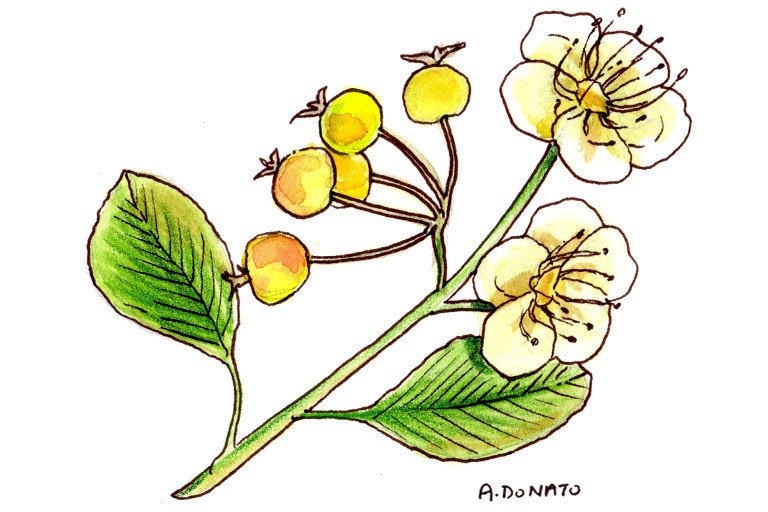
Derived from the flower, leaves, and fruits of the plant, Hawthorn has been used as an digestive aid in traditional Chinese medicine for centuries. Currently, it is used primarily to treat heart failure.
Hawthorn extract exhibited anti-inflammatory, gastroprotective, and antimicrobial properties in vitro (15). Clinical studies suggest effectiveness against congestive heart failure (10) (12) (14) and diabetes (13). But a hawthorn extract did not affect blood pressure in hypertensive individuals (18).
Frequently reported adverse events include nausea, sweating, and fatigue. Signs of overdose include hypotension and arrhythmias.
Purported Uses
- Angina
- Atherosclerosis
- Congestive heart failure
- Hypertension
- Indigestion
Constituents
- Amines: Phenyletylamine, tyramine, O-methoxyphenethylamine
- Flavonoids: Flavonol (kaempferol, quercetin) and flavone (apigenin, luteolin) derivatives, rutin, vitexin glycosides, oligomeric procyanidins
- Tannins: Condensed proanthocyanidins
- Other constituents: Saponins, cyanogenetic glycosides
(4) (15)
Mechanism of Action
It is thought that hawthorn causes direct dilation of smooth muscle in coronary vessels thereby lowering their resistance and increasing blood flow. Hawthorn is also characterized as having positive inotropic effects leading to an increase in heart rate, nerve conductivity, and heart muscle irritability. The cardiac action of the flavonoids is thought to be via inhibition of the 3',5'-cyclic adenosine monophosphate phosphodiesterase (4).
Contraindications
- Patients taking Digoxin should avoid hawthorn (16).
Adverse Reactions
Common: Nausea, fatigue, sedation, and sweating
Toxicity: Hypotension, arrhythmia
(7)
Herb-Drug Interactions
- Digoxin: Hawthorn contains alkaloids that are structurally similar to digoxin and can interfere with its action (16).
- UGT (Uridine 5'-diphospho-glucuronosyltransferase) substrates: Hawthorn modulates UGT enzymes in vitro and can increase the side effects of drugs metabolized by them (17).
Literature Summary and Critique
Dosage (Inside MSKCC Only)
This field is only visible to only Inside MSKCC users.
References
- Newall C, et al. Herbal Medicines: A Guide for Health Care Professionals. London: Pharmaceutical Press; 1996.
- Tyler V. Herbs of Choice, the Therapeutical Use of Phytomedicinals. Binghamton: Pharmaceutical Press; 1994.
- Gildor A. Crataegus oxyacantha and heart failure. Circulation 1998;98:2098.
- Schussler M, Holzl J, Fricke U. Myocardial effects of flavonoids from Crataegus species. Arzneimittelforschung 1995;45:843-5.
- Upton R, et al. Hawthorn Leaf with flower: quality control, analytical and therapeutical monograph. Belmont (CA): American Herbal Pharmacopoeia; 1999:1-29.
- Blumenthal M, et al. The Complete German Commission E Monographs: Therapeutic Guide to Herbal Medicines. Austin: American Botanical Council; 1998.
- Iwamoto M, Sato T, Ishizaki T. Klinische Wirkung von Crataegutt bei Herzerkrankungen ischaemischer und/oder hypertensiver Genese. Planta Med 1981;42:1-16.
- Brinker, F. Herb Contraindications and Drug Interactions, 2nd ed. Sandy (OR): Eclectic Medical Publications; 1998.
- Walker, AF, et al. Promising hypotensive effect of hawthorn extract: a randomized double-blind pilot study of mild, essential hypertension. Phytotherapy Res 2002;16:48-54.
- Degenring FH, Suter A, Weber M, Saller R. A randomised double blind placebo controlled clinical trial of a standardised extract of fresh Crataegus berries (Crataegisan) in the treatment of patients with congestive heart failure NYHA II. Phytomedicine. 2003;10(5):363-9.
- Werbach MR, et al. Botanical Influences on Illness: A Sourcebook of Clinical Research. Third Line Press, 1994.
- Schmidt U, et al. Efficacy of the hawthorn preparation in 78 patients with chronic congestive heart failure defined as NYHA functional class II. Phytomedicine 1994;1:17-24.
- Walker AF, Marakis G, Simpson E, et al. Hypotensive effects of hawthorn for patients with diabetes taking prescription drugs: a randomised controlled trial. Br J Gen Pract 2006;56(527):437-43.
- Pittler M, Guo R, Ernst E. Hawthorn extract for treating chronic heart failure. Cochrane Database Syst Rev 2008;(1):CD005312.
- Tadiæ VM, Dobriæ S, Markoviæ GM, et la. Anti-inflammatory, gastroprotective, free-radical-scavenging, and antimicrobial activities of hawthorn berries ethanol extract. J Agric Food Chem. 2008 Sep 10;56(17):7700-9.
- Dasgupta A, Kidd L, Poindexter BJ, Bick RJ. Interference of hawthorn on serum digoxin measurements by immunoassays and pharmacodynamic interaction with digoxin. Arch Pathol Lab Med. 2010 Aug;134(8):1188-92.
- Mohamed ME, Frye RF. Effects of herbal supplements on drug glucuronidation. Review of clinical, animal, and in vitro studies. Planta Med. 2011 Mar;77(4):311-21.
- Asher GN, Viera AJ, Weaver MA, Dominik R, Caughey M, Hinderliter AL. Effect of hawthorn standardized extract on flow mediated dilation in prehypertensive and mildly hypertensive adults: a randomized, controlled cross-over trial. BMC Complement Altern Med. 2012 Mar 29;12:26.
Consumer Information
How It Works
Bottom Line: Hawthorn has been shown to improve heart function, shortness of breath, palpitations, and exercise tolerance in people with heart failure. There is no evidence to support any other effects.
Hawthorn is a fruit extract that has been used as a digestive aid in traditional Chinese medicine for centuries. Scientists think that hawthorn extract causes dilation of the smooth muscle that lines coronary arteries, thereby increasing blood flow to the heart. Hawthorn is also thought to increase heart muscle contraction, heart rate, nerve transmission, and heart muscle irritability.
Purported Uses
- To treat angina
Hawthorn showed benefit in patients with congestive heart failure.
- To treat atherosclerosis
Hawthorn showed benefit in patients with heart disease.
- To treat congestive heart failure
A few studies found that hawthorn extract improves cardiac function, shortness of breath, palpitations, and exercise tolerance in patients in NYHA functional class II, but no changes in electrocardiogram have been found. It is not known whether hawthorn is effective in patients with more serious heart disease.
- To lower high blood pressure
Data are conflicting. More research is needed.
- To relieve indigestion
Hawthorn has been used to relieve indigestion in traditional Chinese medicine for centuries. But clinical studies are lacking.
Research Evidence
Diabetes
Seventy-nine patients with type 2 diabetes taking prescription drugs were randomised to receive 1200 mg hawthorn extract or a placebo, daily for 16 weeks. At baseline and outcome a well-being questionnaire was completed. Blood pressure and fasting blood samples were taken and a food frequency questionnaire was used to estimate nutrient intake. Researchers reported a significant group difference in mean diastolic blood pressure reductions, but there was no group difference in systolic blood pressure reduction from baseline. The mean sugar intake was higher and there were indications of potential multiple micronutrient deficiencies. Hawthorn may be effective in lowering hypertension in diabetic patients.
Do Not Take If
- You are taking Digoxin (Hawthorn can interfere with its actions).
- You are taking drugs that are substrates of UGT (Uridine 5'-diphospho-glucuronosyltransferase) enzymes (Hawthorn may increase the risk of side effects of these drugs).
Side Effects
- Nausea
- Fatigue
- Sedation
- Sweating
- Overdose can result in low blood pressure and cardiac arrhythmias
Last updated: October 25, 2012
baseline (BAYS-line)
An initial measurement that is taken at an early time point to represent a beginning condition, and is used for comparison over time to look for changes. For example, the size of a tumor will be measured before treatment (baseline) and then afterwards to see if the treatment had an effect.
Source: The National Cancer Institute's Dictionary of Cancer Terms
(http://www.cancer.gov/dictionary)
blood (blud)
A tissue with red blood cells, white blood cells, platelets, and other substances suspended in fluid called plasma. Blood takes oxygen and nutrients to the tissues, and carries away wastes.
Source: The National Cancer Institute's Dictionary of Cancer Terms
(http://www.cancer.gov/dictionary)
blood pressure (blud PREH-sher)
The force of circulating blood on the walls of the arteries. Blood pressure is taken using two measurements: systolic (measured when the heart beats, when blood pressure is at its highest) and diastolic (measured between heart beats, when blood pressure is at its lowest). Blood pressure is written with the systolic blood pressure first, followed by the diastolic blood pressure (for example 120/80).
Source: The National Cancer Institute's Dictionary of Cancer Terms
(http://www.cancer.gov/dictionary)
botanical (buh-TA-nih-kul)
Having to do with, or derived from, plants.
Source: The National Cancer Institute's Dictionary of Cancer Terms
(http://www.cancer.gov/dictionary)
cardiac (KAR-dee-ak)
Having to do with the heart.
Source: The National Cancer Institute's Dictionary of Cancer Terms
(http://www.cancer.gov/dictionary)
chronic (KRAH-nik)
A disease or condition that persists or progresses over a long period of time.
Source: The National Cancer Institute's Dictionary of Cancer Terms
(http://www.cancer.gov/dictionary)
clinical (KLIH-nih-kul)
Having to do with the examination and treatment of patients.
Source: The National Cancer Institute's Dictionary of Cancer Terms
(http://www.cancer.gov/dictionary)
congestive heart failure (kun-JES-tiv hart FAYL-yer)
Weakness of the heart muscle that leads to a buildup of fluid in body tissues.
Source: The National Cancer Institute's Dictionary of Cancer Terms
(http://www.cancer.gov/dictionary)
diabetes (dy-uh-BEE-teez)
Any of several diseases in which the kidneys make a large amount of urine. Diabetes usually refers to diabetes mellitus in which there is also a high level of glucose (a type of sugar) in the blood because the body does not make enough insulin or use it the way it should.
Source: The National Cancer Institute's Dictionary of Cancer Terms
(http://www.cancer.gov/dictionary)
efficacy (EH-fih-kuh-see)
Effectiveness. In medicine, the ability of an intervention (for example, a drug or surgery) to produce the desired beneficial effect.
Source: The National Cancer Institute's Dictionary of Cancer Terms
(http://www.cancer.gov/dictionary)
electrocardiogram (ee-LEK-troh-KAR-dee-oh-gram)
A line graph that shows changes in the electrical activity of the heart over time. It is made by an instrument called an electrocardiograph. The graph can show that there are abnormal conditions, such as blocked arteries, changes in electrolytes (particles with electrical charges), and changes in the way electrical currents pass through the heart tissue. Also called ECG and EKG.
Source: The National Cancer Institute's Dictionary of Cancer Terms
(http://www.cancer.gov/dictionary)
extract (EK-strakt)
In medicine, a preparation of a substance obtained from plants, animals, or bacteria and used as a drug or in drugs.
Source: The National Cancer Institute's Dictionary of Cancer Terms
(http://www.cancer.gov/dictionary)
fatigue (fuh-TEEG)
A condition marked by extreme tiredness and inability to function due lack of energy. Fatigue may be acute or chronic.
Source: The National Cancer Institute's Dictionary of Cancer Terms
(http://www.cancer.gov/dictionary)
German Commission E (JER-mun kuh-MIH-shun …)
The German Federal Institute for Drugs and Medical Devices Commission E. A committee made up of scientists, toxicologists, doctors, and pharmacists formed by the German government in 1978 to find out if herbs sold in Germany are safe and effective. The Commission has published information on the uses, side effects, and drug interactions of more than 300 herbs.
Source: The National Cancer Institute's Dictionary of Cancer Terms
(http://www.cancer.gov/dictionary)
herbal (ER-bul)
Having to do with plants.
Source: The National Cancer Institute's Dictionary of Cancer Terms
(http://www.cancer.gov/dictionary)
hypertension (HY-per-TEN-shun)
A blood pressure of 140/90 or higher. Hypertension usually has no symptoms. It can harm the arteries and cause an increase in the risk of stroke, heart attack, kidney failure, and blindness. Also called high blood pressure.
Source: The National Cancer Institute's Dictionary of Cancer Terms
(http://www.cancer.gov/dictionary)
hypotension (HY-poh-TEN-shun)
Abnormally low blood pressure.
Source: The National Cancer Institute's Dictionary of Cancer Terms
(http://www.cancer.gov/dictionary)
in vitro (in VEE-troh)
In the laboratory (outside the body). The opposite of in vivo (in the body).
Source: The National Cancer Institute's Dictionary of Cancer Terms
(http://www.cancer.gov/dictionary)
M
In chemistry, M is the amount of a substance that has 6.023 x 10(23) atoms or molecules of that substance. Also called mole (chemical).
Source: The National Cancer Institute's Dictionary of Cancer Terms
(http://www.cancer.gov/dictionary)
mean (meen)
A statistics term. The average value in a set of measurements. The mean is the sum of a set of numbers divided by how many numbers are in the set.
Source: The National Cancer Institute's Dictionary of Cancer Terms
(http://www.cancer.gov/dictionary)
medicine (MEH-dih-sin)
Refers to the practices and procedures used for the prevention, treatment, or relief of symptoms of a diseases or abnormal conditions. This term may also refer to a legal drug used for the same purpose.
Source: The National Cancer Institute's Dictionary of Cancer Terms
(http://www.cancer.gov/dictionary)
micronutrient (MY-kroh-NOO-tree-ent)
A substance the body needs in tiny amounts to grow and stay healthy. Examples are vitamins and minerals.
Source: The National Cancer Institute's Dictionary of Cancer Terms
(http://www.cancer.gov/dictionary)
nausea (NAW-zee-uh)
A feeling of sickness or discomfort in the stomach that may come with an urge to vomit. Nausea is a side effect of some types of cancer therapy.
Source: The National Cancer Institute's Dictionary of Cancer Terms
(http://www.cancer.gov/dictionary)
nerve (nerv)
A bundle of fibers that receives and sends messages between the body and the brain. The messages are sent by chemical and electrical changes in the cells that make up the nerves.
Source: The National Cancer Institute's Dictionary of Cancer Terms
(http://www.cancer.gov/dictionary)
nutrient (NOO-tree-ent)
A chemical compound (such as protein, fat, carbohydrate, vitamin, or mineral) contained in foods. These compounds are used by the body to function and grow.
Source: The National Cancer Institute's Dictionary of Cancer Terms
(http://www.cancer.gov/dictionary)
outcome (OWT-kum)
A specific result or effect that can be measured. Examples of outcomes include decreased pain, reduced tumor size, and improvement of disease.
Source: The National Cancer Institute's Dictionary of Cancer Terms
(http://www.cancer.gov/dictionary)
overdose (OH-ver-dose)
An amount of drug that is more than what should be taken at one time.
Source: The National Cancer Institute's Dictionary of Cancer Terms
(http://www.cancer.gov/dictionary)
placebo (pluh-SEE-boh)
An inactive substance or treatment that looks the same as, and is given the same way as, an active drug or treatment being tested. The effects of the active drug or treatment are compared to the effects of the placebo.
Source: The National Cancer Institute's Dictionary of Cancer Terms
(http://www.cancer.gov/dictionary)
prescription (prih-SKRIP-shun)
A doctor's order for medicine or another intervention.
Source: The National Cancer Institute's Dictionary of Cancer Terms
(http://www.cancer.gov/dictionary)
reduction (ree-DUK-shun)
A chemical reaction that takes place when a substance comes into contact with hydrogen or another reducing substance.
Source: The National Cancer Institute's Dictionary of Cancer Terms
(http://www.cancer.gov/dictionary)
significant (sig-NIH-fih-kunt)
In statistics, describes a mathematical measure of difference between groups. The difference is said to be significant if it is greater than what might be expected to happen by chance alone. Also called statistically significant.
Source: The National Cancer Institute's Dictionary of Cancer Terms
(http://www.cancer.gov/dictionary)
therapeutic (THAYR-uh-PYOO-tik)
Having to do with treating disease and helping healing take place.
Source: The National Cancer Institute's Dictionary of Cancer Terms
(http://www.cancer.gov/dictionary)
traditional Chinese medicine (truh-DIH-shuh-nul chy-NEEZ MEH-dih-sin)
A medical system that has been used for thousands of years to prevent, diagnose, and treat disease. It is based on the belief that qi (the body's vital energy) flows along meridians (channels) in the body and keeps a person’s spiritual, emotional, mental, and physical health in balance. Traditional Chinese medicine aims to restore the body’s balance and harmony between the natural opposing forces of yin and yang, which can block qi and cause disease. Traditional Chinese medicine includes acupuncture, diet, herbal therapy, meditation, physical exercise, and massage. Also called Oriental medicine and TCM.
Source: The National Cancer Institute's Dictionary of Cancer Terms
(http://www.cancer.gov/dictionary)