Health Care Professional Information
Common Name
Chestnut, marron europeen, escine, escin, aescin
Clinical Summary
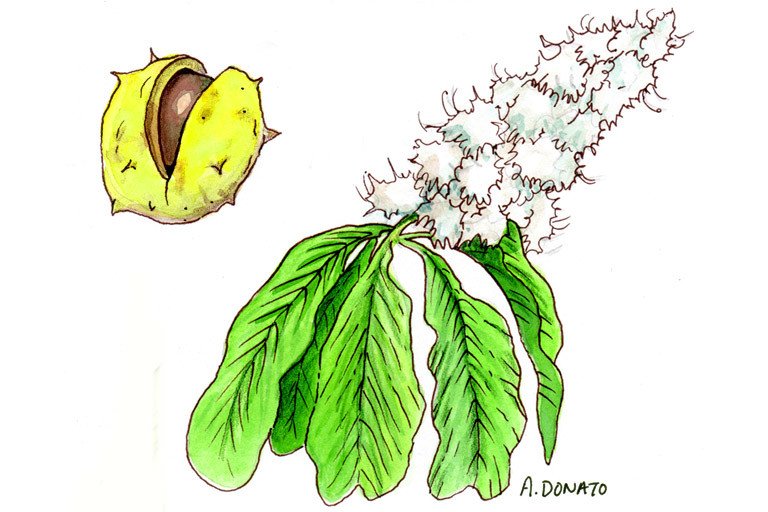
Horse chestnut, a tree native to the Balkan Peninsula, has been used in traditional medicine for centuries. The seed extract is a popular dietary supplement used to support vascular functions. Horse chestnut should not be confused with sweet chestnut.
Escin, also known as Aescin, a natural mixture of triterpenoid saponins isolated from the seed of the horse chestnut and the major active principle, was shown to have anti-inflammatory (1), neuroprotective (1), antitumor effects (2) (3), and enhances the efficacy of gemcitabine (18). Data from clinical trials suggest efficacy of horse chestnut seed extract against chronic venous insufficiency (CVI) (4) (5). Conclusions from systematic reviews and meta analysis state that horse chestnut extract is a safe and well tolerated treatment for CVI (6) (7) (8).
Escin may also be effective in improving sperm quality in patients with varicocele-associated infertility (14).
Patients with compromised renal or hepatic function should not consume horse chestnut products.
Purported Uses
- Circulatory disorders
- Diarrhea
- Hemorrhoids
- Phlebitis
- Varicose veins
Constituents
- Coumarins: Aesculetin, fraxin, scopolin
- Flavonoids: Flavonol (kaempferol, quercetin) glycosides including astragalin, isoquercetrin, rutin, and leucocyanidin
- Saponins: Several saponins collectively referred to as aescin
- Tannins
- Other constituents: Allantoin, amino acids, choline, citric acid, phytosterol
(2) (11)
Mechanism of Action
Anti-inflammatory actions have been documented for the saponins (aescin) found in horse chestnut. Aescin reduces transcapillary filtration of water and protein and increases venous tone by increasing the vasoconstrictor, prostaglandin F2 alpha. It stabilizes cholesterol-containing membranes of lysosomes and limits the release of enzymes, which is typically increased in chronic pathologic conditions of the vein. It also improves vascular resistance and aids toning of vein walls (10). The triterpene glycosides and steroid saponins decrease venous capillary permeability and appear to have a tonic effect on the circulatory system (11) while aesculetin (esculin), a hydroxycoumarin, may increase bleeding time. A synergistic inhibitory effect on human hepatocellular carcinoma SMMC-7721 cells observed with the combined administration of beta-aescin and 5-fluorouracil may be due to synergistic cell-cycle arrest, induction of apoptosis, activation of caspases-3, 8 and 9, and down-regulation of Bcl-2 expression (17).
Pharmacokinetics
Orally administered aescin has an absorption half-life of about 1 hour and an elimination half-life of about 20 hours. (12)
Warnings
Horse chestnut seed is classified by the FDA as an unsafe herb. The glycoside and saponin constituents are considered toxic.
Contraindications
- Patients with hepatic or renal insufficiency should not consume horse chestnut.
Adverse Reactions
Toxicity: (Chestnut poisoning) Diarrhea, muscle twitching, dilated pupils, depression, and paralysis. (11) (14)
Case Report: Chestnut bezoar (well-defined, ovoid-shaped, intraluminal mass with mottled gas pattern) causing intestinal obstruction and abdominal pain was reported in a 68-year-old woman following consumption of excessive amounts of horse chestnut for several months. The bezoar was removed by surgery (15).
Case Report: Life-threatening kidney rupture was reported in a patient with angiomyolipoma (AML), a benign fat-containing mesenchymal tumor of the kidney, after taking horse chestnut seed extract for venous insufficiency. Her symptoms improved after an emergency embolization (16).
Herb-Drug Interactions
- Anticoagulants / Antiplatelet agents: Horse chestnut may have an additive anticoagulant effect due to aesculin, a hydroxycoumarin (14).
Literature Summary and Critique
Pittler MH, Ernst E. Horse chestnut seed extract for chronic venous insufficiency. Cochrane Database Syst Rev. 2006 Jan 25;(1):CD003230.
This review was conducted to determine the efficacy and safety of oral horse chestnut seed extract (HCSE) for the treatment of chronic venous insufficiency (CVI). Databases searched included the Cochrane Peripheral Vascular Diseases Review Group's Specialised Register (October 2005), the Cochrane Central Register of Controlled Trials (CENTRAL) in The Cochrane Library Issue 3, 2005, MEDLINE (January 1966 to October 2005), EMBASE (January 1980 to October 2005), Allied and Complementary Medicine (AMED) (inception to July 2005) and Phytobase (inception to January 2001) for randomized controlled trials (RCTs). Seventeen RCTs that compared oral HCSE mono-preparations with placebo, or reference therapy were included. The analysis indicated an improvement in CVI related symptoms such as leg pain, edema, and pruritus with HCSE compared to placebo. Adverse events were usually mild and infrequent.
The authors concluded that HCSE is an effective short-term treatment for CVI. However, larger well designed studies are needed to establish use of HCSE.
Dosage (Inside MSKCC Only)
This field is only visible to only Inside MSKCC users.
References
- Zhang L, Fu F, Zhang X et al. Escin attenuates cognitive deficits and hippocampal injury after transient global cerebral ischemia in mice via regulating certain inflammatory genes. Neurochem Int. 2010 May 11. [Epub ahead of print]
- Zhou XY, Fu FH, Li Z, et al. Escin, a natural mixture of triterpene saponins, exhibits antitumor activity against hepatocellular carcinoma. Planta Med. 2009 Dec;75(15):1580-5.
- Harikumar KB, Sung B, Pandey MK, et al. Escin, a pentacyclic triterpene, chemosensitizes human tumor cells through inhibition of nuclear factor-kappaB signaling pathway. Mol Pharmacol. 2010 May;77(5):818-27.
- Diehm C, Trampisch HJ, Lange S, Schmidt C. Comparison of leg compression stocking and oral horse-chestnut seed extract therapy in patients with chronic venous insufficiency. Lancet. 1996;347:292-4.
- Diehm C, Vollbrecht D, Amendt K, Comberg HU. Medical edema protection--clinical benefit in patients with chronic deep vein incompetence. A placebo controlled double blind study. Vasa. 1992;21:188-92.
- Siebert U, Brach M, Sroczynski G, Berla K. Efficacy, routine effectiveness, and safety of horsechestnut seed extract in the treatment of chronic venous insufficiency. A meta-analysis of randomized controlled trials and large observational studies. Int Angiol. 2002 Dec;21(4):305-15.
- Pittler MH, et al.Horse-chestnut seed extract for chronic venous insufficiency. A criteria-based systematic review. Arch Dermatol. 1998;134:1356-60.
- Pittler MH, Ernst E. Horse chestnut seed extract for chronic venous insufficiency. Cochrane Database Syst Rev. 2006 Jan 25;(1):CD003230. Review.
- Barnes J, Anderson LA, Phillipson JD. Herbal Medicines: A Guide for Health-Care Professionals. London: Pharmaceutical Press; 1996.
- Fetrow CW, Avila JR. Professional's Handbook of Complementary and Alternative Medicines. Philadelphia: Springjouse; 1999.
- Brinker F. Herb Contraindications and Drug Interactions, 2nd ed. Sandy (OR): Eclectic Med. Publications; 1998.
- Schulz V, et al. Rational Phytotherapy: A Physician's Guide to Herbal Medicine, 3rd ed. Berlin (Germany): Springer; 1998.
- Morrison D. Boehringer-Ingelheim Product Information Venastat™2001.
- Fang Y, Zhao L, Yan F, et al. Escin improves sperm quality in male patients with varicocele-associated infertility. Phytomedicine. 2010 Mar;17(3-4):192-6.
- Chen WT, Suk FM. Abdominal pain after consuming a chestnut. Diagnosis: Chestnut bezoar in the jejunum. Gastroenterology. 2011 Jun;140(7):e9-10.
- Snow A, Halpenny D, Mc Neill G, Torreggiani WC. Life-threatening rupture of a renal angiomyolipoma in a patient taking over-the-counter horse chestnut seed extract. J Emerg Med. 2011 Feb 9. [Epub ahead of print]
- Ming ZJ, Hu Y, Qiu YH, Cao L, Zhang XG. Synergistic effects of beta-aescin and 5-fluorouracil in human hepatocellular carcinoma SMMC-7721 cells.Phytomedicine. 2010;17(8-9):575-80.
- Wang YW, Wang SJ, Zhou YN, Pan SH, Sun B. Escin augments the efficacy of gemcitabine through down-regulation of nuclear factor-κB and nuclear factor-κB-regulated gene products in pancreatic cancer both in vitro and in vivo. J Cancer Res Clin Oncol. 2012 May;138(5):785-97.
Consumer Information
How It Works
Bottom Line: Horse chestnut was shown to be effective for treating chronic venous insufficiency but its long-term effects are not known.
Horse chestnut is a seed extract. One of its active components is aescin, which may reduce inflammation and increase the tone of veins. It also reduces the release of enzymes, which is typically increased in chronic diseases of the vein. Other compounds in horse chestnut generally increase the tone of blood vessels and decrease their permeability. Horse chestnut extract was shown in some studies to be effective against chronic venous insufficiency.
A compound called aesculetin may act as an anticoagulant and blood thinner, and is therefore often excluded from over-the-counter horse chestnut products.
Purported Uses
- To treat circulatory disorders such as chronic venous insufficiency (a condition where a patient's veins are not capable of pumping blood back to their heart, resulting in blood collecting in the lower limbs and leg swelling)
Several clinical trials support use of horse chestnut as a short-term treatment for CVI, but its long-term effects are unknown.
- To treat diarrhea
There is no scientific evidence to back this claim.
- To treat hemorrhoids
There are no data to support this.
- To treat phlebitis
No scientific evidence supports this use.
- To treat varicose veins
This claim is not backed by any evidence.
Research Evidence
Chronic venous insufficiency:
Researchers carried out a systematic review of randomized, controlled trials that used horse chestnut to treat chronic venous insufficiency. Overall, studies showed that patients who used horse chestnut had a significant decrease in symptoms of CVI compared to those who took placebo. The authors concluded that short-term use of this herb extract is relatively safe and effective. Long-term studies are needed.
Patient Warnings
- Horse chestnut seed is classified by the FDA as an unsafe herb. Many of the compounds in horse chestnut are considered to be toxic.
Do Not Take If
- You are taking warfarin, aspirin, or other blood thinners (Horse chestnut products that contain aesculin may increase the risk of bleeding. Check to make sure that your horse chestnut product is aesculin-free)
- You have liver or kidney problems.
Side Effects
- Stomach upset
- Nausea and vomiting
- Chestnut poisoning: Diarrhea, muscle twitching, dilated pupils, depression, and paralysis can occur after high doses of horse chestnut.
- Case Reports:
Chestnut bezoar (well-defined, ovoid-shaped mass) causing intestinal obstruction and abdominal pain was reported in a 68-year-old woman following consumption of excessive amounts of horse chestnut for several months. The bezoar was removed by surgery.
Life-threatening kidney rupture was observed in a patient with angiomyolipoma (AML), a benign fat-containing tumor of the kidney, after taking horse chestnut seed extract for venous insufficiency. Her symptoms improved after an emergency embolization.
Last updated: October 30, 2012
5-fluorouracil (5-FLOOR-oh-YOOR-uh-sil)
A drug used to treat cancers of the breast, stomach, and pancreas, and certain types of colorectal and head and neck cancers. It is also used in a cream to treat basal cell skin cancer and actinic keratosis (a skin condition that may become cancer). It is being studied in the treatment of other conditions and types of cancer. 5-fluorouracil stops cells from making DNA and it may kill cancer cells. It is a type of antimetabolite. Also called 5-FU, Adrucil, Efudex, Fluoroplex, and fluorouracil.
Source: The National Cancer Institute's Dictionary of Cancer Terms
(http://www.cancer.gov/dictionary)
abdominal (ab-DAH-mih-nul)
Having to do with the abdomen, which is the part of the body between the chest and the hips that contains the pancreas, stomach, intestines, liver, gallbladder, and other organs.
Source: The National Cancer Institute's Dictionary of Cancer Terms
(http://www.cancer.gov/dictionary)
acid (A-sid)
A chemical that gives off hydrogen ions in water and forms salts by combining with certain metals. Acids have a sour taste and turn certain dyes red. Some acids made by the body, such as gastric acid, can help organs work the way they should. An example of an acid is hydrochloric acid. Acidity is measured on a scale called the pH scale. On this scale, a value of 7 is neutral, and a pH value of less than 7 to 0 shows increasing acidity.
Source: The National Cancer Institute's Dictionary of Cancer Terms
(http://www.cancer.gov/dictionary)
administration (ad-MIH-nih-STRAY-shun)
In medicine, the act of giving a treatment, such as a drug, to a patient. It can also refer to the way it is given, the dose, or how often it is given.
Source: The National Cancer Institute's Dictionary of Cancer Terms
(http://www.cancer.gov/dictionary)
analysis (uh-NA-lih-sis)
A process in which anything complex is separated into simple or less complex parts.
Source: The National Cancer Institute's Dictionary of Cancer Terms
(http://www.cancer.gov/dictionary)
angiomyolipoma (AN-jee-oh-MY-oh-lih-POH-muh)
A benign (noncancer) tumor of fat and muscle tissue that usually is found in the kidney. Angiomyolipomas rarely cause symptoms, but may bleed or grow large enough to be painful or cause kidney failure. They are common in patients with tuberous sclerosis (a genetic disorder in which benign tumors grow in the kidneys, brain, eyes, heart, lungs, and skin, causing seizures, mental problems, and skin lesions).
Source: The National Cancer Institute's Dictionary of Cancer Terms
(http://www.cancer.gov/dictionary)
anticoagulant (AN-tee-koh-A-gyuh-lunt)
A substance that is used to prevent and treat blood clots in blood vessels and the heart. Also called blood thinner.
Source: The National Cancer Institute's Dictionary of Cancer Terms
(http://www.cancer.gov/dictionary)
antitumor (AN-tee-TOO-mer)
Having to do with stopping abnormal cell growth.
Source: The National Cancer Institute's Dictionary of Cancer Terms
(http://www.cancer.gov/dictionary)
apoptosis (A-pop-TOH-sis)
A type of cell death in which a series of molecular steps in a cell leads to its death. This is the body’s normal way of getting rid of unneeded or abnormal cells. The process of apoptosis may be blocked in cancer cells. Also called programmed cell death.
Source: The National Cancer Institute's Dictionary of Cancer Terms
(http://www.cancer.gov/dictionary)
benign (beh-NINE)
Not cancerous. Benign tumors may grow larger but do not spread to other parts of the body. Also called nonmalignant.
Source: The National Cancer Institute's Dictionary of Cancer Terms
(http://www.cancer.gov/dictionary)
blood (blud)
A tissue with red blood cells, white blood cells, platelets, and other substances suspended in fluid called plasma. Blood takes oxygen and nutrients to the tissues, and carries away wastes.
Source: The National Cancer Institute's Dictionary of Cancer Terms
(http://www.cancer.gov/dictionary)
blood thinner (blud THIH-ner)
A substance that is used to prevent and treat blood clots in blood vessels and the heart. Also called anticoagulant.
Source: The National Cancer Institute's Dictionary of Cancer Terms
(http://www.cancer.gov/dictionary)
capillary (KA-pih-layr-ee)
The smallest type of blood vessel. A capillary connects an arteriole (small artery) to a venule (small vein) to form a network of blood vessels in almost all parts of the body. The wall of a capillary is thin and leaky, and capillaries are involved in the exchange of fluids and gases between tissues and the blood.
Source: The National Cancer Institute's Dictionary of Cancer Terms
(http://www.cancer.gov/dictionary)
carcinoma (KAR-sih-NOH-muh)
Cancer that begins in the skin or in tissues that line or cover internal organs.
Source: The National Cancer Institute's Dictionary of Cancer Terms
(http://www.cancer.gov/dictionary)
choline (KOH-leen)
A nutrient in the vitamin B complex that the body needs in small amounts to function and stay healthy. Choline helps cells make membranes, make a neurotransmitter (a chemical that helps nerve cells communicate with other cells), and remove fat from the liver. It is found in whole milk, beef liver, eggs, soy foods, and peanuts. Choline is water-soluble (can dissolve in water) and must be taken in every day. Not enough choline can cause diseases of the heart and blood vessels and damage to the liver. A form of choline is being studied in the treatment of some types of cancer and to reduce pain and fever. Choline is also being studied together with vitamin B12 in the prevention and treatment of cancer.
Source: The National Cancer Institute's Dictionary of Cancer Terms
(http://www.cancer.gov/dictionary)
chronic (KRAH-nik)
A disease or condition that persists or progresses over a long period of time.
Source: The National Cancer Institute's Dictionary of Cancer Terms
(http://www.cancer.gov/dictionary)
circulatory system (SER-kyoo-lah-tor-ee SIS-tem)
The system that contains the heart and the blood vessels and moves blood throughout the body. This system helps tissues get enough oxygen and nutrients, and it helps them get rid of waste products. The lymph system, which connects with the blood system, is often considered part of the circulatory system.
Source: The National Cancer Institute's Dictionary of Cancer Terms
(http://www.cancer.gov/dictionary)
clinical (KLIH-nih-kul)
Having to do with the examination and treatment of patients.
Source: The National Cancer Institute's Dictionary of Cancer Terms
(http://www.cancer.gov/dictionary)
complementary medicine (KOM-pleh-MEN-tuh-ree MEH-dih-sin)
Practices often used to enhance or complement standard treatments. They generally are not recognized by the medical community as standard or conventional medical approaches. Complementary medicine may include dietary supplements, megadose vitamins, herbal preparations, special teas, acupuncture, massage therapy, magnet therapy, spiritual healing, and meditation.
Source: The National Cancer Institute's Dictionary of Cancer Terms
(http://www.cancer.gov/dictionary)
compound (KOM-pownd)
In science, a substance that is made up of more than one ingredient.
Source: The National Cancer Institute's Dictionary of Cancer Terms
(http://www.cancer.gov/dictionary)
depression (dee-PREH-shun)
A mental condition marked by ongoing feelings of sadness, despair, loss of energy, and difficulty dealing with normal daily life. Other symptoms of depression include feelings of worthlessness and hopelessness, loss of pleasure in activities, changes in eating or sleeping habits, and thoughts of death or suicide. Depression can affect anyone, and can be successfully treated. Depression affects 15-25% of cancer patients.
Source: The National Cancer Institute's Dictionary of Cancer Terms
(http://www.cancer.gov/dictionary)
diarrhea (dy-uh-REE-uh)
Frequent and watery bowel movements.
Source: The National Cancer Institute's Dictionary of Cancer Terms
(http://www.cancer.gov/dictionary)
edema (eh-DEE-muh)
Swelling caused by excess fluid in body tissues.
Source: The National Cancer Institute's Dictionary of Cancer Terms
(http://www.cancer.gov/dictionary)
efficacy (EH-fih-kuh-see)
Effectiveness. In medicine, the ability of an intervention (for example, a drug or surgery) to produce the desired beneficial effect.
Source: The National Cancer Institute's Dictionary of Cancer Terms
(http://www.cancer.gov/dictionary)
embolization (EM-boh-lih-ZAY-shun)
The blocking of an artery by a clot or foreign material. Embolization can be done as treatment to block the flow of blood to a tumor.
Source: The National Cancer Institute's Dictionary of Cancer Terms
(http://www.cancer.gov/dictionary)
extract (EK-strakt)
In medicine, a preparation of a substance obtained from plants, animals, or bacteria and used as a drug or in drugs.
Source: The National Cancer Institute's Dictionary of Cancer Terms
(http://www.cancer.gov/dictionary)
FDA
An agency in the U.S. federal government whose mission is to protect public health by making sure that food, cosmetics, and nutritional supplements are safe to use and truthfully labeled. The FDA also makes sure that drugs, medical devices, and equipment are safe and effective, and that blood for transfusions and transplant tissue are safe. Also called Food and Drug Administration.
Source: The National Cancer Institute's Dictionary of Cancer Terms
(http://www.cancer.gov/dictionary)
gemcitabine (jem-SY-tuh-been)
The active ingredient in a drug that is used to treat pancreatic cancer that is advanced or has spread. It is also used with other drugs to treat breast cancer that has spread, advanced ovarian cancer, and non-small cell lung cancer that is advanced or has spread. It is also being studied in the treatment of other types of cancer. Gemcitabine blocks the cell from making DNA and may kill cancer cells. It is a type of antimetabolite
Source: The National Cancer Institute's Dictionary of Cancer Terms
(http://www.cancer.gov/dictionary)
hepatic (heh-PA-tik)
Refers to the liver.
Source: The National Cancer Institute's Dictionary of Cancer Terms
(http://www.cancer.gov/dictionary)
herbal (ER-bul)
Having to do with plants.
Source: The National Cancer Institute's Dictionary of Cancer Terms
(http://www.cancer.gov/dictionary)
inflammation (IN-fluh-MAY-shun)
Redness, swelling, pain, and/or a feeling of heat in an area of the body. This is a protective reaction to injury, disease, or irritation of the tissues.
Source: The National Cancer Institute's Dictionary of Cancer Terms
(http://www.cancer.gov/dictionary)
intestinal (in-TES-tih-nul)
Having to do with the intestines.
Source: The National Cancer Institute's Dictionary of Cancer Terms
(http://www.cancer.gov/dictionary)
kidney (KID-nee)
One of a pair of organs in the abdomen. Kidneys remove waste from the blood (as urine), produce erythropoietin (a substance that stimulates red blood cell production), and play a role in blood pressure regulation.
Source: The National Cancer Institute's Dictionary of Cancer Terms
(http://www.cancer.gov/dictionary)
L
A measure of volume for a liquid, using the metric system. One L is equal to 1,000 cubic centimeters (cc), 1,000 milliliters (mm), or 1.0567 quarts (qt). Also called liter.
Source: The National Cancer Institute's Dictionary of Cancer Terms
(http://www.cancer.gov/dictionary)
mass (mas)
In medicine, a lump in the body. It may be caused by the abnormal growth of cells, a cyst, hormonal changes, or an immune reaction. A mass may be benign (not cancer) or malignant (cancer).
Source: The National Cancer Institute's Dictionary of Cancer Terms
(http://www.cancer.gov/dictionary)
medicine (MEH-dih-sin)
Refers to the practices and procedures used for the prevention, treatment, or relief of symptoms of a diseases or abnormal conditions. This term may also refer to a legal drug used for the same purpose.
Source: The National Cancer Institute's Dictionary of Cancer Terms
(http://www.cancer.gov/dictionary)
mesenchymal (meh-ZEN-kih-mul)
Refers to cells that develop into connective tissue, blood vessels, and lymphatic tissue.
Source: The National Cancer Institute's Dictionary of Cancer Terms
(http://www.cancer.gov/dictionary)
nausea (NAW-zee-uh)
A feeling of sickness or discomfort in the stomach that may come with an urge to vomit. Nausea is a side effect of some types of cancer therapy.
Source: The National Cancer Institute's Dictionary of Cancer Terms
(http://www.cancer.gov/dictionary)
obstruction (ub-STRUK-shun)
Blockage of a passageway.
Source: The National Cancer Institute's Dictionary of Cancer Terms
(http://www.cancer.gov/dictionary)
oral (OR-ul)
By or having to do with the mouth.
Source: The National Cancer Institute's Dictionary of Cancer Terms
(http://www.cancer.gov/dictionary)
over-the-counter (OH-ver-the-KOWN-ter)
A medicine that can be bought without a prescription (doctor's order). Examples include analgesics (pain relievers) such as aspirin and acetaminophen. Also called nonprescription and OTC.
Source: The National Cancer Institute's Dictionary of Cancer Terms
(http://www.cancer.gov/dictionary)
paralysis (puh-RA-lih-sis)
Loss of ability to move all or part of the body.
Source: The National Cancer Institute's Dictionary of Cancer Terms
(http://www.cancer.gov/dictionary)
placebo (pluh-SEE-boh)
An inactive substance or treatment that looks the same as, and is given the same way as, an active drug or treatment being tested. The effects of the active drug or treatment are compared to the effects of the placebo.
Source: The National Cancer Institute's Dictionary of Cancer Terms
(http://www.cancer.gov/dictionary)
pruritus (proo-RY-tus)
Itching. Severe itching may be a side effect of some cancer treatments and a symptom of some types of cancers.
Source: The National Cancer Institute's Dictionary of Cancer Terms
(http://www.cancer.gov/dictionary)
randomized
Describes an experiment or clinical trial in which animal or human subjects are assigned by chance to separate groups that compare different treatments.
Source: The National Cancer Institute's Dictionary of Cancer Terms
(http://www.cancer.gov/dictionary)
saponin (SA-poh-nin)
A substance found in soybeans and many other plants. Saponins may help lower cholesterol and may have anticancer effects.
Source: The National Cancer Institute's Dictionary of Cancer Terms
(http://www.cancer.gov/dictionary)
significant (sig-NIH-fih-kunt)
In statistics, describes a mathematical measure of difference between groups. The difference is said to be significant if it is greater than what might be expected to happen by chance alone. Also called statistically significant.
Source: The National Cancer Institute's Dictionary of Cancer Terms
(http://www.cancer.gov/dictionary)
steroid (STAYR-oyd)
Any of a group of lipids (fats) that have a certain chemical structure. Steroids occur naturally in plants and animals or they may be made in the laboratory. Examples of steroids include sex hormones, cholesterol, bile acids, and some drugs.
Source: The National Cancer Institute's Dictionary of Cancer Terms
(http://www.cancer.gov/dictionary)
stomach (STUH-muk)
An organ that is part of the digestive system. The stomach helps digest food by mixing it with digestive juices and churning it into a thin liquid.
Source: The National Cancer Institute's Dictionary of Cancer Terms
(http://www.cancer.gov/dictionary)
surgery (SER-juh-ree)
A procedure to remove or repair a part of the body or to find out whether disease is present. An operation.
Source: The National Cancer Institute's Dictionary of Cancer Terms
(http://www.cancer.gov/dictionary)
synergistic (SIH-ner-JIS-tik)
In medicine, describes the interaction of two or more drugs when their combined effect is greater than the sum of the effects seen when each drug is given alone.
Source: The National Cancer Institute's Dictionary of Cancer Terms
(http://www.cancer.gov/dictionary)
therapy (THAYR-uh-pee)
Treatment.
Source: The National Cancer Institute's Dictionary of Cancer Terms
(http://www.cancer.gov/dictionary)
toxic (TOK-sik)
Having to do with poison or something harmful to the body. Toxic substances usually cause unwanted side effects.
Source: The National Cancer Institute's Dictionary of Cancer Terms
(http://www.cancer.gov/dictionary)
tumor (TOO-mer)
An abnormal mass of tissue that results when cells divide more than they should or do not die when they should. Tumors may be benign (not cancer), or malignant (cancer). Also called neoplasm.
Source: The National Cancer Institute's Dictionary of Cancer Terms
(http://www.cancer.gov/dictionary)
vein (vayn)
A blood vessel that carries blood to the heart from tissues and organs in the body.
Source: The National Cancer Institute's Dictionary of Cancer Terms
(http://www.cancer.gov/dictionary)