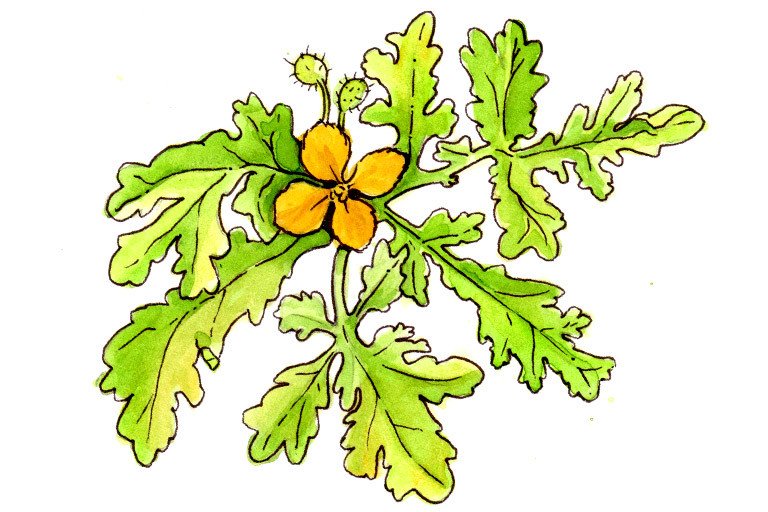
Common Names
- Goldthread
- Chinese coptis
- Coptis deltoidea
- Coptis teetoides
For Patients & Caregivers
Tell your healthcare providers about any dietary supplements you’re taking, such as herbs, vitamins, minerals, and natural or home remedies. This will help them manage your care and keep you safe.
Data are lacking on whether huanglian can help prevent or treat cancer.
Derived from the rhizome of the perennial herb Coptis chinensis, huanglian is used in traditional Chinese medicine for diarrhea, vomiting, abdominal fullness, jaundice, high fever, toothache, diabetes, and eczema.
Preclinical studies suggest antimicrobial, antidiabetic, antioxidant, anti-inflammatory, and anticancer effects. Alkaloids that include berberine are considered to be the active components.
Studies in humans are quite limited. Preliminary data suggest huanglian and berberine may lower blood sugar levels. Well-designed clinical trials are needed.
- To treat infections
Lab studies suggest that berberine, a compound in huanglian, stops the growth of bacteria. Human data are lacking. - To treat diarrhea and other GI symptoms
Lab studies support this claim, but clinical data are lacking. - To lower high blood pressure
Lab studies support this claim, but human data are needed.
Do Not Take if:
- You are taking CYP450 substrate drugs: Huanglian may increase the risk of side effects from these drugs. However, another study suggests huanglian can also induce CYP3A4, which may decrease the concentration of drugs metabolized by this enzyme. Clinical significance is not known.
Special Point:
- Huanglian displaces bilirubin and should not be administered to jaundiced neonates.
- Berberine-containing botanicals may prolong QTc in patients with underlying heart disease.
For Healthcare Professionals
Derived from the rhizome of the perennial herb Coptis chinensis, huanglian is used in traditional Chinese medicine for diarrhea, vomiting, abdominal fullness, jaundice, high fever, toothache, diabetes, and eczema.
Preclinical studies suggest antimicrobial, antidiabetic, antioxidant, hepatoprotective, anti-inflammatory, and anticancer effects (3) (5) (6) (9) (10) (14) (16) (19) (20). Alkaloids that include berberine are considered to be the bioactive components (1). Jatrorrhizine, a protoberberine, offset postoperative ileus-induced delayed gastric emptying and intestinal transit in mice (15).
Studies in humans are quite limited. Preliminary data suggest huanglian and berberine exert antihyperglycemic activity, but well-designed trials are lacking (17) (18). A meta-analysis of Huanglian Jiedu decoction for type 2 diabetes also cites low quality evidence and high risk of bias (21).
- Infections
- Diarrhea
- Hypertension
Potential biological effects of huanglian are attributed to berberine and berberine-like alkaloids. Berberine inhibits human hep-62 hepatoma cell growth via morphological changes and internucleosomal DNA fragmentation (3). Berberine also inhibits platelet aggregation and can antagonize thromboxane B2. In an animal model, it caused potassium channel blockade resulting in prolonged action potential in ventricular monocytes (1).
Huanglian inhibits topoisomerase I and is thought to suppress cyclin B1 protein expression, causing cancer cell arrest at the G2 phase (2). In other studies, it demonstrated antiangiogenic activity (6), induced apoptosis, and arrested cell growth by upregulating IFN-β and TNF-α in breast cancer cells (7).
- Huanglian displaces bilirubin and should not be administered to jaundiced neonates.
- Berberine-containing botanicals may prolong QTc in patients with underlying heart disease (4).