Health Care Professional Information
Common Name
Sehydrin, hydrazine, hydrazine monosulfate, HS
Clinical Summary
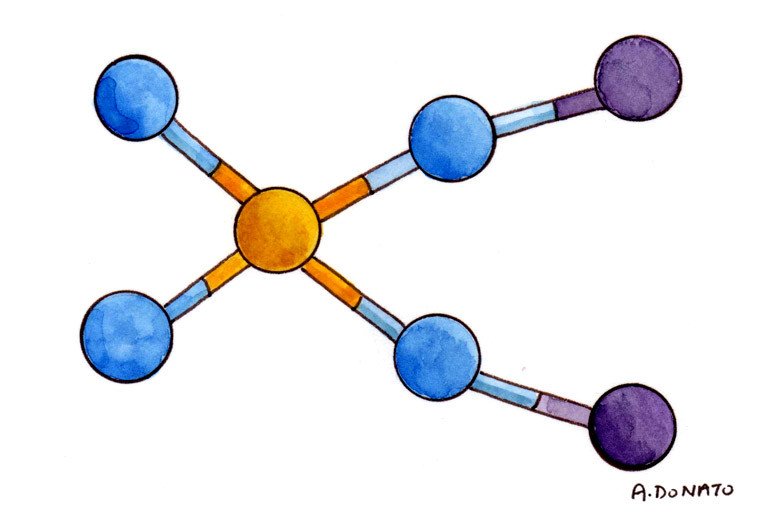
A synthetic chemical (H4N2-H2SO4) primarily used in industrial manufacturing (e.g. agricultural chemicals, rocket fuel, etc), hydrazine sulfate is used to treat cancer, maintain or gain weight, and ameliorate cancer-related cachexia. It is thought to interfere with gluconeogenesis via the inhibition of phosphoenolpyruvate carboxykinase (1). It has moderate monoamine oxidase inhibitor (MAO-I) activity (3).
Animal studies suggest that hydrazine is carcinogenic, although it is not established in humans. Several large randomized clinical trials failed to show significant benefit from hydrazine supplementation (7) (8) (9) to alleviate cancer-related cachexia (10) or to improve cancer survival.
Potential adverse effects include nausea, pruritus, dizziness, peripheral neuropathies, hypoglycemia and insomnia (4). Case reports detailing fatal hepatorenal failure (5) and encephalopathy (6) exist in the literature. Potential drug interactions include increased hydrazine toxicity when combined with benzodiazepines, barbiturates, and alcohol (1) (4). Theoretically, foods high in tyramine content, meperidine, sympathomimetics, and dextromethorphan should be avoided due to MAO-I activity (3).
Purported Uses
- Cancer treatment
- Cancer-related cachexia
- Weight gain
- Weight maintenance
Constituents
- Chemical formula: H4N2-H2SO4
Molecular weight: 130
Mechanism of Action
Hydrazine sulfate is thought to inhibit phosphoenolpyruvate carboxykinase, an enzyme involved with the Cori cycle for gluconeogenesis from anaerobically metabolized lactic acid. Hydrazine therapy is used to antagonize the inappropriate activation of gluconeogenesis pathways, reduce excessive gluconeogenesis, and improve glucose tolerance particularly in patients with cancer and cancer-related cachexia (1). Hydrazine also has been shown to be a weak monoamine oxidase inhibitor (3). Inhibition and stabilization of glioblastoma cell growth was seen in vitro and in animal models (4), but significance in humans is unknown. Hydrazine sulfate appears to have no effect on prostate cancer cell lines in vitro (2).
Contraindications
Patients with diabetes should use this product with caution due to potential hypoglycemic effects.
Adverse Reactions
- Common: Nausea, pruritus, dizziness, sedation, peripheral neuropathies, hypoglycemia, insomnia. (4)
- Case reports:
Hepatorenal failure (5) and encephalopathy (6) have been reported with use of hydrazine sulfate.
Multiple basal cell carcinoma has been associated with extensive exposure to hydrazine sulfate in a 68-year-old man (11).
Herb-Drug Interactions
Benzodiazepines: Increased toxicity of hydrazine suggested (1) (4).
Sympathomimetics: Theoretical interaction due to monoamine oxidase inhibition caused by hydrazine. Potential for hypertensive crisis (3).
Dosage (Inside MSKCC Only)
This field is only visible to only Inside MSKCC users.
References
- Kaegi E. Unconventional therapies for cancer: 4. Hydrazine sulfate. The Task Force on Alternative Therapies of the Canadian Breast Cancer Research Initiative. CMAJ 1998;158:1327-30.
- Kamradt JM, Pienta KJ. The effect of hydrazine sulfate on prostate cancer growth. Oncol Rep 1998;5:919-21.
- Chlebowski RT, et al. Hydrazine sulfate: clinical pharmacokinetics and influence on in vitro growth of human glioblastoma cell lines. Proc Am Assoc Cancer Res 1985;26:1002.
- Hydrazine sulfate (pdq). Available at http://www.cancer.gov/cancertopics/pdq/cam/hydrazinesulfate/healthprofessional. Accessed October 31, 2012.
- Hainer MI, et al. Fatal hepatorenal failure associated with hydrazine sulfate. Ann Intern Med 2000;133:877-80.
- Nagappan R, Riddel T. Pyridoxine therapy in a patient with severe hydrazine sulfate toxicity. Crit Care Med 2000;28:2116-8.
- Kosty MP, et al. Cisplatin, vinblastine, and hydrazine sulfate in advanced, non-small-cell lung cancer: a randomized placebo-controlled, double-blind phase III study of the cancer and leukemia group B. J Clin Oncol 1994;12:1113-20.
- Loprinzi CL, et al. Placebo-controlled trial of hydrazine sulfate in patients with newly diagnosed non-small cell lung cancer. J Clin Oncol 1994;12:1126-9.
- Loprinzi CL, et al. Randomized placebo-controlled evaluation of hydrazine sulfate in patients with advanced colorectal cancer. J Clin Oncol 1994;12:1121-5.
- Chlebowski RT, et al. Hydrazine sulfate in cancer patients with weight loss. A placebo-controlled clinical experience. Cancer 1987;59:406-10.
- Aigner BA, Darsow U, Grosber M, Ring J, Plötz SG. Multiple basal cell carcinomas after long-term exposure to hydrazine: case report and review of the literature. Dermatology. 2010;221(4):300-2.
Consumer Information
How It Works
Bottom Line: Hydrazine sulfate is not an approved cancer treatment. It has been shown to increase the incidence of some cancers.
Hydrazine sulfate is a chemical used in industrial manufacturing of agricultural chemicals and rocket fuel. Supporters of this therapy make the false claim that hydrazine sulfate limits the ability of tumor cells to make glucose, an important source of their energy, from body stores. In theory, this would also prevent the accelerated breakdown of protein in the body that causes cachexia (wasting) in patients with advanced cancer. However, this effect has never been shown in humans. Hydrazine sulfate was able to inhibit the growth of some tumors in laboratory animals when used alone or with chemotherapy drugs, but this effect has also not been shown in humans. Furthermore, hydrazine sulfate has been shown to increase the incidence of breast, lung, and liver cancers and basal cell carcinoma.
Purported Uses
- To prevent wasting (cachexia), maintain weight, and increase appetite in patients with advanced cancer
There is no scientific evidence to support this use.
- To treat cancer
Clinical trials do not support this use, and one actually showed that hydrazine sulfate was worse than no treatment at all.
Patient Warnings
- Hydrazine sulfate is classified as a potential carcinogen by the U.S. Department of Health and Human Services.
Side Effects
- Nausea
- Itching
- Dizziness
- Sedation
- Peripheral neuropathies
- Low blood sugar
- Insomnia
- There have been isolated cases of liver and kidney failure and encephalopathy.
- Multiple basal cell carcinomas were reported in a 68-year-old man following extensive exposure to hydrazine sulfate.
Special Point
- Hydrazine sulfate is commercially available in the United States, but it is illegal to use it as a cancer therapy.
Last updated: October 31, 2012
acid (A-sid)
A chemical that gives off hydrogen ions in water and forms salts by combining with certain metals. Acids have a sour taste and turn certain dyes red. Some acids made by the body, such as gastric acid, can help organs work the way they should. An example of an acid is hydrochloric acid. Acidity is measured on a scale called the pH scale. On this scale, a value of 7 is neutral, and a pH value of less than 7 to 0 shows increasing acidity.
Source: The National Cancer Institute's Dictionary of Cancer Terms
(http://www.cancer.gov/dictionary)
advanced cancer (ad-VANST KAN-ser)
Cancer that has spread to other places in the body and usually cannot be cured or controlled with treatment.
Source: The National Cancer Institute's Dictionary of Cancer Terms
(http://www.cancer.gov/dictionary)
alcohol (AL-kuh-hol)
A chemical substance found in beer, wine, and liquor, and some medicines, mouthwashes, household products, and essential oils (scented liquid taken from plants). Alcohol contains a carbon atom attached to a hydroxyl group (a molecule made of an oxygen atom and a hydrogen atom).
Source: The National Cancer Institute's Dictionary of Cancer Terms
(http://www.cancer.gov/dictionary)
basal cell (BAY-sul sel)
A small, round cell found in the lower part (or base) of the epidermis, the outer layer of the skin.
Source: The National Cancer Institute's Dictionary of Cancer Terms
(http://www.cancer.gov/dictionary)
basal cell carcinoma (BAY-sul sel KAR-sih-NOH-muh)
Cancer that begins in the lower part of the epidermis (the outer layer of the skin). It may appear as a small white or flesh-colored bump that grows slowly and may bleed. Basal cell carcinomas are usually found on areas of the body exposed to the sun. Basal cell carcinomas rarely metastasize (spread) to other parts of the body. They are the most common form of skin cancer. Also called basal cell cancer.
Source: The National Cancer Institute's Dictionary of Cancer Terms
(http://www.cancer.gov/dictionary)
blood (blud)
A tissue with red blood cells, white blood cells, platelets, and other substances suspended in fluid called plasma. Blood takes oxygen and nutrients to the tissues, and carries away wastes.
Source: The National Cancer Institute's Dictionary of Cancer Terms
(http://www.cancer.gov/dictionary)
breast (brest)
Glandular organ located on the chest. The breast is made up of connective tissue, fat, and breast tissue that contains the glands that can make milk. Also called mammary gland.
Source: The National Cancer Institute's Dictionary of Cancer Terms
(http://www.cancer.gov/dictionary)
cachexia (kuh-KEK-see-uh)
Loss of body weight and muscle mass, and weakness that may occur in patients with cancer, AIDS, or other chronic diseases.
Source: The National Cancer Institute's Dictionary of Cancer Terms
(http://www.cancer.gov/dictionary)
cancer (KAN-ser)
A term for diseases in which abnormal cells divide without control and can invade nearby tissues. Cancer cells can also spread to other parts of the body through the blood and lymph systems. There are several main types of cancer. Carcinoma is a cancer that begins in the skin or in tissues that line or cover internal organs. Sarcoma is a cancer that begins in bone, cartilage, fat, muscle, blood vessels, or other connective or supportive tissue. Leukemia is a cancer that starts in blood-forming tissue such as the bone marrow, and causes large numbers of abnormal blood cells to be produced and enter the blood. Lymphoma and multiple myeloma are cancers that begin in the cells of the immune system. Central nervous system cancers are cancers that begin in the tissues of the brain and spinal cord. Also called malignancy.
Source: The National Cancer Institute's Dictionary of Cancer Terms
(http://www.cancer.gov/dictionary)
carcinogen (kar-SIH-noh-jin)
Any substance that causes cancer.
Source: The National Cancer Institute's Dictionary of Cancer Terms
(http://www.cancer.gov/dictionary)
carcinoma (KAR-sih-NOH-muh)
Cancer that begins in the skin or in tissues that line or cover internal organs.
Source: The National Cancer Institute's Dictionary of Cancer Terms
(http://www.cancer.gov/dictionary)
cell (sel)
The individual unit that makes up the tissues of the body. All living things are made up of one or more cells.
Source: The National Cancer Institute's Dictionary of Cancer Terms
(http://www.cancer.gov/dictionary)
chemical (KEH-mih-kul)
A substance made up of elements, such as hydrogen or sodium.
Source: The National Cancer Institute's Dictionary of Cancer Terms
(http://www.cancer.gov/dictionary)
chemotherapy (KEE-moh-THAYR-uh-pee)
Treatment with drugs that kill cancer cells.
Source: The National Cancer Institute's Dictionary of Cancer Terms
(http://www.cancer.gov/dictionary)
clinical (KLIH-nih-kul)
Having to do with the examination and treatment of patients.
Source: The National Cancer Institute's Dictionary of Cancer Terms
(http://www.cancer.gov/dictionary)
diabetes (dy-uh-BEE-teez)
Any of several diseases in which the kidneys make a large amount of urine. Diabetes usually refers to diabetes mellitus in which there is also a high level of glucose (a type of sugar) in the blood because the body does not make enough insulin or use it the way it should.
Source: The National Cancer Institute's Dictionary of Cancer Terms
(http://www.cancer.gov/dictionary)
drug (drug)
Any substance, other than food, that is used to prevent, diagnose, treat or relieve symptoms of a disease or abnormal condition. Also refers to a substance that alters mood or body function, or that can be habit-forming or addictive, especially a narcotic.
Source: The National Cancer Institute's Dictionary of Cancer Terms
(http://www.cancer.gov/dictionary)
encephalopathy (en-SEH-fuh-LAH-puh-thee)
A disorder of the brain that can be caused by disease, injury, drugs, or chemicals.
Source: The National Cancer Institute's Dictionary of Cancer Terms
(http://www.cancer.gov/dictionary)
enzyme (EN-zime)
A protein that speeds up chemical reactions in the body.
Source: The National Cancer Institute's Dictionary of Cancer Terms
(http://www.cancer.gov/dictionary)
glioblastoma (GLEE-oh-blas-TOH-muh)
A fast-growing type of central nervous system tumor that forms from glial (supportive) tissue of the brain and spinal cord and has cells that look very different from normal cells. Glioblastoma usually occurs in adults and affects the brain more often than the spinal cord. Also called GBM, glioblastoma multiforme, and grade IV astrocytoma.
Source: The National Cancer Institute's Dictionary of Cancer Terms
(http://www.cancer.gov/dictionary)
gluconeogenesis (GLOO-koh-NEE-oh-JEH-neh-sis)
The process of making glucose (sugar) from its own breakdown products or from the breakdown products of lipids (fats) or proteins. Gluconeogenesis occurs mainly in cells of the liver or kidney.
Source: The National Cancer Institute's Dictionary of Cancer Terms
(http://www.cancer.gov/dictionary)
glucose (GLOO-kose)
A type of sugar; the chief source of energy for living organisms.
Source: The National Cancer Institute's Dictionary of Cancer Terms
(http://www.cancer.gov/dictionary)
hydrazine sulfate (HY-druh-ZEEN SUL-fayt)
A substance that has been studied as a treatment for cancer and as a treatment for cachexia (body wasting) associated with advanced cancer.
Source: The National Cancer Institute's Dictionary of Cancer Terms
(http://www.cancer.gov/dictionary)
hypoglycemia (HY-poh-gly-SEE-mee-uh)
Abnormally low blood sugar.
Source: The National Cancer Institute's Dictionary of Cancer Terms
(http://www.cancer.gov/dictionary)
in vitro (in VEE-troh)
In the laboratory (outside the body). The opposite of in vivo (in the body).
Source: The National Cancer Institute's Dictionary of Cancer Terms
(http://www.cancer.gov/dictionary)
incidence (IN-sih-dents)
The number of new cases of a disease diagnosed each year.
Source: The National Cancer Institute's Dictionary of Cancer Terms
(http://www.cancer.gov/dictionary)
insomnia (in-SOM-nee-uh)
Difficulty in going to sleep or getting enough sleep.
Source: The National Cancer Institute's Dictionary of Cancer Terms
(http://www.cancer.gov/dictionary)
kidney (KID-nee)
One of a pair of organs in the abdomen. Kidneys remove waste from the blood (as urine), produce erythropoietin (a substance that stimulates red blood cell production), and play a role in blood pressure regulation.
Source: The National Cancer Institute's Dictionary of Cancer Terms
(http://www.cancer.gov/dictionary)
liver (LIH-ver)
A large organ located in the upper abdomen. The liver cleanses the blood and aids in digestion by secreting bile.
Source: The National Cancer Institute's Dictionary of Cancer Terms
(http://www.cancer.gov/dictionary)
lung (lung)
One of a pair of organs in the chest that supplies the body with oxygen, and removes carbon dioxide from the body.
Source: The National Cancer Institute's Dictionary of Cancer Terms
(http://www.cancer.gov/dictionary)
monoamine oxidase inhibitor (MAH-noh-uh-MEEN OK-sih-days in-HIH-bih-ter)
A type of drug used to treat depression. It stops the breakdown of certain chemicals in the brain that help improve a person’s mood. A monoamine oxidase inhibitor is a type of antidepressant. Also called MAO inhibitor.
Source: The National Cancer Institute's Dictionary of Cancer Terms
(http://www.cancer.gov/dictionary)
nausea (NAW-zee-uh)
A feeling of sickness or discomfort in the stomach that may come with an urge to vomit. Nausea is a side effect of some types of cancer therapy.
Source: The National Cancer Institute's Dictionary of Cancer Terms
(http://www.cancer.gov/dictionary)
prostate (PROS-tayt)
A gland in the male reproductive system. The prostate surrounds the part of the urethra (the tube that empties the bladder) just below the bladder, and produces a fluid that forms part of the semen.
Source: The National Cancer Institute's Dictionary of Cancer Terms
(http://www.cancer.gov/dictionary)
protein (PROH-teen)
A molecule made up of amino acids that are needed for the body to function properly. Proteins are the basis of body structures such as skin and hair and of substances such as enzymes, cytokines, and antibodies.
Source: The National Cancer Institute's Dictionary of Cancer Terms
(http://www.cancer.gov/dictionary)
pruritus (proo-RY-tus)
Itching. Severe itching may be a side effect of some cancer treatments and a symptom of some types of cancers.
Source: The National Cancer Institute's Dictionary of Cancer Terms
(http://www.cancer.gov/dictionary)
randomized
Describes an experiment or clinical trial in which animal or human subjects are assigned by chance to separate groups that compare different treatments.
Source: The National Cancer Institute's Dictionary of Cancer Terms
(http://www.cancer.gov/dictionary)
significant (sig-NIH-fih-kunt)
In statistics, describes a mathematical measure of difference between groups. The difference is said to be significant if it is greater than what might be expected to happen by chance alone. Also called statistically significant.
Source: The National Cancer Institute's Dictionary of Cancer Terms
(http://www.cancer.gov/dictionary)
supplementation (SUH-pleh-men-TAY-shun)
Adding nutrients to the diet.
Source: The National Cancer Institute's Dictionary of Cancer Terms
(http://www.cancer.gov/dictionary)
therapy (THAYR-uh-pee)
Treatment.
Source: The National Cancer Institute's Dictionary of Cancer Terms
(http://www.cancer.gov/dictionary)
toxicity (tok-SIH-sih-tee)
The extent to which something is poisonous or harmful.
Source: The National Cancer Institute's Dictionary of Cancer Terms
(http://www.cancer.gov/dictionary)
tumor (TOO-mer)
An abnormal mass of tissue that results when cells divide more than they should or do not die when they should. Tumors may be benign (not cancer), or malignant (cancer). Also called neoplasm.
Source: The National Cancer Institute's Dictionary of Cancer Terms
(http://www.cancer.gov/dictionary)