Health Care Professional Information
Scientific Name
Isatidis baphicacanthi, Isatis tinctoria, Isatis indigotica
Common Name
Dyer’s woad leaf, Indigo, Da Qing Ye
Clinical Summary
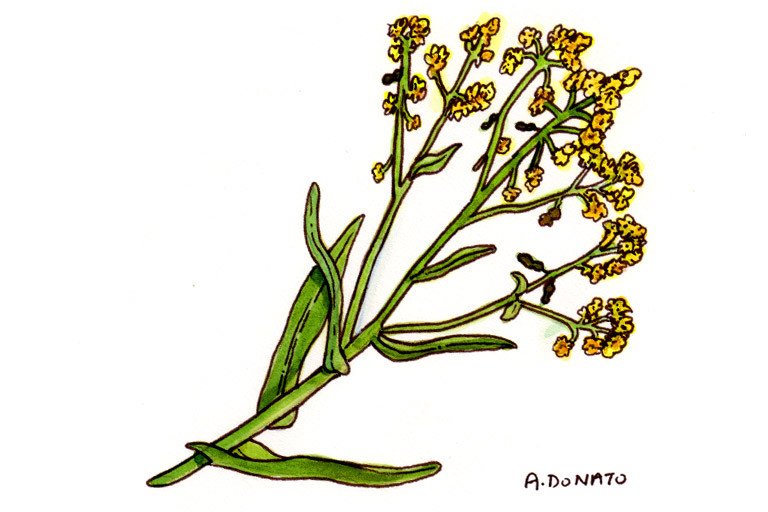
Derived from the leaves of the isatis plant, a source of indigo dye. This botanical has been used for thousands of years in traditional Chinese medicine and Ayurvedic medicine. It is used in combination with isatis root and other herbs to treat common cold, sore throat, mumps, respiratory aliments, other febrile diseases and malignant tumors. The pulverized form, known as Qing Dai, has been used topically to treat oral sores and sore throat (1) (2). Isatis is one of the eight ingredients used in PC-SPES, an herbal formula used to treat prostate cancer. It is also used in Danggui Longhui Wan, a formula used to treat chronic myelocytic leukemia (CML) in China (7). Studies indicate that isatis has antimicrobial, antiviral (1) (8), immunostimulatory (6) and anti-inflammatory (9) properties. Recent anecdotal reports indicate that isatis root can be used to ward off severe acute respiratory syndromes (SARS) (4). Adverse effects from consuming isatis leaves include nausea and vomiting (2).
Purported Uses
- Cancer treatment
- Diarrhea
- GI disorders
- Hepatitis
- HIV and AIDS
- Respiratory infections
Constituents
Indirubin, isatin B, glucobrassicin, neoglucobrassicin, glucobrassicin-1-sulfonate, indigotin.(1) (2)
Mechanism of Action
Extracts obtained from the dried leaves of isatis have cyclooxygenase-2 (COX-2) inhibitory effects.(4) Indirubin, an active component of isatis, is a potent inhibitor of cyclin-dependent kinases (CDKs). It inhibits the proliferation of cells by arresting the cells in the G2/M phase.(7) Other alkaloids isolated from isatis can inhibit the function of leukocytes and can reduce inflammatory responses.(5) Some studies have shown that isatis also has antiendotoxic and antiviral activities.(8)
Pharmacokinetics
An active component of isatis leaf, indican, when given orally to rabbits produced a maximum plasma concentration after 3 hours. Sites of distribution included the liver, kidney, muscle, and gastrointestinal tract. 90% of indican was excreted through the kidney.(2)
Dosage (Inside MSKCC Only)
This field is only visible to only Inside MSKCC users.
References
- Bensky D, Gamble A. Chinese Herbal Medicine: Materia Medica. Revised Ed. Seattle: Eastland Press; 1993.
- Huang KC. The Pharmacology of Chinese Herbs, 2nd ed. New York: CRC Press; 1999.
- Ho Y, Chang Y. Studies on the antinociceptive, anti-inflammatory and anti pyretic effects of Isatis indigotica root. Phytomedicine. 2002;9:419-24.
- Danz H, et al. Identification and isolation of the cyclooxygenase-2 inhibitory principle in Isatis tinctoria. Planta Med. 2001;67:411-6.
- Molina P, et al. Inhibition of leukocyte functions by the alkaloid isaindigotone from Isatis indigotica and some new synthetic derivatives. J Nat Prod. 2001;64:1297-300.
- Xu YM, Lu PC. Experimental studies on immunostimulatory effects of the Isatis indigotica polysaccharide. Zhong Xi Yi Jie He Za Zhi. 1991;11:357-9, 325-6.
- Hoessel R, et al. Indirubin, the active constituent of a Chinese antileukaemia medicine, inhibits cyclin-dependent kinases. Nat Cell Biol. 1999;1:60-7.
- Wang T, et al. Evaluation on antiendotoxic action and antiviral action in vitro of tetraploid Isatis indigotica. Zhongguo Zhong Yao Za Zhi. 2000;25:327-9.
-
Consumer Information
How It Works
Bottom Line: Isatis leaf has not been tested in clinical trials, so it is not known if it works in humans. It should not be used to treat SARS, HIV, or other serious diseases.
Isatis leaf extract is derived from the same plant from which indigo dye is made. It has been used in combination with other botanicals in traditional Chinese and Ayurvedic medicine for thousands of years. Isatis extracts have been found to be COX-2 inhibitors, which indicates that they may have anti-inflammatory and pain-relieving properties. (Other COX-2 inhibitors include aspirin and ibuprofen). Laboratory studies have also suggested that indirubin, an active component of isatis root, inhibits the replication of dividing cells and therefore may be useful in cancer treatment. In the laboratory setting, isatis extracts are able to kill certain viruses and counteract the effects of endotoxin, which causes some of the symptoms and tissue damage of bacterial infections. However, this botanical has not yet been evaluated in clinical trials and therefore it remains uncertain whether these effects occur in the human body.
Purported Uses
- To prevent and treat cancer
Laboratory studies show that an active compound in isatis root, indirubin, inhibits the replication of dividing cells. This herb is used in China in combination with other botanicals to treat chronic myelogenous leukemia (CML). However, there is no proof from clinical trials that isatis is an effective cancer treatment.
- To treat diarrhea
No scientific evidence supports this use.
- To treat gastrointestinal disorders
Isatis extracts have anti-inflammatory activity in the laboratory setting, but no other scientific evidence supports this use.
- To treat hepatitis
Isatis extracts have anti-inflammatory effects.
- To treat HIV and AIDS
No scientific evidence supports this use.
- To treat respiratory infections
In the laboratory setting, isatis extracts have antiviral and anti-endotoxin effects.
Last updated: April 13, 2012
acute (uh-KYOOT)
Symptoms or signs that begin and worsen quickly; not chronic.
Source: The National Cancer Institute's Dictionary of Cancer Terms
(http://www.cancer.gov/dictionary)
anti-inflammatory (AN-tee-in-FLA-muh-TOR-ee)
Having to do with reducing inflammation.
Source: The National Cancer Institute's Dictionary of Cancer Terms
(http://www.cancer.gov/dictionary)
antimicrobial (AN-tee-my-KROH-bee-ul)
A substance that kills microorganisms such as bacteria or mold, or stops them from growing and causing disease.
Source: The National Cancer Institute's Dictionary of Cancer Terms
(http://www.cancer.gov/dictionary)
antiviral (AN-tee-VY-rul)
A drug used to treat infections caused by viruses.
Source: The National Cancer Institute's Dictionary of Cancer Terms
(http://www.cancer.gov/dictionary)
aspirin (AS-pih-rin)
A drug that reduces pain, fever, inflammation, and blood clotting. Aspirin belongs to the family of drugs called nonsteroidal anti-inflammatory agents. It is also being studied in cancer prevention.
Source: The National Cancer Institute's Dictionary of Cancer Terms
(http://www.cancer.gov/dictionary)
Ayurvedic medicine (I-yer-VAY-dik MEH-dih-sin)
A medical system from India that has been used for thousands of years. The goal is to cleanse the body and to restore balance to the body, mind, and spirit. It uses diet, herbal medicines, exercise, meditation, breathing, physical therapy, and other methods. It is a type of Complementary and Alternative Medicine (CAM) therapy. Also called Ayurveda.
Source: The National Cancer Institute's Dictionary of Cancer Terms
(http://www.cancer.gov/dictionary)
botanical (buh-TA-nih-kul)
Having to do with, or derived from, plants.
Source: The National Cancer Institute's Dictionary of Cancer Terms
(http://www.cancer.gov/dictionary)
cancer (KAN-ser)
A term for diseases in which abnormal cells divide without control and can invade nearby tissues. Cancer cells can also spread to other parts of the body through the blood and lymph systems. There are several main types of cancer. Carcinoma is a cancer that begins in the skin or in tissues that line or cover internal organs. Sarcoma is a cancer that begins in bone, cartilage, fat, muscle, blood vessels, or other connective or supportive tissue. Leukemia is a cancer that starts in blood-forming tissue such as the bone marrow, and causes large numbers of abnormal blood cells to be produced and enter the blood. Lymphoma and multiple myeloma are cancers that begin in the cells of the immune system. Central nervous system cancers are cancers that begin in the tissues of the brain and spinal cord. Also called malignancy.
Source: The National Cancer Institute's Dictionary of Cancer Terms
(http://www.cancer.gov/dictionary)
chronic (KRAH-nik)
A disease or condition that persists or progresses over a long period of time.
Source: The National Cancer Institute's Dictionary of Cancer Terms
(http://www.cancer.gov/dictionary)
chronic myelogenous leukemia (KRAH-nik MY-eh-LAH-jeh-nus loo-KEE-mee-uh)
A slowly progressing disease in which too many white blood cells (not lymphocytes) are made in the bone marrow. Also called chronic granulocytic leukemia, chronic myeloid leukemia, and CML.
Source: The National Cancer Institute's Dictionary of Cancer Terms
(http://www.cancer.gov/dictionary)
clinical (KLIH-nih-kul)
Having to do with the examination and treatment of patients.
Source: The National Cancer Institute's Dictionary of Cancer Terms
(http://www.cancer.gov/dictionary)
compound (KOM-pownd)
In science, a substance that is made up of more than one ingredient.
Source: The National Cancer Institute's Dictionary of Cancer Terms
(http://www.cancer.gov/dictionary)
concentration (KON-sen-TRAY-shun)
In science, the amount of a substance, such as a salt, that is in a certain amount of tissue or liquid, such as blood. A substance becomes more concentrated when less water is present. For example, the salt in urine may become more concentrated when a person doesn’t drink enough water.
Source: The National Cancer Institute's Dictionary of Cancer Terms
(http://www.cancer.gov/dictionary)
COX-2
An enzyme that speeds up the formation of substances that cause inflammation and pain. It may also cause tumor cells to grow. Some tumors have high levels of COX-2 and blocking its activity may reduce tumor growth. Also called cyclooxygenase-2 and prostaglandin-endoperoxide synthase 2.
Source: The National Cancer Institute's Dictionary of Cancer Terms
(http://www.cancer.gov/dictionary)
cyclooxygenase-2 (SY-kloh-OK-sih-jeh-NAYS-2)
An enzyme that speeds up the formation of substances that cause inflammation and pain. It may also cause tumor cells to grow. Some tumors have high levels of cyclooxygenase-2 and blocking its activity may reduce tumor growth. Also called COX-2 and prostaglandin-endoperoxide synthase 2.
Source: The National Cancer Institute's Dictionary of Cancer Terms
(http://www.cancer.gov/dictionary)
extract (EK-strakt)
In medicine, a preparation of a substance obtained from plants, animals, or bacteria and used as a drug or in drugs.
Source: The National Cancer Institute's Dictionary of Cancer Terms
(http://www.cancer.gov/dictionary)
gastrointestinal (GAS-troh-in-TES-tih-nul)
Refers to the stomach and intestines. Also called GI.
Source: The National Cancer Institute's Dictionary of Cancer Terms
(http://www.cancer.gov/dictionary)
GI
Refers to the stomach and intestines. Also called gastrointestinal.
Source: The National Cancer Institute's Dictionary of Cancer Terms
(http://www.cancer.gov/dictionary)
hematuria (HEE-muh-TOOR-ee-uh)
Blood in the urine.
Source: The National Cancer Institute's Dictionary of Cancer Terms
(http://www.cancer.gov/dictionary)
herbal (ER-bul)
Having to do with plants.
Source: The National Cancer Institute's Dictionary of Cancer Terms
(http://www.cancer.gov/dictionary)
HIV
The cause of acquired immunodeficiency syndrome (AIDS). Also called human immunodeficiency virus.
Source: The National Cancer Institute's Dictionary of Cancer Terms
(http://www.cancer.gov/dictionary)
inflammatory (in-FLA-muh-TOR-ee)
Having to do with inflammation (redness, swelling, pain, and a feeling of heat that helps protect tissues affected by injury or disease).
Source: The National Cancer Institute's Dictionary of Cancer Terms
(http://www.cancer.gov/dictionary)
injection (in-JEK-shun)
Use of a syringe and needle to push fluids or drugs into the body; often called a "shot."
Source: The National Cancer Institute's Dictionary of Cancer Terms
(http://www.cancer.gov/dictionary)
intramuscular (IN-truh-MUS-kyoo-ler)
Within or into muscle. Also called IM.
Source: The National Cancer Institute's Dictionary of Cancer Terms
(http://www.cancer.gov/dictionary)
intramuscular injection (IN-truh-MUS-kyoo-ler in-JEK-shun)
Injection into muscle.
Source: The National Cancer Institute's Dictionary of Cancer Terms
(http://www.cancer.gov/dictionary)
kidney (KID-nee)
One of a pair of organs in the abdomen. Kidneys remove waste from the blood (as urine), produce erythropoietin (a substance that stimulates red blood cell production), and play a role in blood pressure regulation.
Source: The National Cancer Institute's Dictionary of Cancer Terms
(http://www.cancer.gov/dictionary)
leukemia (loo-KEE-mee-uh)
Cancer that starts in blood-forming tissue such as the bone marrow and causes large numbers of blood cells to be produced and enter the bloodstream.
Source: The National Cancer Institute's Dictionary of Cancer Terms
(http://www.cancer.gov/dictionary)
liver (LIH-ver)
A large organ located in the upper abdomen. The liver cleanses the blood and aids in digestion by secreting bile.
Source: The National Cancer Institute's Dictionary of Cancer Terms
(http://www.cancer.gov/dictionary)
malignant (muh-LIG-nunt)
Cancerous. Malignant cells can invade and destroy nearby tissue and spread to other parts of the body.
Source: The National Cancer Institute's Dictionary of Cancer Terms
(http://www.cancer.gov/dictionary)
myelogenous (MY-eh-LAH-jeh-nus)
Having to do with, produced by, or resembling the bone marrow. Sometimes used as a synonym for myeloid; for example, acute myeloid leukemia and acute myelogenous leukemia are the same disease.
Source: The National Cancer Institute's Dictionary of Cancer Terms
(http://www.cancer.gov/dictionary)
nausea (NAW-zee-uh)
A feeling of sickness or discomfort in the stomach that may come with an urge to vomit. Nausea is a side effect of some types of cancer therapy.
Source: The National Cancer Institute's Dictionary of Cancer Terms
(http://www.cancer.gov/dictionary)
oral (OR-ul)
By or having to do with the mouth.
Source: The National Cancer Institute's Dictionary of Cancer Terms
(http://www.cancer.gov/dictionary)
plasma (PLAZ-muh)
The clear, yellowish, fluid part of the blood that carries the blood cells. The proteins that form blood clots are in plasma.
Source: The National Cancer Institute's Dictionary of Cancer Terms
(http://www.cancer.gov/dictionary)
prostate (PROS-tayt)
A gland in the male reproductive system. The prostate surrounds the part of the urethra (the tube that empties the bladder) just below the bladder, and produces a fluid that forms part of the semen.
Source: The National Cancer Institute's Dictionary of Cancer Terms
(http://www.cancer.gov/dictionary)
throat (throte)
The hollow tube inside the neck that starts behind the nose and ends at the top of the trachea (windpipe) and esophagus (the tube that goes to the stomach). The throat is about 5 inches long, depending on body size. Also called pharynx.
Source: The National Cancer Institute's Dictionary of Cancer Terms
(http://www.cancer.gov/dictionary)
tissue (TIH-shoo)
A group or layer of cells that work together to perform a specific function.
Source: The National Cancer Institute's Dictionary of Cancer Terms
(http://www.cancer.gov/dictionary)