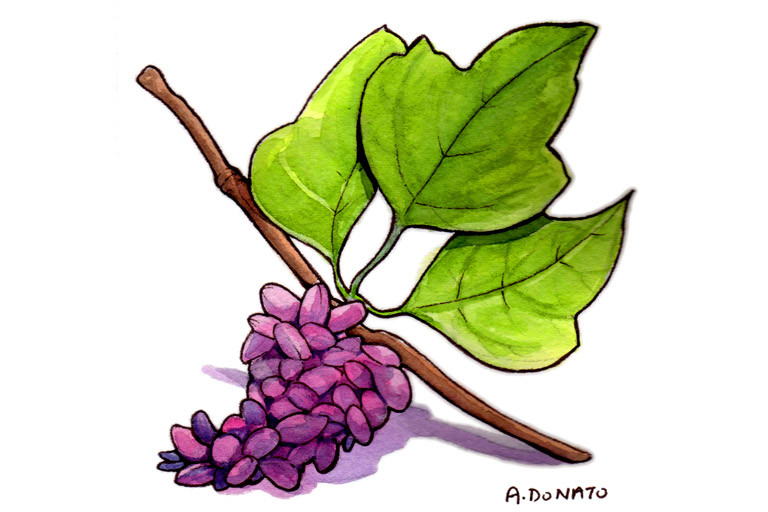
Common Names
- Pueraria
- Pueraria root
- Ge Gen
- Kudsu
- Japanese arrowroot
For Patients & Caregivers
Tell your healthcare providers about any dietary supplements you’re taking, such as herbs, vitamins, minerals, and natural or home remedies. This will help them manage your care and keep you safe.
Although kudzu is used in traditional medicine, the evidence on whether it has benefit for any condition is unclear.
Kudzu is an herb used in Chinese medicine to treat alcoholism, heart disease, menopausal symptoms, diabetes, fever, the common cold, and neck or eye pain. It is sometimes used in combination with other herbs. Lab studies suggest that kudzu has anti-inflammatory and neuroprotective properties. Compounds called isoflavones are thought to be responsible for its potential effects.
Studies of kudzu in humans are limited and have mostly focused on whether it can reduce alcohol intake or menopausal symptoms. However, all of these studies enrolled small numbers of patients, and systematic reviews have determined that the evidence of benefit for any condition is unclear.
Because animal and human studies suggest some estrogenic effects, individuals with hormone-sensitive cancers and those taking tamoxifen should avoid kudzu.
- Menopausal symptoms
Small clinical studies suggest that kudzu is a phytoestrogen that may help reduce menopausal symptoms, but a systematic review did not find benefit. - Alcohol abuse
Kudzu may reduce alcohol intake and withdrawal, but these studies enrolled only a small number of patients, and a systematic review did not find benefit. - Diabetes
Kudzu is used in traditional medicine to treat diabetes, but evidence is lacking. - Fever or common cold
Kudzu is used in traditional medicine for these purposes, but human studies are lacking. - Neck or eye pain
Kudzu is used in traditional medicine for these purposes. Although animal studies suggest kudzu may reduce inflammation and pain in combination with other herbs, human studies are lacking.
Short-term effects on blood and liver tests occurred in a small study of postmenopausal women. A few other small studies reported no significant side effects.
Case reports
Kidney problems: In a middle-aged woman who consumed kudzu root juice to promote health and well-being for 10 days, and without evidence of any other causes. Symptoms of appetite loss, nausea, vomiting, and upper abdomen discomfort improved within several days after juice discontinuation and treatment.
Liver injury: In a 55-year-old man previously in good health who was hospitalized with mild fever, brown urine, and elevated liver enzymes. Mistletoe and kudzu extracts which he took to promote general health were suspected, although it is uncertain whether either, both, or an interaction between the two caused these adverse effects.
Do Not Take if:
- You have hypersensitivity to kudzu.
- You have hormone-sensitive cancer: Kudzu has estrogenic activity.
- You are taking tamoxifen: Isoflavones in kudzu may interfere with the effects of tamoxifen which is used for estrogen-dependent breast cancer.
- You are taking methotrexate: In animal studies, taking kudzu at the same time reduced elimination of the drug methotrexate, causing increased levels of the drug. Clinical relevance has yet to be determined.
- You are taking antidiabetic medication: Animal studies suggest a key component in kudzu may increase the activity of these medications. Clinical relevance has yet to be determined.
For Healthcare Professionals
Kudzu is a botanical used in traditional medicine to treat alcoholism, cardiovascular disease, menopausal symptoms, diabetes, fever, the common cold, and neck or eye pain. There are several species of kudzu and both the flowers and root extract are used for their medicinal properties. Isoflavones, the major components of kudzu, are thought to be responsible for its potential effects.
In vitro, kudzu has demonstrated antiproliferative (1), anti-inflammatory (3), and neuroprotective (16) (18) properties. In animal studies, feeding with kudzu root suppressed alcohol intake and withdrawal symptoms (4).
Studies of kudzu in humans are limited and have mostly focused on its effects on alcohol consumption or climacteric symptoms. In heavy drinkers, data suggest kudzu may be a useful adjunct to reduce alcohol intake (9) (19) (23). In moderate drinkers, it was shown to not disturb sleep wake/cycles, as can occur during withdrawal or with other medications that treat dependence (20). In another small study, a single dose of kudzu extract reduced alcohol consumption (25).
Other preliminary studies suggest kudzu may improve symptoms such as hot flushes and night sweats in perimenopausal women (5) (10) (21), and cognitive function in postmenopausal women (6). Although a topical P. mirifica gel improved vaginal symptoms in postmenopausal women, a conjugated estrogen cream was found to be more effective (26). A recent systematic review of P. mirifica regarding efficacy for menopausal symptoms is inconclusive (27). In addition, another systematic review determined that evidence on benefits for any condition with various species of kudzu are limited and unclear (28).
Because human and animal studies suggest some estrogenic effects (5) (10) (11), individuals with hormone-sensitive cancers and those taking tamoxifen should avoid kudzu.
- Alcoholism
- Cold, fever
- Diabetes
- Pain
- Menopause
Anti-inflammatory properties are attributed to decreased prostaglandin E2 and tumor necrosis factor-alpha release, both of which are involved in inflammatory processes (3). The isoflavone tectorigenin demonstrated antiproliferative activity via cell differentiation and reduced expression of Bcl-2, an antiapoptotic protein (1). In animal studies, peurarin may alleviate chronic alcoholic liver injury via inhibition of endotoxin gut-leakage, activation of Kupffer cells, and expression of lipopolysaccharide receptors (22).
In humans, benefits from kudzu on hot flashes, night sweats, and cognitive function are also attributed to isoflavones (5) (6). Puerarin particularly has been credited with influencing alcohol consumption patterns, although the mechanism by which this might occur is unknown (19).
In one small study of postmenopausal women, transient negative profiles including anemia and liver profiles (5). Other small studies reported no significant adverse effects (9) (19) (20) (21) (23).
Case reports
Acute interstitial nephritis: In a middle-aged woman who consumed kudzu root juice to promote health and well-being for 10 days, and without evidence of any other causes (29). Symptoms of appetite loss, nausea, vomiting, and epigastric discomfort, improved within several days after discontinuation and conservative treatment.
Liver injury: In a 55-year-old man previously in good health who was hospitalized with mild fever, brown urine, and elevated AST/ALT levels. These adverse effects were attributed to the ingestion of mistletoe and kudzu extracts which he took to promote general health, although it is uncertain whether either, both, or an interaction between the two caused these adverse effects (30).
- Tamoxifen: Human and animal studies suggest that kudzu has some estrogenic activity (5) (10) (11). Therefore, it may antagonize the effects of tamoxifen, although clinical relevance has yet to be determined.
- Methotrexate: In animal models, coadministration of a root decoction of kudzu reduced the elimination of methotrexate, resulting in increased methotrexate levels (17).
- Antidiabetic drugs: Animal models suggest puerarin also has antihyperglycemic effects (14). Clinical relevance has yet to be determined.
- CYP2D6 substrate drugs: In vitro, puerarin inhibited activity of CYP2D6 and can alter the metabolism of these drugs (15). Clinical relevance has yet to be determined.
- CYP1A2 substrate drugs: In vitro, puerarin induced CYP1A2 and may affect the metabolism of some of these drugs (15). Clinical relevance has yet to be determined.