Health Care Professional Information
Common Name
Aspic, lavandin, spike lavender
Clinical Summary
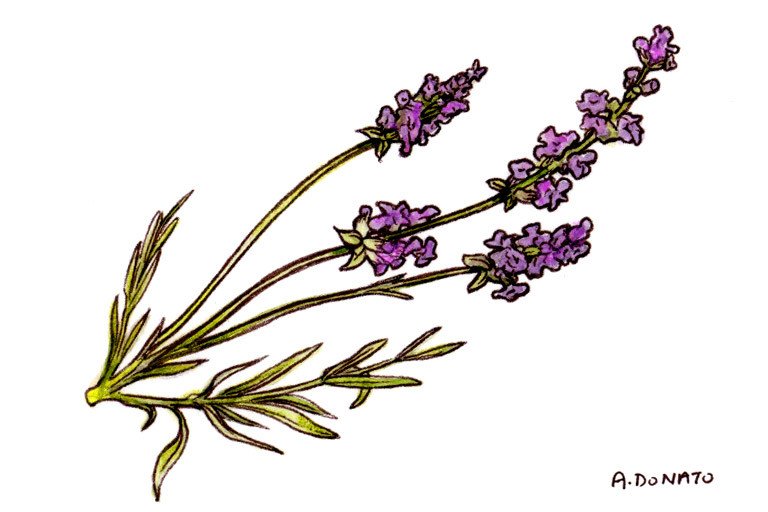
Derived from the flowering tops of the plant, lavender oil is used in aromatherapy, as a topical treatment and as an oral supplement for a wide variety of symptoms.
Lavender exhibits antibacterial (4), antioxidant and neuroprotective (21) effects in vitro. In mice, topical application of lavender oil reduced inflammation and recurrent ulceration (22); and exposure to lavender oil reversed spatial memory loss (23).
Topical application of an herbal formulation that includes lavender was shown effective in reducing otalgia in children with acute otitis media (11) and aromatherapy with lavender improved symptoms in patients with dementia (5) (15). Oral preparations of lavender were effective as adjuvant therapy for mild to moderate depression (7) and for generalized anxiety disorder (16) (18).
Essential oils containing lavender may also be beneficial in treating alopecia areata (10).
Inhalation of lavender oil may reduce the number of migraine headaches (19); and prevent agitation and falls in older individuals (20).
Lavender has been studied for the treatment of cancer related symptoms. Results indicate that it does not reduce anxiety during radiotherapy (6); and topical application of lavender oil does not improve long-term pain, anxiety, or quality of life in patients with advanced cancer (8).
Purported Uses
- Acne
- Alopecia
- Depression
- GI disorders
- Inflammation
- Insomnia
- Migraine treatment
- Pain
- Promote urination
- Spasms
Constituents
- Volatile oil (1-3%): linalool, linalyl acetate chiefly. Also 1,8-cineole, borneol and camphor.
- Hydroxycoumarins
- Tannins (up to 12%)
- Caffeic acid derivatives
(2) (3)
Mechanism of Action
The anti-inflammatory and analgesic effects of lavender are thought to be due to a compound known as 1,8-cineole or eucalyptol (2). Eucalyptol is also found in Eucalyptus, rosemary and cardamon (9). Lavender oil has broad spectrum antibacterial activity (22). It has been shown to prevent immediate-type allergic reactions by inhibiting mast cell degranulation in vivo and in vitro (25).
Data also indicate that lavender oil has a depressive effect on the central nervous system (3); and displays neuroprotective effects by attenuating neuronal damage, upregulating catalase (CAT), superoxide dismutase (SOD), glutathione peroxidase (GSH-Px) activities and glutathione (GSH)/glutathione disulfide (GSSG) ratio (21). The anti-epileptic effects of lavender are due to suppression of nitric oxide level in the brain. Lavender has also shown to be superior to Valproate, a major antiepileptic drug (26).
In vitro studies have shown that lavender oil has weak estrogenic and antiandrogenic activities that may alter the estrogen and androgen signaling pathways (14).
Pharmacokinetics
Absorption
Lavender is quickly absorbed through the skin. Components of the essential oil were found in the blood within 5-20 minutes of massage (9) (12).
Adverse Reactions
- Reported (Topical): Allergic contact dermatitis (17) (24)
- Reported (Topical): Repeated application of lavender and tea tree oils resulted in gynecomastia in prepubertal boys (14).
Herb-Drug Interactions
Sedatives: Lavender may potentiate their sleep-inducing effects (3).
Literature Summary and Critique
Dosage (Inside MSKCC Only)
This field is only visible to only Inside MSKCC users.
References
- PDR for Herbal Medicines. Montvale, NJ: Medical Economics, 1998.
- Hajhashemi V, Ghannadi A, Sharif B. Anti-inflammatory and analgesic properties of the leaf extracts and essential oil of Lavandula angustifolia Mill. J Ethnopharmacol. 2003;89:67-71.
- Gyllenhaal C, Merritt SL, Peterson SD, Block KI, Gochenour T. Efficacy and safety of herbal stimulants and sedatives in sleep disorders. Sleep Med Rev. 2000;4:229-51.
- Takarada K, Kimizuka R, Takahashi N, Honma K, Okuda K, Kato T. A comparison of the antibacterial efficacies of essential oils against oral pathogens. Oral Microbiol.Immunol. 2004;19:61-4.
- Holmes C, Hopkins V, Hensford C, MacLaughlin V, Wilkinson D, Rosenvinge H. Lavender oil as a treatment for agitated behaviour in severe dementia: a placebo controlled study. Int J Geriatr.Psychiatry 2002;17:305-8.
- Graham PH, Browne L, Cox H, Graham J. Inhalation Aromatherapy During Radiotherapy: Results of a Placebo-Controlled Double-Blind Randomized Trial. Journal of Clinical Oncology 2003;21:2372-6.
- Akhondzadeh S, Kashani L, Fotouhi A, Jarvandi S, Mobaseri M, Moin M et al. Comparison of Lavandula angustifolia Mill. tincture and imipramine in the treatment of mild to moderate depression: a double-blind, randomized trial. Prog.Neuropsychopharmacol.Biol Psychiatry 2003;27:123-7.
- Soden K, Vincent K, Craske S, Lucas C, Ashley S. A randomized controlled trial of aromatherapy massage in a hospice setting. Palliat.Med 2004;18:87-92.
- Buckle J. Use of aromatherapy as a complementary treatment for chronic pain. Altern.Ther.Health Med 1999;5:42-51.
- Hay IC, Jamieson M, Ormerod AD. Randomized trial of aromatherapy. Successful treatment for alopecia areata. Arch Dermatol 1998;134:1349-52.
- Sarrell EM, Cohen HA, Kahan E. Naturopathic treatment for ear pain in children. Pediatrics 2003;111:e574-e579.
- DerMarderosian A. The Review of Natural Products. St. Louis: Facts and Comparisons, 1999.
- MICROMEDEX(R) Healthcare Series. 120. 2004. Thomson MICROMEDEX.
- Henley DV, Lipson N, Korach KS, et al. Prepubertal gynecomastia linked to lavender and tea tree oils. N Engl J Med 2007;356(5):479-85.
- Jimbo D, Kimura Y, Taniguchi M, Inoue M, Urakami K. Effect of aromatherapy on patients with Alzheimer's disease. Psychogeriatrics. 2009 Dec;9(4):173-9.
- Woelk H, Schläfke S. A multi-center, double-blind, randomised study of the Lavender oil preparation Silexan in comparison to Lorazepam for generalized anxiety disorder. Phytomedicine. 2010 Feb;17(2):94-9.
- Goiriz R, Delgado-Jiménez Y, Sánchez-Pérez J, García-Diez A. Photoallergic contact dermatitis from lavender oil in topical ketoprofen. Contact Dermatitis. 2007 Dec;57(6):381-2.
- Kasper S, Gastpar M, Müller WE, et al. Efficacy and safety of silexan, a new, orally administered lavender oil preparation, in subthreshold anxiety disorder - evidence from clinical trials. Wien Med Wochenschr. 2010 Dec;160(21-22):547-56.
- Sasannejad P, Saeedi M, Shoeibi A, Gorji A, Abbasi M, Foroughipour M. Lavender essential oil in the treatment of migraine headache: a placebo-controlled clinical trial.Eur Neurol. 2012;67(5):288-91.
- Sakamoto Y, Ebihara S, Ebihara T, et al. Fall prevention using olfactory stimulation with lavender odor in elderly nursing home residents: a randomized controlled trial.J Am Geriatr Soc. 2012 Jun;60(6):1005-11.
- Wang D, Yuan X, Liu T, et al. Neuroprotective activity of lavender oil on transient focal cerebral ischemia in mice. Molecules. 2012 Aug 15;17(8):9803-17.
- Altaei DT. Topical lavender oil for the treatment of recurrent aphthous ulceration. Am J Dent. 2012 Feb;25(1):39-43.
- Hritcu L, Cioanca O, Hancianu M. Effects of lavender oil inhalation on improving scopolamine-induced spatial memory impairment in laboratory rats. Phytomedicine. 2012 Apr 15;19(6):529-34.
- Posadzki P, Alotaibi A, Ernst E. Adverse effects of aromatherapy: a systematic review of case reports and case series. Int J Risk Saf Med. 2012 Jan 1;24(3):147-61.
- Kim HM, Cho SH. Lavender oil inhibits immediate-type allergic reaction in mice and rats. J Pharm Pharmacol. 1999 Feb;51(2):221-6.
- Rahmati B, Khalili M, Roghani M, Ahghari P. Anti-epileptogenic and antioxidant effect of Lavandula officinalis aerial part extract against pentylenetetrazol-induced kindling in male mice. J Ethnopharmacol. 2013 Apr 17. [Epub ahead of print]
Consumer Information
How It Works
Bottom Line: Lavender has not been shown to prevent or treat cancer.
Laboratory studies show that lavender oil can kill the bacteria present in the mouth. Studies in humans indicate that massage with lavender oil is beneficial in treating mild to moderate depression and in the treatment of baldness. A formula that contains lavender and other herbs was shown to be effective in reducing ear pain in children with inflammation of the middle ear. However, it is unclear from the study if lavender alone would have a similar effect.
Lavender can cause allergic contact dermatitis and may increase the effect of sedatives.
Purported Uses
- Acne
This use is not supported by research.
- Alopecia (Baldness)
A few studies have shown that lavender oil when combined with other herbs can help in the treatment of alopecia.
- Anxiety
No scientific evidence supports this use.
- Depression
Studies have demonstrated that lavender tincture can be used to aid in the treatment of depression.
- Gastrointestinal disorders
This claim is not backed by research.
- Inflammation
There are no data that support this use.
- Insomnia
One clinical trial showed that lavender improves sleep pattern in cancer patients.
- Migraine treatment
One study showed that inhaling lavender oil may reduce migraine headaches.
- Pain
A few studies have shown that lavender oil is effective in treating chronic pain although the effects are short term.
- Promote urination
This claim is not backed by research.
- Spasms
There are no data to support this use.
Research Evidence
Migraine Headaches:
Forty-seven patients with migraine headaches were randomized to the intervention group that inhaled lavender essential oil, and a control group that used liquid paraffin, for 15 minutes. Patients recorded severity of their headache and associated symptoms in 30-minute intervals over a period of two hours. Based on the Visual Analogue Scale, the average reduction of severity of headache was significantly greater in the lavender group compared to those in the control group. Inhalation of lavender oil may be an effective and safe treatment in controlling migraine headaches.
Do Not Take If
- You are taking sedatives or hypnotic drugs (Lavender may increase the depressant effects of such drugs).
Side Effects
- Allergic contact dermatitis
- Repeated application of lavender and tea tree oils resulted in gynecomastia (excessive development of breasts) in prepubertal boys.
Last updated: April 26, 2013
acute (uh-KYOOT)
Symptoms or signs that begin and worsen quickly; not chronic.
Source: The National Cancer Institute's Dictionary of Cancer Terms
(http://www.cancer.gov/dictionary)
adjuvant therapy (A-joo-vunt THAYR-uh-pee)
Additional cancer treatment given after the primary treatment to lower the risk that the cancer will come back. Adjuvant therapy may include chemotherapy, radiation therapy, hormone therapy, targeted therapy, or biological therapy.
Source: The National Cancer Institute's Dictionary of Cancer Terms
(http://www.cancer.gov/dictionary)
advanced cancer (ad-VANST KAN-ser)
Cancer that has spread to other places in the body and usually cannot be cured or controlled with treatment.
Source: The National Cancer Institute's Dictionary of Cancer Terms
(http://www.cancer.gov/dictionary)
agitation (A-jih-TAY-shun)
A condition in which a person is unable to relax and be still. The person may be very tense and irritable, and become easily annoyed by small things. He or she may be eager to have an argument, and be unwilling to work with caregivers to make the situation better.
Source: The National Cancer Institute's Dictionary of Cancer Terms
(http://www.cancer.gov/dictionary)
alopecia (A-loh-PEE-shuh)
The lack or loss of hair from areas of the body where hair is usually found. Alopecia can be a side effect of some cancer treatments.
Source: The National Cancer Institute's Dictionary of Cancer Terms
(http://www.cancer.gov/dictionary)
androgen (AN-droh-jen)
A type of hormone that promotes the development and maintenance of male sex characteristics.
Source: The National Cancer Institute's Dictionary of Cancer Terms
(http://www.cancer.gov/dictionary)
antibacterial (AN-tee-bak-TEER-ee-ul)
A substance that kills bacteria or stops them from growing and causing disease.
Source: The National Cancer Institute's Dictionary of Cancer Terms
(http://www.cancer.gov/dictionary)
antiepileptic (AN-tee-EH-pih-LEP-tik)
A drug or other substance used to prevent or stop seizures or convulsions. Also called anticonvulsant.
Source: The National Cancer Institute's Dictionary of Cancer Terms
(http://www.cancer.gov/dictionary)
antioxidant (AN-tee-OK-sih-dent)
A substance that protects cells from the damage caused by free radicals (unstable molecules made by the process of oxidation during normal metabolism). Free radicals may play a part in cancer, heart disease, stroke, and other diseases of aging. Antioxidants include beta-carotene, lycopene, vitamins A, C, and E, and other natural and manufactured substances.
Source: The National Cancer Institute's Dictionary of Cancer Terms
(http://www.cancer.gov/dictionary)
anxiety (ang-ZY-eh-tee)
Feelings of fear, dread, and uneasiness that may occur as a reaction to stress. A person with anxiety may sweat, feel restless and tense, and have a rapid heart beat. Extreme anxiety that happens often over time may be a sign of an anxiety disorder.
Source: The National Cancer Institute's Dictionary of Cancer Terms
(http://www.cancer.gov/dictionary)
aromatherapy (uh-ROH-muh-THAYR-uh-pee)
A type of complementary and alternative medicine that uses plant oils that give off strong pleasant aromas (smells) to promote relaxation, a sense of well-being, and healing.
Source: The National Cancer Institute's Dictionary of Cancer Terms
(http://www.cancer.gov/dictionary)
bacteria (bak-TEER-ee-uh)
A large group of single-cell microorganisms. Some cause infections and disease in animals and humans. The singular of bacteria is bacterium.
Source: The National Cancer Institute's Dictionary of Cancer Terms
(http://www.cancer.gov/dictionary)
blood (blud)
A tissue with red blood cells, white blood cells, platelets, and other substances suspended in fluid called plasma. Blood takes oxygen and nutrients to the tissues, and carries away wastes.
Source: The National Cancer Institute's Dictionary of Cancer Terms
(http://www.cancer.gov/dictionary)
cancer (KAN-ser)
A term for diseases in which abnormal cells divide without control and can invade nearby tissues. Cancer cells can also spread to other parts of the body through the blood and lymph systems. There are several main types of cancer. Carcinoma is a cancer that begins in the skin or in tissues that line or cover internal organs. Sarcoma is a cancer that begins in bone, cartilage, fat, muscle, blood vessels, or other connective or supportive tissue. Leukemia is a cancer that starts in blood-forming tissue such as the bone marrow, and causes large numbers of abnormal blood cells to be produced and enter the blood. Lymphoma and multiple myeloma are cancers that begin in the cells of the immune system. Central nervous system cancers are cancers that begin in the tissues of the brain and spinal cord. Also called malignancy.
Source: The National Cancer Institute's Dictionary of Cancer Terms
(http://www.cancer.gov/dictionary)
cell (sel)
The individual unit that makes up the tissues of the body. All living things are made up of one or more cells.
Source: The National Cancer Institute's Dictionary of Cancer Terms
(http://www.cancer.gov/dictionary)
central nervous system (SEN-trul NER-vus SIS-tem)
The brain and spinal cord. Also called CNS.
Source: The National Cancer Institute's Dictionary of Cancer Terms
(http://www.cancer.gov/dictionary)
chronic (KRAH-nik)
A disease or condition that persists or progresses over a long period of time.
Source: The National Cancer Institute's Dictionary of Cancer Terms
(http://www.cancer.gov/dictionary)
clinical (KLIH-nih-kul)
Having to do with the examination and treatment of patients.
Source: The National Cancer Institute's Dictionary of Cancer Terms
(http://www.cancer.gov/dictionary)
control group (kun-TROLE groop)
In a clinical trial, the group that does not receive the new treatment being studied. This group is compared to the group that receives the new treatment, to see if the new treatment works.
Source: The National Cancer Institute's Dictionary of Cancer Terms
(http://www.cancer.gov/dictionary)
dementia (deh-MEN-shuh)
A condition in which a person loses the ability to think, remember, learn, make decisions, and solve problems. Symptoms may also include personality changes and emotional problems. There are many causes of dementia, including Alzheimer disease, brain cancer, and brain injury. Dementia usually gets worse over time.
Source: The National Cancer Institute's Dictionary of Cancer Terms
(http://www.cancer.gov/dictionary)
depression (dee-PREH-shun)
A mental condition marked by ongoing feelings of sadness, despair, loss of energy, and difficulty dealing with normal daily life. Other symptoms of depression include feelings of worthlessness and hopelessness, loss of pleasure in activities, changes in eating or sleeping habits, and thoughts of death or suicide. Depression can affect anyone, and can be successfully treated. Depression affects 15-25% of cancer patients.
Source: The National Cancer Institute's Dictionary of Cancer Terms
(http://www.cancer.gov/dictionary)
dermatitis (DER-muh-TY-tis)
Inflammation of the skin.
Source: The National Cancer Institute's Dictionary of Cancer Terms
(http://www.cancer.gov/dictionary)
disorder (dis-OR-der)
In medicine, a disturbance of normal functioning of the mind or body. Disorders may be caused by genetic factors, disease, or trauma.
Source: The National Cancer Institute's Dictionary of Cancer Terms
(http://www.cancer.gov/dictionary)
drug (drug)
Any substance, other than food, that is used to prevent, diagnose, treat or relieve symptoms of a disease or abnormal condition. Also refers to a substance that alters mood or body function, or that can be habit-forming or addictive, especially a narcotic.
Source: The National Cancer Institute's Dictionary of Cancer Terms
(http://www.cancer.gov/dictionary)
essential oil (eh-SENT-shul oyl)
The scented liquid taken from certain plants using steam or pressure. Essential oils contain the natural chemicals that give the plant its “essence” (specific odor and flavor). Essential oils are used in perfumes, food flavorings, medicine, and aromatherapy.
Source: The National Cancer Institute's Dictionary of Cancer Terms
(http://www.cancer.gov/dictionary)
estrogen (ES-truh-jin)
A type of hormone made by the body that helps develop and maintain female sex characteristics and the growth of long bones. Estrogens can also be made in the laboratory. They may be used as a type of birth control and to treat symptoms of menopause, menstrual disorders, osteoporosis, and other conditions.
Source: The National Cancer Institute's Dictionary of Cancer Terms
(http://www.cancer.gov/dictionary)
eucalyptus (YOO-kuh-LIP-tus)
A type of evergreen tree that is a member of the myrtle family. Oil from the leaves is used in very small amounts in mouthwash and in medicines and candy used to treat and soothe sore throats and coughs. It has also been used in some cultures to treat many other medical problems. The scientific name is .
Source: The National Cancer Institute's Dictionary of Cancer Terms
(http://www.cancer.gov/dictionary)
GI
Refers to the stomach and intestines. Also called gastrointestinal.
Source: The National Cancer Institute's Dictionary of Cancer Terms
(http://www.cancer.gov/dictionary)
glutathione (GLOO-tuh-THY-one)
A substance found in plant and animal tissues that has many functions in a cell. These include activating certain enzymes and destroying toxic compounds and chemicals that contain oxygen.
Source: The National Cancer Institute's Dictionary of Cancer Terms
(http://www.cancer.gov/dictionary)
herbal (ER-bul)
Having to do with plants.
Source: The National Cancer Institute's Dictionary of Cancer Terms
(http://www.cancer.gov/dictionary)
in vitro (in VEE-troh)
In the laboratory (outside the body). The opposite of in vivo (in the body).
Source: The National Cancer Institute's Dictionary of Cancer Terms
(http://www.cancer.gov/dictionary)
in vivo (in VEE-voh)
In the body. The opposite of in vitro (outside the body or in the laboratory).
Source: The National Cancer Institute's Dictionary of Cancer Terms
(http://www.cancer.gov/dictionary)
inflammation (IN-fluh-MAY-shun)
Redness, swelling, pain, and/or a feeling of heat in an area of the body. This is a protective reaction to injury, disease, or irritation of the tissues.
Source: The National Cancer Institute's Dictionary of Cancer Terms
(http://www.cancer.gov/dictionary)
inhalation (IN-huh-LAY-shun)
In medicine, refers to the act of taking a substance into the body by breathing.
Source: The National Cancer Institute's Dictionary of Cancer Terms
(http://www.cancer.gov/dictionary)
intervention (IN-ter-VEN-shun)
In medicine, a treatment or action taken to prevent or treat disease, or improve health in other ways.
Source: The National Cancer Institute's Dictionary of Cancer Terms
(http://www.cancer.gov/dictionary)
intervention group (IN-ter-VEN-shun groop)
The group receiving the study agent that is being tested in a clinical trial or clinical study.
Source: The National Cancer Institute's Dictionary of Cancer Terms
(http://www.cancer.gov/dictionary)
lavender (LA-ven-der)
A plant with aromatic leaves and flowers that is a member of the mint family. Oil from the flowers has been used in some cultures to treat certain medical problems, to keep insects away, and to wash in. It is also used in aromatherapy. Perillyl alcohol, a substance found in lavender, is being studied in cancer prevention and treatment. The scientific name is . Also called English lavender and true lavender.
Source: The National Cancer Institute's Dictionary of Cancer Terms
(http://www.cancer.gov/dictionary)
oral (OR-ul)
By or having to do with the mouth.
Source: The National Cancer Institute's Dictionary of Cancer Terms
(http://www.cancer.gov/dictionary)
oxide (OK-side)
A type of chemical substance that is a combination of oxygen and another substance. Oxides are found in essential oils.
Source: The National Cancer Institute's Dictionary of Cancer Terms
(http://www.cancer.gov/dictionary)
quality of life (KWAH-lih-tee ... life)
The overall enjoyment of life. Many clinical trials assess the effects of cancer and its treatment on the quality of life. These studies measure aspects of an individual’s sense of well-being and ability to carry out various activities.
Source: The National Cancer Institute's Dictionary of Cancer Terms
(http://www.cancer.gov/dictionary)
radiotherapy (RAY-dee-oh-THAYR-uh-pee)
The use of high-energy radiation from x-rays, gamma rays, neutrons, protons, and other sources to kill cancer cells and shrink tumors. Radiation may come from a machine outside the body (external-beam radiation therapy), or it may come from radioactive material placed in the body near cancer cells (internal radiation therapy). Systemic radiotherapy uses a radioactive substance, such as a radiolabeled monoclonal antibody, that travels in the blood to tissues throughout the body. Also called irradiation and radiation therapy.
Source: The National Cancer Institute's Dictionary of Cancer Terms
(http://www.cancer.gov/dictionary)
randomized
Describes an experiment or clinical trial in which animal or human subjects are assigned by chance to separate groups that compare different treatments.
Source: The National Cancer Institute's Dictionary of Cancer Terms
(http://www.cancer.gov/dictionary)
reduction (ree-DUK-shun)
A chemical reaction that takes place when a substance comes into contact with hydrogen or another reducing substance.
Source: The National Cancer Institute's Dictionary of Cancer Terms
(http://www.cancer.gov/dictionary)
significant (sig-NIH-fih-kunt)
In statistics, describes a mathematical measure of difference between groups. The difference is said to be significant if it is greater than what might be expected to happen by chance alone. Also called statistically significant.
Source: The National Cancer Institute's Dictionary of Cancer Terms
(http://www.cancer.gov/dictionary)
tea tree (tee tree)
A tree that is a member of the myrtle family. Oil from the tea tree is used in shampoos and skin care products and to treat skin infections. It has been used in some cultures to treat other skin conditions, including acne, burns, and insect bites. The scientific name is .
Source: The National Cancer Institute's Dictionary of Cancer Terms
(http://www.cancer.gov/dictionary)
topical (TAH-pih-kul)
On the surface of the body.
Source: The National Cancer Institute's Dictionary of Cancer Terms
(http://www.cancer.gov/dictionary)
ulceration (UL-seh-RAY-shun)
The formation of a break on the skin or on the surface of an organ. An ulcer forms when the surface cells die and are cast off. Ulcers may be associated with cancer and other diseases.
Source: The National Cancer Institute's Dictionary of Cancer Terms
(http://www.cancer.gov/dictionary)