Health Care Professional Information
Scientific Name
Cymbopogon citratus, Cymbopogon flexuous
Common Name
Fever grass, barbed wire grass, silky heads
Clinical Summary
The genus Cymbopogon consists of several species (1) that are prevalent in the tropical regions of Africa and Asia, (2) including C. citratus (West Indian lemongrass) and C. flexuous (East Indian lemongrass). Lemongrass is widely used in perfumery, as a flavoring agent in Asian cuisine, and also has medicinal effects (1). While not generally used as a dietary supplement, it is traditionally consumed as a tea. It has been used in folk medicine as a sedative (3), to reduce gastrointestinal problems (4), and for its CNS-depressant effects (5). Lemongrass has also been used as an insect repellent (6), has antifungal/antibacterial properties (1) (7) (21) and may help reduce oral thrush (7). The oil extract from C.citratus leaves demonstrated anti-inflammatory effects via COX-2 enzyme inhibition (8), and citral, an active constituent, showed antioxidant activity (9). Lemongrass stalk may have vasorelaxation effects, but the mechanism has not been elucidated (10).
Lemongrass and its constituents were shown to induce apoptosis in some cancer cell lines (11) (12) but it has not been studied in cancer patients.
Food Sources
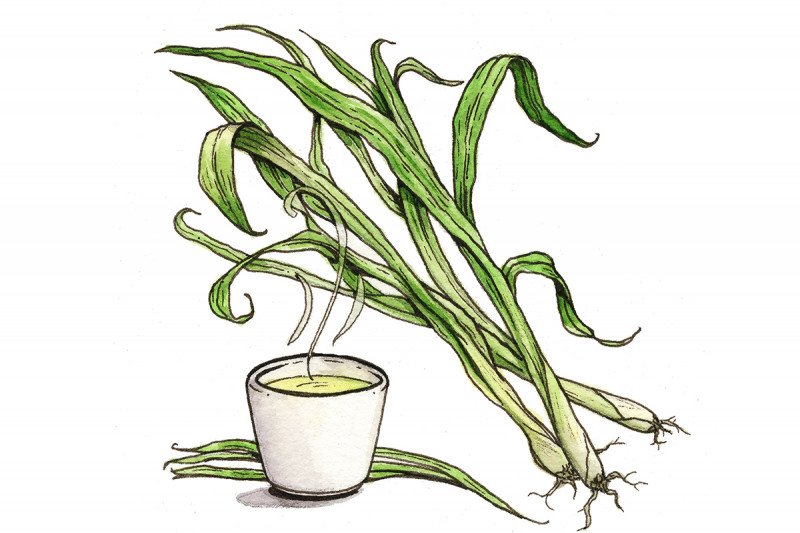
Lemongrass is used to flavor many foods and beverages. The dried leaves are used to make tea.
Purported Uses
- Anticancer
- Food flavoring
- Perfumery/Aromatherapy
- Insect repellent
- Vasorelaxation
- Sedative
- Antifungal
- Anti-inflammatory
- Anxiolytic
Constituents
Essential oil from C.citratus
Essential oil from C.flexuous
- Isointermedeol
- Geraniol
- Geranyl Acetate
- alpha-bisabolol
- Limonene
(3) (9) (11)
Mechanism of Action
The oil extracted from C. flexuous oil contains isointermedeol, which along with other constituents demonstrates anticancer activity (2) (11) by upregulating tumor necrosis factor receptor 1 leading to apoptosis through the extrinsic Fas pathway. It also increases mitochondrial expression and activation of caspase-9 via the intrinsic cell death pathway. Citral, the major constituent of C. citratus, was shown to induce glutathione S-transferase (GST) through an electrophilic interaction with glutathione (GSH) in rat liver epithelial cells. GST functions in cell detoxification by rescuing cells from oxidative damage and carcinogenic compounds (9). In human leukemia and breast cancer cells, citral induced apoptosis by inducing caspase-3 enzymatic activity (8). Cytotoxicity was noted to significantly affect the cancer cell lines, up to 90% cell death in some cases (12). This is attributed to the presence of an unsaturated aldehyde group, which is specific to the geranial isomer of citral (9).
The essential oil extract of C. citratus leaves was found to alter the onset and duration of pentylenetetrazol (PZT)-induced convulsions and potentiate sleep time possibly through GABAergic mechanisms in mice (3). It also increased seizure threshold by blocking seizure propagation (15).
Citronellol, a compound present in the essential oil of C. Citratus, demonstrated analgesic effects thought to be mediated via inhibition of peripheral mediators as well as central inhibitory mechanisms (22). C. citratus inhibits release of myeloperoxidase (a marker of inflammation) from neutrophils. It also suppresses IL-6 and IL-1alpha production in mice peritoneal macrophages (13) and inhibits COX-2 enzyme in human breast cancer cells (8).
Contraindications
- Because of its antioxidant potential, lemongrass may interfere with the actions of some chemotherapeutic agents.
- Lemongrass should be avoided during pregnancy as citral and myrcene, in high doses, can cause birth defects in rats (16) (17).
Adverse Reactions
- Dizziness, drowsiness, dry mouth, polyuria, and increased appetite (5) (7).
- In high doses, the essential oil of C.citratus can damage the liver and stomach mucosa (18).
Herb-Drug Interactions
- Citral, found in the essential oil of lemongrass, was shown to induce glutathione-S-transferase (9).
- Beta-myrcene, another constituent of lemongrass, can interfere with cytochrome P450 liver enzymes (19) (20). But lemongrass-prescription drug interactions have not been reported.
Literature Summary and Critique
Dosage (Inside MSKCC Only)
This field is only visible to only Inside MSKCC users.
References
- Ganjewala D and Luthra R. Essential oil biosynthesis and regulation in the genus Cymbopogon. Nat Prod Commun 2010;5(1):163-72.
- Sharma PR, et al. Anticancer activity of an essential oil from Cymbopogon flexuosus. Chem Biol Interact 2009; 179(2-3):160-8.
- Silva MR, et al. Comparative anticonvulsant activities of the essential oils (EOs) from Cymbopogon winterianus Jowitt and Cymbopogon citratus (DC) Stapf. in mice. Naunyn Schmiedebergs Arch Pharmacol 2010; 381(5):415-26.
- Carlini EA, et al. Pharmacology of lemongrass (Cymbopogon citratus Stapf). I. Effects of teas prepared from the leaves on laboratory animals. J Ethnopharmacol 1986; 17(1):37-64.
- Leite JR, et al. Pharmacology of lemongrass (Cymbopogon citratus Stapf). III. Assessment of eventual toxic, hypnotic and anxiolytic effects on humans. J Ethnopharmacol 1986; 17(1):75-83.
- Nerio LS, Olivero-Verbel J, Stashenko E. Repellent activity of essential oils: a review. Bioresour Technol 2010;101(1):72-8.
- Wright SC, Maree JE, Sibanyoni M. Treatment of oral thrush in HIV/AIDS patients with lemon juice and lemon grass (Cymbopogon citratus) and gentian violet. Phytomedicine 2009;16(2-3):118-24.
- Chaouki W, et al. Citral inhibits cell proliferation and induces apoptosis and cell cycle arrest in MCF-7 cells. Fundam Clin Pharmacol 2009;23(5):549-56.
- Nakamura Y, et al. A phase II detoxification enzyme inducer from lemongrass: identification of citral and involvement of electrophilic reaction in the enzyme induction. Biochem Biophys Res Commun 2003;302(3):593-600.
- Runnie I, et al. Vasorelaxation induced by common edible tropical plant extracts in isolated rat aorta and mesenteric vascular bed. J Ethnopharmacol 2004; 92(2-3):311-6.
- Kumar A, et al. An essential oil and its major constituent isointermedeol induce apoptosis by increased expression of mitochondrial cytochrome c and apical death receptors in human leukaemia HL-60 cells. Chem Biol Interact 2008; 171(3):332-47.
- Dudai N, et al. Citral is a new inducer of caspase-3 in tumor cell lines. Planta Med 2005;71(5):484-8
- Sforcin JM, et al. Lemongrass effects on IL-1beta and IL-6 production by macrophages. Nat Prod Res 2009;23(12):1151-9.
- Ernst E. Herbal remedies for anxiety - a systematic review of controlled clinical trials. Phytomedicine 2006;13(3):205-8.
- Blanco MM, et al. Neurobehavioral effect of essential oil of Cymbopogon citratus in mice. Phytomedicine 2009;16(2-3):265-70.
- Delgado IF, Carvalho RR, Nogueira AC, et al. Study on embryofoetotoxicity of b-myrcene in the rat. Food and Chemical Toxicology 1993;31(1):31-35.
- Nogueira AC, Carvalho RR, Souza CA, Chahoud I, Paumgartten FJ. Study on the embryofeto-toxicity of citral in the rat. Toxicology 1995;96(2):105-113.
- Fandohan P, Gnonlonfin B, Laleye A, et al. Toxicity and gastric tolerance of essential oils from Cymbopogon citratus , Ocimum gratissimum and Ocimum basilicum in Wistar rats. Food Chem Toxicol 2008;46(7):2493-2497.
- De-Oliveira AC, Ribeiro-Pinto LF, Paumgartten JR. In vitro inhibition of CYP2B1 monooxygenase by beta-myrcene and other monoterpenoid compounds. Toxicol Lett 1997;92(1):39-46.
- De-Oliveira AC, Ribeiro-Pinto LF, Otto SS, Goncalves A, Paumgartten FJ. Induction of liver monooxygenase by beta-myrcene. Toxicology 1997;124(2):135-140.
- Chaudhari LK, Jawale BA, Sharma S, Sharma H, Kumar CD, Kulkarni PA. Antimicrobial activity of commercially available essential oils against Streptococcus mutans. J Contemp Dent Pract.2012 Jan 1;13(1):71-4.
- Brito RG, Guimarães AG, Quintans JS, et al. Citronellol, a monoterpene alcohol, reduces nociceptive and inflammatory activities in rodents.J Nat Med. 2012 Oct;66(4):637-44.
Consumer Information
How It Works
Bottom Line: Lemongrass has antioxidant, anticancer, and antifungal properties. But it has not been studied in cancer patients.
There are over 140 species of lemongrass that are prevalent in many parts of Africa and Asia. West Indian lemongrass has been traditionally used in Brazilian folk medicine to treat anxiety, gastrointestinal problems, and to induce sleep. These effects were demonstrated in rats but not in humans. Lab studies showed that lemongrass can lower blood pressure and has anti-inflammatory and antioxidant properties. More research is needed.
Purported Uses
- Flavoring Agent
Lemongrass extract is used to flavor food and beverages.
- Perfume/Aromatherapy
Essential oils from lemongrass are commonly used in perfumes and aromatherapy.
- Anticancer
In vitro studies showed that citral, the main component of lemongrass, can cause cancer cell death. Clinical evidence is lacking.
- Insect repellent
Essential oils of lemongrass can repel insects, but the effects are not long lasting.
- Vasodilation
Lab studies suggest that lemongrass can lower blood pressure by relaxing blood vessels. Human studies are needed.
- Sedative
Animal studies have shown that lemongrass injections can produce sedative effects. However, drinking lemongrass tea does not have the same effect in humans.
- Antifungal
A clinical trial of HIV/AIDS patients with oral thrush indicated that lemongrass is an effective antifungal treatment.
- Anti-inflammatory
Lab studies showed favorable results but human data are lacking.
- Antioxidant
Studies in mice showed that lemongrass acts as an effective antioxidant; however, clinical evidence is lacking.
- Anxiolytic
Clinical studies show that lemongrass tea does not lower anxiety or produce calming effects.
Research Evidence
Fungal Infections:
Ninety HIV/AIDS patients with oral thrush were randomly assigned to receive gentian violet solution, fresh lemon juice, or lemongrass tea. Gentian violet is the standard treatment for oral thrush in South Africa. Researchers found that both fresh lemon juice and lemongrass were better than gentian violet. Large scale studies are needed to confirm these results.
Do Not Take If
You are undergoing chemotherapy, because lemongrass can act as an antioxidant and may reduce the effectiveness of some chemo agents.
You are pregnant, because citral and myrcene present in lemongrass can cause birth defects in rats.
Side Effects
- Dizziness
- Drowsiness
- Dry mouth
- Polyuria (excessive production or passage of urine)
- Increase in appetite
- In high doses, the essential oil of C.citratus can damage the liver and stomach mucosa.
Last updated: February 27, 2013
AIDS
A disease caused by the human immunodeficiency virus (HIV). People with AIDS are at an increased risk for developing certain cancers and for infections that usually occur only in individuals with a weak immune system. Also called acquired immunodeficiency syndrome.
Source: The National Cancer Institute's Dictionary of Cancer Terms
(http://www.cancer.gov/dictionary)
aldehyde (AL-deh-hide)
A type of chemical substance made from alcohol. Aldehydes are found in essential oils (scented liquid taken from plants).
Source: The National Cancer Institute's Dictionary of Cancer Terms
(http://www.cancer.gov/dictionary)
analgesic (A-nul-JEE-zik)
A drug that reduces pain. Analgesics include aspirin, acetaminophen, and ibuprofen.
Source: The National Cancer Institute's Dictionary of Cancer Terms
(http://www.cancer.gov/dictionary)
anti-inflammatory (AN-tee-in-FLA-muh-TOR-ee)
Having to do with reducing inflammation.
Source: The National Cancer Institute's Dictionary of Cancer Terms
(http://www.cancer.gov/dictionary)
antifungal (AN-tee-FUN-gul)
A drug that treats infections caused by fungi.
Source: The National Cancer Institute's Dictionary of Cancer Terms
(http://www.cancer.gov/dictionary)
antioxidant (AN-tee-OK-sih-dent)
A substance that protects cells from the damage caused by free radicals (unstable molecules made by the process of oxidation during normal metabolism). Free radicals may play a part in cancer, heart disease, stroke, and other diseases of aging. Antioxidants include beta-carotene, lycopene, vitamins A, C, and E, and other natural and manufactured substances.
Source: The National Cancer Institute's Dictionary of Cancer Terms
(http://www.cancer.gov/dictionary)
anxiety (ang-ZY-eh-tee)
Feelings of fear, dread, and uneasiness that may occur as a reaction to stress. A person with anxiety may sweat, feel restless and tense, and have a rapid heart beat. Extreme anxiety that happens often over time may be a sign of an anxiety disorder.
Source: The National Cancer Institute's Dictionary of Cancer Terms
(http://www.cancer.gov/dictionary)
apoptosis (A-pop-TOH-sis)
A type of cell death in which a series of molecular steps in a cell leads to its death. This is the body’s normal way of getting rid of unneeded or abnormal cells. The process of apoptosis may be blocked in cancer cells. Also called programmed cell death.
Source: The National Cancer Institute's Dictionary of Cancer Terms
(http://www.cancer.gov/dictionary)
appetite (A-peh-tite)
A desire to satisfy a physical or mental need, such as for food, sex, or adventure.
Source: The National Cancer Institute's Dictionary of Cancer Terms
(http://www.cancer.gov/dictionary)
aqueous (A-kwee-us)
Having to do with water.
Source: The National Cancer Institute's Dictionary of Cancer Terms
(http://www.cancer.gov/dictionary)
aromatherapy (uh-ROH-muh-THAYR-uh-pee)
A type of complementary and alternative medicine that uses plant oils that give off strong pleasant aromas (smells) to promote relaxation, a sense of well-being, and healing.
Source: The National Cancer Institute's Dictionary of Cancer Terms
(http://www.cancer.gov/dictionary)
blood (blud)
A tissue with red blood cells, white blood cells, platelets, and other substances suspended in fluid called plasma. Blood takes oxygen and nutrients to the tissues, and carries away wastes.
Source: The National Cancer Institute's Dictionary of Cancer Terms
(http://www.cancer.gov/dictionary)
blood pressure (blud PREH-sher)
The force of circulating blood on the walls of the arteries. Blood pressure is taken using two measurements: systolic (measured when the heart beats, when blood pressure is at its highest) and diastolic (measured between heart beats, when blood pressure is at its lowest). Blood pressure is written with the systolic blood pressure first, followed by the diastolic blood pressure (for example 120/80).
Source: The National Cancer Institute's Dictionary of Cancer Terms
(http://www.cancer.gov/dictionary)
breast (brest)
Glandular organ located on the chest. The breast is made up of connective tissue, fat, and breast tissue that contains the glands that can make milk. Also called mammary gland.
Source: The National Cancer Institute's Dictionary of Cancer Terms
(http://www.cancer.gov/dictionary)
breast cancer (brest KAN-ser)
Cancer that forms in tissues of the breast, usually the ducts (tubes that carry milk to the nipple) and lobules (glands that make milk). It occurs in both men and women, although male breast cancer is rare.
Source: The National Cancer Institute's Dictionary of Cancer Terms
(http://www.cancer.gov/dictionary)
cancer (KAN-ser)
A term for diseases in which abnormal cells divide without control and can invade nearby tissues. Cancer cells can also spread to other parts of the body through the blood and lymph systems. There are several main types of cancer. Carcinoma is a cancer that begins in the skin or in tissues that line or cover internal organs. Sarcoma is a cancer that begins in bone, cartilage, fat, muscle, blood vessels, or other connective or supportive tissue. Leukemia is a cancer that starts in blood-forming tissue such as the bone marrow, and causes large numbers of abnormal blood cells to be produced and enter the blood. Lymphoma and multiple myeloma are cancers that begin in the cells of the immune system. Central nervous system cancers are cancers that begin in the tissues of the brain and spinal cord. Also called malignancy.
Source: The National Cancer Institute's Dictionary of Cancer Terms
(http://www.cancer.gov/dictionary)
cell (sel)
The individual unit that makes up the tissues of the body. All living things are made up of one or more cells.
Source: The National Cancer Institute's Dictionary of Cancer Terms
(http://www.cancer.gov/dictionary)
clinical (KLIH-nih-kul)
Having to do with the examination and treatment of patients.
Source: The National Cancer Institute's Dictionary of Cancer Terms
(http://www.cancer.gov/dictionary)
clinical trial (KLIH-nih-kul TRY-ul)
A type of research study that tests how well new medical approaches work in people. These studies test new methods of screening, prevention, diagnosis, or treatment of a disease. Also called clinical study.
Source: The National Cancer Institute's Dictionary of Cancer Terms
(http://www.cancer.gov/dictionary)
compound (KOM-pownd)
In science, a substance that is made up of more than one ingredient.
Source: The National Cancer Institute's Dictionary of Cancer Terms
(http://www.cancer.gov/dictionary)
COX-2
An enzyme that speeds up the formation of substances that cause inflammation and pain. It may also cause tumor cells to grow. Some tumors have high levels of COX-2 and blocking its activity may reduce tumor growth. Also called cyclooxygenase-2 and prostaglandin-endoperoxide synthase 2.
Source: The National Cancer Institute's Dictionary of Cancer Terms
(http://www.cancer.gov/dictionary)
dietary supplement (DY-uh-TAYR-ee SUH-pleh-ment)
A product that is added to the diet. A dietary supplement is taken by mouth, and usually contains one or more dietary ingredient (such as vitamin, mineral, herb, amino acid, and enzyme). Also called nutritional supplement.
Source: The National Cancer Institute's Dictionary of Cancer Terms
(http://www.cancer.gov/dictionary)
drug (drug)
Any substance, other than food, that is used to prevent, diagnose, treat or relieve symptoms of a disease or abnormal condition. Also refers to a substance that alters mood or body function, or that can be habit-forming or addictive, especially a narcotic.
Source: The National Cancer Institute's Dictionary of Cancer Terms
(http://www.cancer.gov/dictionary)
enzyme (EN-zime)
A protein that speeds up chemical reactions in the body.
Source: The National Cancer Institute's Dictionary of Cancer Terms
(http://www.cancer.gov/dictionary)
epithelial (eh-pih-THEE-lee-ul)
Refers to the cells that line the internal and external surfaces of the body.
Source: The National Cancer Institute's Dictionary of Cancer Terms
(http://www.cancer.gov/dictionary)
essential oil (eh-SENT-shul oyl)
The scented liquid taken from certain plants using steam or pressure. Essential oils contain the natural chemicals that give the plant its “essence” (specific odor and flavor). Essential oils are used in perfumes, food flavorings, medicine, and aromatherapy.
Source: The National Cancer Institute's Dictionary of Cancer Terms
(http://www.cancer.gov/dictionary)
extract (EK-strakt)
In medicine, a preparation of a substance obtained from plants, animals, or bacteria and used as a drug or in drugs.
Source: The National Cancer Institute's Dictionary of Cancer Terms
(http://www.cancer.gov/dictionary)
gastrointestinal (GAS-troh-in-TES-tih-nul)
Refers to the stomach and intestines. Also called GI.
Source: The National Cancer Institute's Dictionary of Cancer Terms
(http://www.cancer.gov/dictionary)
glutathione (GLOO-tuh-THY-one)
A substance found in plant and animal tissues that has many functions in a cell. These include activating certain enzymes and destroying toxic compounds and chemicals that contain oxygen.
Source: The National Cancer Institute's Dictionary of Cancer Terms
(http://www.cancer.gov/dictionary)
IL-6
One of a group of related proteins made by leukocytes (white blood cells) and other cells in the body. IL-6 is made mainly by some T lymphocytes. It causes B lymphocytes to make more antibodies and also causes fever by affecting areas of the brain that control body temperature. IL-6 made in the laboratory is used as a biological response modifier to boost the immune system in cancer therapy. IL-6 is a type of cytokine. Also called interleukin-6.
Source: The National Cancer Institute's Dictionary of Cancer Terms
(http://www.cancer.gov/dictionary)
in vitro (in VEE-troh)
In the laboratory (outside the body). The opposite of in vivo (in the body).
Source: The National Cancer Institute's Dictionary of Cancer Terms
(http://www.cancer.gov/dictionary)
infusion (in-FYOO-zhun)
A method of putting fluids, including drugs, into the bloodstream. Also called intravenous infusion.
Source: The National Cancer Institute's Dictionary of Cancer Terms
(http://www.cancer.gov/dictionary)
isomer (I-soh-mer)
One of two or more compounds that have the same chemical formula but different arrangements of the atoms within the molecules and that may have different physical/chemical properties.
Source: The National Cancer Institute's Dictionary of Cancer Terms
(http://www.cancer.gov/dictionary)
lemon (LEH-mun)
A small, yellow citrus fruit that is a source of citric acid and ascorbic acid (vitamin C). The juice is used to flavor food and drink and to prevent scurvy. Lemon oil (scented liquid taken from the peel) is used in aromatherapy. The scientific name of the lemon tree is .
Source: The National Cancer Institute's Dictionary of Cancer Terms
(http://www.cancer.gov/dictionary)
leukemia (loo-KEE-mee-uh)
Cancer that starts in blood-forming tissue such as the bone marrow and causes large numbers of blood cells to be produced and enter the bloodstream.
Source: The National Cancer Institute's Dictionary of Cancer Terms
(http://www.cancer.gov/dictionary)
liver (LIH-ver)
A large organ located in the upper abdomen. The liver cleanses the blood and aids in digestion by secreting bile.
Source: The National Cancer Institute's Dictionary of Cancer Terms
(http://www.cancer.gov/dictionary)
marker (MAR-ker)
A diagnostic indication that disease may develop.
Source: The National Cancer Institute's Dictionary of Cancer Terms
(http://www.cancer.gov/dictionary)
medicine (MEH-dih-sin)
Refers to the practices and procedures used for the prevention, treatment, or relief of symptoms of a diseases or abnormal conditions. This term may also refer to a legal drug used for the same purpose.
Source: The National Cancer Institute's Dictionary of Cancer Terms
(http://www.cancer.gov/dictionary)
mucosa (myoo-KOH-suh)
The moist, inner lining of some organs and body cavities (such as the nose, mouth, lungs, and stomach). Glands in the mucosa make mucus (a thick, slippery fluid). Also called mucous membrane.
Source: The National Cancer Institute's Dictionary of Cancer Terms
(http://www.cancer.gov/dictionary)
necrosis (neh-KROH-sis)
Refers to the death of living tissues.
Source: The National Cancer Institute's Dictionary of Cancer Terms
(http://www.cancer.gov/dictionary)
oral (OR-ul)
By or having to do with the mouth.
Source: The National Cancer Institute's Dictionary of Cancer Terms
(http://www.cancer.gov/dictionary)
peritoneal (PAYR-ih-toh-NEE-ul)
Having to do with the parietal peritoneum (the tissue that lines the abdominal wall and pelvic cavity) and visceral peritoneum (the tissue that covers most of the organs in the abdomen, including the intestines).
Source: The National Cancer Institute's Dictionary of Cancer Terms
(http://www.cancer.gov/dictionary)
receptor (reh-SEP-ter)
A molecule inside or on the surface of a cell that binds to a specific substance and causes a specific physiologic effect in the cell.
Source: The National Cancer Institute's Dictionary of Cancer Terms
(http://www.cancer.gov/dictionary)
sedative (SEH-duh-tiv)
A drug or substance used to calm a person down, relieve anxiety, or help a person sleep.
Source: The National Cancer Institute's Dictionary of Cancer Terms
(http://www.cancer.gov/dictionary)
seizure (SEE-zher)
Sudden, uncontrolled body movements and changes in behavior that occur because of abnormal electrical activity in the brain. Symptoms include loss of awareness, changes in emotion, loss of muscle control, and shaking. Seizures may be caused by drugs, high fevers, head injuries, and certain diseases, such as epilepsy.
Source: The National Cancer Institute's Dictionary of Cancer Terms
(http://www.cancer.gov/dictionary)
stomach (STUH-muk)
An organ that is part of the digestive system. The stomach helps digest food by mixing it with digestive juices and churning it into a thin liquid.
Source: The National Cancer Institute's Dictionary of Cancer Terms
(http://www.cancer.gov/dictionary)
thrush (thrush)
A condition in which Candida albicans, a type of yeast, grows out of control in moist skin areas of the body. It is usually a result of a weakened immune system, but can be a side effect of chemotherapy or treatment with antibiotics. Thrush usually affects the mouth (oral thrush); however, rarely, it spreads throughout the entire body. Also called candidiasis and candidosis.
Source: The National Cancer Institute's Dictionary of Cancer Terms
(http://www.cancer.gov/dictionary)
toxicology (TOK-sih-KAH-loh-jee)
The study of poisons, including the source, effect, and treatment of poisoning. It is a branch of pharmacology (the study of drugs).
Source: The National Cancer Institute's Dictionary of Cancer Terms
(http://www.cancer.gov/dictionary)
tumor (TOO-mer)
An abnormal mass of tissue that results when cells divide more than they should or do not die when they should. Tumors may be benign (not cancer), or malignant (cancer). Also called neoplasm.
Source: The National Cancer Institute's Dictionary of Cancer Terms
(http://www.cancer.gov/dictionary)