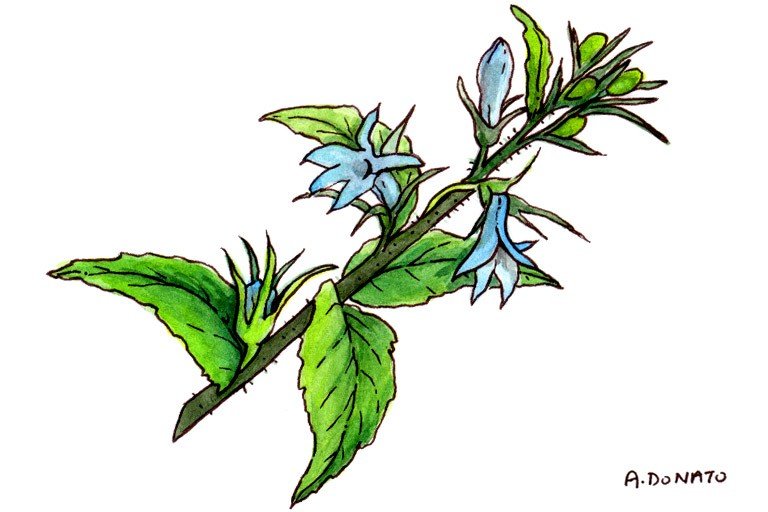
Health Care Professional Information
Common Name
Lobella, asthma weed, eyebright, gagroot, Indian pink, Indian tobacco, pukeweed, vomit weed, Lobelia berlandieri, Lobelia cardinalis
Clinical Summary
Derived from the aerial parts of the plant. Patients use lobelia for smoking cessation and to treat asthma and depression. The piperidine alkaloids are thought responsible for lobelia's activity. In vitro and animal studies show that lobeline crosses the blood-brain barrier, has activity similar to that of nicotine, and stimulates the release of dopamine and norepinephrine (5). At low doses lobelia has stimulant effects, but higher doses result in CNS depression (10).
Lobeline, a piperidine alkaloid, was shown to reverse multidrug resistance of tumor cells to doxorubicin (16); reduce alcohol consumption (17) and exert antidepressant effects (19) in mice.
Clinical studies of lobelia do not support its use for smoking cessation (15) (18) (20).
Purported Uses
- Asthma
- Depression
- Drug withdrawal symptoms
- Induce vomiting
- Inflammation
- Smoking cessation
Constituents
- Alkaloids: Lobeline, lobelanine, lobelanidine
- Beta-amyrin palmitate
(1)
Mechanism of Action
Lobelia has central stimulant activity, dilates bronchioles, and increases respiration rate at low doses, but higher doses cause CNS and respiratory depression (10). In rat and mouse models lobeline increases dopamine release from striatal synaptosomes, increases norepinephrine release from the hippocampus (5), and binds extensively to nicotinic receptors both centrally and peripherally (4). In vitro, lobeline redistributes dopamine pools in presynaptic vesicles and antagonizes their release following amphetamine stimulation. Lobeline can have both antagonistic and synergistic effects when combined with nicotine and does not induce receptor up-regulation as seen with nicotine (10). Intravenous administration of approximately 12 mcg/kg lobeline to healthy human subjects resulted in cough, apnea, prolonged inspiration and expiratory pause, the feeling of choking, and pressure in the throat and chest (9). Animal studies suggest that beta-amyrin palmitate stimulates the release of norepinephrine in the brain, possibly leading to an antidepressant effect (1).
Pharmacokinetics
Lobeline, an extract from Lobelia inflata, has high lipophilicity, crosses the blood brain barrier, and distributes widely throughout the body. Additional pharmacokinetic data are not available.
(11)
Literature Summary and Critique
Dosage (Inside MSKCC Only)
This field is only visible to only Inside MSKCC users.
References
- Subarnas A, et al. A possible mechanism of antidepressant activity of beta-amyrin palmitate isolated from lobelia inflata leaves in the forced swimming test. Life Sci 1993;52:289-96.
- Fetrow CW, et al. Professional's Handbook of Complementary and Alternative Medicines. Philadelphia: Springhouse; 1999.
- Foster S, et al. Tyler's Honest Herbal: A Sensible Guide to the Use of Herbs and Related Remedies. New York: Haworth Herbal Press; 1999.
- Damaj MI, et al. Pharmacology of lobeline, a nicotinic receptor ligand. J Pharmacol Exp Ther 1997;282:410-9.
- Santha E, et al. Multiple cellular mechanisms mediate the effect of lobeline on the release of norepinephrine. J Pharmacol Exp Ther 2000;294:302-7.
- Miller DK, et al. Lobeline inhibits the neurochemical and behavioral effects of amphetamine. J Pharmacol Exp Ther 2001;296:1023-34.
- Decker MW, Majchrzak MJ, Arneric SP. Effects of lobeline, a nicotinic receptor agonist, on learning and memory. Pharmacol Biochem Behav 1993;45:571-6.
- Subarnas A, et al. An antidepressant principle of Lobelia inflata L. (Campanulaceae). J Pharm Sci 1992;81:620-1.
- Raj H, et al. Sensory origin of lobeline-induced sensations: a correlative study in man and cat. J Physiol 1995;482:235-46.
- Terry AV Jr, et al. Lobeline and structurally simplified analogs exhibit differential agonist activity and sensitivity to antagonist blockade when compared to nicotine. Neuropharmacology 1998;37:93-102.
- Reavill C, et al. Behavioural and pharmacokinetic studies on nicotine, cytisine and lobeline. Neuropharmacology 1990;29:619-24.
- Brinker F. Herb Contraindications and Drug Interactions, 3rd ed. Sandy (OR): Eclectic Medical Publications; 2001.
- Dwoskin LP, Crooks PA. A novel mechanism of action and potential use for lobeline as a treatment for psychostimulant abuse. Biochem Pharmacol 2002;63:89-98.
- McChargue DE, Collins FL Jr, Cohen LM. Effect of non-nicotinic moist snuff replacement and lobeline on withdrawal symptoms during 48-h smokeless tobacco deprivation. Nicotine Tob Res 2002;4:195-200.
- Stead LF, Hughes JR. Lobeline for smoking cessation. Cochrane Database Syst Rev 2002;(2):CD000124.
- Ma Y, Wink M. Lobeline, a piperidine alkaloid from Lobelia can reverse P-gp dependent multidrug resistance in tumor cells. Phytomedicine. 2008 Sep;15(9):754-8.
- Farook JM, Lewis B, Gaddis JG, Littleton JM, Barron S. Lobeline, a nicotinic partial agonist attenuates alcohol consumption and preference in male C57BL/6J mice. Physiol Behav. 2009 Jun 22;97(3-4):503-6.
- Glover ED, Rath JM, Sharma E, et al. A multicenter phase 3 trial of lobeline sulfate for smoking cessation. Am J Health Behav. 2010 Jan-Feb;34(1):101-9.
- Roni MA, Rahman S. Antidepressant-like effects of lobeline in mice: Behavioral, neurochemical, and neuroendocrine evidence. Prog Neuropsychopharmacol Biol Psychiatry. 2012 Nov 29. [Epub ahead of print]
- Stead LF, Hughes JR. Lobeline for smoking cessation. Cochrane Database Syst Rev. 2012 Feb 15;2:CD000124.
Consumer Information
How It Works
Bottom Line: Current evidence shows that lobelia is not effective for smoking cessation, asthma, or any other medical condition.
The active compound in lobelia is lobeline. Lobeline has a similar activity in the body to nicotine, which explains its common use as an aid in smoking cessation. Like nicotine, lobelia stimulates the central nervous system (CNS), dilates the lung passageways, and increases respiration rate. However, at higher doses, lobelia has the opposite effect and causes CNS depression and reduced breathing rate. In experiments with rats and mice, lobeline increased the release of stimulatory neurotransmitters (dopamine and norepinephrine) from specific parts of the brain, but it is still unclear what significance this has in the human body. Strangely, lobeline can have both additive and antagonistic effects when used at the same time as nicotine.
Purported Uses
- To treat asthma
Although lobelia is thought to dilate the bronchial tubes, human data are lacking.
- To treat depression
Lobelia causes release of excitatory neurotransmitters in the brains of research animals. Human studies are needed.
- To relieve symptoms from drug withdrawal
No scientific evidence supports this use.
- To induce vomiting
There is no research to back this claim.
- To reduce inflammation
No scientific evidence supports this use.
- To help with smoking cessation
A review of 16 clinical trials concluded that this herb is not effective for smoking cessation.
Research Evidence
Smoking cessation:
A systematic review of 16 separate clinical trials was performed to determine the usefulness of lobeline for smoking cessation. All of the clinical trials had flaws in their design, and none followed patients for more than two weeks in order to evaluate the long-term safety and effectiveness of lobeline. The reviewers concluded that there is no evidence to support the hypothesis that lobelia is effective for smoking cessation.
Do Not Take If
- You are using nicotine-containing products (Lobelia may have additive effects, resulting in toxicity).
Last updated: March 5, 2013
addiction (uh-DIK-shun)
Uncontrollable craving, seeking, and use of a substance such as a drug or alcohol.
Source: The National Cancer Institute's Dictionary of Cancer Terms
(http://www.cancer.gov/dictionary)
administration (ad-MIH-nih-STRAY-shun)
In medicine, the act of giving a treatment, such as a drug, to a patient. It can also refer to the way it is given, the dose, or how often it is given.
Source: The National Cancer Institute's Dictionary of Cancer Terms
(http://www.cancer.gov/dictionary)
alcohol (AL-kuh-hol)
A chemical substance found in beer, wine, and liquor, and some medicines, mouthwashes, household products, and essential oils (scented liquid taken from plants). Alcohol contains a carbon atom attached to a hydroxyl group (a molecule made of an oxygen atom and a hydrogen atom).
Source: The National Cancer Institute's Dictionary of Cancer Terms
(http://www.cancer.gov/dictionary)
alkaloid (AL-kuh-loyd)
A member of a large group of substances found in plants and in some fungi. Alkaloids contain nitrogen and can be made in the laboratory. Nicotine, caffeine, codeine, and vincristine are alkaloids. Some alkaloids, such as vincristine, are used to treat cancer.
Source: The National Cancer Institute's Dictionary of Cancer Terms
(http://www.cancer.gov/dictionary)
antidepressant (AN-tee-dee-PREH-sunt)
A drug used to treat depression.
Source: The National Cancer Institute's Dictionary of Cancer Terms
(http://www.cancer.gov/dictionary)
bronchial (BRON-kee-ul)
Having to do with the bronchi, which are the larger air passages of the lungs, including those that lead from the trachea (windpipe) to the lungs and those within the lungs.
Source: The National Cancer Institute's Dictionary of Cancer Terms
(http://www.cancer.gov/dictionary)
central nervous system (SEN-trul NER-vus SIS-tem)
The brain and spinal cord. Also called CNS.
Source: The National Cancer Institute's Dictionary of Cancer Terms
(http://www.cancer.gov/dictionary)
clinical (KLIH-nih-kul)
Having to do with the examination and treatment of patients.
Source: The National Cancer Institute's Dictionary of Cancer Terms
(http://www.cancer.gov/dictionary)
clinical trial (KLIH-nih-kul TRY-ul)
A type of research study that tests how well new medical approaches work in people. These studies test new methods of screening, prevention, diagnosis, or treatment of a disease. Also called clinical study.
Source: The National Cancer Institute's Dictionary of Cancer Terms
(http://www.cancer.gov/dictionary)
CNS
The brain and spinal cord. Also called central nervous system.
Source: The National Cancer Institute's Dictionary of Cancer Terms
(http://www.cancer.gov/dictionary)
compound (KOM-pownd)
In science, a substance that is made up of more than one ingredient.
Source: The National Cancer Institute's Dictionary of Cancer Terms
(http://www.cancer.gov/dictionary)
depression (dee-PREH-shun)
A mental condition marked by ongoing feelings of sadness, despair, loss of energy, and difficulty dealing with normal daily life. Other symptoms of depression include feelings of worthlessness and hopelessness, loss of pleasure in activities, changes in eating or sleeping habits, and thoughts of death or suicide. Depression can affect anyone, and can be successfully treated. Depression affects 15-25% of cancer patients.
Source: The National Cancer Institute's Dictionary of Cancer Terms
(http://www.cancer.gov/dictionary)
dilate (DY-layt)
To widen or enlarge an opening or hollow structure beyond its usual size, such as the pupil of the eye or a blood vessel.
Source: The National Cancer Institute's Dictionary of Cancer Terms
(http://www.cancer.gov/dictionary)
doxorubicin (DOK-soh-ROO-bih-sin)
A drug that is used to treat many types of cancer and is being studied in the treatment of other types of cancer. Doxorubicin comes from the bacterium . It damages DNA and may kill cancer cells. It is a type of anthracycline antitumor antibiotic. Also called Adriamycin PFS, Adriamycin RDF, doxorubicin hydrochloride, hydroxydaunorubicin, and Rubex.
Source: The National Cancer Institute's Dictionary of Cancer Terms
(http://www.cancer.gov/dictionary)
drug (drug)
Any substance, other than food, that is used to prevent, diagnose, treat or relieve symptoms of a disease or abnormal condition. Also refers to a substance that alters mood or body function, or that can be habit-forming or addictive, especially a narcotic.
Source: The National Cancer Institute's Dictionary of Cancer Terms
(http://www.cancer.gov/dictionary)
follow-up (FAH-loh-up)
Monitoring a person's health over time after treatment. This includes keeping track of the health of people who participate in a clinical study or clinical trial for a period of time, both during the study and after the study ends.
Source: The National Cancer Institute's Dictionary of Cancer Terms
(http://www.cancer.gov/dictionary)
herbal (ER-bul)
Having to do with plants.
Source: The National Cancer Institute's Dictionary of Cancer Terms
(http://www.cancer.gov/dictionary)
hypothesis (hy-PAH-theh-sis)
A tentative proposal made to explain certain observations or facts that requires further investigation to be verified.
Source: The National Cancer Institute's Dictionary of Cancer Terms
(http://www.cancer.gov/dictionary)
in vitro (in VEE-troh)
In the laboratory (outside the body). The opposite of in vivo (in the body).
Source: The National Cancer Institute's Dictionary of Cancer Terms
(http://www.cancer.gov/dictionary)
intravenous (IN-truh-VEE-nus)
Into or within a vein. Intravenous usually refers to a way of giving a drug or other substance through a needle or tube inserted into a vein. Also called IV.
Source: The National Cancer Institute's Dictionary of Cancer Terms
(http://www.cancer.gov/dictionary)
lobeline (LOH-beh-leen)
A substance that comes from a plant known as Indian tobacco, which is different from the tobacco used to make smoking products. It has been studied as a way to help people stop smoking. It is a type of alkaloid.
Source: The National Cancer Institute's Dictionary of Cancer Terms
(http://www.cancer.gov/dictionary)
lung (lung)
One of a pair of organs in the chest that supplies the body with oxygen, and removes carbon dioxide from the body.
Source: The National Cancer Institute's Dictionary of Cancer Terms
(http://www.cancer.gov/dictionary)
multidrug resistance (MUL-tee-... reh-ZIH-stunts)
Adaptation of tumor cells to anticancer drugs in ways that make the drugs less effective.
Source: The National Cancer Institute's Dictionary of Cancer Terms
(http://www.cancer.gov/dictionary)
nicotine (NIH-kuh-TEEN)
An addictive, poisonous chemical found in tobacco. It can also be made in the laboratory. When it enters the body, nicotine causes an increased heart rate and use of oxygen by the heart, and a sense of well-being and relaxation. It is also used as an insecticide.
Source: The National Cancer Institute's Dictionary of Cancer Terms
(http://www.cancer.gov/dictionary)
norepinephrine (NOR-eh-pih-NEH-frin)
A chemical made by some nerve cells and in the adrenal gland. It can act as both a neurotransmitter (a chemical messenger used by nerve cells) and a hormone (a chemical that travels in the blood and controls the actions of other cells or organs). Norepinephrine is released from the adrenal gland in response to stress and low blood pressure. Also called noradrenaline.
Source: The National Cancer Institute's Dictionary of Cancer Terms
(http://www.cancer.gov/dictionary)
PA
A health professional who is licensed to do certain medical procedures under the guidance of a doctor. A PA may take medical histories, do physical exams, take blood and urine samples, care for wounds, and give injections and immunizations. Also called physician assistant.
Source: The National Cancer Institute's Dictionary of Cancer Terms
(http://www.cancer.gov/dictionary)
randomized
Describes an experiment or clinical trial in which animal or human subjects are assigned by chance to separate groups that compare different treatments.
Source: The National Cancer Institute's Dictionary of Cancer Terms
(http://www.cancer.gov/dictionary)
receptor (reh-SEP-ter)
A molecule inside or on the surface of a cell that binds to a specific substance and causes a specific physiologic effect in the cell.
Source: The National Cancer Institute's Dictionary of Cancer Terms
(http://www.cancer.gov/dictionary)
stimulant (STIM-yoo-lunt)
In medicine, a family of drugs used to treat depression, attention-deficit disorder (a common disorder in which children are inattentive, impulsive, and/or over-active), and narcolepsy (a sleep disorder that causes uncontrollable sleepiness). Stimulants increase brain activity, alertness, attention, and energy. They also raise blood pressure and increase heart rate and breathing rate.
Source: The National Cancer Institute's Dictionary of Cancer Terms
(http://www.cancer.gov/dictionary)
synergistic (SIH-ner-JIS-tik)
In medicine, describes the interaction of two or more drugs when their combined effect is greater than the sum of the effects seen when each drug is given alone.
Source: The National Cancer Institute's Dictionary of Cancer Terms
(http://www.cancer.gov/dictionary)
throat (throte)
The hollow tube inside the neck that starts behind the nose and ends at the top of the trachea (windpipe) and esophagus (the tube that goes to the stomach). The throat is about 5 inches long, depending on body size. Also called pharynx.
Source: The National Cancer Institute's Dictionary of Cancer Terms
(http://www.cancer.gov/dictionary)
tobacco (tuh-BA-koh)
A plant with leaves that have high levels of the addictive chemical nicotine. The leaves may be smoked (in cigarettes, cigars, and pipes), applied to the gums (as dipping and chewing tobacco), or inhaled (as snuff). Tobacco leaves also contain many cancer-causing chemicals, and tobacco use and exposure to secondhand tobacco smoke have been linked to many types of cancer and other diseases. The scientific name is .
Source: The National Cancer Institute's Dictionary of Cancer Terms
(http://www.cancer.gov/dictionary)
tumor (TOO-mer)
An abnormal mass of tissue that results when cells divide more than they should or do not die when they should. Tumors may be benign (not cancer), or malignant (cancer). Also called neoplasm.
Source: The National Cancer Institute's Dictionary of Cancer Terms
(http://www.cancer.gov/dictionary)