Tell your healthcare providers about any dietary supplements you’re taking, such as herbs, vitamins, minerals, and natural or home remedies. This will help them manage your care and keep you safe.
Maroon bush has not been studied in humans.
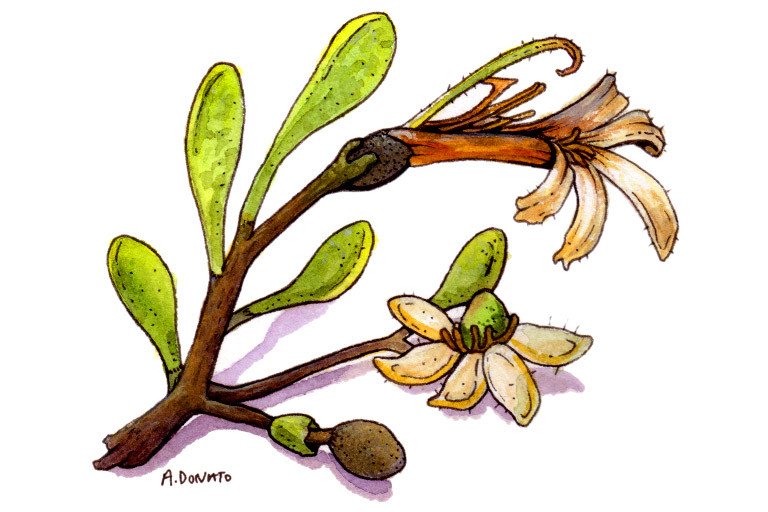
Maroon bush is a plant native to Australia where it is used in traditional medicine for colds, stomach ailments, and as a diuretic by the Aboriginal people. Lab studies have shown that it has antibacterial and antiviral activities, but it is not known whether it has anticancer effects in humans.
Ulcers
Evidence is lacking to support this claim.
Stomach ache
Evidence is lacking to support this claim.
Colds
Although used in traditional medicine, evidence is lacking to support this claim.
Cancer
Although believed to have anticancer effects, evidence is lacking to support this claim.
Diuretic
Maroon bush is used in traditional medicine as a diuretic, but evidence is lacking to support this claim.
For Healthcare Professionals
Scaevola spinescens
Maroon bush is a plant native to Australia where it is used in traditional medicine for colds, stomach ailments, and as a diuretic by the Aboriginal people. Flavonoids, tannins, alkaloids, anthraquinones, polysteroids, saponins, cardiac glycosides and phenolic compounds are among the constituents found in maroon bush (2)(3).
In vitro, the plant extracts demonstrated antibacterial and antiviral properties without toxic effects (1)(2). Infusions made from the leaves and branches are thought to have anticancer effects, leading to heightened interest in this plant as an alternative cancer treatment. However, human studies have yet to be conducted.