Health Care Professional Information
Brand Name
Biobran®, Lentin Plus 1000
Clinical Summary
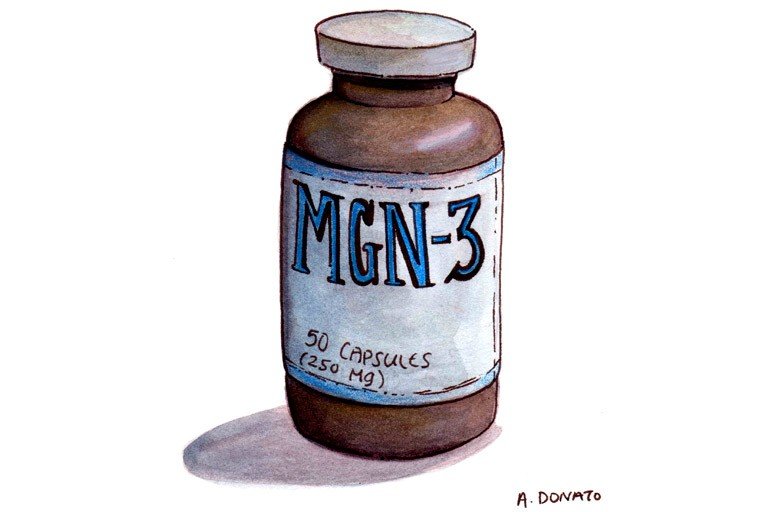
MGN-3 is a proprietary product derived from rice bran. Promoters of MGN-3 claim that it improves immune function against cancer and AIDS. Polysaccharides are the primary ingredients and are thought to increase the levels of TNF-alpha and IFN-gamma secretion, and augment natural killer (NK) cell function in vitro (3). In vitro and studies in mice have shown that MGN-3 facilitates apoptosis of human T cell leukemia cells (6), sensitizes human breast cancer cells to a chemo drug (7), and protects against cisplatin-induced weight loss (8).
Improved immunomodulatory function was observed with use of MGN-3 in a small study of cancer patients (5). In another study on patients with liver cancer, MGN-3 increased overall response and reduced adverse effects of standard therapies (1). Further research is warranted. MGN-3 did not improve symptoms of chronic fatigue syndrome (9).
No adverse effects have been reported following consumption of MGN-3.
Constituents
Main ingredients
- Rice bran, enzymatically treated with extracts from shiitake (Lentinus edodes), kawaratake (Coriolus versicolor), and suehirotake (Schizophyllum commune) mushrooms
Other ingredients
- Beet root fiber
- Calcium phosphate
- Silica
- Magnesium stearate
Mechanism of Action
MGN-3 is an arabinoxylan from rice bran made using enzymes from mycelia of shiitake, kawaratake and suehirotake mushrooms. MGN-3 is claimed to cause an overall increase of the immune system, such as natural killer cell activity, increase gamma interferon and tumor necrosis factor-alpha, and to act synergistically with interleukin-2, which also increases natural killer cell activity (2).
Literature Summary and Critique
Dosage (Inside MSKCC Only)
This field is only visible to only Inside MSKCC users.
References
- Bang MH, Van Riep T, Thinh NT, et al. Arabinoxylan rice bran (MGN-3) enhances the effects of interventional therapies for the treatment of hepatocellular carcinoma: a three-year randomized clinical trial. Anticancer Res. 2010 Dec;30(12):5145-51.
- Ghoneum MH, Maeda H. Immunopotentiator and method of manufacturing the same (Arabinoxylane Compound). U.S. Patent #5560914. Filed July 12, 1995.
- Ghoneum M, Jewett A. Production of tumor necrosis factor-alpha and interferon-gamma from human peripheral blood lymphocytes by MGN-3, a modified arabinoxylan from rice bran, and its synergy with interleukin-2 in vitro. Cancer Prev 2000;24:314.
- Ghoneum M. Anti-HIV activity in vitro of MGN-3, an activated arabinoxylane from rice bran. Biochem Biophys Res Commun 1998;243:25.
- Ghoneum M. NK Immunomodulatory function in 27 cancer patients by MGN-3. Abstract, 87th Annual Meeting of the American Association for Cancer Research. April 20-24, 1996.
- Ghoneum M, Sastry G. Modified arabinoxylan rice bran (MGN-3/Biobran) sensitizes human T cell leukemia cells to death receptor (CD95)-induced apoptosis. Cancer Letters 2003;201:41-49.
- Gollapudi S, Ghoneum M. MGN-3/Biobran, modified arabinoxylan from rice bran, sensitizes human breast cancer cells to chemotherapeutic agent, daunorubicin. Cancer Detect Prev 2008;32(1):1-6.
- Endo Y, Kanbayashi H. Modified rice bran beneficial for weight loss of mice as a major and acute adverse effect of Cisplatin. Pharmacol Toxicol. 2003 Jun;92(6):300-3.
- McDermott C, Richards SC, Thomas PW, Montgomery J, Lewith G. A placebo-controlled, double-blind, randomized controlled trial of a natural killer cell stimulant (BioBran MGN-3) in chronic fatigue syndrome. QJM. 2006 Jul;99(7):461-8.
Consumer Information
How It Works
Bottom Line: MGN-3 has not been shown to prevent cancer, HIV or any other medical condition.
MGN-3 is a complex sugar derived from rice bran treated with extracts from three mushrooms: Shiitake, Coriolus versicolor, and Suehirotake. The manufacturer claims that it stimulates several aspects of the immune system, causing an overall immune stimulation. Laboratory studies show that MGN-3 can cause cell death in some cancer cells and increase their susceptibility to chemo drugs. It may improve the response and reduce the side effects of standard therapies in liver cancer patients, but more studies are needed.
Purported Uses
- To treat cancer
A clinical study shows MGN-3 may improve the response of standard therapies in liver cancer patients. However, there is no evidence that it can be used as a treatment alone. More studies are needed.
- To prevent and treat chemotherapy side effects
A study suggests MGN-3 can reduce the side effects of standard therapies in liver cancer patients. More studies are needed.
- To stimulate the immune system
The manufacturers of MGN-3 claim that it stimulates immune cells in laboratory studies and in a small group of cancer patients. More research is needed.
- To treat chronic fatigue syndrome
A clinical study did not find MGN-3 effective in treating chronic fatigue syndrome.
Side Effects
- No side effects have been reported.
Last updated: March 11, 2013
alpha-fetoprotein (AL-fuh-FEE-toh-PROH-teen)
A protein normally produced by a fetus. AFP levels are usually undetectable in the blood of healthy adult men or women (who are not pregnant). An elevated level of AFP suggests the presence of either a primary liver cancer or germ cell tumor. Also called AFP.
Source: The National Cancer Institute's Dictionary of Cancer Terms
(http://www.cancer.gov/dictionary)
apoptosis (A-pop-TOH-sis)
A type of cell death in which a series of molecular steps in a cell leads to its death. This is the body’s normal way of getting rid of unneeded or abnormal cells. The process of apoptosis may be blocked in cancer cells. Also called programmed cell death.
Source: The National Cancer Institute's Dictionary of Cancer Terms
(http://www.cancer.gov/dictionary)
breast (brest)
Glandular organ located on the chest. The breast is made up of connective tissue, fat, and breast tissue that contains the glands that can make milk. Also called mammary gland.
Source: The National Cancer Institute's Dictionary of Cancer Terms
(http://www.cancer.gov/dictionary)
calcium (KAL-see-um)
A mineral needed for healthy teeth, bones, and other body tissues. It is the most common mineral in the body. A deposit of calcium in body tissues, such as breast tissue, may be a sign of disease.
Source: The National Cancer Institute's Dictionary of Cancer Terms
(http://www.cancer.gov/dictionary)
cancer (KAN-ser)
A term for diseases in which abnormal cells divide without control and can invade nearby tissues. Cancer cells can also spread to other parts of the body through the blood and lymph systems. There are several main types of cancer. Carcinoma is a cancer that begins in the skin or in tissues that line or cover internal organs. Sarcoma is a cancer that begins in bone, cartilage, fat, muscle, blood vessels, or other connective or supportive tissue. Leukemia is a cancer that starts in blood-forming tissue such as the bone marrow, and causes large numbers of abnormal blood cells to be produced and enter the blood. Lymphoma and multiple myeloma are cancers that begin in the cells of the immune system. Central nervous system cancers are cancers that begin in the tissues of the brain and spinal cord. Also called malignancy.
Source: The National Cancer Institute's Dictionary of Cancer Terms
(http://www.cancer.gov/dictionary)
carcinoma (KAR-sih-NOH-muh)
Cancer that begins in the skin or in tissues that line or cover internal organs.
Source: The National Cancer Institute's Dictionary of Cancer Terms
(http://www.cancer.gov/dictionary)
cell (sel)
The individual unit that makes up the tissues of the body. All living things are made up of one or more cells.
Source: The National Cancer Institute's Dictionary of Cancer Terms
(http://www.cancer.gov/dictionary)
chemotherapy (KEE-moh-THAYR-uh-pee)
Treatment with drugs that kill cancer cells.
Source: The National Cancer Institute's Dictionary of Cancer Terms
(http://www.cancer.gov/dictionary)
chronic (KRAH-nik)
A disease or condition that persists or progresses over a long period of time.
Source: The National Cancer Institute's Dictionary of Cancer Terms
(http://www.cancer.gov/dictionary)
chronic fatigue syndrome (KRAH-nik fuh-TEEG SIN-drome)
A condition that lasts for more than 6 months in which a person feels tired most of the time. They may also have trouble concentrating and carrying out daily activities. Other symptoms include sore throat, fever, muscle weakness, headache, and joint pain. Also called CFS.
Source: The National Cancer Institute's Dictionary of Cancer Terms
(http://www.cancer.gov/dictionary)
clinical (KLIH-nih-kul)
Having to do with the examination and treatment of patients.
Source: The National Cancer Institute's Dictionary of Cancer Terms
(http://www.cancer.gov/dictionary)
clinical study (KLIH-nih-kul STUH-dee)
A type of research study that tests how well new medical approaches work in people. These studies test new methods of screening, prevention, diagnosis, or treatment of a disease. Also called clinical trial.
Source: The National Cancer Institute's Dictionary of Cancer Terms
(http://www.cancer.gov/dictionary)
cytotoxic (SY-toh-TOK-sik)
Cell-killing.
Source: The National Cancer Institute's Dictionary of Cancer Terms
(http://www.cancer.gov/dictionary)
drug (drug)
Any substance, other than food, that is used to prevent, diagnose, treat or relieve symptoms of a disease or abnormal condition. Also refers to a substance that alters mood or body function, or that can be habit-forming or addictive, especially a narcotic.
Source: The National Cancer Institute's Dictionary of Cancer Terms
(http://www.cancer.gov/dictionary)
fatigue (fuh-TEEG)
A condition marked by extreme tiredness and inability to function due lack of energy. Fatigue may be acute or chronic.
Source: The National Cancer Institute's Dictionary of Cancer Terms
(http://www.cancer.gov/dictionary)
HIV
The cause of acquired immunodeficiency syndrome (AIDS). Also called human immunodeficiency virus.
Source: The National Cancer Institute's Dictionary of Cancer Terms
(http://www.cancer.gov/dictionary)
immune system (ih-MYOON SIS-tem)
The complex group of organs and cells that defends the body against infections and other diseases.
Source: The National Cancer Institute's Dictionary of Cancer Terms
(http://www.cancer.gov/dictionary)
in vitro (in VEE-troh)
In the laboratory (outside the body). The opposite of in vivo (in the body).
Source: The National Cancer Institute's Dictionary of Cancer Terms
(http://www.cancer.gov/dictionary)
interleukin (in-ter-LOO-kin)
One of a group of related proteins made by leukocytes (white blood cells) and other cells in the body. Interleukins regulate immune responses. Interleukins made in the laboratory are used as biological response modifiers to boost the immune system in cancer therapy. An interleukin is a type of cytokine. Also called IL.
Source: The National Cancer Institute's Dictionary of Cancer Terms
(http://www.cancer.gov/dictionary)
leukemia (loo-KEE-mee-uh)
Cancer that starts in blood-forming tissue such as the bone marrow and causes large numbers of blood cells to be produced and enter the bloodstream.
Source: The National Cancer Institute's Dictionary of Cancer Terms
(http://www.cancer.gov/dictionary)
liver (LIH-ver)
A large organ located in the upper abdomen. The liver cleanses the blood and aids in digestion by secreting bile.
Source: The National Cancer Institute's Dictionary of Cancer Terms
(http://www.cancer.gov/dictionary)
liver cancer (LIH-ver KAN-ser)
Primary liver cancer is cancer that forms in the tissues of the liver. Secondary liver cancer is cancer that spreads to the liver from another part of the body.
Source: The National Cancer Institute's Dictionary of Cancer Terms
(http://www.cancer.gov/dictionary)
M
In chemistry, M is the amount of a substance that has 6.023 x 10(23) atoms or molecules of that substance. Also called mole (chemical).
Source: The National Cancer Institute's Dictionary of Cancer Terms
(http://www.cancer.gov/dictionary)
magnesium (mag-NEE-zee-um)
In medicine, a mineral used by the body to help maintain muscles, nerves, and bones. It is also used in energy metabolism and protein synthesis.
Source: The National Cancer Institute's Dictionary of Cancer Terms
(http://www.cancer.gov/dictionary)
necrosis (neh-KROH-sis)
Refers to the death of living tissues.
Source: The National Cancer Institute's Dictionary of Cancer Terms
(http://www.cancer.gov/dictionary)
NK cell (… sel)
A type of immune cell that has granules (small particles) with enzymes that can kill tumor cells or cells infected with a virus. An NK cell is a type of white blood cell. Also called natural killer cell and NK-LGL.
Source: The National Cancer Institute's Dictionary of Cancer Terms
(http://www.cancer.gov/dictionary)
response (reh-SPONTS)
In medicine, an improvement related to treatment.
Source: The National Cancer Institute's Dictionary of Cancer Terms
(http://www.cancer.gov/dictionary)
syndrome (SIN-drome)
A set of symptoms or conditions that occur together and suggest the presence of a certain disease or an increased chance of developing the disease.
Source: The National Cancer Institute's Dictionary of Cancer Terms
(http://www.cancer.gov/dictionary)
synergistic (SIH-ner-JIS-tik)
In medicine, describes the interaction of two or more drugs when their combined effect is greater than the sum of the effects seen when each drug is given alone.
Source: The National Cancer Institute's Dictionary of Cancer Terms
(http://www.cancer.gov/dictionary)
tumor (TOO-mer)
An abnormal mass of tissue that results when cells divide more than they should or do not die when they should. Tumors may be benign (not cancer), or malignant (cancer). Also called neoplasm.
Source: The National Cancer Institute's Dictionary of Cancer Terms
(http://www.cancer.gov/dictionary)