Tell your healthcare providers about any dietary supplements you’re taking, such as herbs, vitamins, minerals, and natural or home remedies. This will help them manage your care and keep you safe.
Myrrh has been used in traditional medicine for its anti-inflammatory effects, but studies are very limited.
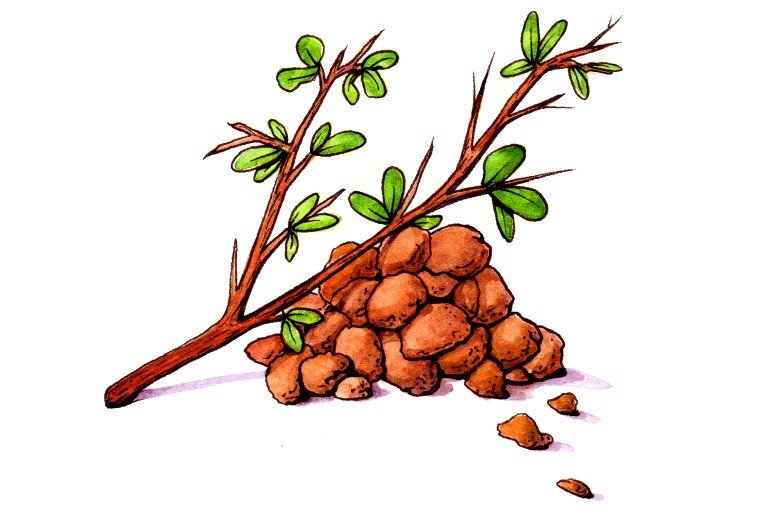
Myrrh is an extract of a tree gum resin that has long been used as a fragrance and as an herbal medicine. Animal studies suggest it may reduce inflammation and fevers or protect against substances that are hard on the digestive system. It may also have antioxidant properties and stimulate the thyroid gland. Other experiments suggest it may slow cancer growth in mice or isolated cancer cells, but it is unknown if such effects can occur in humans.
Only a few small studies have been conducted in humans, some of which were herbal preparations that included other compounds. Additional studies are needed to determine what utility myrrh may have for various conditions.
To treat asthma
Experiments in animals suggest that myrrh might reduce inflammation.
To treat coughs
No scientific evidence supports this use.
To treat gastrointestinal disorders and indigestion
Animal studies suggest myrrh extracts may protect against damage to the stomach lining.
To reduce inflammation
Experiments in animals suggest that myrrh might reduce inflammation.
High doses of myrrh can affect heart rate.
Topical myrrh products can cause skin redness, swelling, and itching.
Case reports
Acute abdominal pain: In a pregnant woman who used large amounts of myrrh herbs. Symptoms ended after myrrh was discontinued.
Skin reaction after oral myrrh: Diagnosed by patch test, after taking a traditional Chinese medicine formula.
Do Not Take if:
You are taking warfarin: Myrrh may reduce the therapeutic effects of warfarin.
You have sensitive skin: Topical myrrh products can cause irritation.
For Healthcare Professionals
Commiphora molmol
Myrrh is the oleo gum resin obtained from Commiphora species, and is well known as a fragrance used in perfumes and incense. It is also used in traditional medicine for treating inflammation, stomach problems, asthma, and other bronchial conditions.
Preclinical studies suggest that myrrh has anti-inflammatory, cytotoxic (13), anti-trichomoniasis (14), and antipyretic effects (2). Other experiments suggest some constituents of myrrh may inhibit certain cancers (3)(4)(5)(12), but human data are lacking.
A small study suggests effectiveness of myrrh against trichomoniasis vaginalis in affected women (15). Other preliminary data on different herbal preparations containing myrrh suggest potential benefit as maintenance therapy in patients with ulcerative colitis (16) and in women with type 2 diabetes (17), but additional studies are needed.
Asthma
Cough
GI disorders
Indigestion
Inflammation
In animal studies, an aqueous suspension of C. molmol protected against gastric mucosal damage from NSAIDs and ethanol (7). C. molmol may have free radical-scavenging, thyroid-stimulating, and prostaglandin-inducing properties. These effects are caused by increased mucus production, and nucleic acid and non-protein sulfhydryl concentrations. Aqueous extracts of myrrh may induce hepatic microsomal enzymes, causing a more rapid metabolism of warfarin (10).
C. molmol inhibits the growth of Ehrlich carcinoma cells in mice (4). The cytotoxic activities appear to be as effective as cyclophosphamide in solid tumor-bearing mice. In one study, Na, K and Ca levels in cancer cells were reduced by treatment with C. molmol, leading to inhibition of cellular proliferation and tumor growth (3). Another in vitro study found that myrrh gum had tumoricidal effects against a malignant murine neuroblastoma cell line (5). The antiproliferative activity of sesquiterpenoids ST1 and ST2 from myrrh in human prostate cancer cells may occur through androgen receptor signaling inhibition (12).
Patients who have sensitive skin should avoid topical products containing myrrh (6).
Acute abdominal pain: In a 32-year-old pregnant woman with a history of infertility and miscarriages who used large amounts of myrrh herbs for 2 months based on traditional healing advice. Symptoms ended after myrrh was discontinued, and myrrh acting as a uterine stimulant was a suspected cause (18).
Non-immediate cutaneous reaction to oral intake of myrrh: In the form of a traditional Chinese medicine decoction and diagnosed via patch test (19).
Warfarin: A published case report describes the antagonism of the anticoagulant effects of warfarin after a patient began concomitantly taking C. molmol(10).
DerMarderosian A, editor. The Review of Natural Products. St. Louis: Facts and Comparisons; 1999.