Health Care Professional Information
Clinical Summary
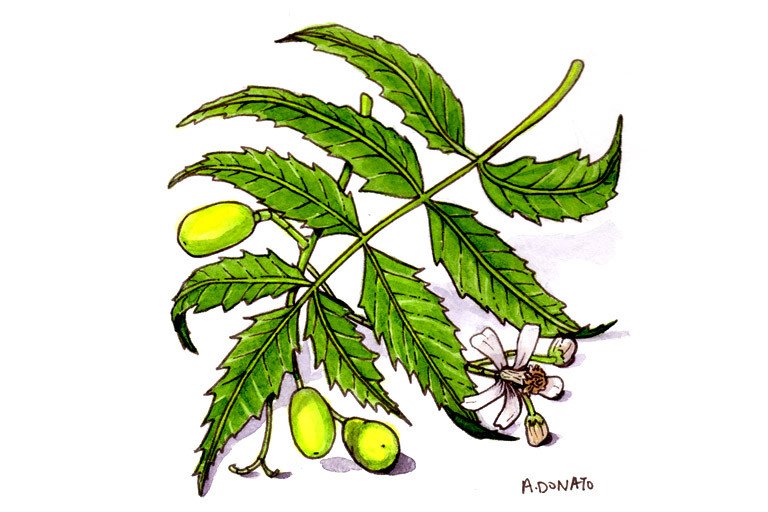
Azadirachta indica or neem is a tree prevalent in South Asia. The bark, leaves, flowers, and seeds of which have been utilized as food and medicine for centuries. In Ayurvedic medicine, neem is used externally for skin conditions; and internally for gastrointestinal ailments and for oral hygiene. Currently, many forms of neem extracts are marketed as dietary supplements.
Neem has antimicrobial activity and is used against a wide range of pests and parasites (1). It is effective against lice (2) (3) (4) and has antiretroviral activity (5). Neem also reduces plaque and decreases oral bacterial counts (3), but data are conflicting (4).
A neem bark extract was found to exhibit anti-secretory and anti-ulcer properties (6). Neem may also be effective in the treatment of cholera and diarrhea (7) (8).
A few studies have examined the anticancer potential of neem. An ethanolic extract of neem leaves reduced the incidence of stomach tumors (9), and neem-treated monocytes induced apoptosis in cervical (10) and prostate cancer cells (11). Neem also showed chemopreventive effects in animal models (12). However, human data are lacking.
Neem oil has been reported to cause nausea, drowsiness and tachypnea in children (8).
Purported Uses
- Ulcers
- Cancer Treatment
- Antiviral
- Antifungal
- Oral Hygiene
- Pesticide
Constituents
- Isoprenoids: Protomeliacins, limonoids, azadirone and its derivatives, gedunin and its derivatives, nimbin, salanin and azadirachtin
- Non-isoprenoids: Amino acids, polysaccharides, sulphurous compounds, flavonoids, dihydrochalcone, coumarin and tannins
(14)
Mechanism of Action
The anti-secretory effects of neem are via the inhibition of the proton pump, H+- K+- ATPase, to control the secretion of hydrochloric acid. The anti-ulcer effects are believed to be through inhibition of gastric mucus depletion and prevention of oxidative mucosal damage. Neem also scavenges hydroxyl radicals, which are known to contribute to the formation of gastric lesions (6).
Neem induces cell death in prostate cancer cells by decreasing the levels of Bcl-2, an anti-apoptotic protein. Neem-treated monocytes induce apoptosis in cervical cancer cells by increasing levels of caspases 3, 8, and 9, interferon (IFN-gamma), and by decreasing tumor necrosis factor (TNF-alpha) (10).
Neem also acts as an antiretroviral agent via inhibition of viral invasion of host cells (5).
Warnings
Oral administration of neem oil resulted in severe poisoning in children. Vomiting, drowsiness and diarrhea have also been reported. In most serious cases, seizures associated with coma have occurred (8).
Adverse Reactions
Reported: Vomiting, drowsiness, diarrhea, tachypnea with acidotic respiration, polymorphonuclear leukocytosis, encephalopathy, and seizures associated with coma have been reported following oral administration of neem (8).
Herb-Drug Interactions
Some studies show that neem extracts have antioxidant activities. Theoretically, antioxidants can decrease the efficacy of certain chemotherapy drugs that rely on the generation of free radicals for their cytotoxic effects. Supplements with antioxidant properties are not recommended during chemotherapy.
Literature Summary and Critique
Udeinya IJ, Mbah AU, Chijioke CP, Shu EN. An antimalarial extract from neem leaves is antiretroviral. Transactions of the Royal Society of Tropical Medicine and Hygiene. Jul 2004;98(7):435-437.
Ten ambulatory HIV-positve volunteers were included in this study. All received oral gelatin capsules containing neem extract (1000 mg), once daily for 30 days. They were not given any other antiretroviral drugs. Bodyweight, blood cell count, and CD4+ cell count were measured before and after the study period. The increases in body weight and blood cell count after 30 days was significant among all participants. No adverse effects were reported. Larger studies are required to determine the efficacy and long-term effects of neem.
Bandyopadhyay U, Biswas K, Sengupta A, et al. Clinical studies on the effect of Neem (Azadirachta indica) bark extract on gastric secretion and gastroduodenal ulcer. Life sciences. Oct 29 2004;75(24):2867-2878.
Twenty patients, aged 18 — 45 years, were selected on the basis of gastro-acidity symptoms and/or ulcer diagnosis. Capsules (30 mg) containing filtered and lyophilized extract from neem tree bark were orally administered, twice daily, 30 minutes before lunch and dinner, for ten days. For a month before the onset of the treatment, patients received no other drugs. Administration of neem extract resulted in a 63% reduction in volume of gastric secretion, and a 77% inhibition of total acid secretion. Though the results were significant and no adverse effects were recorded, larger studies must be conducted to fully assess the value of neem as an anti-secretory drug.
Dosage (Inside MSKCC Only)
This field is only visible to only Inside MSKCC users.
References
- Schmahl G, Al-Rasheid KA, Abdel-Ghaffar F, Klimpel S, Mehlhorn H. The efficacy of neem seed extracts (Tre-san, MiteStop on a broad spectrum of pests and parasites. Parasitology research. Jul 2010;107(2):261-269.
- Abdel-Ghaffar F, Semmler M. Efficacy of neem seed extract shampoo on head lice of naturally infected humans in Egypt. Parasitology research. Jan 2007;100(2):329-332.
- Pai MR, Acharya LD, Udupa N. Evaluation of antiplaque activity of Azadirachta indica leaf extract gel—a 6-week clinical study. Journal of ethnopharmacology. Jan 2004;90(1):99-103.
- Sharma S, Saimbi CS, Koirala B, Shukla R. Effect of various mouthwashes on the levels of interleukin-2 and interferon-gamma in chronic gingivitis. The Journal of clinical pediatric dentistry. Winter 2008;32(2):111-114.
- Udeinya IJ, Mbah AU, Chijioke CP, Shu EN. An antimalarial extract from neem leaves is antiretroviral. Transactions of the Royal Society of Tropical Medicine and Hygiene. Jul 2004;98(7):435-437. 6.
- Bandyopadhyay U, Biswas K, Sengupta A, et al. Clinical studies on the effect of Neem (Azadirachta indica) bark extract on gastric secretion and gastroduodenal ulcer. Life sciences. Oct 29 2004;75(24):2867-2878.
- Thakurta P, Bhowmik P, Mukherjee S, et al. Antibacterial, antisecretory and antihemorrhagic activity of Azadirachta indica used to treat cholera and diarrhea in India. Journal of ethnopharmacology. May 22 2007;111(3):607-612.
- Krieger R. Human Health Effects. 2001. http://toxnet.nlm.nih.gov/cgi-bin/sis/search/a?dbs+hsdb:@term+@DOCNO+7372. Accessed July 27, 2012.
- Gangar SC, Koul A. Azadirachta indica modulates carcinogen biotransformation and reduced glutathione at peri-initiation phase of benzo(a)pyrene induced murine forestomach tumorigenesis. Phytotherapy research : PTR. Sep 2008;22(9):1229-1238.
- Vasenwala SM, Seth R, Haider N, et al. A study on antioxidant and apoptotic effect of Azadirachta Indica (neem) in cases of cervical cancer. Archives of gynecology and obstetrics. Jun 21 2012.
- Kumar S, Suresh PK, Vijayababu MR, Arunkumar A, Arunakaran J. Anticancer effects of ethanolic neem leaf extract on prostate cancer cell line (PC-3). Journal of ethnopharmacology. Apr 21 2006;105(1-2):246-250.
- Dasgupta T, Banerjee S, Yadava PK, Rao AR. Chemopreventive potential of Azadirachta indica (Neem) leaf extract in murine carcinogenesis model systems. Journal of ethnopharmacology. May 2004;92(1):23-36.
- Mbah AU, Udeinya IJ, Shu EN, et al. Fractionated neem leaf extract is safe and increases CD4+ cell levels in HIV/AIDS patients. American journal of therapeutics. Jul-Aug 2007;14(4):369-374.
- Brahmachari G. Neem—an omnipotent plant: a retrospection. Chembiochem. 2004 Apr 2;5(4):408-21.
Consumer Information
How It Works
Bottom Line: Neem has anticancer effects. More studies are needed to test its effects in humans.
Neem is an herb that is used as food, and in traditional medicine for skin conditions and for stomach ailments. It is also used as a disinfectant against pests and parasites. Some lab studies show that neem extracts have anticancer activities by inhibiting cancer cell growth. However, there are no human studies showing it to be an effective cancer treatment. Adverse reactions caused by neem oil have been reported in children.
Purported Uses
- Ulcers
A small study found neem bark extract effective in reducing stomach acid secretion without any adverse effects. More studies are needed in humans.
- Cancer
In vitro studies show neem can inhibit cancer cell growth. It has not been studied as a treatment for cancer.
- Antiviral
Neem extract has been shown to increase CD4+ cell count and bodyweight in a small number of HIV+ volunteers.
- Oral Hygiene
Neem can reduce oral plaque and bacterial count. It is used as mouth rinse in traditional medicine.
- Pesticide/fungicide
Neem oil has been used externally against pests and lice.
Patient Warnings
Swallowing neem oil can cause severe adverse effects in children.
Side Effects
Vomiting, drowsiness, diarrhea, and seizures associated with coma have been reported.
Last updated: August 31, 2012
acid (A-sid)
A chemical that gives off hydrogen ions in water and forms salts by combining with certain metals. Acids have a sour taste and turn certain dyes red. Some acids made by the body, such as gastric acid, can help organs work the way they should. An example of an acid is hydrochloric acid. Acidity is measured on a scale called the pH scale. On this scale, a value of 7 is neutral, and a pH value of less than 7 to 0 shows increasing acidity.
Source: The National Cancer Institute's Dictionary of Cancer Terms
(http://www.cancer.gov/dictionary)
administration (ad-MIH-nih-STRAY-shun)
In medicine, the act of giving a treatment, such as a drug, to a patient. It can also refer to the way it is given, the dose, or how often it is given.
Source: The National Cancer Institute's Dictionary of Cancer Terms
(http://www.cancer.gov/dictionary)
antioxidant (AN-tee-OK-sih-dent)
A substance that protects cells from the damage caused by free radicals (unstable molecules made by the process of oxidation during normal metabolism). Free radicals may play a part in cancer, heart disease, stroke, and other diseases of aging. Antioxidants include beta-carotene, lycopene, vitamins A, C, and E, and other natural and manufactured substances.
Source: The National Cancer Institute's Dictionary of Cancer Terms
(http://www.cancer.gov/dictionary)
apoptosis (A-pop-TOH-sis)
A type of cell death in which a series of molecular steps in a cell leads to its death. This is the body’s normal way of getting rid of unneeded or abnormal cells. The process of apoptosis may be blocked in cancer cells. Also called programmed cell death.
Source: The National Cancer Institute's Dictionary of Cancer Terms
(http://www.cancer.gov/dictionary)
blood (blud)
A tissue with red blood cells, white blood cells, platelets, and other substances suspended in fluid called plasma. Blood takes oxygen and nutrients to the tissues, and carries away wastes.
Source: The National Cancer Institute's Dictionary of Cancer Terms
(http://www.cancer.gov/dictionary)
blood cell count (blud sel kownt)
A test to check the number of red blood cells, white blood cells, and platelets in a sample of blood. Also called CBC and complete blood count.
Source: The National Cancer Institute's Dictionary of Cancer Terms
(http://www.cancer.gov/dictionary)
cancer (KAN-ser)
A term for diseases in which abnormal cells divide without control and can invade nearby tissues. Cancer cells can also spread to other parts of the body through the blood and lymph systems. There are several main types of cancer. Carcinoma is a cancer that begins in the skin or in tissues that line or cover internal organs. Sarcoma is a cancer that begins in bone, cartilage, fat, muscle, blood vessels, or other connective or supportive tissue. Leukemia is a cancer that starts in blood-forming tissue such as the bone marrow, and causes large numbers of abnormal blood cells to be produced and enter the blood. Lymphoma and multiple myeloma are cancers that begin in the cells of the immune system. Central nervous system cancers are cancers that begin in the tissues of the brain and spinal cord. Also called malignancy.
Source: The National Cancer Institute's Dictionary of Cancer Terms
(http://www.cancer.gov/dictionary)
cell (sel)
The individual unit that makes up the tissues of the body. All living things are made up of one or more cells.
Source: The National Cancer Institute's Dictionary of Cancer Terms
(http://www.cancer.gov/dictionary)
cervical (SER-vih-kul)
Relating to the neck, or to the neck of any organ or structure. Cervical lymph nodes are located in the neck. Cervical cancer refers to cancer of the uterine cervix, which is the lower, narrow end (the “neck”) of the uterus.
Source: The National Cancer Institute's Dictionary of Cancer Terms
(http://www.cancer.gov/dictionary)
cervical cancer (SER-vih-kul KAN-ser)
Cancer that forms in tissues of the cervix (the organ connecting the uterus and vagina). It is usually a slow-growing cancer that may not have symptoms but can be found with regular Pap tests (a procedure in which cells are scraped from the cervix and looked at under a microscope). Cervical cancer is almost always caused by human papillomavirus (HPV) infection.
Source: The National Cancer Institute's Dictionary of Cancer Terms
(http://www.cancer.gov/dictionary)
chemotherapy (KEE-moh-THAYR-uh-pee)
Treatment with drugs that kill cancer cells.
Source: The National Cancer Institute's Dictionary of Cancer Terms
(http://www.cancer.gov/dictionary)
coma (KOH-muh)
A condition in which a patient is in a state of deep sleep and cannot be awakened. A coma may be caused by many things, including trauma, drugs, toxins, or certain diseases.
Source: The National Cancer Institute's Dictionary of Cancer Terms
(http://www.cancer.gov/dictionary)
cytotoxic (SY-toh-TOK-sik)
Cell-killing.
Source: The National Cancer Institute's Dictionary of Cancer Terms
(http://www.cancer.gov/dictionary)
diagnosis (DY-ug-NOH-sis)
The process of identifying a disease, such as cancer, from its signs and symptoms.
Source: The National Cancer Institute's Dictionary of Cancer Terms
(http://www.cancer.gov/dictionary)
diarrhea (dy-uh-REE-uh)
Frequent and watery bowel movements.
Source: The National Cancer Institute's Dictionary of Cancer Terms
(http://www.cancer.gov/dictionary)
disinfectant (DIS-in-fek-tunt)
Any substance or process that is used primarily on non-living objects to kill germs, such as viruses, bacteria, and other microorganisms that can cause infection and disease. Most disinfectants are harsh chemicals but sometimes heat or radiation may be used.
Source: The National Cancer Institute's Dictionary of Cancer Terms
(http://www.cancer.gov/dictionary)
drug (drug)
Any substance, other than food, that is used to prevent, diagnose, treat or relieve symptoms of a disease or abnormal condition. Also refers to a substance that alters mood or body function, or that can be habit-forming or addictive, especially a narcotic.
Source: The National Cancer Institute's Dictionary of Cancer Terms
(http://www.cancer.gov/dictionary)
efficacy (EH-fih-kuh-see)
Effectiveness. In medicine, the ability of an intervention (for example, a drug or surgery) to produce the desired beneficial effect.
Source: The National Cancer Institute's Dictionary of Cancer Terms
(http://www.cancer.gov/dictionary)
encephalopathy (en-SEH-fuh-LAH-puh-thee)
A disorder of the brain that can be caused by disease, injury, drugs, or chemicals.
Source: The National Cancer Institute's Dictionary of Cancer Terms
(http://www.cancer.gov/dictionary)
extract (EK-strakt)
In medicine, a preparation of a substance obtained from plants, animals, or bacteria and used as a drug or in drugs.
Source: The National Cancer Institute's Dictionary of Cancer Terms
(http://www.cancer.gov/dictionary)
gastric (GAS-trik)
Having to do with the stomach.
Source: The National Cancer Institute's Dictionary of Cancer Terms
(http://www.cancer.gov/dictionary)
in vitro (in VEE-troh)
In the laboratory (outside the body). The opposite of in vivo (in the body).
Source: The National Cancer Institute's Dictionary of Cancer Terms
(http://www.cancer.gov/dictionary)
incidence (IN-sih-dents)
The number of new cases of a disease diagnosed each year.
Source: The National Cancer Institute's Dictionary of Cancer Terms
(http://www.cancer.gov/dictionary)
interferon (in-ter-FEER-on)
A biological response modifier (a substance that can improve the body's natural response to infections and other diseases). Interferons interfere with the division of cancer cells and can slow tumor growth. There are several types of interferons, including interferon-alpha, -beta, and -gamma. The body normally produces these substances. They are also made in the laboratory to treat cancer and other diseases.
Source: The National Cancer Institute's Dictionary of Cancer Terms
(http://www.cancer.gov/dictionary)
medicine (MEH-dih-sin)
Refers to the practices and procedures used for the prevention, treatment, or relief of symptoms of a diseases or abnormal conditions. This term may also refer to a legal drug used for the same purpose.
Source: The National Cancer Institute's Dictionary of Cancer Terms
(http://www.cancer.gov/dictionary)
mucus (MYOO-kus)
A thick, slippery fluid made by the membranes that line certain organs of the body, including the nose, mouth, throat, and vagina.
Source: The National Cancer Institute's Dictionary of Cancer Terms
(http://www.cancer.gov/dictionary)
nausea (NAW-zee-uh)
A feeling of sickness or discomfort in the stomach that may come with an urge to vomit. Nausea is a side effect of some types of cancer therapy.
Source: The National Cancer Institute's Dictionary of Cancer Terms
(http://www.cancer.gov/dictionary)
necrosis (neh-KROH-sis)
Refers to the death of living tissues.
Source: The National Cancer Institute's Dictionary of Cancer Terms
(http://www.cancer.gov/dictionary)
oral (OR-ul)
By or having to do with the mouth.
Source: The National Cancer Institute's Dictionary of Cancer Terms
(http://www.cancer.gov/dictionary)
plaque (plak)
In medicine, a small, abnormal patch of tissue on a body part or an organ. Plaques may also be a build-up of substances from a fluid, such as cholesterol in the blood vessels.
Source: The National Cancer Institute's Dictionary of Cancer Terms
(http://www.cancer.gov/dictionary)
prevention (pree-VEN-shun)
In medicine, action taken to decrease the chance of getting a disease or condition. For example, cancer prevention includes avoiding risk factors (such as smoking, obesity, lack of exercise, and radiation exposure) and increasing protective factors (such as getting regular physical activity, staying at a healthy weight, and having a healthy diet).
Source: The National Cancer Institute's Dictionary of Cancer Terms
(http://www.cancer.gov/dictionary)
prostate (PROS-tayt)
A gland in the male reproductive system. The prostate surrounds the part of the urethra (the tube that empties the bladder) just below the bladder, and produces a fluid that forms part of the semen.
Source: The National Cancer Institute's Dictionary of Cancer Terms
(http://www.cancer.gov/dictionary)
prostate cancer (PROS-tayt KAN-ser)
Cancer that forms in tissues of the prostate (a gland in the male reproductive system found below the bladder and in front of the rectum). Prostate cancer usually occurs in older men.
Source: The National Cancer Institute's Dictionary of Cancer Terms
(http://www.cancer.gov/dictionary)
protein (PROH-teen)
A molecule made up of amino acids that are needed for the body to function properly. Proteins are the basis of body structures such as skin and hair and of substances such as enzymes, cytokines, and antibodies.
Source: The National Cancer Institute's Dictionary of Cancer Terms
(http://www.cancer.gov/dictionary)
proton (PROH-ton)
A small, positively charged particle of matter found in the atoms of all elements. Streams of protons generated by special equipment can be used for radiation treatment.
Source: The National Cancer Institute's Dictionary of Cancer Terms
(http://www.cancer.gov/dictionary)
pump (pump)
A device that is used to give a controlled amount of a liquid at a specific rate. For example, pumps are used to give drugs (such as chemotherapy or pain medicine) or nutrients.
Source: The National Cancer Institute's Dictionary of Cancer Terms
(http://www.cancer.gov/dictionary)
reduction (ree-DUK-shun)
A chemical reaction that takes place when a substance comes into contact with hydrogen or another reducing substance.
Source: The National Cancer Institute's Dictionary of Cancer Terms
(http://www.cancer.gov/dictionary)
significant (sig-NIH-fih-kunt)
In statistics, describes a mathematical measure of difference between groups. The difference is said to be significant if it is greater than what might be expected to happen by chance alone. Also called statistically significant.
Source: The National Cancer Institute's Dictionary of Cancer Terms
(http://www.cancer.gov/dictionary)
stomach (STUH-muk)
An organ that is part of the digestive system. The stomach helps digest food by mixing it with digestive juices and churning it into a thin liquid.
Source: The National Cancer Institute's Dictionary of Cancer Terms
(http://www.cancer.gov/dictionary)
tachypnea (TA-kip-NEE-uh)
Rapid breathing.
Source: The National Cancer Institute's Dictionary of Cancer Terms
(http://www.cancer.gov/dictionary)
tumor (TOO-mer)
An abnormal mass of tissue that results when cells divide more than they should or do not die when they should. Tumors may be benign (not cancer), or malignant (cancer). Also called neoplasm.
Source: The National Cancer Institute's Dictionary of Cancer Terms
(http://www.cancer.gov/dictionary)
ulcer (UL-ser)
A break on the skin, in the lining of an organ, or on the surface of a tissue. An ulcer forms when the surface cells become inflamed, die, and are shed. Ulcers may be linked to cancer and other diseases.
Source: The National Cancer Institute's Dictionary of Cancer Terms
(http://www.cancer.gov/dictionary)
viral (VY-rul)
Having to do with a virus.
Source: The National Cancer Institute's Dictionary of Cancer Terms
(http://www.cancer.gov/dictionary)