Health Care Professional Information
Common Name
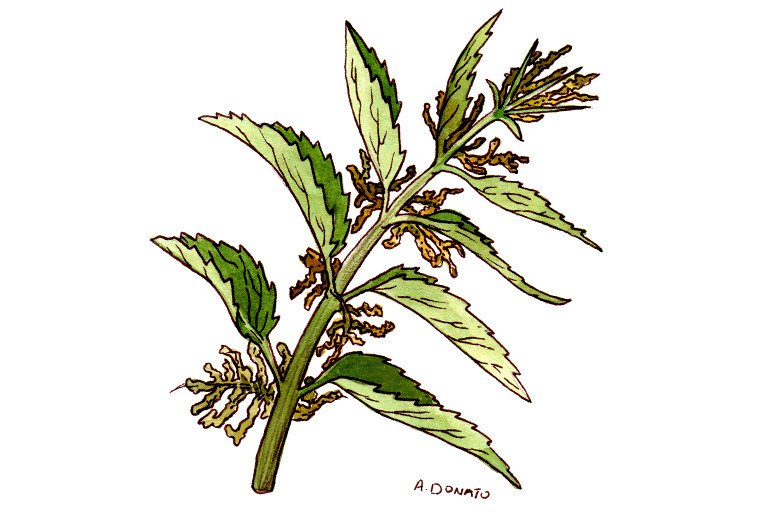
Stinging nettle, common nettle, greater nettle
Clinical Summary
The root of nettle is widely used to treat benign prostatic hypertrophy (BPH), allergies, arthritis, and inflammation. It is usually combined with herbs such as saw palmetto and pygeum for the treatment of BPH. Several compounds have been isolated from nettle including flavonoid glycosides that appear to contribute to its biological effects, although the precise mechanism of action is unclear.
In vitro and animal studies indicate that nettle extract has anti proliferative effects in human prostate cancer cells (6) and protects against cisplatin-induced toxicity (15). It was also shown effective against colitis in mice (16).
Data from a few clinical trials suggest benefits of nettle in the treatment of osteoarthritis of hip, knee (10) and hand (14) and in ameliorating symptoms associated with benign prostatic syndrome (BPS) (8) (11) (12). Larger studies are needed to establish use of nettle.
Constituents
- Acids: Carbonic acid, formic acid, silicic acid, citric acid, fumaric acid, glyceric acid, malic acid, oxalic acid, phosphoric acid, quinic acid, succinic acid, and threonic acid
- Amines: Acetylcholine, betaine, choline, lecithin, histamine, and serotonin
- Flavonoids: Flavonol glycosides (isorhamnetin, kaempferol, quercetin)
- Other constituents: Choline acetyltransferase, scopoletin, B-sitosterol, and tannins
(1)
Mechanism of Action
In vitro studies show that nettle extract inhibits several inflammatory events that are responsible for the symptoms of seasonal allergies (2). They include the antagonist and negative agonist activity against the histamine-1 (H(1)) receptor and inhibition of prostaglandin formation via inhibition of cyclooxygenase-1 (COX-1), cyclooxygenase-2 (COX-2), and hematopoietic prostaglandin D(2) synthase (HPGDS), key enzymes in pro-inflammatory pathways (2).
A methanolic extract of nettle reduced experimentally induced prostatic hyperplasia in mice (17).
Adverse Reactions
Reported:
A case of gynecomastia has been reported in a man following consumption of nettle tea (13).
Galactorrhea was reported in a woman after ingestion of nettle tea (13).
A breastfed, 17-day-old infant developed urticaria following the mother’s use of water boiled with stinging nettle to heal nipple cracks (5).
Hypoglycemia has been reported in a 78-year-old man after taking an herbal remedy containing nettle for benign prostatic hypertrophy (18).
Herb-Drug Interactions
- Cytochrome P450 substrates: Nettle inhibits cytochrome P450 enzymes and may affect the intracellular concentration of drugs metabolized by these enzymes (9).
- Diuretics: Theoretically nettle may have additive effect due to its diuretic activity (19).
- Hypotensives: Nettle has hypotensive action and may enhance the effects of hypotensive drugs (19).
Dosage (Inside MSKCC Only)
This field is only visible to only Inside MSKCC users.
References
- Urtica dioica; Urtica urens (nettle). Monograph. Altern Med Rev. 2007 Sep;12(3):280-4.
- Roschek B Jr, Fink RC, McMichael M, Alberte RS. Nettle extract (Urtica dioica) affects key receptors and enzymes associated with allergic rhinitis. Phytother Res. 2009 Jul;23(7):920-6.
- Brinker F. Herb Contraindications and Drug Interactions, 2nd ed. Sandy (OR): Eclectic Medical Publishing; 1997.
- Schulz V, et al. Rational Phytotherapy: A Physician's Guide to Herbal Medicine, 3rd ed. Berlin (Germany): Springer; 1998.
-
Uslu S, Bulbul A, Diler B, Bas EK, Nuhoglu A. Urticaria due to Urtica dioica in a neonate. Eur J Pediatr. 2011 Mar;170(3):401-3.
-
Konrad L, et al. Antiproliferative effect on human prostate cancer cells by a stinging nettle root (Urtica dioica) extract. Planta Med 2000;66:44-7.
- Fagelman E, Lowe FC. Herbal medications in the treatment of benign prostatic hyperplasia (BPH). Urol Clin N Am 2002;29:23-9.
- Schneider T and Rubben H. Stinging nettle root extract (Bazoton-uno) in long term treatment of benign prostatic syndrome (BPS). Results of a randomized, double-blind, placebo controlled multicenter study after 12 months. Urologe A. 2004;43(3):302-6.
- Ozen T, Korkmaz. Modulatory effect of Urtica dioica L. (Urticaceae) leaf extract on biotransformation enzyme systems, antioxidant enzymes, lactate dehydrogenase and lipid peroxidation in mice. Phytomedicine 2003;10(5):405-15.
- Jacquet A, Girodet PO, Pariente A, et al. Phytalgic(R), a food supplement, vs placebo in patients with osteoarthritis of the knee or hip: a randomised double-blind placebo-controlled clinical trial. Arthritis Res Ther. 2009;11(6):R192.
- Safarinejad MR. Urtica dioica for treatment of benign prostatic hyperplasia: a prospective, randomized, double-blind, placebo-controlled, crossover study. J Herb Pharmacother. 2005;5(4):1-11.
- Lopatkin N, Sivkov A, Schläfke S, et al. Efficacy and safety of a combination of Sabal and Urtica extract in lower urinary tract symptoms—long-term follow-up of a placebo-controlled, double-blind, multicenter trial. Int Urol Nephrol. 2007;39(4):1137-46.
- Sahin M, Yilmaz H, Gursoy A, et al. Gynaecomastia in a man and hyperoestrogenism in a woman due to ingestion of nettle (Urtica dioica). N Z Med J. 2007 Nov 9;120(1265):U2803.
- Randall C, Randall H, Dobbs F, Hutton C, Sanders H. Randomized controlled trial of nettle sting for treatment of base-of-thumb pain. J R Soc Med. 2000 Jun;93(6):305-9.
- Ozkol H, Musa D, Tuluce Y, Koyuncu I. Ameliorative influence of Urtica dioica L against cisplatin-induced toxicity in mice bearing Ehrlich ascites carcinoma. Drug Chem Toxicol. 2011 Sep 22. [Epub ahead of print]
- Genc Z, Yarat A, Tunali-Akbay T, et al. The Effect of Stinging Nettle (Urtica dioica) Seed Oil on Experimental Colitis in Rats. J Med Food. 2011 Aug 23. [Epub ahead of print]
- Lichius JJ, Renneberg H, Blaschek W, Aumüller G, Muth C. The inhibiting effects of components of stinging nettle roots on experimentally induced prostatic hyperplasia in mice. Planta Med. 1999 Oct;65(7):666-8.
- Edgcumbe DP, McAuley D. Hypoglycaemia related to ingestion of a herbal remedy. Eur J Emerg Med. 2008 Aug;15(4):236-7.
-
Tahri A, Yamani S, Legssyer A, et al. Acute diuretic, natriuretic and hypotensive effects of a continuous perfusion of aqueous extract of Urtica dioica in the rat. J Ethnopharmacol. 2000 Nov;73(1-2):95-100.
Consumer Information
How It Works
Bottom Line: Nettle may be effective in relieving symptoms of benign prostatic hyperplasia (BPH).
Researchers are still unsure how nettle works. It has been suggested that nettle might reduce the activity of testosterone by altering the amount of testosterone circulating in the blood, or by inhibiting one of the key enzymes in testosterone synthesis. However, none of these theories has been conclusively proven. Other actions of nettle include acting as a diuretic (causing water loss from the body through the urine) and lowering blood pressure. Some compounds in nettle also reduce inflammation.
Purported Uses
- To treat allergies
No scientific evidence supports this use.
- To treat arthritis
Clinical trials support the topical use of nettle sting for arthritis of the hip, knee, and hand. Larger studies are needed to confirm these data.
- To treat benign prostatic hypertrophy (BPH)
When combined with other herbs, nettle has shown positive results in clinical trials.
- To clear up chest congestion
There is no evidence to back this claim.
- To promote urination
Nettle is a known diuretic.
- To reduce inflammation
Nettle may have anti-inflammatory activities, but clinical trials have yet to be conducted.
- To treat oily skin
No scientific evidence supports this use.
- To calm muscle spasms
This use is not backed by research.
- To treat urinary tract disorders and relieve difficult or painful urination
Nettle was shown to have beneficial effects in clinical studies.
Research Evidence
Benign prostatic hypertrophy (BPH)
A few clinical trials have used nettle in combination with other herbs for the treatment of benign prostatic hypertrophy (BPH), with positive results.
Side Effects
Reported:
A case of gynecomastia has been reported in a man following consumption of nettle tea.
Galactorrhea was reported in a woman after ingestion of nettle tea.
A breastfed, 17-day-old infant developed urticaria following the mother’s use of water boiled with stinging nettle to heal nipple cracks.
Hypoglycemia has been reported in a 78-year-old man after taking an herbal remedy containing nettle for benign prostatic hypertrophy.
Last updated: September 28, 2012
agonist (A-guh-nist)
A drug or substance that binds to a receptor inside a cell or on its surface and causes the same action as the substance that normally binds to the receptor.
Source: The National Cancer Institute's Dictionary of Cancer Terms
(http://www.cancer.gov/dictionary)
antagonist (an-TA-guh-nist)
In medicine, a substance that stops the action or effect of another substance. For example, a drug that blocks the stimulating effect of estrogen on a tumor cell is called an estrogen receptor antagonist.
Source: The National Cancer Institute's Dictionary of Cancer Terms
(http://www.cancer.gov/dictionary)
anti-inflammatory (AN-tee-in-FLA-muh-TOR-ee)
Having to do with reducing inflammation.
Source: The National Cancer Institute's Dictionary of Cancer Terms
(http://www.cancer.gov/dictionary)
arthritis (ar-THRY-tis)
A disease that causes inflammation and pain in the joints.
Source: The National Cancer Institute's Dictionary of Cancer Terms
(http://www.cancer.gov/dictionary)
benign (beh-NINE)
Not cancerous. Benign tumors may grow larger but do not spread to other parts of the body. Also called nonmalignant.
Source: The National Cancer Institute's Dictionary of Cancer Terms
(http://www.cancer.gov/dictionary)
benign prostatic hypertrophy (beh-NINE prah-STA-tik hy-PER-troh-fee)
A benign (not cancer) condition in which an overgrowth of prostate tissue pushes against the urethra and the bladder, blocking the flow of urine. Also called benign prostatic hyperplasia and BPH.
Source: The National Cancer Institute's Dictionary of Cancer Terms
(http://www.cancer.gov/dictionary)
blood (blud)
A tissue with red blood cells, white blood cells, platelets, and other substances suspended in fluid called plasma. Blood takes oxygen and nutrients to the tissues, and carries away wastes.
Source: The National Cancer Institute's Dictionary of Cancer Terms
(http://www.cancer.gov/dictionary)
blood pressure (blud PREH-sher)
The force of circulating blood on the walls of the arteries. Blood pressure is taken using two measurements: systolic (measured when the heart beats, when blood pressure is at its highest) and diastolic (measured between heart beats, when blood pressure is at its lowest). Blood pressure is written with the systolic blood pressure first, followed by the diastolic blood pressure (for example 120/80).
Source: The National Cancer Institute's Dictionary of Cancer Terms
(http://www.cancer.gov/dictionary)
clinical (KLIH-nih-kul)
Having to do with the examination and treatment of patients.
Source: The National Cancer Institute's Dictionary of Cancer Terms
(http://www.cancer.gov/dictionary)
colitis (koh-LY-tis)
Inflammation of the colon.
Source: The National Cancer Institute's Dictionary of Cancer Terms
(http://www.cancer.gov/dictionary)
cyclooxygenase-2 (SY-kloh-OK-sih-jeh-NAYS-2)
An enzyme that speeds up the formation of substances that cause inflammation and pain. It may also cause tumor cells to grow. Some tumors have high levels of cyclooxygenase-2 and blocking its activity may reduce tumor growth. Also called COX-2 and prostaglandin-endoperoxide synthase 2.
Source: The National Cancer Institute's Dictionary of Cancer Terms
(http://www.cancer.gov/dictionary)
diuretic (DY-yoo-REH-tik)
A drug that increases the production of urine.
Source: The National Cancer Institute's Dictionary of Cancer Terms
(http://www.cancer.gov/dictionary)
extract (EK-strakt)
In medicine, a preparation of a substance obtained from plants, animals, or bacteria and used as a drug or in drugs.
Source: The National Cancer Institute's Dictionary of Cancer Terms
(http://www.cancer.gov/dictionary)
herbal (ER-bul)
Having to do with plants.
Source: The National Cancer Institute's Dictionary of Cancer Terms
(http://www.cancer.gov/dictionary)
herbal medicine (ER-bul MEH-dih-sin)
A type of medicine that uses roots, stems, leaves, flowers, or seeds of plants to improve health, prevent disease, and treat illness.
Source: The National Cancer Institute's Dictionary of Cancer Terms
(http://www.cancer.gov/dictionary)
hyperplasia (HY-per-PLAY-zhuh)
An abnormal increase in the number of normal cells in an organ or tissue.
Source: The National Cancer Institute's Dictionary of Cancer Terms
(http://www.cancer.gov/dictionary)
hypoglycemia (HY-poh-gly-SEE-mee-uh)
Abnormally low blood sugar.
Source: The National Cancer Institute's Dictionary of Cancer Terms
(http://www.cancer.gov/dictionary)
inflammation (IN-fluh-MAY-shun)
Redness, swelling, pain, and/or a feeling of heat in an area of the body. This is a protective reaction to injury, disease, or irritation of the tissues.
Source: The National Cancer Institute's Dictionary of Cancer Terms
(http://www.cancer.gov/dictionary)
ingestion (in-JES-chun)
Taking into the body by mouth.
Source: The National Cancer Institute's Dictionary of Cancer Terms
(http://www.cancer.gov/dictionary)
nipple (NIH-pul)
In anatomy, the small raised area in the center of the breast through which milk can flow to the outside.
Source: The National Cancer Institute's Dictionary of Cancer Terms
(http://www.cancer.gov/dictionary)
prostaglandin (PROS-tuh-GLAN-din)
One of several hormone-like substances made by the body. Different prostaglandins control blood pressure, contraction of smooth muscles, and other processes within tissues where they are made. Certain prostaglandins are being studied as cancer biomarkers. Also called PG.
Source: The National Cancer Institute's Dictionary of Cancer Terms
(http://www.cancer.gov/dictionary)
receptor (reh-SEP-ter)
A molecule inside or on the surface of a cell that binds to a specific substance and causes a specific physiologic effect in the cell.
Source: The National Cancer Institute's Dictionary of Cancer Terms
(http://www.cancer.gov/dictionary)
syndrome (SIN-drome)
A set of symptoms or conditions that occur together and suggest the presence of a certain disease or an increased chance of developing the disease.
Source: The National Cancer Institute's Dictionary of Cancer Terms
(http://www.cancer.gov/dictionary)
testosterone (tes-TOS-teh-rone)
A hormone made mainly in the testes (part of the male reproductive system). It is needed to develop and maintain male sex characteristics, such as facial hair, deep voice, and muscle growth. Testosterone may also be made in the laboratory and is used to treat certain medical conditions.
Source: The National Cancer Institute's Dictionary of Cancer Terms
(http://www.cancer.gov/dictionary)
topical (TAH-pih-kul)
On the surface of the body.
Source: The National Cancer Institute's Dictionary of Cancer Terms
(http://www.cancer.gov/dictionary)
toxicity (tok-SIH-sih-tee)
The extent to which something is poisonous or harmful.
Source: The National Cancer Institute's Dictionary of Cancer Terms
(http://www.cancer.gov/dictionary)
urinary (YOOR-ih-NAYR-ee)
Having to do with urine or the organs of the body that produce and get rid of urine.
Source: The National Cancer Institute's Dictionary of Cancer Terms
(http://www.cancer.gov/dictionary)
urticaria (ER-tih-KAYR-ee-uh)
Itchy, raised red areas on the skin. Urticaria are caused by a reaction to certain foods, drugs, infections, or emotional stress. Also called hives.
Source: The National Cancer Institute's Dictionary of Cancer Terms
(http://www.cancer.gov/dictionary)