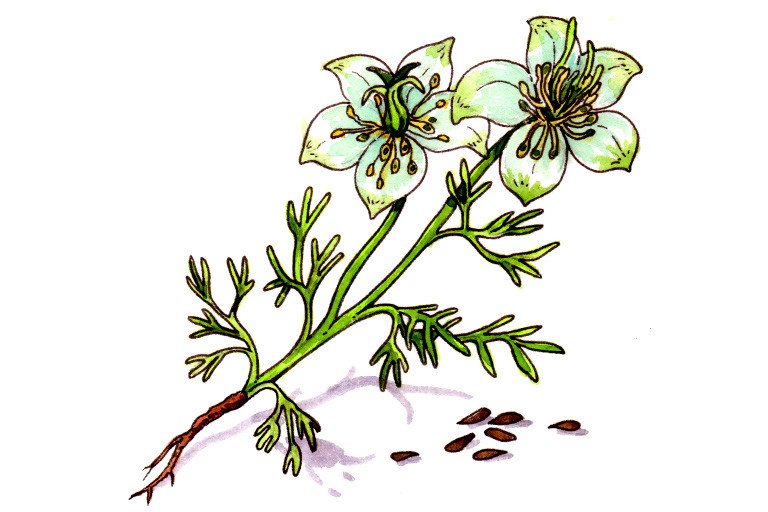
Common Names
- Black cumin
- Black caraway
- Black seed
- Kalonji
For Patients & Caregivers
Tell your healthcare providers about any dietary supplements you’re taking, such as herbs, vitamins, minerals, and natural or home remedies. This will help them manage your care and keep you safe.
Black cumin seed has not been shown to treat cancer in humans.
Black cumin seed is used for cooking and in traditional medicine in India, Arabia, and Europe. Laboratory studies have shown that some components have antioxidant and anti-inflammatory effects. Small clinical suggest that black cumin seed may help to control high blood pressure, asthma, diabetes, and rheumatoid arthritis.
- To treat cancer
Animal studies have shown that black cumin seed can stop the growth of tumor cells and reduce the incidence of tumors. However, the effects in humans are unclear. - To protect the body from the adverse effect of radiation therapy
Topical application of an N. sativa gel decreased the severity of acute radiation dermatitis in breast cancer patients. - To decrease hypertension
Small studies suggest benefits in lowering hypertension. - To decrease symptoms of asthma
Studies show that black cumin seed may help to prevent asthmatic symptoms. - To treatment rheumatoid arthritis
One study shows black cumin seed oil when taken orally, can help reduce symptoms of rheumatoid arthritis - To treat diabetes
Small studies show benefits of black cumin seed in patients with diabetes.
- Topical use of pure N. sativa oil caused allergic reactions.
- High doses of Nigella sativa caused liver and kidney damage in rats. Human data are lacking.
Do Not Take if:
- You are taking cytochrome P450 substrate drugs: Nigella sativa may increase the risk of side effects of these drugs. Clinical relevance is not known.
For Healthcare Professionals
Nigella sativa is a flowering plant found throughout India, Arabia, and Europe. The seeds, commonly known as black seeds or black cumin, are used in cooking and in traditional medicine to reduce inflammation, as well as to treat infections and cancer.
Constituents from N. sativa demonstrated immunomodulatory (1) (2) (11), antioxidant (15), antiparasitic (13) and hepatoprotective effects (14)in preclinical studies.
Small clinical trials suggest benefits of seed extracts for the treatment of asthma (21), allergic diseases (12), rheumatoid arthritis (26), dyspepsia (27) (31), H. pylori infection (39), diabetes (28) (40), and for ameliorating hepatic steatosis and insulin resistance in patients with nonalcoholic fatty liver disease (32). Data on anti-hypertensive effects are conflicting (22) (33) (41). Thymoquinone, a major constituent, conferred antiepileptic effects in children with refractory seizures (23).
Topical use of N. sativa oil reduced cyclical mastalgia (34), improved urinary incontinence in menopausal women (42), and both topical (35) and oral (43) use relieved osteoarthritic knee pain, but oral intake of N. sativa seed powder did not have similar benefit (36). Oral oil use improved metabolic parameters in patients with coronary artery disease (44) and had cardiovascular protective effects in patients with type-2 diabetes (45).
Thymoquinone and other constituents also showed anticancer effects (4) (5) (6) (7) (8) (9) (25). N. sativa oil, when injected, protected against radiation-induced tissue damage in a murine model (15). Oral intake of N. sativa seeds lowered the incidence of febrile neutropenia and length of hospital stay in children with brain tumors (37); and topical application of an N. sativa gel decreased the severity of acute radiation dermatitis in breast cancer patients (38). Larger studies are needed to confirm these findings.
- Cancer
- Radiation therapy side effects
- Hypertension
- Asthma
- Rheumatoid arthritis
- Diabetes
Thymoquinone, one of the chief constituents of N. sativa oil has antioxidant effects and restored the levels of lactate dehydrogenase, glutathione, and SOD in animal models (6) (7) (9). This may also explain its hepatoprotective effects (3) (4). Studies have also shown that N. sativa oil exerts anti-inflammatory properties by inhibiting cyclooxygenase and lipoxygenase (18). Nigellone, a constituent of the crude seed extract, inhibited histamine release from rat peritoneal mast cells (10) and may reduce allergy symptoms in humans (12). N. sativa also decreased hypertension in rats likely via its diuretic effects (5), and decreased uterine smooth muscle contractions (14).
The antioxidant effects of nigella are thought to protect tissues from radiation injury (15). However, it is not clear if this would also make radiation therapy less effective. Possible antitumor mechanisms of thymoquinone include inhibition of DNA synthesis (7), and promotion of apoptosis by inhibiting cell growth in G1 phase (8). A methanol extract of N. sativa exhibited in vitro estrogenic activity following naringinase treatment (30).
- Contact dermatitis (19) (46) has been reported following use of N. sativa oil.
- Eosinophilia and systemic symptoms: In a 28-year-old woman after application of N. sativa oil necessitating corticosteroid treatment (47).
- The fixed oil of N. sativa administered for 12 weeks did not produce any significant changes in hepatic enzymes, and did not affect mortality in murine model (16). However, high doses may cause liver damage (29). Human data are lacking.