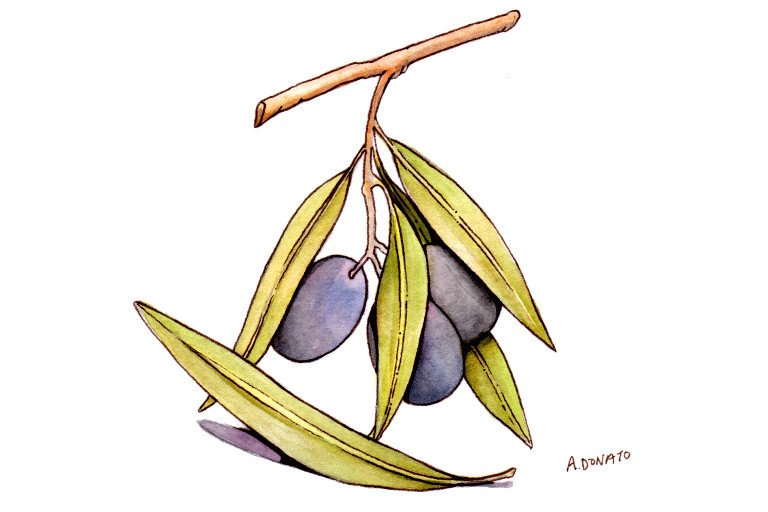
Common Names
- Olive leaf extract
For Patients & Caregivers
Tell your healthcare providers about any dietary supplements you’re taking, such as herbs, vitamins, minerals, and natural or home remedies. This will help them manage your care and keep you safe.
Olive leaf extract has not been shown to prevent or treat cancer in humans.
Olive leaves contain a substance called oleuropein, which is thought to help reduce cholesterol levels and inflammation. Olive leaf extracts (OLE) also reduce glucose levels in the blood. Laboratory studies found that OLE can kill a number of microorganisms including yeasts, bacteria, and fungi. It was also shown to have anticancer effects, but human studies are needed.
-
To prevent or treat cancer
Laboratory results show possible benefit, but human studies have not been conducted. -
To lower cholesterol
Animal studies have shown a possible effect. Human studies are lacking. -
To reduce high blood pressure
Animal and human studies show that olive leaf extract can lower blood pressure. -
To fight infections
Laboratory results show olive leaf extract to be effective against a variety of microorganisms. -
To promote urination
There is no evidence to support this claim.
- Pollen from olive trees can cause severe respiratory allergy.
Do Not Take if:
- You are taking blood pressure medicine: In lab experiments, olive leaf extract increased the blood pressure lowering effect. Clinical relevance has yet to be determined.
- You are taking insulin or other blood sugar medicine: In lab experiments, olive leaf extract lowered blood sugar levels. Clinical relevance has yet to be determined.
For Healthcare Professionals
Derived from the olive plant, both olive leaves and the extract have been used to treat infections, inflammation, diabetes, and hypertension. A major component of olive leaf, oleuropein, has been shown to have antioxidant (1) and anti-inflammatory activity (23). Because of its hypoglycemic effects, the leaf extract can induce insulin release and improve peripheral uptake of glucose (2). It also has antimicrobial (3) (22), anti-HIV (4), and anticancer (13) (14) (15) (18) (19) properties. Animal studies showed antiarrhythmic, spasmolytic, diuretic (5), antihypertensive (6), analgesic (20) (21), and cholesterol-lowering (7) effects.
Small studies suggest olive leaf extracts may reduce metabolic risk factors (25), gastrointestinal discomfort (26) and blood pressure (16) (17) (27). But data on its lipid-lowering effects are mixed (24) (28). Topical use of an olive leaf extract cream was shown to be superior to acyclovir cream in healing herpes simplex virus infection (29).
- Cancer
- High cholesterol
- Hypertension
- Infections
- Promote urination
The cholesterol-lowering effects of olive leaf extracts (OLE) are thought to be due to oleuropein, a compound present in the leaves. Studies on hypercholesterolemic rats suggest that OLE is more effective than pure oleuropein at lowering cholesterol. This implies that a synergistic effect occurs between oleuropein and another substance within the leaf (7).
Oleuropein is converted into elenoic acid in the body which may prevent viruses and bacteria from replicating (8). The antihypertensive and vasodilating effects of olive leaf occurred independently of the integrity of the vascular endothelium (9). Constituents of olive leaf have been shown to strongly inhibit the complement system, although it is unknown what effect this has on the body (10).
Hypoglycemic activities of olive leaf are attributed to two mechanisms: potentiation of glucose-induced insulin release and increased peripheral uptake of glucose. Hypoglycemic activity is greater in samples collected in the winter months (2). OLE may prevent diabetic neuropathy by reducing glucose-induced apoptosis through the inhibition of neural caspase 3 activation (20).
In vitro studies show that OLE has antimicrobial activities against E. coli, Pseudomonas aeruginosa, S. aureus, K. pneumoniae, Trichophyton mentagrophytes, Microsporum canis, T. rubrum, and Candida albicans (3) (22). Anti-HIV properties of OLE include upregulation of the expression of apoptosis inhibitor proteins as well as protein kinase signaling molecules (4). OLE promotes cell differentiation (18) and induces DNA fragmentation leading to apoptosis in leukemia cell line (19).
- Olive tree pollen may cause severe respiratory allergy (12).