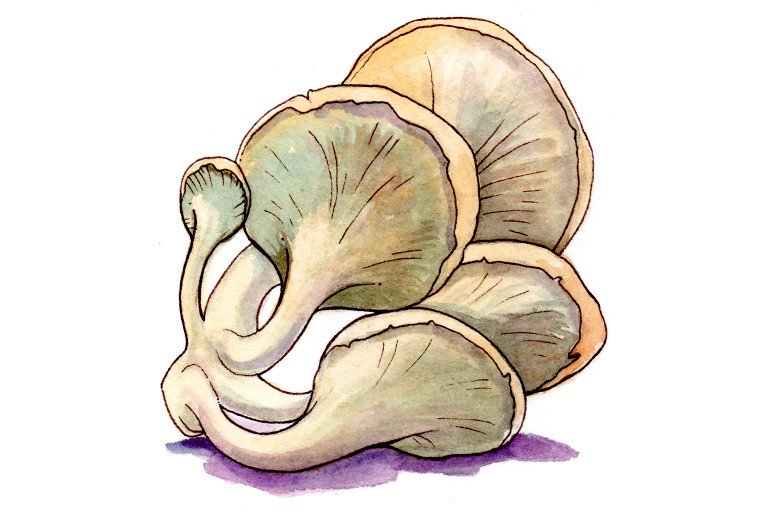
Common Names
- Brown oyster mushroom
- Hao gu
For Patients & Caregivers
Tell your healthcare providers about any dietary supplements you’re taking, such as herbs, vitamins, minerals, and natural or home remedies. This will help them manage your care and keep you safe.
Oyster mushroom has not been shown to treat cancer in humans.
Oyster mushroom is an edible fungus. It is used in traditional medicine to treat high cholesterol, infections, diabetes, and cancer. Lab experiments suggest cholesterol-lowering, antifungal, and antitumor properties.
Studies in human are limited however. One study did not show cholesterol-lowering effects. Other small studies suggest potential benefit in patients with impaired glucose tolerance or type 2 diabetes, but more studies are needed.
- Cancer
Although animal studies suggest some benefit, no such studies have been done in humans. - Antifungal
Lab studies suggest that oyster mushroom has antifungal activity. - High fat levels in the blood
Although animal studies suggest benefit, a clinical trial in HIV patients with high cholesterol levels caused by antiretroviral treatment did not. - Diabetes
Oyster mushroom may lower blood sugar levels and increase insulin levels, but more studies are needed to confirm these effects.
Case reports
- Occupational asthma, widespread lung inflammation, severe allergic reaction: Following exposure to oyster mushroom spores.
- Nausea, vomiting, shortness of breath, and chest pain: In a 31-year old woman, 2 hours after eating oyster mushrooms. An allergy test and complete resolution after treatment confirmed this as the source of her reactions.
Do Not Take if:
- You are allergic to mushrooms.
For Healthcare Professionals
Oyster mushroom is an edible fungus found widely in North America and Europe. It is used in traditional medicine to treat infections, hyperlipidemia, diabetes, and cancer.
Preclinical studies suggest antitumor (1) (7) (8) (9) (12) (13), immunomodulatory (10) (11), antifungal (2), lipid-lowering, and hypoglycemic (3) (6) properties. Beneficial effects are due to constituents such as polysaccharides, lectins, and peptides.
Studies in humans are limited. Oyster mushroom improved postprandial metabolism in patients with impaired glucose tolerance (22) and exhibited hypoglycemic activity in diabetic patients (19). However, it did not lower non-HDL cholesterol in a study of HIV patients with antiretroviral treatment-induced hypercholesterolemia (5). Other small studies suggest that pleuran, a beta-glucan isolated from oyster mushroom, may have anti-allergic effects in children with respiratory tract infections (18).
Oyster mushroom is an edible fungus, available both in fresh and dried forms. The whole mushroom is often used in soups and sauces.
- Cancer
- Diabetes
- Hyperlipidemia
- Infections
Pleurostrin, a peptide derived from the fruiting bodies of oyster mushroom, exhibit antifungal properties (2). The compound mevinolin decreased cholesterol biosynthesis by inhibiting HMG CoA reductase, the rate-limiting enzyme in cholesterol biosynthesis (3). Suggested hypoglycemic mechanisms include increased glucokinase activity and insulin secretion, which increases glucose utilization by peripheral tissues, inhibits glycogen synthase kinase, and promotes glycogen synthesis (19).
A lectin isolated from the fruiting bodies of oyster mushroom demonstrated antitumor activity in mice bearing sarcoma and hepatoma (1). Another study found development of precancerous aberrant crypt foci significantly reduced in mice fed a diet containing 10% pleuran, an isolated beta-glucan (4). RNase Po1, a guanylic acid-specific ribonuclease from oyster mushroom induced apoptosis in tumor cells (18).
The compound ostreolysin caused bradycardia, myocardial ischemia, and ventricular extrasystoles following intravenous injection in mice (14).
Hypersensitivity to oyster mushrooms