Health Care Professional Information
Scientific Name
Tabebuia impetiginosa, Tabebuia avellanedae, Tabebuia heptaphylla
Common Name
Ipe-Roxo, lapacho, purple lapacho, trumpet bush and taheebo
Clinical Summary
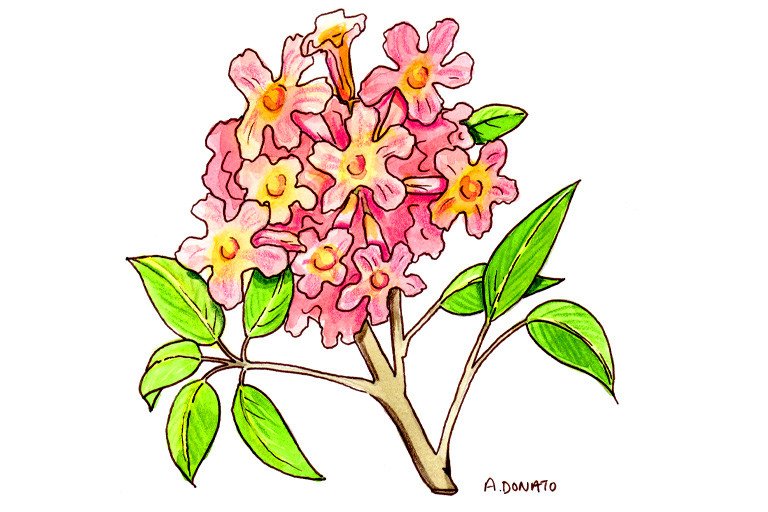
Pau D'arco is a tree native to South America, preparations derived from the bark of which have been traditionally used to treat bacterial, fungal, viral infections, and cancer. Quinones, the main constituents, were shown to be the active principle of Pau D'arco (11) (12) (13) (14).
In vitro and in vivo studies of compounds isolated from Pau D'arco demonstrated antibacterial (3) (4) (5) (6), antifungal (7), antipsoriatic (8), immunomodulatory (9) (10), anti-inflammatory (19), antidepressant (20), anticancer (11) (12) (13) (14), and antimetastatic (14) properties. One of the compounds may also be effective against inflammatory disorders (24). A Pau D'arco extract selectively inhibits growth of ER positive breast cancer cells (21). Human studies are needed to validate these effects.
In a small single-arm study, Lapachol, a naphthoquinone isolated from the tree bark, failed to show any effects on patients with non-leukemic tumors or CML (chronic myelocytic leukemia) (15).
Reported adverse events from use of Pau D'arco include nausea, vomiting, dizziness and anemia (16). It may also enhance the activity of anticoagulants (17).
Purported Uses
- Cancer treatment
- Antibacterial
- Antifungal
Constituents
- Quinone compounds: Lapachol, beta-lapachone, xyloidone (naphthoquinones) and tabebuin (anthroquinone)
- Flavonoids: Quercetin
- Glycosides: Iridoid, lignan, isocoumarin, phenylthanoid, phenolic
- Cyclopentene dialdehydes
(1) (2) (3)
Mechanism of Action
The anticancer activity of beta-lapachone, a quinone compound isolated from Pau D'arco, may be due to down regulation of COX-2 (cyclooxygenase) and telomerase activities (11). Beta-lapachone also induces apoptosis in cancer cells via mitochondrial-signaling (12) or by activating caspases (3) (9) (18). The anti-metastatic activity of beta-lapachone was shown to be through decreasing the invasive ability of cancer cells by inducing Egr-1 that is known to suppress metastasis (14).
Warnings
Some constituents may have toxic effects. The effectiveness of Pau d'arco for the treatment of cancer in humans remains unproven.
Adverse Reactions
- Reported: Nausea, vomiting, dizziness, anemia, bleeding, and discoloration of urine (16).
- Short term administration of Lapachol caused reproductive toxicity (significant reduction in the weight of the seminal vesicle) in adult male rats (22).
- Oral administration of Lapachol resulted in clastogenic effects in rats (23).
Dosage (Inside MSKCC Only)
This field is only visible to only Inside MSKCC users.
References
- Warashina T, Nagatani Y, Noro T. Further constituents from the bark of Tabebuia impetiginosa. Phytochemistry. 2005;66(5):589-597.
- Koyama J, Morita I, Tagahara K, Hirai K. Cyclopentene dialdehydes from Tabebuia impetiginosa. Phytochemistry. 2000;53(8):869-872.
- Park BS, Lee HK, Lee SE, et al. Antibacterial activity of Tabebuia impetiginosa Martius ex DC (Taheebo) against Helicobacter pylori. J Ethnopharmacol. 2006;105(1-2):255-262.
- Anesini C, Perez C. Screening of plants used in Argentine folk medicine for antimicrobial activity. J Ethnopharmacol. 1993;39(2):119-128.
- Park BS, Kim JR, Lee SE, et al. Selective growth-inhibiting effects of compounds identified in Tabebuia impetiginosa inner bark on human intestinal bacteria.J Agric Food Chem. 2005;53(4):1152-1157.
- Pereira EM, Machado Tde B, Leal IC, et al. Tabebuia avellanedae naphthoquinones: activity against methicillin-resistant staphylococcal strains, cytotoxic activity and in vivo dermal irritability analysis. Ann Clin Microbiol Antimicrob. 2006;5:5.
- Portillo A, Vila R, Freixa B, et al. Antifungal activity of Paraguayan plants used in traditional medicine. J Ethnopharmacol. 2001;76(1):93-98.
- Muller K, Sellmer A, Wiegrebe W. Potential antipsoriatic agents: lapacho compounds as potent inhibitors of HaCaT cell growth. J Nat Prod. 1999;62(8):1134-1136.
- Bohler T, Nolting J, Gurragchaa P, et al. Tabebuia avellanedae extracts inhibit IL-2-independent T-lymphocyte activation and proliferation.Transpl Immunol. 2008;18(4):319-323.
- Son DJ, Lim Y, Park YH, et al. Inhibitory effects of Tabebuia impetiginosa inner bark extract on platelet aggregation and vascular smooth muscle cell proliferation through suppressions of arachidonic acid liberation and ERK1/2 MAPK activation. J Ethnopharmacol. 2006;108(1):148-151.
- Lee JH, Cheong J, Park YM, Choi YH. Down-regulation of cyclooxygenase-2 and telomerase activity by beta-lapachone in human prostate carcinoma cells. Pharmacol Res. 2005;51(6):553-560.
- Lee JI, Choi DY, Chung HS, et al. beta-lapachone induces growth inhibition and apoptosis in bladder cancer cells by modulation of Bcl-2 family and activation of caspases. Exp Oncol. 2006;28(1):30-35.
- Kung HN, Chien CL, Chau GY, et al. Involvement of NO/cGMP signaling in the apoptotic and anti-angiogenic effects of beta-lapachone on endothelial cells in vitro. J Cell Physiol. 2007;211(2):522-532.
- Kim SO, Kwon JI, Jeong YK, et al. Induction of Egr-1 is associated with anti-metastatic and anti-invasive ability of beta-lapachone in human hepatocarcinoma cells. Biosci Biotechnol Biochem. 2007;71(9):2169-2176.
- Block JB, Serpick AA, Miller W, Wiernik PH. Early clinical studies with lapachol (NSC-11905). Cancer Chemother Rep 2. 1974;4(4):27-28.
- Foster S. Tyler's Honest Herbal: A Sensible Guide to the Use of Herbs and Related Remedies. New York: Haworth Herbal Press; 1999.
- Brinker F. Herb Contraindications and Drug Interactions. 2nd ed. Sandy (OR): Eclectic Med Publications; 1998.
- Woo HJ, Park KY, Rhu CH, et al. Beta-lapachone, a quinone isolated from Tabebuia avellanedae, induces apoptosis in HepG2 hepatoma cell line through induction of Bax and activation of caspase. J Med Food. 2006;9(2):161-168.
- Byeon SE, Chung JY, Lee YG, et al. In vitro and in vivo anti-inflammatory effects of taheebo, a water extract from the inner bark of Tabebuia avellanedae. J Ethnopharmacol. 2008 Sep 2;119(1):145-52.
- Freitas AE, Budni J, Lobato KR, et al. Antidepressant-like action of the ethanolic extract from Tabebuia avellanedae in mice: evidence for the involvement of the monoaminergic system. Prog Neuropsychopharmacol Biol Psychiatry. 2010 Mar 17;34(2):335-43.
- Mukherjee B, Telang N, Wong GY. Growth inhibition of estrogen receptor positive human breast cancer cells by Taheebo from the inner bark of Tabebuia avellandae tree. Int J Mol Med. 2009 Aug;24(2):253-60.
- de Cássia da Silveira E Sá R, de Oliveira Guerra M. Reproductive toxicity of lapachol in adult male Wistar rats submitted to short-term treatment. Phytother Res. 2007 Jul;21(7):658-62.
- Maistro EL, Fernandes DM, Pereira FM, Andrade SF. Lapachol induces clastogenic effects in rats. Planta Med. 2010 Jun;76(9):858-62.
- Xu J, Wagoner G, Douglas JC, Drew PD. β-Lapachone ameliorization of experimental autoimmune encephalomyelitis. J Neuroimmunol. 2012 Sep 22.[Epub ahead of print]
Consumer Information
How It Works
Bottom Line: Pau D'arco has antibacterial and anticancer activities in laboratory studies, but these effects have not been shown in humans.
Pau D'arco, a tree native to South America, has been used in traditional medicine for a wide range of ailments. In laboratory studies, compounds extracted from Pau d'arco showed antibacterial, antifungal, anti-inflammatory, antidepressant, and anticancer properties. However, the safety and effectiveness of these compounds has not been tested in humans.
Purported Uses
- To treat cancer
A small study done on 21 cancer patients did not show any benefits of Pau D'arco.
- To treat infections
Laboratory studies showed that Pau D'arco has antibacterial and antifungal activities. It has not been tested in humans.
Patient Warnings
- Some compounds found in Pau D'arco may have toxic effects.
Side Effects
- Nausea
- Vomiting
- Dizziness
- Anemia
- Increased risk of bleeding
- Discoloration of urine
- Short term administration of Lapachol caused reproductive toxicity (significant reduction in the weight of the seminal vesicle) in adult male rats.
- Oral administration of Lapachol resulted in chromosomal aberrations in rats.
Last updated: December 7, 2012
administration (ad-MIH-nih-STRAY-shun)
In medicine, the act of giving a treatment, such as a drug, to a patient. It can also refer to the way it is given, the dose, or how often it is given.
Source: The National Cancer Institute's Dictionary of Cancer Terms
(http://www.cancer.gov/dictionary)
anemia (uh-NEE-mee-uh)
A condition in which the number of red blood cells is below normal.
Source: The National Cancer Institute's Dictionary of Cancer Terms
(http://www.cancer.gov/dictionary)
anti-inflammatory (AN-tee-in-FLA-muh-TOR-ee)
Having to do with reducing inflammation.
Source: The National Cancer Institute's Dictionary of Cancer Terms
(http://www.cancer.gov/dictionary)
antibacterial (AN-tee-bak-TEER-ee-ul)
A substance that kills bacteria or stops them from growing and causing disease.
Source: The National Cancer Institute's Dictionary of Cancer Terms
(http://www.cancer.gov/dictionary)
antidepressant (AN-tee-dee-PREH-sunt)
A drug used to treat depression.
Source: The National Cancer Institute's Dictionary of Cancer Terms
(http://www.cancer.gov/dictionary)
antifungal (AN-tee-FUN-gul)
A drug that treats infections caused by fungi.
Source: The National Cancer Institute's Dictionary of Cancer Terms
(http://www.cancer.gov/dictionary)
apoptosis (A-pop-TOH-sis)
A type of cell death in which a series of molecular steps in a cell leads to its death. This is the body’s normal way of getting rid of unneeded or abnormal cells. The process of apoptosis may be blocked in cancer cells. Also called programmed cell death.
Source: The National Cancer Institute's Dictionary of Cancer Terms
(http://www.cancer.gov/dictionary)
breast (brest)
Glandular organ located on the chest. The breast is made up of connective tissue, fat, and breast tissue that contains the glands that can make milk. Also called mammary gland.
Source: The National Cancer Institute's Dictionary of Cancer Terms
(http://www.cancer.gov/dictionary)
cancer (KAN-ser)
A term for diseases in which abnormal cells divide without control and can invade nearby tissues. Cancer cells can also spread to other parts of the body through the blood and lymph systems. There are several main types of cancer. Carcinoma is a cancer that begins in the skin or in tissues that line or cover internal organs. Sarcoma is a cancer that begins in bone, cartilage, fat, muscle, blood vessels, or other connective or supportive tissue. Leukemia is a cancer that starts in blood-forming tissue such as the bone marrow, and causes large numbers of abnormal blood cells to be produced and enter the blood. Lymphoma and multiple myeloma are cancers that begin in the cells of the immune system. Central nervous system cancers are cancers that begin in the tissues of the brain and spinal cord. Also called malignancy.
Source: The National Cancer Institute's Dictionary of Cancer Terms
(http://www.cancer.gov/dictionary)
CML
A slowly progressing disease in which too many white blood cells (not lymphocytes) are made in the bone marrow. Also called chronic granulocytic leukemia, chronic myelogenous leukemia, and chronic myeloid leukemia.
Source: The National Cancer Institute's Dictionary of Cancer Terms
(http://www.cancer.gov/dictionary)
compound (KOM-pownd)
In science, a substance that is made up of more than one ingredient.
Source: The National Cancer Institute's Dictionary of Cancer Terms
(http://www.cancer.gov/dictionary)
COX-2
An enzyme that speeds up the formation of substances that cause inflammation and pain. It may also cause tumor cells to grow. Some tumors have high levels of COX-2 and blocking its activity may reduce tumor growth. Also called cyclooxygenase-2 and prostaglandin-endoperoxide synthase 2.
Source: The National Cancer Institute's Dictionary of Cancer Terms
(http://www.cancer.gov/dictionary)
drug (drug)
Any substance, other than food, that is used to prevent, diagnose, treat or relieve symptoms of a disease or abnormal condition. Also refers to a substance that alters mood or body function, or that can be habit-forming or addictive, especially a narcotic.
Source: The National Cancer Institute's Dictionary of Cancer Terms
(http://www.cancer.gov/dictionary)
ER
A protein found inside the cells of the female reproductive tissue, some other types of tissue, and some cancer cells. The hormone estrogen will bind to the receptors inside the cells and may cause the cells to grow. Also called estrogen receptor.
Source: The National Cancer Institute's Dictionary of Cancer Terms
(http://www.cancer.gov/dictionary)
extract (EK-strakt)
In medicine, a preparation of a substance obtained from plants, animals, or bacteria and used as a drug or in drugs.
Source: The National Cancer Institute's Dictionary of Cancer Terms
(http://www.cancer.gov/dictionary)
in vitro (in VEE-troh)
In the laboratory (outside the body). The opposite of in vivo (in the body).
Source: The National Cancer Institute's Dictionary of Cancer Terms
(http://www.cancer.gov/dictionary)
in vivo (in VEE-voh)
In the body. The opposite of in vitro (outside the body or in the laboratory).
Source: The National Cancer Institute's Dictionary of Cancer Terms
(http://www.cancer.gov/dictionary)
inflammatory (in-FLA-muh-TOR-ee)
Having to do with inflammation (redness, swelling, pain, and a feeling of heat that helps protect tissues affected by injury or disease).
Source: The National Cancer Institute's Dictionary of Cancer Terms
(http://www.cancer.gov/dictionary)
medicine (MEH-dih-sin)
Refers to the practices and procedures used for the prevention, treatment, or relief of symptoms of a diseases or abnormal conditions. This term may also refer to a legal drug used for the same purpose.
Source: The National Cancer Institute's Dictionary of Cancer Terms
(http://www.cancer.gov/dictionary)
metastasis (meh-TAS-tuh-sis)
The spread of cancer from one part of the body to another. A tumor formed by cells that have spread is called a “metastatic tumor” or a “metastasis.” The metastatic tumor contains cells that are like those in the original (primary) tumor. The plural form of metastasis is metastases (meh-TAS-tuh-SEEZ).
Source: The National Cancer Institute's Dictionary of Cancer Terms
(http://www.cancer.gov/dictionary)
nausea (NAW-zee-uh)
A feeling of sickness or discomfort in the stomach that may come with an urge to vomit. Nausea is a side effect of some types of cancer therapy.
Source: The National Cancer Institute's Dictionary of Cancer Terms
(http://www.cancer.gov/dictionary)
oral (OR-ul)
By or having to do with the mouth.
Source: The National Cancer Institute's Dictionary of Cancer Terms
(http://www.cancer.gov/dictionary)
reduction (ree-DUK-shun)
A chemical reaction that takes place when a substance comes into contact with hydrogen or another reducing substance.
Source: The National Cancer Institute's Dictionary of Cancer Terms
(http://www.cancer.gov/dictionary)
telomerase (teh-LOH-meh-rays)
An enzyme in cells that helps keep them alive by adding DNA to telomeres (the ends of chromosomes). Each time a cell divides, the telomeres lose a small amount of DNA and become shorter. Over time, the chromosomes become damaged and the cells die. Telomerase helps keep this from happening. Cancer cells usually have more telomerase than most normal cells.
Source: The National Cancer Institute's Dictionary of Cancer Terms
(http://www.cancer.gov/dictionary)
toxic (TOK-sik)
Having to do with poison or something harmful to the body. Toxic substances usually cause unwanted side effects.
Source: The National Cancer Institute's Dictionary of Cancer Terms
(http://www.cancer.gov/dictionary)
toxicity (tok-SIH-sih-tee)
The extent to which something is poisonous or harmful.
Source: The National Cancer Institute's Dictionary of Cancer Terms
(http://www.cancer.gov/dictionary)
urine (YOOR-in)
Fluid containing water and waste products. Urine is made by the kidneys, stored in the bladder, and leaves the body through the urethra.
Source: The National Cancer Institute's Dictionary of Cancer Terms
(http://www.cancer.gov/dictionary)