About Herbs, Botanicals & Other Products

Brand Name

PC SPES® (BotanicLab); Prostate-Res™ (ARC Nutrition)

Clinical Summary

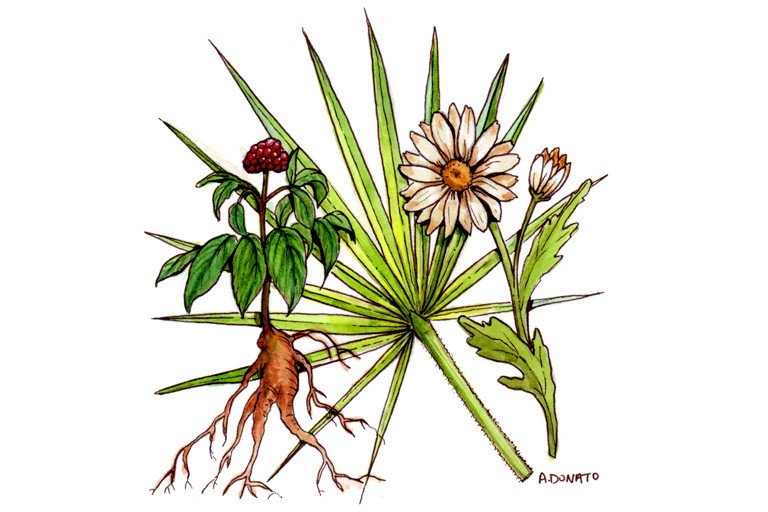
PC-SPES is a supplement consisting of eight herbs: reishi mushroom, baikal skullcap, rabdosia, dyer's woad, chrysanthemum, saw palmetto, panax ginseng, and licorice. Patients use it to treat prostate cancer. Published studies document efficacy of PC-SPES (10) (14) (15) (16). In vitro testing reveals suppression of human tumor cell lines, including androgen-sensitive and -insensitive prostate cancer (7) (12). Use of PC-SPES brings about significant decreases in androgen and PSA levels in humans. It is thought that PC-SPES contains phytoestrogens (17) and other undefined components that contribute to its activity.

Concerns about contamination with DES, warfarin, and alprazolam resulted in a voluntary recall of PC-SPES by Botanic Labs, the manufacturer of PC-SPES in 2002.

Purported Uses
  • Prostate cancer
Constituents
Mechanism of Action

The active components of PC-SPES are unknown. Laboratory analysis of PC-SPES by HPLC, gas chromatography, and mass spectrometry indicate the presence of estrogenic organic compounds different from diethylstilbestrol(DES), estrone, and estradiol. In vitro testing of this extract shows suppressed cell proliferation and reduced clonogenicity in human tumor cell lines, including prostrate, breast, and colon. The predominant cell cycle effect induced by PC-SPES is prolongation of G1 phase; however, apoptosis was observed after exposure of tumor cells to PC-SPES for 48 hours or longer. PC-SPES also inhibits proliferation of LNCaP prostate cell lines, associated with a 60-70% down regulation of the proliferating cell nuclear antigen. Preliminary studies evaluating the viability of prostate cancer cell lines LNCaP, LNCaP apoptosis-resistant derivative, LNCaP-bcl-2, PC3, and DU145 at three concentrations of PC-SPES show inhibited growth at concentrations of 4 mcg/ml or less. Another recent in vitro study indicates its cytotoxicity may be due to alteration of expression of specific genes involved in regulating the cell cycle, cell structure and androgen response. No single botanical or chemical extract appears responsible for the overall effects of this product. PC-SPES has been found to contain small amount of diethylstiberstrol and ethinyl estradiol. It is unclear whether these agents account for PC-SPES anticancer effects.
(2) (3) (4) (5) (6) (7) (12) (13) (14) (16)

Warnings
  • Concerns about product contamination with prescription drugs, such as DES, warfarin, and alprazolam resulted in a voluntary recall of PC-SPES by Botanic Labs, the manufacturer of PC-SPES in 2002.
  • PC-SPES should not be confused with SPES, an immunostimulant that contains 15 botanicals, sold by BotanicLab. SPES was also recalled in 2002 because of contaminated products.
Adverse Reactions

Common: Mastalgia, gynecomastia, sexual dysfunction, decreased libido, transient GI symptoms, diarrhea, and dyspepsia (8).
Infrequent: Pulmonary embolism, deep vein thrombosis, phlebitis, edema, and allergic reactions (10).
Case report: Retroperitoneal hemorrhage (9)

Herb Lab Interactions
  • Reduced PSA levels (2)
  • Decreased serum potassium (10)
Literature Summary and Critique

Small EJ, et al. Prospective trial of the herbal supplement PC-SPES in patients with progressive prostate cancer. J Clin Oncol 2000;18:3595-603.
A prospective phase II study to assess the efficacy and toxicity of PC-SPES in androgen- dependent or -independent prostate cancer. Thirty-three patients with androgen-dependent prostate cancer (ADPCa) and 37 patients with androgen-independent (AIPCa) were treated with PC-SPES at a dose of nine capsules daily. Clinical outcomes were assessed with serial serum prostate-specific androgen (PSA) level measurement and imaging studies. One hundred percent of ADPCa patients experienced a PSA decline of >/=80%, with a median duration of 57+ weeks. No patient developed PSA progression. In 31 patients (97%), testosterone levels dropped to the anorchid range. Two ADPCa patients had positive bone scans; both improved. One patient with a bladder mass measurable on CT scan experienced disappearance of this mass. Nineteen (54%) of 35 AIPCa patients had a PSA decline of >/=50%, including eight (50%) of l6 patients who had received prior ketoconazole therapy. Severe toxicities included thromboembolic events (n=3) and allergic reactions (n=3). Other frequent toxicities included gynecomastia, leg cramps, and grade 1 or 2 diarrhea.

De la Taille A, et al. Herbal therapy PC-SPES: in vitro effects and evaluation of its efficacy in 69 patients with prostate cancer. J Urol 2000;164:1229-34.
Of the 69 prostate cancer patients, 82% had decreased serum PSA 2 months, 78% 6 months and 88% 12 months after treatment with PC-SPES. Side effects in the treated population included nipple tenderness in 42% and phlebitis requiring heparinization in 2%. PC-SPES was effective in inducing apoptosis of hormone-sensitive and -insensitive prostate cancer cells in vitro, and in suppressing the growth rate of hormone-insensitive prostate cancer cell lines in vivo.

Bonham M, et al. Molecular effects of the herbal compound PC-SPES: identification of activity pathways in prostate carcinoma. Cancer Res 2002;62:3920-4.
LNCaP prostate carcinoma cells were exposed to PC-SPES and other estrogenic agents such as DES. PC-SPES was shown to alter the expression of 156 genes after 24 hours of exposure. Alpha- and beta- tubulins and androgen receptors were down regulated. Comparative analysis between PC-SPES and DES on cytotoxicity and gene expression changes shows that PC-SPES may have effects on prostate cancer cells other than its anti-estrogenic activities.

Oh WK, et al. Prospective, Multicenter, Randomized Phase II Trial of the Herbal Supplement, PC-SPES, and Diethylstilbestrol in Patients With Androgen-Independent Prostate Cancer. J Clin Oncol 2004;22
This is a randomized phase II study involved 90 patients with androgen independent prostate cancer. Patients received either PC-SPES capsules 3 times daily or diethylstilbestrol (DES) 3mg orally daily. The study was discontinued prematurely after contaminants, including DES and ethinyl estradiol, were detected in PC-SPES. Available data suggests PC-SPES has moderate activity in decreasing prostate-specific antigen level. However, it is unclear which components account for this activity.

References
  1. Anon. PC SPES® For Prostate Health: Product information. Brea (CA): BotanicLab; 2000.
  2. De la Taille A, et al. Effects of a phytotherapeutic agent, PC-SPES, on prostate cancer: a preliminary investigation on human cell lines and patients. BJU Int 1999;84:845-50.
  3. Tiwari RK, et al. Anti-tumor effects of PC-SPES, an herbal formulation in prostate cancer. Int J Oncol 1999;14:713-9.
  4. Chenn S. In vitro mechanism of PC SPES. Urology 2001;58:28-35.
  5. Kubota T, et al. PC-SPES: a unique inhibitor of proliferation of prostate cancer cells in vitro and in vivo. Prostate 2000;42:163-71.
  6. Hsieh TC, Wu JM. Mechanism of action of herbal supplement PC-SPES: elucidation of effects of individual herbs of PC-SPES on cell proliferation and prostate specific gene expression in androgen-dependent LNCaP cells. Int J Oncol 2002;20:583-8.
  7. DiPaola R, et al. Clinical and biologic activity of an estrogenic herbal combination (PC-SPES) in prostate cancer. N Engl J Med 1998;339:785-91.
  8. Pfeifer BL, et al. PC-SPES, a dietary supplement for the treatment of hormone-refractory prostate cancer. BJU Int 2000;85:481-5.
  9. Weinrobe MC, Montgomery B. Acquired bleeding diathesis in a patient taking PC-SPES. N Engl J Med 2001;345:1213-4.
  10. Small EJ, et al. Prospective trial of the herbal supplement PC-SPES in patients with progressive prostate cancer. J Clin Oncol 2000;18:3595-603.
  11. Brinker F. Herb Contraindications and Drug Interactions, 3rd ed. Sandy (OR): Eclectic Medical Publications; 2001.
  12. Bonham M, et al. Molecular effects of the herbal compound PC-SPES: identification of activity pathways in prostate carcinoma. Cancer Res 2002;62:3920-4.
  13. Hsu MJ, Lee SS, Lin WW. Polysaccharide purified from Ganoderma lucidum inhibits spontaneous and Fas-mediated apoptosis in human neutrophils through activation of the phosphatidylinositol 3 kinase/Akt signaling pathway. J Leukoc Biol 2002;72:207-16.
  14. De la Taille A, et al. Herbal therapy PC-SPES: in vitro effects and evaluation of its efficacy in 69 patients with prostate cancer. J Urol 2000;164:1229-34.
  15. Porterfield H. Survey of UsToo members and other prostate cancer patients to evaluate the efficacy and safety of PC-SPES. Mol Urol 1999;3:333-6.
  16. Oh WK, et al. Prospective, Multicenter, Randomized Phase II Trial of the Herbal Supplement, PC-SPES, and Diethylstilbestrol in Patients With Androgen-Independent Prostate Cancer. J Clin Oncol 2004;22(18):3657-9.
  17. Bonham M, et al. Characterization of chemical constituents in Scutellaria baicalensis with antiandrogenic and growth-inhibitory activities toward prostate carcinoma. Clin Cancer Res 2005 11(10):3905-14.
How It Works

Bottom Line: There is no evidence that PC-SPES can shrink prostate tumors or prolong survival in cancer patients.

PC-SPES is a supplement containing eight herbs (reishi mushroom, baikal skullcap, rabdosia, dyer's woad, chrysanthemum, saw palmetto, panax ginseng, and licorice.) Scientists do not know which substances in PC-SPES account for its activity. No single botanical or chemical extract appears responsible for the overall effects of this product. Laboratory tests have analyzed the makeup of PC-SPES and have identified estrogen-like compounds that suppress growth and proliferation of human tumor cell lines on contact, including breast, colon, hormone-dependent prostate and hormone-independent prostrate. PC-SPES appears to interfere with the process of tumor cell division and also causes tumor cell death (apoptosis) when cells are exposed to it long enough. The ability of PC-SPES to kill cancer cells may be due to alteration of expression of specific genes involved in regulating the cell cycle, cell structure and response to androgens (such as testosterone). This effect has not been confirmed in humans.
PC-SPES has been found to contain small amount of prescription drugs, including diethylstiberstrol and ethinyl estradiol and was taken off the market. It is unclear whether these agents account for its anticancer effects.

Purported Uses
  • To treat prostate cancer
    Several studies showed that PC-SPES can lower PSA levels, but none found the evidence for its anticancer effects in men with prostate cancer.
Research Evidence

Cancer treatment
A phase II study looked at the effect of PC-SPES in 33 patients with hormone-dependent and 37 patients with hormone-independent prostate cancer. Patients received nine capsules of PC-SPES daily. All patients with hormone-dependent cancer had a decline in PSA levels of greater than or equal to 80% and most saw their testosterone levels drop significantly. PSA levels dropped by at least half in 19 patients with hormone-independent tumors. Although drops in PSA levels is a good sign, the fact that only three patients had tumor shrinkage indicates that this is not an effective cancer therapy. Three patients developed blood clots and three had allergic reactions to PC-SPES. Leg cramps, diarrhea, and breast growth were other side effects.

In another study of 69 prostate cancer patients taking PC-SPES, blood PSA levels dropped in 82% of patients at two months, in 78% of patients at six months, and in 88% of patients at 12 months. Side effects included many cases of nipple tenderness in and one case of phlebitis (vein inflammation). Again, although a PSA drop is a good sign, it is more important if the tumors shrink, which was not addressed in this study.

Sixteen men previously treated for advanced metastatic prostate cancer who had not responded to hormonal therapy took three capsules of PC-SPES three times a day for 20 weeks. Fourteen of these men also underwent other therapies, including LHRH-agonist, anti-androgens, and removal of the testes. After treatment, patients reported a significant improvement in quality of life and had over a 50% reduction in PSA levels. Eight men reported breast tenderness. However, the researchers do not report if patients experienced progression of disease.

A survey was carried out of UsToo members and other prostate cancer patients taking PC-SPES. Out of 82 patients, beneficial effects were reported in 77%, the other 23% reporting more limited or marginal results. Reductions in PSA were reported and were sustained for the duration PC-SPES therapy, approaching 2 years in some cases. However, tumor shrinkage was not reported.

Patient Warnings
  • PC-SPES was recalled and its production was halted in February 2002 because of product contamination with the prescription drugs warfarin, alprazolam, and diethylstilbestrol.
  • PC-SPES should not be confused with SPES, an immunostimulant that contains 15 botanicals, sold by BotanicLab. SPES was also recalled for contamination in February 2002.
Side Effects
  • Mastalgia (breast pain)
  • Gynecomastia (enlargement of the breasts)
  • Sexual dysfunction and/or decreased libido
  • GI symptoms, diarrhea, and dyspepsia
  • Rare: Pulmonary embolism (blood clot in the lungs), deep vein thrombosis (blood clot), phlebitis (inflammation of a vein), edema (swelling), and allergic reactions.
  • Case report: Retroperitoneal hemorrhage (bleeding from the lining of the abdominal cavity).
Dosage (Inside MSKCC Only)
This field is only visible to only Inside MSKCC users.
Aliases
SPES
E-mail your questions and comments to aboutherbs@mskcc.org.