Health Care Professional Information
Brand Name
Umckaloabo®, Umcka® cold care
Clinical Summary
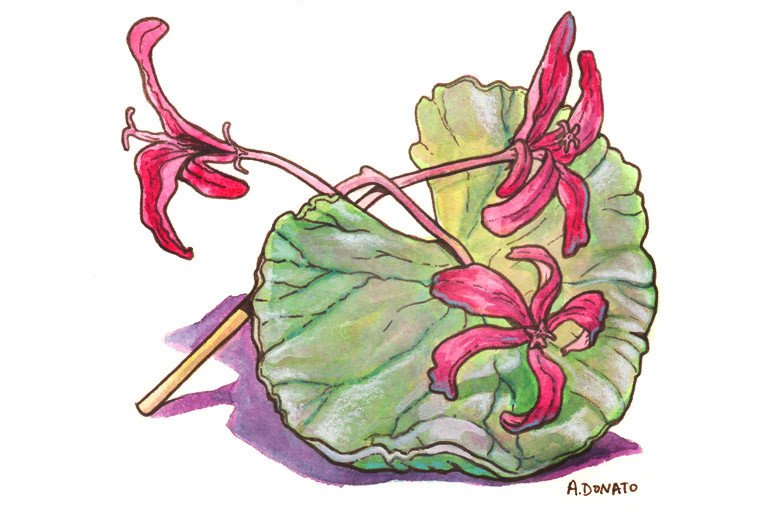
Pelargonium sidoides is an herb that has been used in traditional medicine in South Africa for centuries to treat infectious respiratory disease, and dysentery diarrhea. The root extracts are currently being used in Germany for the treatment of respiratory infections (1). Patients take the supplemental form to treat common cold and acute bronchitis. In vitro studies indicate that P. sidoides has antibacterial (2), antiviral (3), immunomodulatory (4) and anti-adhesive (5) properties.
Data from clinical trials suggest its effectiveness against acute bronchitis in adults and children (6) (7) (8), and against rhinosinusitis (9). Conclusions of a meta-analysis also show a significant decrease in bronchitis symptoms with P. sidoides use (10).
Mild to moderate adverse events have been reported in a few patients that include gastrointestinal disorders, nervous system disorders, and ear and labyrinth disorders (10) (8).
Purported Uses
- Dysentery
- Diarrhea
- Common cold
- Bronchitis
Constituents
- Polymeric proanthocyanidins
- Monomeric falvan-3-ols
- 7-Hydroxyl-Coumarins (umckalin)
- Polyphenols (catechin)
- Phenolic acids with gallic acid
- Quercetin
- Sitosterol-glucoside
(1) (5)
Mechanism of Action
P. sidoides extract has anti-microbial and immunomodulatory effects. It was shown to increase natural killer cell formation, tumor necrosis factor alpha, iNO and interferon-beta release, and also demonstrated anti-adhesive effects (5). In addition, the extract improved peripheral blood phagocytes by enhancing the oxidative burst and intracellular killing in vitro (11).
Adverse Reactions
- Allergic reactions (12)
- Gastrointestinal upset (13)
- Ear and labyrinth disorders (13)
- Exacerbation of existing respiratory symptoms, fever, exanthema, psychomotor unrest, and diarrhea in children have been reported (8).
Herb-Drug Interactions
Due to its coumarin content, P. sidoides may increase the risk of bleeding. However, coadministration with warfarin did not change the blood coagulation values in animals (14).
Literature Summary and Critique
Matthys H, Eisebitt R, Seith B, Heger M. Efficacy and safety of an extract of Pelargonium sidoides (EPs 7630) in adults with acute bronchitis. A randomised, double-blind, placebo-controlled trial. Phytomedicine. 2003;10 Suppl 4:7-17.
In this study, 468 adults presenting with bronchitis were randomized, to Pelargonium sidoides (EPs 7630) or placebo for seven days. On day seven, the treatment group had a higher recovery rate and improvement in hoarseness, headache and pain in limbs compared to patients on placebo. Patients in the treatment group also had a shorter duration of illness compared to those who took placebo.
Schulz V. Liquid herbal drug preparation from the root of Pelargonium sidoides is effective against acute bronchitis: results of a double-blind study with 124 patients. Phytomedicine. 2007;14 Suppl 6:74-75.
One hundred and twenty-four adults aged 18 years and over with a Bronchitis Severity Score (BSS) of greater than 5 points were randomized to Pelargonium sidoides liquid or placebo for seven days. Researchers report that on day seven, patients who were administered P. sidoides had a greater reduction in BSS, the primary outcome measure, than those on placebo. The findings should be confirmed in larger trials.
Dosage (Inside MSKCC Only)
This field is only visible to only Inside MSKCC users.
References
- Schulz V. Liquid herbal drug preparation from the root of Pelargonium sidoides is effective against acute bronchitis: results of a double-blind study with 124 patients. Phytomedicine. 2007;14 Suppl 6:74-75.
- Kim CE, Griffiths WJ, Taylor PW. Components derived from Pelargonium stimulate macrophage killing of Mycobacterium species. J Appl Microbiol. Apr 2009;106(4):1184-1193.
- Michaelis M, Doerr HW, Cinatl J, Jr. Investigation of the influence of EPs((R)) 7630, a herbal drug preparation from Pelargonium sidoides, on replication of a broad panel of respiratory viruses. Phytomedicine. Oct 29 2010.
- Luna LA, Jr., Bachi AL, Novaes EBRR, et al.Immune responses induced by Pelargonium sidoides extract in serum and nasal mucosa of athletes after exhaustive exercise: Modulation of secretory IgA, IL-6 and IL-15. Phytomedicine. Sep 16 2010.
- Wittschier N, Faller G, Hensel A. An extract of Pelargonium sidoides (EPs 7630) inhibits in situ adhesion of Helicobacter pylori to human stomach. Phytomedicine. Apr 2007;14(4):285-288.
- Matthys H, Heger M. Treatment of acute bronchitis with a liquid herbal drug preparation from Pelargonium sidoides (EPs 7630): a randomised, double-blind, placebo-controlled, multicentre study. Curr Med Res Opin. Feb 2007;23(2):323-331.
- Kamin W, Maydannik V, Malek FA, Kieser M. Efficacy and tolerability of EPs 7630 in children and adolescents with acute bronchitis - a randomized, double-blind, placebo-controlled multicenter trial with a herbal drug preparation from Pelargonium sidoides roots. Int J Clin Pharmacol Ther. Mar 2010;48(3):184-191.
- Haidvogl M, Heger M. Treatment effect and safety of EPs 7630-solution in acute bronchitis in childhood: report of a multicentre observational study.Phytomedicine. 2007;14 Suppl 6:60-64.
- Bachert C, Schapowal A, Funk P, Kieser M. Treatment of acute rhinosinusitis with the preparation from Pelargonium sidoides EPs 7630: a randomized, double-blind, placebo-controlled trial. Rhinology. Mar 2009;47(1):51-58.
- Agbabiaka TB, Guo R, Ernst E. Pelargonium sidoides for acute bronchitis: a systematic review and meta-analysis. Phytomedicine. May 2008;15(5):378-385.
- Conrad A, Hansmann C, Engels I, Daschner FD, Frank U. Extract of Pelargonium sidoides (EPs 7630) improves phagocytosis, oxidative burst, and intracellular killing of human peripheral blood phagocytes in vitro. Phytomedicine. 2007;14 Suppl 6:46-51.
- de Boer HJ, Hagemann U, Bate J, Meyboom RH. Allergic reactions to medicines derived from Pelargonium species. Drug Saf. 2007;30(8):677-680.
- Matthys H, Eisebitt R, Seith B, Heger M. Efficacy and safety of an extract of Pelargonium sidoides (EPs 7630) in adults with acute bronchitis. A randomised, double-blind, placebo-controlled trial. Phytomedicine. 2003;10 Suppl 4:7-17.
- Koch E, Biber A. Treatment of rats with the Pelargonium sidoides extract EPs 7630 has no effect on blood coagulation parameters or on the pharmacokinetics of warfarin. Phytomedicine. 2007;14 Suppl 6:40-45.
Consumer Information
How It Works
Bottom line: Pelargonium sidoides helps reduce cold symptoms.
Pelargonium sidoides is an herb that has been used in traditional medicine in South Africa for centuries. It is used in Europe in treating common cold, and bronchitis. In laboratory studies, this herb was shown to kill bacteria, viruses, and stimulate the immune system. Human studies show that it can reduce the symptoms of common cold and bronchitis.
Purported Uses
- Dysentery
Although P. sidoides is used to treat dysentery in traditional medicine, there is no scientific evidence to back this claim.
- Common cold
A few studies support use of P. sidoides in reducing symptoms.
- Bronchitis
Clinical trial data shows that P. sidoides is effective against acute and chronic bronchitis.
Research Evidence
Bronchitis:
In this study, 468 adults presenting with symptoms of bronchitis were randomized to Pelargonium sidoides (EPs 7630) or placebo for seven days. On day seven, researchers observed that the treatment group had a higher recovery rate and improvement in hoarseness, headache and pain in limbs compared to patients on placebo. Patients in the treatment group also had a shorter duration of illness compared to those who took placebo.
In another study 124 adults aged 18 years and over with a Bronchitis Severity Score (BSS) of greater than 5 points were randomized to Pelargonium sidoides liquid or placebo. Patients who were administered P. sidoides had a greater reduction in BSS than those on placebo.
Side Effects
- Allergies
- Gastrointestinal upset
- Ear and labyrinth disorders
- Fever
- Diarrhea
- Restlessness
Last updated: January 18, 2012
acute (uh-KYOOT)
Symptoms or signs that begin and worsen quickly; not chronic.
Source: The National Cancer Institute's Dictionary of Cancer Terms
(http://www.cancer.gov/dictionary)
antibacterial (AN-tee-bak-TEER-ee-ul)
A substance that kills bacteria or stops them from growing and causing disease.
Source: The National Cancer Institute's Dictionary of Cancer Terms
(http://www.cancer.gov/dictionary)
antiviral (AN-tee-VY-rul)
A drug used to treat infections caused by viruses.
Source: The National Cancer Institute's Dictionary of Cancer Terms
(http://www.cancer.gov/dictionary)
bacteria (bak-TEER-ee-uh)
A large group of single-cell microorganisms. Some cause infections and disease in animals and humans. The singular of bacteria is bacterium.
Source: The National Cancer Institute's Dictionary of Cancer Terms
(http://www.cancer.gov/dictionary)
blood (blud)
A tissue with red blood cells, white blood cells, platelets, and other substances suspended in fluid called plasma. Blood takes oxygen and nutrients to the tissues, and carries away wastes.
Source: The National Cancer Institute's Dictionary of Cancer Terms
(http://www.cancer.gov/dictionary)
bronchitis (bron-KY-tis)
Inflammation (swelling and reddening) of the bronchi.
Source: The National Cancer Institute's Dictionary of Cancer Terms
(http://www.cancer.gov/dictionary)
cell (sel)
The individual unit that makes up the tissues of the body. All living things are made up of one or more cells.
Source: The National Cancer Institute's Dictionary of Cancer Terms
(http://www.cancer.gov/dictionary)
chronic (KRAH-nik)
A disease or condition that persists or progresses over a long period of time.
Source: The National Cancer Institute's Dictionary of Cancer Terms
(http://www.cancer.gov/dictionary)
clinical (KLIH-nih-kul)
Having to do with the examination and treatment of patients.
Source: The National Cancer Institute's Dictionary of Cancer Terms
(http://www.cancer.gov/dictionary)
clinical trial (KLIH-nih-kul TRY-ul)
A type of research study that tests how well new medical approaches work in people. These studies test new methods of screening, prevention, diagnosis, or treatment of a disease. Also called clinical study.
Source: The National Cancer Institute's Dictionary of Cancer Terms
(http://www.cancer.gov/dictionary)
diarrhea (dy-uh-REE-uh)
Frequent and watery bowel movements.
Source: The National Cancer Institute's Dictionary of Cancer Terms
(http://www.cancer.gov/dictionary)
extract (EK-strakt)
In medicine, a preparation of a substance obtained from plants, animals, or bacteria and used as a drug or in drugs.
Source: The National Cancer Institute's Dictionary of Cancer Terms
(http://www.cancer.gov/dictionary)
fever (FEE-ver)
An increase in body temperature above normal (98.6 degrees F), usually caused by disease.
Source: The National Cancer Institute's Dictionary of Cancer Terms
(http://www.cancer.gov/dictionary)
gastrointestinal (GAS-troh-in-TES-tih-nul)
Refers to the stomach and intestines. Also called GI.
Source: The National Cancer Institute's Dictionary of Cancer Terms
(http://www.cancer.gov/dictionary)
immune system (ih-MYOON SIS-tem)
The complex group of organs and cells that defends the body against infections and other diseases.
Source: The National Cancer Institute's Dictionary of Cancer Terms
(http://www.cancer.gov/dictionary)
in vitro (in VEE-troh)
In the laboratory (outside the body). The opposite of in vivo (in the body).
Source: The National Cancer Institute's Dictionary of Cancer Terms
(http://www.cancer.gov/dictionary)
intracellular (IN-truh-SEL-yoo-ler)
Inside a cell.
Source: The National Cancer Institute's Dictionary of Cancer Terms
(http://www.cancer.gov/dictionary)
medicine (MEH-dih-sin)
Refers to the practices and procedures used for the prevention, treatment, or relief of symptoms of a diseases or abnormal conditions. This term may also refer to a legal drug used for the same purpose.
Source: The National Cancer Institute's Dictionary of Cancer Terms
(http://www.cancer.gov/dictionary)
meta-analysis (meh-tuh-uh-NA-lih-sis)
A process that analyzes data from different studies done about the same subject. The results of a meta-analysis are usually stronger than the results of any study by itself.
Source: The National Cancer Institute's Dictionary of Cancer Terms
(http://www.cancer.gov/dictionary)
necrosis (neh-KROH-sis)
Refers to the death of living tissues.
Source: The National Cancer Institute's Dictionary of Cancer Terms
(http://www.cancer.gov/dictionary)
nervous system (NER-vus SIS-tem)
The organized network of nerve tissue in the body. It includes the central nervous system (the brain and spinal cord), the peripheral nervous system (nerves that extend from the spinal cord to the rest of the body), and other nerve tissue.
Source: The National Cancer Institute's Dictionary of Cancer Terms
(http://www.cancer.gov/dictionary)
outcome (OWT-kum)
A specific result or effect that can be measured. Examples of outcomes include decreased pain, reduced tumor size, and improvement of disease.
Source: The National Cancer Institute's Dictionary of Cancer Terms
(http://www.cancer.gov/dictionary)
placebo (pluh-SEE-boh)
An inactive substance or treatment that looks the same as, and is given the same way as, an active drug or treatment being tested. The effects of the active drug or treatment are compared to the effects of the placebo.
Source: The National Cancer Institute's Dictionary of Cancer Terms
(http://www.cancer.gov/dictionary)
randomized
Describes an experiment or clinical trial in which animal or human subjects are assigned by chance to separate groups that compare different treatments.
Source: The National Cancer Institute's Dictionary of Cancer Terms
(http://www.cancer.gov/dictionary)
reduction (ree-DUK-shun)
A chemical reaction that takes place when a substance comes into contact with hydrogen or another reducing substance.
Source: The National Cancer Institute's Dictionary of Cancer Terms
(http://www.cancer.gov/dictionary)
significant (sig-NIH-fih-kunt)
In statistics, describes a mathematical measure of difference between groups. The difference is said to be significant if it is greater than what might be expected to happen by chance alone. Also called statistically significant.
Source: The National Cancer Institute's Dictionary of Cancer Terms
(http://www.cancer.gov/dictionary)
tumor (TOO-mer)
An abnormal mass of tissue that results when cells divide more than they should or do not die when they should. Tumors may be benign (not cancer), or malignant (cancer). Also called neoplasm.
Source: The National Cancer Institute's Dictionary of Cancer Terms
(http://www.cancer.gov/dictionary)