Common Names
- Chinese apple
For Patients & Caregivers
Tell your healthcare providers about any dietary supplements you’re taking, such as herbs, vitamins, minerals, and natural or home remedies. This will help them manage your care and keep you safe.
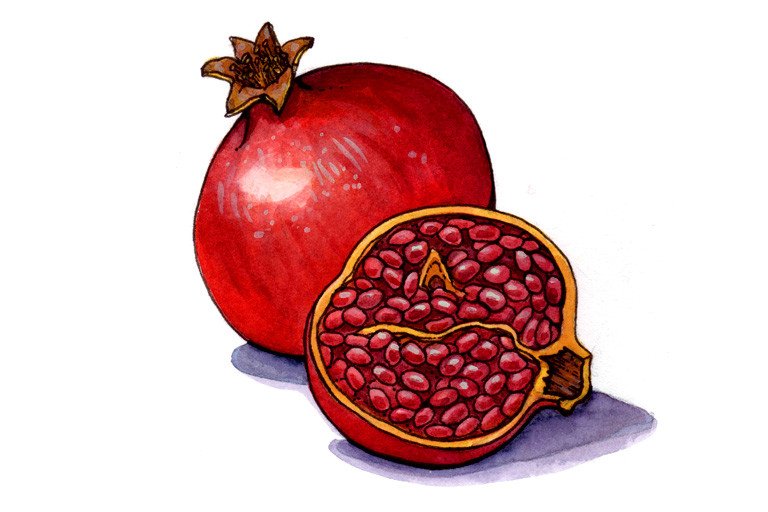
Pomegranate is a reddish-brown fruit that comes from the pomegranate tree. Pomegranate seeds have many nutrients. They are also used in traditional medicine to help with many issues.
Juice made from pomegranate seeds comes in supplements as capsules, tablets, and as powders.
Pomegranate supplements/juice are used:
- To prevent and treat heart disease.
- To lower high cholesterol levels.
- To reduce high blood pressure.
- To prevent cancer.
Pomegranate also has other uses that haven’t been studied by doctors to see if they work.
It’s generally safe to eat pomegranate seeds or drink pomegranate juice. Talk with your healthcare provider before taking pomegranate supplements. Herbal supplements are stronger than the herbs you would use in cooking.
Supplements can also interact with some medications and affect how they work. For more information, read the “What else do I need to know?” section below.
Side effects of pomegranate juice may include:
- Diarrhea (loose or watery bowel movements).
- Talk with your healthcare provider if you’re on blood thinners such as warfarin (Coumadin®, Jantoven®). Pomegranate juice can increase your risk of bleeding.
- Avoid eating the root, stem, or peel of pomegranate. They contain chemicals that can be harmful.
For Healthcare Professionals
Pomegranate is a small fruit-bearing tree native to Asia, but it is also cultivated in many parts of the world including the United States. The fruit juice extracted from the arils of the seeds is used in drinks and as a dietary supplement. Several studies suggest antioxidant and antiatherosclerotic properties, which are attributed to the presence of multiple polyphenols such as tannins, flavonols, anthocyanins, and ellagic acid (1) (2). Preclinical studies also suggest pomegranate juice may suppress inflammatory cell signaling and prostate tumor growth, and lower serum PSA levels (1) (3) (4). In other experiments, it inhibited aromatase activity, endogenous estrogen biosynthesis, and breast cancer cell proliferation (5), and a pomegranate seed extract alleviated ciplatin-induced hepatotoxicity in animal studies (23).
Preliminary studies in humans suggest pomegranate may have some benefit on cognition (43), cardiovascular disease (6) (8), hyperlipidemia (21), or erectile dysfunction (19), but not COPD (9). Data for its use in hypertension is limited (7) (34), and meta-analyses did not find pomegranate helpful to improve oxidative stress (44), although it may help improve some biomarkers of inflammation and vascular dysfunction (45).
A few studies have been conducted in cancer patients. In men with favorable-risk prostate cancer on active surveillance, preliminary data suggest pomegranate fruit extract may alter biomarkers related to androgen signaling and oxidative stress (46). Pomegranate extract before surgery resulted in pomegranate metabolite accumulation in prostate tissue, but did not significantly lower 8-OHdG levels, a measure of oxidative damage (35). Data are conflicting on whether pomegranate juice can slow the rate of prostate-specific antigen increase in men with high PSA levels (2) (24). A planned subset analysis suggests that those with the manganese superoxide dismutase (MnSOD) AA genotype might benefit (36). Supplementation with a blend of green tea, pomegranate, broccoli, and curcumin resulted in lower rates of PSA increase following PSA relapse post-radical treatment (25). However, an adjunctive intervention with pomegranate juice in men with advanced prostate cancer did not produce significant PSA reductions versus placebo (37).
Other investigations suggest pomegranate in combination with other plant extracts may modulate gene expression for osteoclastic and osteogenic processes (26), but intake of pomegranate seed oil did not reduce hot flashes (22), and there was no overall association between pomegranate juice intake and hormonal biomarkers for breast cancer risk (38). Pomegranate extract influenced changes in gene expression in colon tissues from colorectal patients (27). In newly-diagnosed CRC patients, pomegranate consumption may lower plasma LPS-binding protein levels, a marker for endotoxemia (33). More studies are needed to determine the implications of such changes.
Although animal studies suggested pomegranate may inhibit CYP3A and 2C9 (10) (11) (18), humans studies have not shown clinically relevant interactions (12) (39) (40) (41).
Whole fruit, juice
- Cardiovascular disease
- High cholesterol
- Hypertension
- Cancer prevention
Pomegranate juice has antioxidant and antiatherosclerotic properties due to the presence of polyphenols such as tannins, flavonols, anthocyanins, and ellagic acid. Punicalagin, an ellagitannin, is the most abundant polyphenol that accounts for >50% of antioxidant activity (1) (2).
In animal models, constituents such as ellagic acid and luteolin inhibit ovarian cancer metastasis by downregulating MMP2 and MMP9 (28). In prostate cancer cells, a pomegranate extract induced apoptosis and impaired metastasis also by downregulating MMP2/9 along with TIMP2 upregulation (29). Prevention of chemically-induced mammary carcinogenesis by another extract likely involved anti-inflammatory mechanisms such as differential regulation of NF-κB and NF-erythroid 2p45 (NF-E2)-related factor 2 (Nrf2) signaling (30). Pomegranate extract suppressed breast cancer stem cell characteristics by inhibiting the epithelial to mesenchymal transition (31). It can also inhibit aromatase activity and decrease endogenous estrogen synthesis (5).
Some commercial pomegranate juices are marketed with claims of higher antioxidant activity than green tea and red wine (13). However such effects could be due to colonic microflora metabolites and not the polyphenols present in the juice (14). Recent interest in the link between gut microbiota and cancer explores possible mechanisms. In one RCT, consumption of pomegranate decreased plasma lipopolysaccharide binding protein levels, a known marker associated with onset and development of colorectal cancer (33).
- Pomegranate juice may increase the risk of rhabdomyolysis for patients on statin therapy (17).
- Diabetic patients should be careful because of the sugar content of pomegranate.
Generally well tolerated (25) (42).
No significant adverse effects were observed in men following daily consumption of 8 ounces of pomegranate juice for over 2 years (2). In a study of prostate cancer patients, few related adverse events occurred, including mild to moderate nausea, constipation, and decreased appetite (36). Diarrhea occurred with higher doses in some patients (24).
Case report
Transient elevated alkaline phosphatase: In a 20-month-old boy, caused by daily consumption of pomegranate juice due to feeding and appetite problems over a 2-month period (47).
- CYP3A substrates: Although studies in rats suggest that pomegranate juice may inhibit CYP3A activity similar to grapefruit juice (10) (11), studies in humans did not show clinically relevant inhibition (12) (39) (40).
- CYP2C9 substrates: A study in rats showed that pomegranate juice inhibited CYP2C9 activity and increased tolbutamide bioavailability (18), but pomegranate juice and extract had no effect on CYP2C9 activity in humans (41).
- Warfarin: According to a case report, pomegranate juice may interact with warfarin (20).
- Metformin: In a rat model, pre-administration of pomegranate juice reduced metformin efficacy (32). The clinical relevance in humans has yet to be determined.