Health Care Professional Information
Clinical Summary
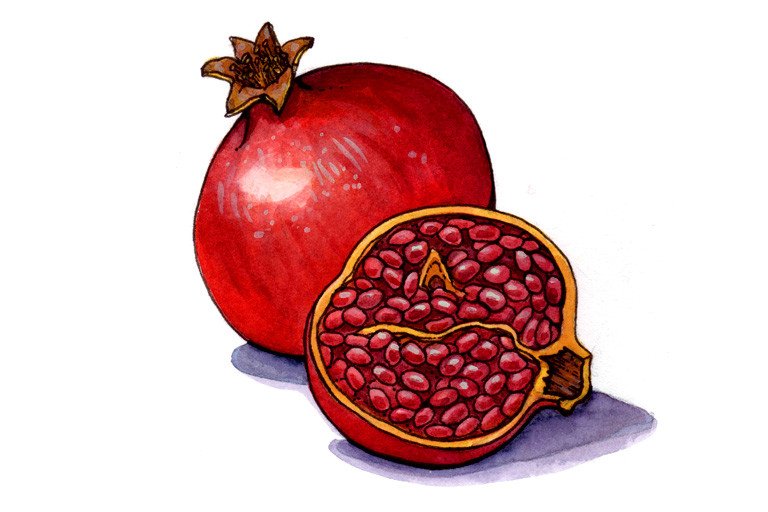
Pomegranate is a small fruit-bearing tree native to Asia but is cultivated in many parts of the world including the United States. The fruit juice extracted from the arils of the seeds is used in drinks and as a dietary supplement. Several studies have shown that pomegranate has antioxidant and antiatherosclerotic properties attributed to the presence of multiple polyphenols such as tannins, flavonols, anthocyanins and ellagic acid (1) (2). Pomegranate juice has been shown to suppress inflammatory cell signaling (1), inhibit prostate tumor growth and lower serum PSA levels (3) (4), and also inhibit aromatase activity, endogenous estrogen biosynthesis and breast cancer cell proliferation (5) in vitro.
Consumption of pomegranate juice was found to benefit patients with carotid artery stenosis (6), in those with hypertension (7), hyperlipidemia (21), mild to moderate erectile dysfunction (19), and in patients with coronary heart disease (CHD) (8), but had no effect in patients with chronic obstructive pulmonary disease (COPD) (9). Pomegranate juice appears to slow the rate of increase of PSA in men with high PSA levels (2). But this needs to be confirmed in large scale clinical trials.
Adverse effects associated with use of pomegranate juice are rare. There is, however, a concern that pomegranate juice can inhibit cytochrome P450 enzymes similar to grapefruit juice (10) (11). But other studies yielded mixed results (12).
Patients should be aware that pomegranate is not an approved cancer treatment.
Purported Uses
- Cancer treatment and prevention
- Atherosclerosis
- Coronary heart Disease
- Hypercholesterolemia
- Hyperlipidemia
- Hypertension
- HIV
Constituents
- Tannins
- Flavonols
- Anthocyanins
- Ellagic acid
Mechanism of Action
Several studies have indicated that pomegranate juice has antioxidant and antiatherosclerotic properties due to the presence of multiple polyphenols such as tannins, flavonols, anthocyanins and ellagic acid. Punicalagin, an ellagitannin, is the most abundant polyphenol that accounts for >50% of the antioxidant activity (1) (2). Some commercial pomegranate juices are marketed with claims of higher antioxidant activity than green tea and red wine (13). However such effects could be due to colonic microflora metabolites and not the polyphenols present in the juice (14). Pomegranate extract can inhibit aromatase activity and decrease the endogenous synthesis of estrogen (5).
Pharmacokinetics
Studies in rats suggest that most punicalagin is absorbed but only 3-6% is excreted in the feces and urine suggesting that the majority is converted to CO2 or other undetectable metabolites (15). The metabolites that are present in urine in both rats and humans, 6H-dibenzo[b,d]pyran-6-one derivatives, are the products of intestinal microflora metabolizing the pomegranate tannins. A recent human study has shown that ellagic acid is absorbed from pomegranate juice and detected in plasma samples. It is unclear whether free ellagic acid is due to hydrolysis of the pomegranate ellagitannins, physiological pH, or gut microflora activity (16).
Warnings
Pomegranate juice may increase the risk of rhabdomyolysis for patients on statin therapy possibly due to the inhibition of CYP 450 enzymes (17).
Diabetic patients should be careful because of the sugar content of pomegranate.
Adverse Reactions
No significant adverse effects were seen with daily consumption of 8 ounces of pomegranate juice in men for over two years (2).
Herb-Drug Interactions
- Cytochrome P4503A substrates: Studies in rats indicate that pomegranate juice may inhibit cytochrome P450 3A (CYP3A) activity similar to grapefruit juice (10) (11). But a study in humans demonstrated that pomegranate juice did not alter clearance of intravenous or oral midazolam, whereas grapefruit juice is known to have this effect (12).
- CYP 2C9 substrates: A study done in rats showed that pomegranate juice inhibited CYP2C9 activity and increased tolbutamide bioavailability (18).
- Warfarin: According to a case report, pomegranate juice may interact with warfarin (20).
Literature Summary and Critique
Cerda B, Soto C, Albaladejo MD, et al. Pomegranate juice supplementation in chronic obstructive pulmonary disease: a 5-week randomized, double-blind, placebo-controlled trial. Eur J Clin Nutr 2006;60(2):245-253.Thirty men with COPD were given either pomegranate juice (providing 2.66 grams of polyphenols) or placebo for five weeks. No significant differences were found between the two groups for any of the study parameters including urinary 8-iso-PGF, respiratory function, hematological and serobiochemical markers, and clinical symptoms of COPD. The authors noted that none of the polyphenols present in pomegranate juice were detected in the plasma or urine of the patients. Instead, the major metabolites found were dibenzopyranone derivatives resulting from the pomegranate ellagitannins metabolized by colonic microflora. The authors suggest that understanding the different bioavailabilities of dietary polyphenols is essential before making claims of antioxidant-based health benefits.
Pantuck AJ, Leppert JT, Zomorodian N, et al. Phase II study of pomegranate juice for men with rising prostate-specific antigen following surgery or radiation for prostate cancer. Clin Cancer Res. 2006;12(13):4018-4026.
A phase II clinical trial was conducted with 46 men with rising PSA following surgery or radiotherapy. Subjects were given 240ml (8 ounces) of pomegranate juice daily until progression of disease. Researchers found a significant increase in the mean PSA doubling time following the study period. These results warrant further testing via a placebo-controlled study.
Sumner MD, Elliott-Eller M, Weidner G, et al. Effects of pomegranate juice consumption on myocardial perfusion in patients with coronary heart disease. Am J Cardiol 2005;96(6):810-814.
Forty-five patients with stable coronary heart disease (CHD) received 240mL/day of pomegranate juice or placebo for three months. After three months, stress-induced ischemia decreased in the pomegranate group (SDS -0.8 +/- 2.7), but an increase was observed in the placebo group. The authors conclude that pomegranate juice may be of benefit in improving stress-induced myocardial ischemia in CHD patients.
Dosage (Inside MSKCC Only)
This field is only visible to only Inside MSKCC users.
References
- Adams LS, Seeram NP, Aggarwal BB, Takada Y, Sand D, Heber D. Pomegranate juice, total pomegranate ellagitannins, and punicalagin suppress inflammatory cell signaling in colon cancer cells. J Agric Food Chem. Feb 8 2006;54(3):980-985.
- Pantuck AJ, Leppert JT, Zomorodian N, et al. Phase II study of pomegranate juice for men with rising prostate-specific antigen following surgery or radiation for prostate cancer. Clin Cancer Res. Jul 1 2006;12(13):4018-4026.
- Lansky EP, Jiang W, Mo H, et al. Possible synergistic prostate cancer suppression by anatomically discrete pomegranate fractions. Invest New Drugs. Jan 2005;23(1):11-20.
- Malik A, Afaq F, Sarfaraz S, Adhami VM, Syed DN, Mukhtar H. Pomegranate fruit juice for chemoprevention and chemotherapy of prostate cancer. Proc Natl Acad Sci U S A. Oct 11 2005;102(41):14813-14818.
- Kim ND, Mehta R, Yu W, et al. Chemopreventive and adjuvant therapeutic potential of pomegranate (Punica granatum) for human breast cancer. Breast Cancer Res Treat. Feb 2002;71(3):203-217.
- Aviram M, Rosenblat M, Gaitini D, et al. Pomegranate juice consumption for 3 years by patients with carotid artery stenosis reduces common carotid intima-media thickness, blood pressure and LDL oxidation. Clin Nutr. Jun 2004;23(3):423-433.
- Aviram M, Dornfeld L. Pomegranate juice consumption inhibits serum angiotensin converting enzyme activity and reduces systolic blood pressure.Atherosclerosis. Sep 2001;158(1):195-198.
- Sumner MD, Elliott-Eller M, Weidner G, et al. Effects of pomegranate juice consumption on myocardial perfusion in patients with coronary heart disease. Am J Cardiol. Sep 15 2005;96(6):810-814.
- Cerda B, Soto C, Albaladejo MD, et al. Pomegranate juice supplementation in chronic obstructive pulmonary disease: a 5-week randomized, double-blind, placebo-controlled trial. Eur J Clin Nutr. Feb 2006;60(2):245-253.
- Summers KM. Potential drug-food interactions with pomegranate juice. Ann Pharmacother. Jul-Aug 2006;40(7-8):1472-1473.
- Hidaka M, Okumura M, Fujita K, et al. Effects of pomegranate juice on human cytochrome p450 3A (CYP3A) and carbamazepine pharmacokinetics in rats.Drug Metab Dispos. May 2005;33(5):644-648.
- Farkas D, Oleson LE, Zhao Y, et al. Pomegranate juice does not impair clearance of oral or intravenous midazolam, a probe for cytochrome P450-3A activity: comparison with grapefruit juice.J Clin Pharmacol. Mar 2007;47(3):286-294.
- Gil MI, Tomas-Barberan FA, Hess-Pierce B, Holcroft DM, Kader AA. Antioxidant activity of pomegranate juice and its relationship with phenolic composition and processing. J Agric Food Chem. Oct 2000;48(10):4581-4589.
- Cerda B, Espin JC, Parra S, Martinez P, Tomas-Barberan FA. The potent in vitro antioxidant ellagitannins from pomegranate juice are metabolised into bioavailable but poor antioxidant hydroxy-6H-dibenzopyran-6-one derivatives by the colonic microflora of healthy humans. Eur J Nutr. Aug 2004;43(4):205-220.
- Cerda B, Llorach R, Ceron JJ, Espin JC, Tomas-Barberan FA. Evaluation of the bioavailability and metabolism in the rat of punicalagin, an antioxidant polyphenol from pomegranate juice. Eur J Nutr. Jan 2003;42(1):18-28.
- Seeram NP, Lee R, Heber D. Bioavailability of ellagic acid in human plasma after consumption of ellagitannins from pomegranate (Punica granatum L.) juice. Clin Chim Acta. Oct 2004;348(1-2):63-68.
- Sorokin AV, Duncan B, Panetta R, Thompson PD. Rhabdomyolysis associated with pomegranate juice consumption. Am J Cardiol. Sep 1 2006;98(5):705-706.
- Nagata M, Hidaka M, Sekiya H, et al. Effects of pomegranate juice on human cytochrome P450 2C9 and tolbutamide pharmacokinetics in rats. Drug Metab Dispos. Feb 2007;35(2):302-305.
- Forest CP, Padma-Nathan H, Liker HR. Efficacy and safety of pomegranate juice on improvement of erectile dysfunction in male patients with mild to moderate erectile dysfunction: a randomized, placebo-controlled, double-blind, crossover study. Int J Impot Res. 2007 Nov-Dec;19(6):564-7.
- Komperda KE. Potential interaction between pomegranate juice and warfarin. Pharmacotherapy. 2009 Aug;29(8):1002-6.
- Mirmiran P, Fazeli MR, Asghari G, Shafiee A, Azizi F. Effect of pomegranate seed oil on hyperlipidaemic subjects: a double-blind placebo-controlled clinical trial. Br J Nutr. 2010 Aug;104(3):402-6.
Consumer Information
How It Works
BOTTOMLINE: Pomegranate was shown effective in lowering blood pressure and high cholesterol. More research is needed to know its benefits for cancer.
Pomegranate is a small fruit-bearing tree native to Asia. Juice from the seed pulp contains compounds known as polyphenols that may contribute to its activity. A few studies suggest pomegranate juice can benefit patients with heart disease and can lower cholesterol and blood pressure. It was shown in laboratory studies to prevent growth of cancer cells. In a human study, intake of pomegranate juice was found to have some benefit in patients with prostate cancer. But more clinical trials are needed to confirm such effects.
Patients should be aware that pomegranate is not an approved cancer treatment.
Purported Uses
- Cancer prevention
Data from laboratory studies showed that pomegranate is effective against tumor cells. A single study in humans showed some indirect benefit of pomegranate juice for patients with prostate cancer. More studies are needed.
- Hypercholesterolemia
There is evidence from a few studies that pomegranate lowers cholesterol level.
- Hypertension
A few small scale studies suggest that drinking pomegranate juice may reduce hypertension. More studies are needed to verify this effect.
Research Evidence
Prostate CancerIn this study, 46 men with rising levels of Prostate Specific Antigen (PSA), a protein found in prostate cancer patients, were given 240ml (8 ounces) of pomegranate juice daily after surgery or radiation therapy. The rise of PSA was slowed after 54 months which suggests slower disease progression. More studies are needed to confirm such effects.
Cardiovascular Disease
Forty-five patients with coronary heart disease (CHD) were assigned to receive 240mL/day of pomegranate juice or placebo for three months. Researchers reported a decrease in stress-induced ischemia (reduction in blood supply to heart muscle) following the study period. Pomegranate juice may benefit patients with CHD.
Patient Warnings
- Pomegranate juice may increase the risk of rhabdomyolysis (breakdown of muscle fibers and release of muscle fiber contents into circulation) for patients on statin therapy.
- Diabetic patients should be careful because of the sugar content of pomegranate.
Do Not Take If
- You are taking medications that interact with grapefruit juice (pomegranate may have effects similar to grapefruit juice.)
- You are taking warfarin (pomegranate juice may interact with warfarin).
Side Effects
No significant side effects were reported with use of pomegranate juice.
Last updated: April 18, 2011
acid (A-sid)
A chemical that gives off hydrogen ions in water and forms salts by combining with certain metals. Acids have a sour taste and turn certain dyes red. Some acids made by the body, such as gastric acid, can help organs work the way they should. An example of an acid is hydrochloric acid. Acidity is measured on a scale called the pH scale. On this scale, a value of 7 is neutral, and a pH value of less than 7 to 0 shows increasing acidity.
Source: The National Cancer Institute's Dictionary of Cancer Terms
(http://www.cancer.gov/dictionary)
antigen (AN-tih-jen)
Any substance that causes the body to make a specific immune response.
Source: The National Cancer Institute's Dictionary of Cancer Terms
(http://www.cancer.gov/dictionary)
artery (AR-tuh-ree)
A blood vessel that carries blood from the heart to tissues and organs in the body.
Source: The National Cancer Institute's Dictionary of Cancer Terms
(http://www.cancer.gov/dictionary)
blood (blud)
A tissue with red blood cells, white blood cells, platelets, and other substances suspended in fluid called plasma. Blood takes oxygen and nutrients to the tissues, and carries away wastes.
Source: The National Cancer Institute's Dictionary of Cancer Terms
(http://www.cancer.gov/dictionary)
breast (brest)
Glandular organ located on the chest. The breast is made up of connective tissue, fat, and breast tissue that contains the glands that can make milk. Also called mammary gland.
Source: The National Cancer Institute's Dictionary of Cancer Terms
(http://www.cancer.gov/dictionary)
cancer (KAN-ser)
A term for diseases in which abnormal cells divide without control and can invade nearby tissues. Cancer cells can also spread to other parts of the body through the blood and lymph systems. There are several main types of cancer. Carcinoma is a cancer that begins in the skin or in tissues that line or cover internal organs. Sarcoma is a cancer that begins in bone, cartilage, fat, muscle, blood vessels, or other connective or supportive tissue. Leukemia is a cancer that starts in blood-forming tissue such as the bone marrow, and causes large numbers of abnormal blood cells to be produced and enter the blood. Lymphoma and multiple myeloma are cancers that begin in the cells of the immune system. Central nervous system cancers are cancers that begin in the tissues of the brain and spinal cord. Also called malignancy.
Source: The National Cancer Institute's Dictionary of Cancer Terms
(http://www.cancer.gov/dictionary)
case report (kays reh-PORT)
A detailed report of the diagnosis, treatment, and follow-up of an individual patient. Case reports also contain some demographic information about the patient (for example, age, gender, ethnic origin).
Source: The National Cancer Institute's Dictionary of Cancer Terms
(http://www.cancer.gov/dictionary)
cell (sel)
The individual unit that makes up the tissues of the body. All living things are made up of one or more cells.
Source: The National Cancer Institute's Dictionary of Cancer Terms
(http://www.cancer.gov/dictionary)
cell proliferation (sel proh-LIH-feh-RAY-shun)
An increase in the number of cells as a result of cell growth and cell division.
Source: The National Cancer Institute's Dictionary of Cancer Terms
(http://www.cancer.gov/dictionary)
cholesterol (koh-LES-teh-rol)
A waxy, fat-like substance made in the liver, and found in the blood and in all cells of the body. Cholesterol is important for good health and is needed for making cell walls, tissues, hormones, vitamin D, and bile acid. Cholesterol also comes from eating foods taken from animals such as egg yolks, meat, and whole-milk dairy products. Too much cholesterol in the blood may build up in blood vessel walls, block blood flow to tissues and organs, and increase the risk of developing heart disease and stroke.
Source: The National Cancer Institute's Dictionary of Cancer Terms
(http://www.cancer.gov/dictionary)
chronic (KRAH-nik)
A disease or condition that persists or progresses over a long period of time.
Source: The National Cancer Institute's Dictionary of Cancer Terms
(http://www.cancer.gov/dictionary)
clinical (KLIH-nih-kul)
Having to do with the examination and treatment of patients.
Source: The National Cancer Institute's Dictionary of Cancer Terms
(http://www.cancer.gov/dictionary)
clinical trial (KLIH-nih-kul TRY-ul)
A type of research study that tests how well new medical approaches work in people. These studies test new methods of screening, prevention, diagnosis, or treatment of a disease. Also called clinical study.
Source: The National Cancer Institute's Dictionary of Cancer Terms
(http://www.cancer.gov/dictionary)
COPD
A type of lung disease marked by permanent damage to tissues in the lungs, making it hard to breathe. COPD includes chronic bronchitis, in which the bronchi (large air passages) are inflamed and scarred, and emphysema, in which the alveoli (tiny air sacs) are damaged. It develops over many years and is usually caused by cigarette smoking. Also called chronic obstructive pulmonary disease.
Source: The National Cancer Institute's Dictionary of Cancer Terms
(http://www.cancer.gov/dictionary)
coronary heart disease (KOR-uh-NAYR-ee hart dih-ZEEZ)
A disease in which there is a narrowing or blockage of the coronary arteries (blood vessels that carry blood and oxygen to the heart). Coronary heart disease is usually caused by atherosclerosis (a build up of fatty material and plaque inside the coronary arteries). The disease may cause chest pain, shortness of breath during exercise, and heart attacks. The risk of coronary heart disease is increased by having a family history of coronary heart disease before age 50, older age, smoking tobacco, high blood pressure, high cholesterol, diabetes, lack of exercise, and obesity. Also called CAD and coronary artery disease.
Source: The National Cancer Institute's Dictionary of Cancer Terms
(http://www.cancer.gov/dictionary)
disease progression (dih-ZEEZ pruh-GREH-shun)
Cancer that continues to grow or spread.
Source: The National Cancer Institute's Dictionary of Cancer Terms
(http://www.cancer.gov/dictionary)
doubling time (DUH-bling...)
In biology, the amount of time it takes for one cell to divide or for a group of cells (such as a tumor) to double in size. The doubling time is different for different kinds of cancer cells or tumors.
Source: The National Cancer Institute's Dictionary of Cancer Terms
(http://www.cancer.gov/dictionary)
dysfunction (dis-FUNK-shun)
A state of not functioning normally.
Source: The National Cancer Institute's Dictionary of Cancer Terms
(http://www.cancer.gov/dictionary)
endogenous (en-DAH-jeh-nus)
Produced inside an organism or cell. The opposite is external (exogenous) production.
Source: The National Cancer Institute's Dictionary of Cancer Terms
(http://www.cancer.gov/dictionary)
estrogen (ES-truh-jin)
A type of hormone made by the body that helps develop and maintain female sex characteristics and the growth of long bones. Estrogens can also be made in the laboratory. They may be used as a type of birth control and to treat symptoms of menopause, menstrual disorders, osteoporosis, and other conditions.
Source: The National Cancer Institute's Dictionary of Cancer Terms
(http://www.cancer.gov/dictionary)
extract (EK-strakt)
In medicine, a preparation of a substance obtained from plants, animals, or bacteria and used as a drug or in drugs.
Source: The National Cancer Institute's Dictionary of Cancer Terms
(http://www.cancer.gov/dictionary)
fiber (FY-ber)
In food, fiber is the part of fruits, vegetables, legumes, and whole grains that cannot be digested. The fiber in food may help prevent cancer. In the body, fiber refers to tissue made of long threadlike cells, such as muscle fiber or nerve fiber.
Source: The National Cancer Institute's Dictionary of Cancer Terms
(http://www.cancer.gov/dictionary)
gut microflora (... MY-kroh-FLOR-uh)
Bacteria and other organisms that live inside the intestines. They help digest food. Vitamins such as biotin and vitamin K are made by gut microflora. Also called gut flora, intestinal flora, intestinal microflora, and microflora.
Source: The National Cancer Institute's Dictionary of Cancer Terms
(http://www.cancer.gov/dictionary)
hydrolysis (hy-DRAH-lih-sis)
A chemical reaction that uses water to break down a compound.
Source: The National Cancer Institute's Dictionary of Cancer Terms
(http://www.cancer.gov/dictionary)
hypertension (HY-per-TEN-shun)
A blood pressure of 140/90 or higher. Hypertension usually has no symptoms. It can harm the arteries and cause an increase in the risk of stroke, heart attack, kidney failure, and blindness. Also called high blood pressure.
Source: The National Cancer Institute's Dictionary of Cancer Terms
(http://www.cancer.gov/dictionary)
in vitro (in VEE-troh)
In the laboratory (outside the body). The opposite of in vivo (in the body).
Source: The National Cancer Institute's Dictionary of Cancer Terms
(http://www.cancer.gov/dictionary)
inflammatory (in-FLA-muh-TOR-ee)
Having to do with inflammation (redness, swelling, pain, and a feeling of heat that helps protect tissues affected by injury or disease).
Source: The National Cancer Institute's Dictionary of Cancer Terms
(http://www.cancer.gov/dictionary)
intestinal (in-TES-tih-nul)
Having to do with the intestines.
Source: The National Cancer Institute's Dictionary of Cancer Terms
(http://www.cancer.gov/dictionary)
intravenous (IN-truh-VEE-nus)
Into or within a vein. Intravenous usually refers to a way of giving a drug or other substance through a needle or tube inserted into a vein. Also called IV.
Source: The National Cancer Institute's Dictionary of Cancer Terms
(http://www.cancer.gov/dictionary)
ischemia (is-KEE-mee-uh)
Lack of blood supply to a part of the body. Ischemia may cause tissue damage due to the lack of oxygen and nutrients.
Source: The National Cancer Institute's Dictionary of Cancer Terms
(http://www.cancer.gov/dictionary)
mean (meen)
A statistics term. The average value in a set of measurements. The mean is the sum of a set of numbers divided by how many numbers are in the set.
Source: The National Cancer Institute's Dictionary of Cancer Terms
(http://www.cancer.gov/dictionary)
microflora (MY-kroh-FLOR-uh)
Bacteria and other organisms that live inside the intestines. They help digest food. Vitamins such as biotin and vitamin K are made by microflora. Also called gut flora, gut microflora, intestinal flora, and intestinal microflora.
Source: The National Cancer Institute's Dictionary of Cancer Terms
(http://www.cancer.gov/dictionary)
midazolam (mih-DAY-zoh-lam)
A drug used to treat anxiety and tension and to relax muscles. It is also being studied in the treatment of nausea and vomiting caused by some cancer treatments. It is a type of benzodiazepine. Also called midazolam hydrochloride and Versed.
Source: The National Cancer Institute's Dictionary of Cancer Terms
(http://www.cancer.gov/dictionary)
NP
A registered nurse who has additional education and training in how to diagnose and treat disease. NPs are licensed at the state level and certified by national nursing organizations. In cancer care, an NP may manage the primary care of patients and their families, based on a practice agreement with a doctor. Also called advanced practice nurse, APN, and nurse practitioner.
Source: The National Cancer Institute's Dictionary of Cancer Terms
(http://www.cancer.gov/dictionary)
oral (OR-ul)
By or having to do with the mouth.
Source: The National Cancer Institute's Dictionary of Cancer Terms
(http://www.cancer.gov/dictionary)
placebo (pluh-SEE-boh)
An inactive substance or treatment that looks the same as, and is given the same way as, an active drug or treatment being tested. The effects of the active drug or treatment are compared to the effects of the placebo.
Source: The National Cancer Institute's Dictionary of Cancer Terms
(http://www.cancer.gov/dictionary)
placebo-controlled (pluh-SEE-boh-kun-TROLD)
Refers to a clinical study in which the control patients receive a placebo.
Source: The National Cancer Institute's Dictionary of Cancer Terms
(http://www.cancer.gov/dictionary)
plasma (PLAZ-muh)
The clear, yellowish, fluid part of the blood that carries the blood cells. The proteins that form blood clots are in plasma.
Source: The National Cancer Institute's Dictionary of Cancer Terms
(http://www.cancer.gov/dictionary)
pomegranate (PAH-meh-GRA-nut)
A subtropical shrub or tree. Juice from the fruit may contain substances that decrease or slow the rise of prostate-specific antigen (PSA) levels. It is being studied for its ability to delay or prevent recurrent prostate cancer. The scientific name is .
Source: The National Cancer Institute's Dictionary of Cancer Terms
(http://www.cancer.gov/dictionary)
progression (pruh-GREH-shun)
In medicine, the course of a disease, such as cancer, as it becomes worse or spreads in the body.
Source: The National Cancer Institute's Dictionary of Cancer Terms
(http://www.cancer.gov/dictionary)
prostate (PROS-tayt)
A gland in the male reproductive system. The prostate surrounds the part of the urethra (the tube that empties the bladder) just below the bladder, and produces a fluid that forms part of the semen.
Source: The National Cancer Institute's Dictionary of Cancer Terms
(http://www.cancer.gov/dictionary)
prostate cancer (PROS-tayt KAN-ser)
Cancer that forms in tissues of the prostate (a gland in the male reproductive system found below the bladder and in front of the rectum). Prostate cancer usually occurs in older men.
Source: The National Cancer Institute's Dictionary of Cancer Terms
(http://www.cancer.gov/dictionary)
protein (PROH-teen)
A molecule made up of amino acids that are needed for the body to function properly. Proteins are the basis of body structures such as skin and hair and of substances such as enzymes, cytokines, and antibodies.
Source: The National Cancer Institute's Dictionary of Cancer Terms
(http://www.cancer.gov/dictionary)
PSA
A protein made by the prostate gland and found in the blood. PSA blood levels may be higher than normal in men who have prostate cancer, benign prostatic hyperplasia (BPH), or infection or inflammation of the prostate gland. Also called prostate-specific antigen.
Source: The National Cancer Institute's Dictionary of Cancer Terms
(http://www.cancer.gov/dictionary)
pulmonary (PUL-muh-NAYR-ee)
Having to do with the lungs.
Source: The National Cancer Institute's Dictionary of Cancer Terms
(http://www.cancer.gov/dictionary)
radiation (RAY-dee-AY-shun)
Energy released in the form of particle or electromagnetic waves. Common sources of radiation include radon gas, cosmic rays from outer space, medical x-rays, and energy given off by a radioisotope (unstable form of a chemical element that releases radiation as it breaks down and becomes more stable).
Source: The National Cancer Institute's Dictionary of Cancer Terms
(http://www.cancer.gov/dictionary)
radiotherapy (RAY-dee-oh-THAYR-uh-pee)
The use of high-energy radiation from x-rays, gamma rays, neutrons, protons, and other sources to kill cancer cells and shrink tumors. Radiation may come from a machine outside the body (external-beam radiation therapy), or it may come from radioactive material placed in the body near cancer cells (internal radiation therapy). Systemic radiotherapy uses a radioactive substance, such as a radiolabeled monoclonal antibody, that travels in the blood to tissues throughout the body. Also called irradiation and radiation therapy.
Source: The National Cancer Institute's Dictionary of Cancer Terms
(http://www.cancer.gov/dictionary)
serum (SEER-um)
The clear liquid part of the blood that remains after blood cells and clotting proteins have been removed.
Source: The National Cancer Institute's Dictionary of Cancer Terms
(http://www.cancer.gov/dictionary)
significant (sig-NIH-fih-kunt)
In statistics, describes a mathematical measure of difference between groups. The difference is said to be significant if it is greater than what might be expected to happen by chance alone. Also called statistically significant.
Source: The National Cancer Institute's Dictionary of Cancer Terms
(http://www.cancer.gov/dictionary)
statin (STA-tin)
Any of a group of drugs that lower the amount of cholesterol and certain fats in the blood. Statins inhibit a key enzyme that helps make cholesterol. Statin drugs are being studied in the prevention and treatment of cancer.
Source: The National Cancer Institute's Dictionary of Cancer Terms
(http://www.cancer.gov/dictionary)
surgery (SER-juh-ree)
A procedure to remove or repair a part of the body or to find out whether disease is present. An operation.
Source: The National Cancer Institute's Dictionary of Cancer Terms
(http://www.cancer.gov/dictionary)
therapy (THAYR-uh-pee)
Treatment.
Source: The National Cancer Institute's Dictionary of Cancer Terms
(http://www.cancer.gov/dictionary)
tumor (TOO-mer)
An abnormal mass of tissue that results when cells divide more than they should or do not die when they should. Tumors may be benign (not cancer), or malignant (cancer). Also called neoplasm.
Source: The National Cancer Institute's Dictionary of Cancer Terms
(http://www.cancer.gov/dictionary)
urinary (YOOR-ih-NAYR-ee)
Having to do with urine or the organs of the body that produce and get rid of urine.
Source: The National Cancer Institute's Dictionary of Cancer Terms
(http://www.cancer.gov/dictionary)
urine (YOOR-in)
Fluid containing water and waste products. Urine is made by the kidneys, stored in the bladder, and leaves the body through the urethra.
Source: The National Cancer Institute's Dictionary of Cancer Terms
(http://www.cancer.gov/dictionary)
warfarin (WOR-fuh-rin)
A drug that prevents blood from clotting. It belongs to the family of drugs called anticoagulants (blood thinners).
Source: The National Cancer Institute's Dictionary of Cancer Terms
(http://www.cancer.gov/dictionary)