Common Names
- Turkish rhubarb
- Chinese rhubarb
- Tai huang
- Da huang
For Patients & Caregivers
Tell your healthcare providers about any dietary supplements you’re taking, such as herbs, vitamins, minerals, and natural or home remedies. This will help them manage your care and keep you safe.
Rhubarb acts as a stimulant laxative, but has not been shown to treat or prevent cancer.
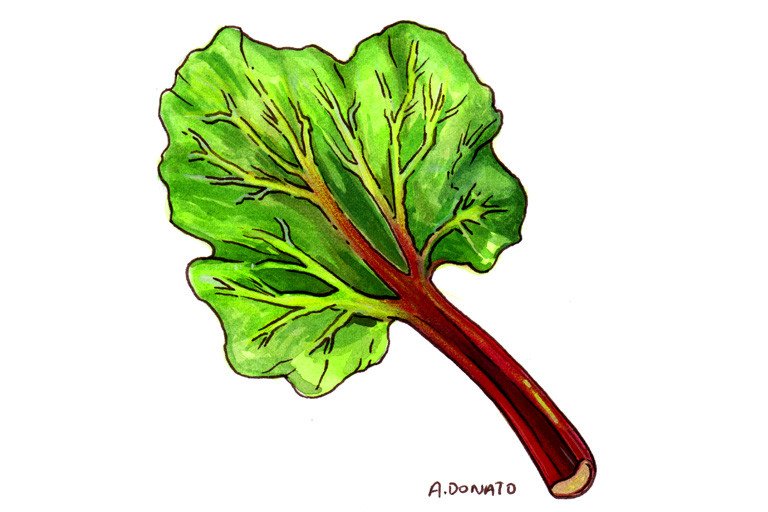
Rhubarb is a perennial herb, and the stalks are sometimes consumed as food. In Traditional Chinese Medicine (TCM), the rhizome and root are use to treat gastrointestinal and liver diseases. It is also used in herbal formulas such as Ma Zi Ren Wan. In lab animals, compounds in rhubarb called anthraquinones reduced pain, inflammation, and some tumors.
Studies in humans are limited, but suggest rhubarb can improve feeding tolerance and relieve gastrointestinal dysfunction in very ill patients. It may also reduce excess blood levels of pancreatic enzymes and pancreatitis events caused by some procedures. Other initial studies suggest it can treat mouth sores or help reduce radiation side effects. Additional studies are needed to determine safety and effectiveness.
Rhubarb is considered to be a stimulant laxative. It is also a component of Essiac tea. Patients and physicians should be aware of the potential for additive effects.
- To reduce cancer treatment side effects
One study suggests that a rhubarb extract may reduce side effects from radiation therapy in lung cancer patients. Additional studies are needed. - To relieve constipation
Rhubarb acts as a laxative, although clinical trials have not tested this use. - As a fever reducer
There is no scientific evidence to support this claim. - To suppress the immune system
Lab data show that rhubarb decreases the activity of isolated immune cells. - To reduce inflammation
Some studies suggest that rhubarb has anti-inflammatory effects. - To treat infections
There is no scientific evidence to support this claim. - To treat ulcers
A small study suggests rhubarb may be useful for treating oral ulcers. More studies are needed.
Case reports
- Kidney damage/failure: In a type-1 diabetic patient with normal kidney function following excess ingestion of rhubarb and in a 75-year-old man from excess intakes of rhubarb stew over a few weeks.
- Dark pigment deposits in the colon: In a 67-year-old woman with long-term use of a natural fiber supplement containing rhubarb. This condition is often associated with chronic laxative use. It was reversed after a long period of product discontinuation and repeat colonoscopy.
Do Not Take if:
- You are taking CYP450 substrate drugs: Rhubarb may reduce the effectiveness of these drugs, but clinical significance has yet to be determined.
- You are taking digoxin: Potassium loss due to the laxative effect of rhubarb means it may increase the risk of low potassium levels.
- You are taking melatonin: Lab studies suggest that using both products together may affect the way melatonin is metabolized, but clinical relevance is not yet known.
- You are taking cyclosporine: In lab studies, rhubarb decreased cyclosporine bioavailability. Clinical relevance is not yet known.
- You are taking methotrexate: In lab studies, rhubarb increased exposure to methotrexate. However, clinical relevance is not clear.
- You have kidney disease: Rhubarb is high in oxalates and may cause kidney problems in some individuals.
Special Point:
- Rhubarb is high in oxalates, and may cause kidney problems in some individuals.
- Animal studies suggest the potential for liver toxicity at high doses and with long-term use.
For Healthcare Professionals
Rhubarb, a perennial herb, is cultivated in many parts of the world and the stalks are sometimes consumed as food. The rhizome and root are used in Traditional Chinese Medicine to treat gastrointestinal and liver diseases (40). It is also used in herbal formulas such as Ma Zi Ren Wan. The anthraquinones and tannins in rhubarb are thought responsible for its laxative and constipating effects, respectively (4).
In preclinical studies, rhubarb demonstrated anticancer (20), antimetastatic (21), radioprotective (22), and estrogen-receptor-modulating (13) effects. The constituent aloe-emodin has demonstrated anticancer (5) (6) (27) and anti-leishmanial (30) properties, and appeared to enhance effects of sorefenib (28) and cisplatin (29).
Evidence for safety and efficacy in humans is limited. Preliminary data suggest rhubarb may have added benefits for patients with sepsis when used with the protease inhibitor ulinastatin (34), or may help treat recurrent aphthous stomatitis (25). Other studies suggest it may improve feeding tolerance and relieve gastrointestinal dysfunction in critically ill patients (23) or help prevent procedure-related pancreatitis and hyperamylasemia in high-risk patients (24). A meta-analysis suggests that rhubarb adjuvant to early enteral nutrition may benefit patients with severe acute pancreatitis (35), but a systematic review does not support its use for gastrointestinal failure in ICU patients (36). In a small study of lung cancer patients, a rhubarb extract reduced radiation-induced lung toxicity and increased pulmonary function (7).
A few studies have also been conducted using topical applications. Short-term treatment with a rhubarb navel plaster improved bowel function in patients with chronic constipation (41). A small study of an externally applied mirabilite rhubarb powder along with chemotherapy suggests symptom improvement in patients with malignant pleural effusion (42). Additional studies to confirm safety and efficacy are needed.
Rhubarb is considered to be a stimulant laxative and is high in oxalates (37). Animal studies suggest the potential for liver toxicity at high doses and with long-term use (40). Rhubarb is also a component of Essiac tea. Patients and physicians should be aware of the potential for additive effects.
- Cancer
- Constipation
- Fever
- Immune suppression
- Inflammation
- Infection
- Ulcers
When used in small doses, the tannin content in rhubarb has a constipating effect. At higher doses, however, the hydrolyzed metabolites of emodin and sennidin stimulate the gastrointestinal tract and produce a laxative effect (4). The actions of anthraquinones on rheinanthrone, which is transformed from sennoside A, may promote the purgative effects of sennoside A (16).
The anti-inflammatory activity of emodin may mediate rhubarb’s hepatoprotective effects in rats with cholestatic hepatitis (11). Lindeyin, a phenolic gallylglucoside, exhibits analgesic and anti-inflammatory properties in animal models. Catechin, epicatechin, procyanidins, and gallylglucose were shown to inhibit hyaluronidase (10) (12).
Additional studies suggest that aloe-emodin exerts anti-proliferative activity, inducing cell cycle arrest in cancer cell lines (6). Anthraquinone extracts of rhubarb induced cytotoxicity in cancer cell lines (5) and tumor necrosis in mice (1), although this has not been demonstrated in humans. Another study showed that emodin inhibits human cancer cell invasiveness by specifically antagonizing the adenosine 5’-triphosphate-gated Ca(2+)-permeable channel P2X7 receptor (17).
Other animal studies suggest potential for liver toxicity at high doses and with long-term use, in part due to anthraquinone compounds such as rhein and emodin as well as tannins (40).
Case reports
- Kidney failure: In a type-1 diabetic patient with normal kidney function following excess ingestion of rhubarb (18), and in a 75-year-old man from excessive intake of rhubarb stew over a few weeks (37). Rhubarb is high in oxalates.
- Melanosis coli: In a 67-year-old woman with long-term use of a natural fiber supplement containing rhubarb. This condition is often associated with chronic laxative use and causes dark cellular pigment deposits in the colon. It was reversed after product discontinuation and upon repeat colonoscopy 1.5 years later (38).
- CYP450 substrates: In animal models, rhubarb induces 3A and 2D6 (15) (19), while the compound rhein inhibits 2E1, 3A, 2C9, and to a lesser extent 1A2 and 2D6 (39). Clinical relevance is not known.
- Digoxin: Potassium loss due to rhubarb’s laxative effect can increase risk of hypokalemia (9).
- Melatonin: A study using human primary hepatocytes showed that concomitant use can cause metabolic disorder of melatonin (31). Clinical relevance is not known.
- Cyclosporine: Rhubarb decreased bioavailability of cyclosporine in a murine model. Clinical relevance is not known (32).
- Methotrexate: Rhubarb increased exposure to methotrexate in a murine model. Clinical relevance is not clear (33).