Common Names
- SAM-e
- SAMe
- SAM
- Adomet
For Patients & Caregivers
Tell your healthcare providers about any dietary supplements you’re taking, such as herbs, vitamins, minerals, and natural or home remedies. This will help them manage your care and keep you safe.
Not enough research has been done to say whether SAM-e can treat depression, arthritis, or liver disease.
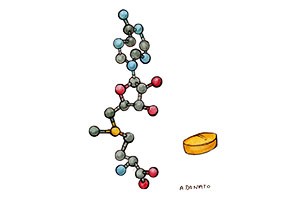
SAM-e is a compound produced naturally by the human body. It acts on a number of important molecules including hormones, neurotransmitters, fatty acids, DNA, proteins, and cell membranes. In the United States, SAM-e is marketed as a supplement to enhance mood, brain and neural function, joint mobility, and liver detoxification.
Data suggest that SAM-e has anti-inflammatory and antidepressant properties. Lower levels of SAM-e have been observed with various diseases such as depression, Alzheimer's and liver disease. However, study results on SAM-e for these conditions are mixed. In osteoarthritis, a few studies suggest benefit comparable with standard medications, but a panel could not recommend it for pain. More study is needed to determine safety and potential benefits.
SAM-e may interact with medications such as antidepressants, or other natural products that also affect serotonin levels. Therefore, patients should consult with their physician before taking this supplement.
- To treat arthritis
A few studies show that SAM-e is as effective as conventional treatments in treating osteoarthritis, but a panel could not recommend it for pain because of insufficient evidence. More studies are needed. - To treat chronic liver disease
Earlier studies found SAM-e helpful in chronic liver disease, but additional studies are needed to confirm this. - To treat drug-induced liver toxicity
Initial studies suggest that SAM-e may help reduce liver toxicity caused by some drugs, but more studies are needed to confirm safety as well as effectiveness. - To treat depression
Clinical studies produced conflicting results or were poorly designed. More studies are needed to evaluate this use. - To treat hot flashes
A preliminary study suggests SAM-e is ineffective for this use. - To treat muscle pain
Older studies of SAM-e for fibromyalgia suggest some benefit, but a panel could not recommend it for pain because of insufficient evidence. More studies are needed. - To treat AIDS-related spinal cord disease
One study did not show significant benefits in this patient population. - To treat Alzheimer’s disease
Studies that evaluate SAM-e alone without the use of other supplements for Alzheimer’s disease are lacking.
- Headache
- Mild stomach upset
- Flatulence
- Nausea and vomiting
- Patients with bipolar disorder may develop mania
Patient Warnings:
Patients taking selective serotonin reuptake inhibitors (SSRIs), monoamine oxidase inhibitors (MAOIs), tricyclic antidepressants, or other drugs that affect serotonin levels should avoid taking SAM-e without the supervision of a physician due to case reports of mania and serotonin syndrome, a serious condition, or other side effects.
Use of this supplement should be avoided if taking other supplements such as 5-HTP or St John’s wort because these products may also affect serotonin levels.
Patients who are immunocompromised should avoid this supplement due to concerns that SAM-e could enhance the growth of a microorganism called Pneumocystis carinii.
Do Not Take if:
You have bipolar disorder: There have been case reports of mania in patients with bipolar disorder.
You are immunocompromised: There is a theoretical risk that SAM-e could enhance the growth of a microorganism called Pneumocystis carinii.
You are taking clomipramine: There is a report of serotonin syndrome in a woman after simultaneous use of clomipramine and SAM-e.
You are taking antidepressants or anxiolytics (including tricyclics, MAOIs, and SSRIs): Because many of these drugs also affect serotonin levels, there is an increased risk for side effects or toxicities if you also take SAM-e. Discuss any use of this supplement with your treating physician.
You are taking levodopa: There is concern that taking SAM-e over a period of time may decrease the effectiveness of L-dopa, which is used for Parkinson’s disease. Discuss any use of this supplement with your treating physician.
You are taking St John’s wort: Because SJW may also affect serotonin levels, the use of multiple herbs that do this should be avoided to reduce risks for excess serotonin in the body, a serious condition.
You are taking 5-HTP : Because 5-HTP may also affect serotonin levels, the use of multiple herbs that do this should be avoided to reduce risks for excess serotonin in the body, a serious condition.
For Healthcare Professionals
SAM-e is endogenously produced in the human body from adenosine triphosphate and methionine (1) (2). It is involved in the formation of monoamine neurotransmitters such as serotonin and norepinephrine (28). Decreased SAM-e levels in cerebrospinal fluid are thought to contribute to the etiologies of depression and Alzheimer’s disease (29) (30). SAM-e levels may also be decreased in chronic liver disease (31) and AIDS-associated myelopathy (32). In the United States, SAM-e is marketed as a supplement to enhance mood, brain and neural function, joint mobility, and liver detoxification. It is also a prescription drug in other countries.
Preclinical data suggest that SAM-e may have antidepressive (33), neuroprotective (34), anti-inflammatory (35), and chondroprotective (36) effects. Other models suggest liver injury can be exacerbated by depleted SAM-e levels, and that supplementation may have hepatoprotective effects (31).
In humans, data on whether SAM-e is an effective adjunct for major depressive disorder are mixed (16) (27), and whether it is more effective than escitalopram or placebo is also unclear (20) (37), although it may have greater therapeutic potential in men (21). Other double-blind studies have not found SAM-e, either as monotherapy or in a nutraceutical combination, helpful for major depressive disorder (50) (51), and various analyses remain mixed on its potential benefit (22) (23). Preliminary data suggest SAM-e may improve memory-related cognitive symptoms in depressed patients (17). However, studies that suggest cognitive benefits for patients with Alzheimer’s disease do not evaluate SAM-e in isolation (28).
Although preliminary trials suggest some benefit in fibromyalgia patients (40) (41), results are mixed on whether SAM-e is comparable with NSAIDs for osteoarthritis (14) (15) (38), and it did not significantly improve neurological measures in patients with AIDS-associated myelopathy (32). In addition, a steering committee examining whether dietary ingredients could help reduce pain determined there was insufficient evidence for SAM-e (52) (53). For hot flashes, SAM-e was ineffective compared with historical placebo (39).
Some trials suggest benefit in chronic liver disease (42). Addition of oral SAM-e to injected pegylated interferon alpha and oral ribavirin improved viral response in patients with chronic hepatitis C (18). Postoperative intravenous SAM-e therapy improved residual liver function in patients with cirrhosis (19). However, in patients with hepatitis C cirrhosis at elevated risk for hepatocellular carcinoma, oral SAM-e did not improve liver function or reduce injury or oxidative stress (24). Other preliminary data suggest it may be useful as adjunctive palliative therapy in advanced biliary tract carcinoma (25) or protect against chemotherapy-induced liver toxicity (43) (44) (45). Additional confirmatory studies are needed to assess efficacy and safety.
While generally well-tolerated, the therapeutic value of SAM-e in chronic liver disease is limited (26) or yet to be determined. Because it is poorly absorbed, enteric-coated tablets are preferred. Outside the United States, parenteral formulations are used to treat fibromyalgia (9), osteoarthritis, and tendonitis as well as depression. However, patients with bipolar disorder or taking serotonergic medications including antidepressants should discuss any use of this supplement with their treating physician, as cases of mania and serotonin syndrome have been reported.
- AIDS-related myelopathy
- Alzheimer’s disease
- Arthritis
- Liver disease
- Depression
- Fibromyalgia
- Hot flashes
SAM-e is endogenously produced from adenosine triphosphate and the amino acid methionine. It is a major, ubiquitous methyl donor to a wide variety of molecules (26), including catecholamines and other biogenic amines, fatty acids, neurotransmitters, nucleic acids, polysaccharides, porphyrins, proteins and membrane phospholipids. Homocysteine is formed through the transsulfuration pathway and is catabolized to cysteine and indirectly to glutathione.
In preclinical models, SAM-e protected against amyloid-beta-induced cellular injury by inhibiting oxidative stress and neuroinflammation (34). It also increased the endogenous antioxidant glutathione and potentiated antioxidant enzyme activity. Supplementation with SAM-e restores hepatic glutathione deposits and attenuates liver injury (26). The mechanism by which SAM-e might treat depression is unknown, but increased synthesis of neurotransmitters such as serotonin, norepinephrine, and dopamine, may increase responsiveness of neurotransmitter receptors and fluidity of cell membranes in the production of phospholipids (2) (3) (4).
Use of this supplement should be avoided if taking other supplements such as 5-HTP or St John’s wort because these products may also affect serotonin levels.
Patients on antidepressants or with bipolar disorder should avoid this supplement without the supervision of the treating physician due to case reports of mania, serotonin syndrome, or other side effects (13) (22) (46).
There is a theoretical concern that immunocompromised individuals may have an increased risk of Pneumocystis carinii infection with SAM-e (47) (48).
Generally well tolerated (32) (37) (42) (43)
Headache, mild GI upset, flatulence, nausea, vomiting, diarrhea
Patients with bipolar disorder may develop manic phase (11) (22) (37).
Case Reports
Serotonin syndrome: In a woman after simultaneous use of clomipramine and SAM-e (13).
Mania with psychotic features: In a patient, related to concomitant use of SAM-e and the SSRI escitalopram (46).
Increase of serum homocysteine: In some patients with AIDS-associated myelopathy (32).
Clomipramine: Serotonin syndrome was reported following concomitant administration of clomipramine and intramuscular S-adenosylmethionine (13).
Levodopa: There is concern that taking SAM-e over a period of time may decrease the effectiveness of L-dopa in Parkinson’s disease (49).
Antidepressants/anxiolytics (tricyclics, MAOIs, and SSRIs): SAM-e may also raise serotonin levels, thereby increasing the risk of side effects or toxicities. A few case reports of mania and serotonin syndrome have been attributed to concomitant use of SAM-e (13) (46).
Increased serum homocysteine levels: In some patients with AIDS-associated myelopathy (32).