Tell your healthcare providers about any dietary supplements you’re taking, such as herbs, vitamins, minerals, and natural or home remedies. This will help them manage your care and keep you safe.
Safrole and oil of sassafras has been banned as a food additive by the FDA due to carcinogenic concerns, and should not be used to treat medical conditions.
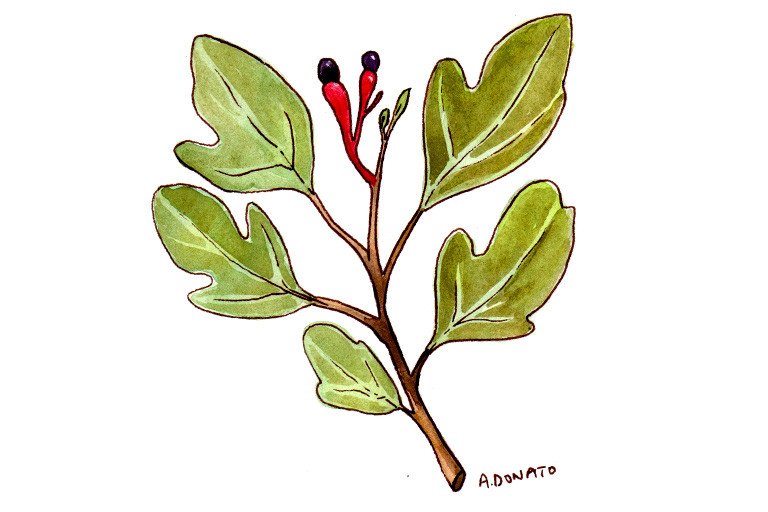
Sassafras is a perennial tree native to Eastern United States. Native Americans used infusions made from the root bark as a remedy to treat fevers, diarrhea, and rheumatism. Sassafras was even used as a flavoring for root beer decades ago. However, sassafras contains safrole, a volatile oil, which has been classified as a likely carcinogen to humans, and banned as a food additive by the FDA.
There is no scientific evidence to support the claims below:
To detoxify
For general health maintenance
To reduce inflammation, including mucositis (sores in the mouth and throat)
To treat arthritis
To treat sprains
To treat syphilis
To treat urinary tract disorders
Hot flashes
Profuse perspiration
Patient Warnings:
Sassafras is classified as a carcinogenic substance. It caused liver cancer in laboratory animals. The risk of developing cancer increases with the amount consumed and duration of consumption.
Do Not Take if:
Safrole and oil of sassafras has been banned as a food additive by the FDA due to carcinogenic concerns, and should not be used to treat any medical conditions.
Special Point:
Sassafras was once used as flavoring agent in root beer and candies, but the Food and Drug Administration has prohibited the use of sassafras as a food additive due to its carcinogenic effects.
For Healthcare Professionals
Sassafras albidum
Sassafras is a perennial tree native to Eastern United States. Native Americans used infusions made from its root bark as a remedy to treat fevers, diarrhea, and rheumatism. It was also used to scent perfume and even as a flavoring for root beer.
Studies of sassafras are quite limited and have only been conducted in vitro or in animals. A few experiments suggested antidiabetic (12) and anticancer effects (7)(8)(9)(10)(11). However, safrole was shown to be a carcinogen (5)(13), causing it to be banned as a food additive since the 1960s (5). Based on these data, the FDA continues to classify safrole as a Substance Generally Prohibited From Direct Addition or Use as Human Food (14).
Detoxification
Inflammation
Arthritis
Safrole, the main active constituent, shows cytotoxic effects in human tongue squamous carcinoma SCC-4 cells by apoptosis via the mitochondria- and caspase-dependent signal pathways (7); and through the endoplasmic reticulum stress and intrinsic signaling pathways in human leukemia HL-60 cells (9). It also suppressed myelomonocytic leukemia WEHI-3 cells in vivo, and stimulated macrophage phagocytosis and natural killer cell cytotoxicity in leukemic mice (8).
Toxic effects of safrole in Madin-Darby canine kidney (MDCK) cells were shown to be via induction of an increase in cytosolic free Ca2+ by causing Ca2+ release from the endoplasmic reticulum in a phospholipase C- and protein kinase C-independent fashion, and by inducing Ca2+ influx (16).
However, despite potential apoptotic and cytotoxic effects, data indicates that safrole is “Reasonably anticipated to be a human carcinogen” (5).
Sassafras contains safrole, which causes liver cancer in animal models and is classified as a carcinogenic substance. Risk increases with length of exposure and amount consumed. (5)
Case Report
Hot flashes and diaphoresis: Due to ingestion of sassafras tea. (4)
Cytochrome P450 substrates: In vitro, safrole inhibited human CYP1A2, CYP2A6, and CYP2E1 (17).
Newall C, et al. Herbal Medicines: A Guide for Health-Care Professionals. London: Pharmaceutical Press; 1996.
De Smet PA, et al. Adverse Effects of Herbal Drugs, Vol 3. New York: Springer; 1997.
Brinker F, Herb Contraindications and Drug Interactions, 2nd ed. Sandy (OR): Eclectic Medical Publications; 1998.