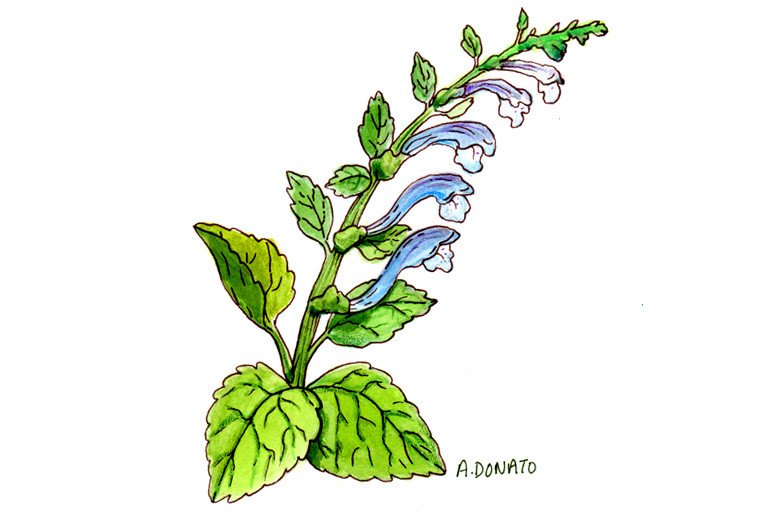
Common Names
- Huang Qin
- Baikal skullcap
- Chinese skullcap
For Patients & Caregivers
Tell your healthcare providers about any dietary supplements you’re taking, such as herbs, vitamins, minerals, and natural or home remedies. This will help them manage your care and keep you safe.
Scutellaria baicalensis is used in traditional medicine to treat many medical conditions, but studies in humans are limited.
S. baicalensis, also known as Huang Qin or Chinese skullcap, is a root extract used in traditional medicine. It is often used in combination with other herbs.
Most studies have been done in the lab rather than in humans, and suggest anti-inflammatory and antioxidant activity. Some cancer cell lines undergo cell death when exposed to extracts of this herb, but some compounds in this herb may actually have opposite effects. Larger studies in humans that test safety and effectiveness are needed to determine under what circumstances S. baicalensis may be beneficial.
- To treat cancer
Extracts from this herb cause cell death in some cancer cell lines, but human data are lacking. S. baicalensis has not been studied in clinical trials as a single agent, but has been studied in combination with other herbs in formulations such as PC-SPES and sho-saiko-to. - To treat arthritis
An herbal supplement containing S. baicalensis appeared to reduce symptoms of osteoarthritis. However, it is not known if the herb would exert similar effects by itself, and some supplements containing it have been associated with liver toxicity. - To treat hepatitis
The herbal formulation sho-saiko-to, which contains Huang Qin, has been studied for its possible liver-protectant effects.
- Liver damage
- Lung inflammation due to bacterial or viral infection
- Elevated high-sensitivity C-reactive protein and high triglycerides
Case Reports
Acute liver injury: In patients with arthritis, following consumption of a formula containing baicalin derived from S. baicalensis or Chinese skullcap.
Do Not Take if:
- You are taking warfarin or other blood thinners: Lab studies suggest Chinese skullcap has similar effects and therefore, may increase bruising and bleeding risks. Clinical relevance has yet to be determined.
- You are taking statins: In healthy volunteers, Chinese skullcap decreased blood levels of drugs used to lower cholesterol.
- You are taking CYP450 substrate drugs: Lab studies suggest Chinese skullcap may increase the risk of side effects with these drugs. Clinical relevance has yet to be determined.
For Healthcare Professionals
Scutellaria baicalensis is an herb used in traditional Chinese medicine to treat a variety of conditions including hepatitis, infections, and cancer. It often is used in combination with other botanicals such as PC-SPES and sho-saiko-to.
Preclinical data suggest that compounds in S. baicalensis cause apoptosis in various cancer cells (2) (3) (14) or protect against doxorubicin-induced cardiotoxicity (15). However, both S. baicalensis root and its main flavonoid baicalin appear to have dose-dependent pro- and anti-angiogenic effects (9). Some constituents may also have neuroprotective (4) (5), anticonvulsant (6), and anti-inflammatory (17) effects.
Studies in humans are quite limited. A preliminary study of S. baicalensis along with metformin appeared to improved glucose tolerance, inflammation, and gut microbiota in patients with type 2 diabetes (23). An herbal supplement containing S. baicalensis reduced symptoms of osteoarthritis (22). However, it is not known if the herb would exert similar effects by itself, and cases of hepatotoxicity with some supplements have been reported (18) (24).
- Cancer
- Arthritis
- Hepatitis
In vitro, the flavonoid baicalin exhibits anti-inflammatory, antioxidant, and gram-positive antibacterial activity (3). In animal models, attenuation of asthma was attributed to reduced airway injury and restored mitochondrial function (19). Neuroprotective effects of flavonoids were ameliorated by diazepam, a GABA receptor agonist, suggesting that the components influence GABA receptor activity (5).
Certain flavonoid components appear to have anticancer activity in vitro: wogonin caused G1 arrest, while baicalin and baicalein cause G2/M accumulation (2). Baicalin also activated caspase-3, resulting in apoptosis of leukemia-derived T cells. However, low doses of baicalin upregulated expression of multiple angiogenic genes to increase cell proliferation in developing blood vessels, while high doses inhibited angiogenesis by inducing cell death, suggesting dose-dependent dual effects. The compound baicalein exhibited only inhibitory effects (9).
Hepatotoxicity, pneumonitis (7)
Elevated high-sensitivity C-reactive protein and high triglycerides were possibly related to ingestion of baicalein tablets in healthy subjects and should be monitored in future studies (25).
Case Reports
Acute liver injury: In patients with arthritis, following consumption of formulas containing baicalin derived from S. baicalensis or Chinese skullcap (18) (24).
- Anticoagulants / Antiplatelets: Lab studies suggest baicalin has antithrombotic activity (12) and may have additive effects. Clinical relevance has yet to be determined.
- Statins: In healthy volunteers, baicalin decreased blood levels of statin drugs used to lower cholesterol (13).
- CYP450 substrates: In vitro, wogonin inhibits 1A2 and 2C19, and may affect intracellular concentrations of drugs metabolized by these enzymes (16). Clinical relevance has yet to be determined.
- SLC transporters: In vitro, baicalein, baicalin, and wogonin inhibited uptake of substrates mediated by essential solute carrier transporters, membrane proteins responsible for the cellular influx of various drugs (21). Clinical relevance has yet to be determined.
Elevated high-sensitivity C-reactive protein and high triglycerides were possibly related to ingestion of baicalein tablets in healthy subjects and should be monitored in future studies (25).