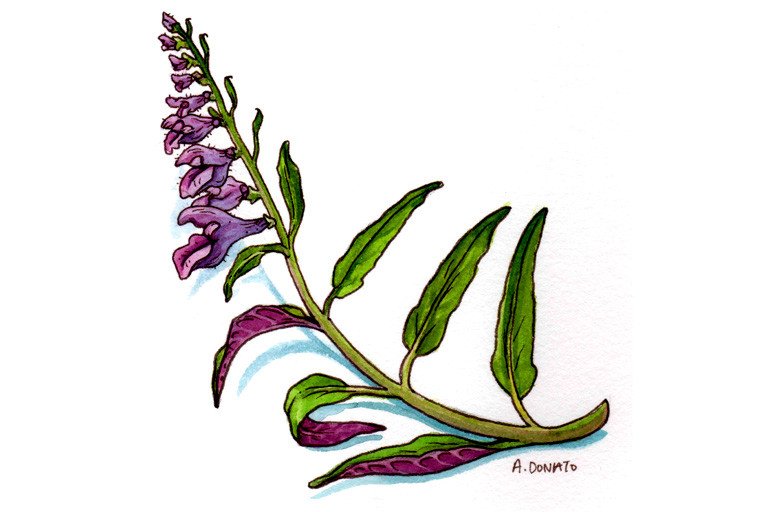
Common Names
- Barbat skullcap
- Ban Zhi Lian
- Banjiryun
For Patients & Caregivers
Tell your healthcare providers about any dietary supplements you’re taking, such as herbs, vitamins, minerals, and natural or home remedies. This will help them manage your care and keep you safe.
Scutellaria barbata has been studied for its anticancer properties, but more research is needed.
S. barbata is an herb found in Korea and southern China. It is used with other herbs in traditional Chinese medicine to treat bacterial infections, hepatitis, and tumors. Laboratory studies have shown S. barbata can limit the growth of cancer cells. It is also effective against some bacteria. Small studies in humans suggest that S. barbata may benefit patients with advanced breast cancer. Further studies are needed.
- To treat hepatitis
Scientific evidence is lacking. - To treat bacterial infections
Lab studies suggest benefit but additional studies are needed. - To treat cancer
Lab studies suggest that S. barbata has anticancer properties. A few small studies in humans report that it may benefit patients with advanced breast cancer, but larger studies are needed.
None reported
Do Not Take if:
- You are allergic to S. barbata.
- You are pregnant.
Special Point:
Scutellaria barbata should not be confused with Scutellaria baicalensis.
For Healthcare Professionals
Scutellaria barbata is a perennial herb that is used along with other botanicals in traditional Chinese medicine to treat bacterial infections, hepatitis, and tumors. It is also used as a diuretic, and should not be confused with Scutellaria baicalensis.
In vitro studies suggest that S. barbata has antibacterial (1), antioxidant (15), antimutagenic (2), and anticancer (3) (4) (5) (6) (7) (8) (10) (11) (12) properties. A number of constituents including flavonoids are thought to be responsible for these activities. Animal models also suggest antitumor activity with S. barbata across a range of cancers (16) (17) (18) (19) (20). However, different extraction methodologies and/or plant origins have yielded varying degrees of antitumor effects (21).
A large long-term population study identified S. barbata among the single herbs used in TCM that may reduce risk of hepatocellular carcinoma in hepatitis B patients (9). Another study found association with improved overall survival (34). Small studies also suggest it is safe and may benefit patients with advanced breast cancer (13) (14). Further research is needed to confirm these effects.
- Infections
- Cancer
- Hepatitis
S. barbata possesses a range of antitumor activities via multiple intracellular targets (20), with major anticancer constituents identified as scutellarin, apigenin5-O-β-glucopyranoside, apigenin, p-coumaric acid, luteolin and 4’-hydroxywogonin (22). Polysaccharides in S. barbata demonstrate antioxidant and free radical-scavenging activity (15). Flavonoids and scutebarbatines can regulate immune function, with decreases in IL-17, IL-10, FOXP3, TGF-beta1, RORgammat, and IL-6 levels, and increases in IL-2 and IFN-gamma levels (23). Neo-clerodane diterpenoids also have demonstrated anticancer (24) and antiviral (25) activities.
Preclinical studies of S. barbata have focused mostly on colon, lung, and liver cancer models. In human colon cancer cells, S. barbata induces apoptosis and inhibits cell proliferation and angiogenesis via Akt and p53 modulation, Bax/Bcl-2 upregulation, decreased cyclin D1/CDK4 expression, G1/S cell cycle arrest, VEGF-A inhibition, and increased p21 expression (19) (20) (26) (27). In lung tumor models, S. barbata inhibits hypoxia-inducible factor-1 alpha and VEGF expression (18). Polysaccharides inhibit proliferation and downregulate phospho-c-Met expression and downstream phospho-Erk/Akt signaling (18). Apoptotic effects with the alkaloid scutebarbatine A occurs via cytochrome c and caspase-3/9 upregulation, and Bcl-2 downregulation (28).
In liver tumors, S. barbata flavonoids suppressed angiogenesis via VEGF regulation, MMP2/9 inhibition, and increased TIMP1/2 expression (17) (29). Total flavonoids induced increases in DNA fragmentation and mitochondrial pathway apoptosis (30). S. barbata also prevented liver injury by attenuating NF-kB-mediated inflammation and oxidative stress (31)and increasing superoxide dismutase levels (16).
S. barbata flavonoids have produced synergistic effects in combination with cisplatin in ovarian cancer cells (32). A proprietary aqueous S. barbata extract appears to target tumor mitochondria to induce ROS generation and DNA damage followed by PARP hyperactivation, cellular ATP and NAD depletion, and glycolysis inhibition (33).
- Sensitivity to S. barbata
- Pregnancy
None reported