Common Names
- Xiao-chai-hu-tang
- Xiaochaihutang
- XCHT
- Minor bupleurum decoction
For Patients & Caregivers
Tell your healthcare providers about any dietary supplements you’re taking, such as herbs, vitamins, minerals, and natural or home remedies. This will help them manage your care and keep you safe.
Sho-saiko-to may have liver-protective effects in some circumstances, but it may also cause serious lung or liver problems. Therefore, it should only be used in limited situations under the supervision of a doctor.
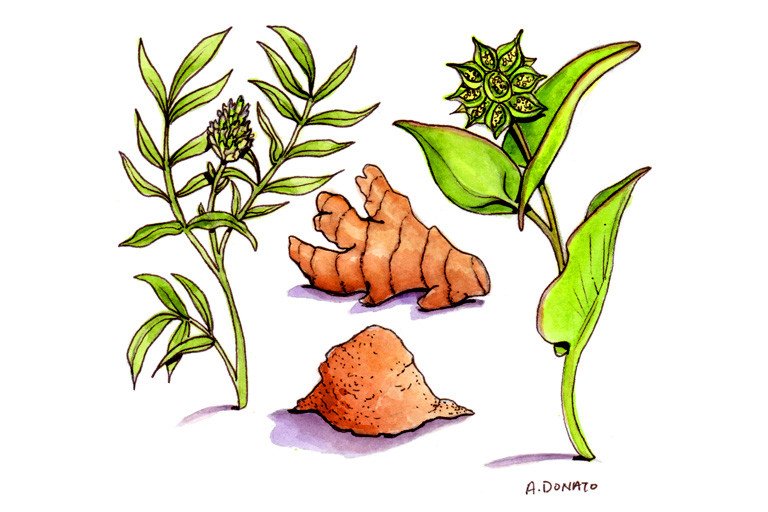
Sho-saiko-to or “Xiao Chai Hu Tang” is a plant formula that is a mixture of 7 botanicals: Bupleurum root (Chai hu), Pinellia tuber (Ban xia), Scutellaria root (Huang qin), Ginseng (Ren shen), Jujube (da zao), Licorice (Gan cao), and Ginger (Sheng jiang). It is used in both China and Japan as traditional medicine to treat fever, gastrointestinal disorders, chronic liver diseases, and inflammatory conditions.
In laboratory and animal studies, Sho-saiko-to appears to prevent liver injury, reduce inflammation, and stimulate or enhance immune functioning. However, only a few clinical trials have been conducted in humans. These studies suggest it may be helpful for some types of patients with hepatitis, but studies to confirm this are needed. In addition, there have been cases of serious lung or liver problems with the use of Sho-saiko-to. Therefore, it should only be used under the supervision of a qualified practitioner.
-
To prevent and treat cancer
The prescribing information for Sho-saiko-to does not recommend its use in patients with liver cancer due to risks for interstitial pneumonia, a serious and potentially life-threatening condition. -
To treat some liver diseases
A few studies suggest it may improve liver pathology in some patients with hepatitis, but a meta-analysis found that most studies were of low quality. There are also reports of serious lung and liver problems with the use of Sho-saiko-to. Therefore, it should only be used in limited situations under close supervision by a qualified practitioner. -
To reduce fevers or treat infections
Although used for these purposes in traditional medicine, human studies are lacking. -
To treat gastrointestinal disorders
Although used for these purposes in traditional medicine, human studies are lacking.
- Rash with fever, anorexia, nausea, diarrhea, or cystitis
- Lung scarring or inflammation
- Liver injuries and hepatitis
Case reports
Recurrent drug-induced liver injury: In a 67-year-old woman who received shosaikoto and saikokeishikankyoto extracts among other drugs on two separate occasions. Her condition improved after the discontinuation of all medications. Scutellariae radix as a component of both extracts were the suspected cause.
Liver injuries and hepatitis: Various cases associated with Sho-saiko-to.
Patient Warnings:
- Discontinue product and contact physician immediately if fever, cough, or difficulty and/or labored breathing occurs.
- Sho-saiko-to may cause a serious lung condition called interstitial pneumonitis, which can be potentially fatal. Use of interferon or low platelet counts may increase this risk.
Do Not Take if:
- You are pregnant or nursing.
- You are currently undergoing interferon treatment: Using Sho-saiko-to at the same time can increase the risk of interstitial pneumonitis, a potentially fatal condition.
- You have liver cancer or cirrhosis: Interstitial pneumonia may occur and cause death if not treated in its early stages.
- You have chronic hepatitis and low platelet counts.
- You are taking drugs metabolized by CYP450 enzymes: Preclinical studies show that Sho-saiko-to can affect the blood concentrations of these drugs. One study in healthy humans also suggests it may interact with some drugs. Although clinical relevance has yet to be determined, patients should not use Sho-saiko-to without close supervision of a qualified practitioner.
- You are taking tolbutamide: In an animal study, Sho-saiko-to reduces the bioavailability of this drug. Although clinical relevance has yet to be determined, patients should not use Sho-saiko-to without close supervision of a qualified practitioner.
For Healthcare Professionals
Sho-saiko-to or “Xiao Chai Hu Tang” is a Chinese botanical formulation widely known by its Japanese name. It is a mixture of 7 botanicals: Bupleurum root (Chai hu), Pinellia tuber (Ban xia), Scutellaria root (Huang qin), Ginseng (Ren shen), Jujube (da zao), Licorice (Gan cao), and Ginger (Sheng jiang) (4). Sho-saiko-to is used in traditional medicine to treat fever, gastrointestinal disorders, chronic liver diseases (24), stomatitis, and oral mucositis (25), and fatigue (34).
In animal models, Sho-saiko-to inhibited hepatic necroinflammation and fibrosis (26) (27), prevented liver injury, and promoted liver regeneration (7). Other experiments show it can enhance various aspects of immune functioning (9) (10) (11) (12) (13) (14) (18). Preclinical studies also suggest antiproliferative effects in hepatoma and ovarian cancer cell lines (15). Morphological analysis of cells grown in the presence of Sho-saiko-to show evidence of apoptosis (6).
In humans, a clinical study showed that Sho-saiko-to may improve liver pathology in hepatitis C patients who do not respond to interferon-based treatment (22). In older studies, Sho-saiko-to decreased serum AST and ALT values in patients with chronic active hepatitis (28) and appeared to reduce incidence of hepatocellular carcinoma in cirrhotic patients (5). However, the prescribing information for this product recommends against its use in patients with liver cirrhosis or cancer, or in patients with liver dysfunction/chronic hepatitis and a below-normal platelet count, and further indicates that patients should have a “moderately strong constitution”. In addition, a meta-analysis determined that the efficacy of Sho-saiko-to for chronic hepatitis B is unclear, with small trials of low methodological quality (33).
Because its use is associated with interstitial pneumonitis (3), liver injuries (16), and hepatitis (17), Sho-saiko-to should only be used under the supervision of a qualified practitioner.
- Cancer
- Fever
- Infections
- GI disorders
- Liver disease
Preclinical experiments show that Sho-saiko-to may enhance various aspects of immune function including effects on natural killer cells (12), interleukins (9), interferon gamma (10) (18), and macrophages (11) (13). Its regulation of the cytokine production system may help to explain effects on disease progression, as Sho-saiko-to induced IL-10, an anti-inflammatory cytokine, while suppressing IL-4 and IL-5 in peripheral blood mononuclear cell cultures from patients with chronic active hepatitis (9). It is also a mild inducer of tumor necrosis factor-alpha and granulocyte colony-stimulating factor, cytokines that play key roles in biological defense mechanisms (14).
Animal studies suggest Sho-saiko-to may prevent liver fibrosis and preneoplastic lesions by inhibiting stellate cells (7), the activation of which has been identified as a main driver of fibrosis in liver injury (29). Fibrotic inhibition has also been attributed to Nrf2 pathway upregulation against oxidative stress (30). Sho-saiko-to regulates temporal gene expression in mouse hepatocytes by way of microRNA (23).
In hepatocellular carcinoma and cholangiocarcinoma cell lines, antiproliferative effects were attributed to induction of apoptosis and arrest at the G0/G1 cell cycle phases (6).
Sho-saiko-to may cause interstitial pneumonitis, a potentially fatal condition. Concurrent use of interferon (3) or low platelet counts may increase this risk.
Patients should be carefully monitored and the product discontinued immediately if fever, cough, dyspnea, abnormal pulmonary sounds (fine crackle), or X-ray abnormalities are observed.
- Women who are nursing or pregnant.
- Patients receiving treatment with interferon preparations, due to risks for interstitial pneumonitis.
- Patients with liver cancer, cirrhosis, or chronic hepatitis and low platelet counts, due to risks for interstitial pneumonitis.
Rash with fever, anorexia, nausea, diarrhea, or cystitis (4).
Sho-saiko-to-related pneumonitis reported in 74 patients (approximately 1 in 20,000) (3).
Case reports
Recurrent drug-induced liver injury: In a 67-year-old woman who received shosaikoto and saikokeishikankyoto extracts among other drugs on two distant occasions. Her condition improved after the discontinuation of all medications. Scutellariae radix as a component of both extracts were the suspected cause (31).
Liver injuries and hepatitis: Various cases associated with Sho-saiko-to (16) (17).
- Interferon: Concurrent use may increase the risk of interstitial pneumonitis (3).
- CYP450 substrate drugs: Preclinical studies show that Sho-saiko-to upregulates CYP2B, CYP3A1, and CYP4A1 expression (19), and can interact with drugs metabolized by CYP2C9 (20). In healthy subjects, it reduced CYP1A2 activity (32). Although clinical relevance has yet to be determined, patients should only use Sho-saiko-to under the close supervision of a qualified practitioner.
- Tolbutamide: In an animal study, sho-saiko-to reduced tolbutamide bioavailability following concurrent oral administration (21). Clinical relevance has yet to be determined.