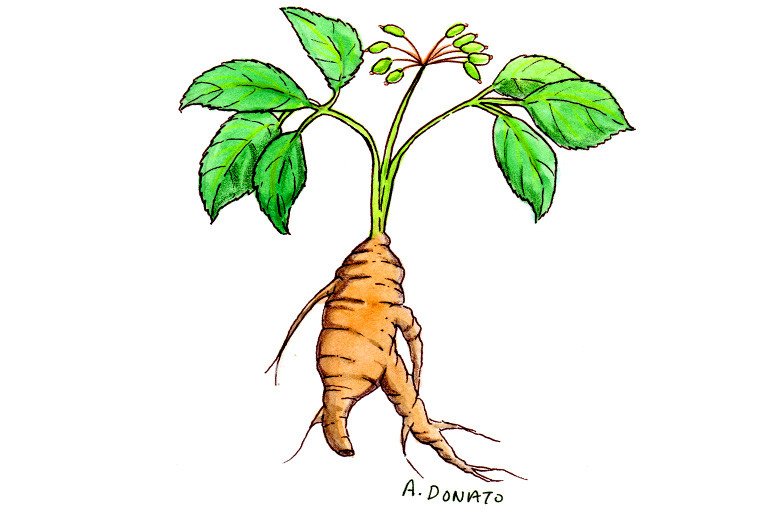
Common Names
- Eleuthero
- Russian ginseng
- Devil's shrub
- Touch-me-not
- Wild pepper
- Shigoka
- Ci wu ja
For Patients & Caregivers
Tell your healthcare providers about any dietary supplements you’re taking, such as herbs, vitamins, minerals, and natural or home remedies. This will help them manage your care and keep you safe.
Siberian ginseng is an herb used in traditional Chinese medicine. It comes in supplements as powders, solid and liquid extracts, capsules, tablets, and as dried or cut root for tea.
Siberian ginseng is used to:
- Boost the immune system.
- Increase strength and stamina.
- Prevent colds and flu.
Siberian ginseng has other uses, but doctors have not studied them to see if they work.
Talk with your healthcare providers before taking Siberian ginseng supplements. They can interact with some medications and affect how they work. For more information, read the “What else do I need to know?” section below.
Side effects have not been reported.
- Talk with your healthcare provider if you’re taking digoxin (Digox®, Lanoxin Pediatric®, Lanoxin®, and Digitek®). Digoxin is a medication used to treat heart conditions. Siberian ginseng can increase the risk of side effects from this medication.
- Avoid taking Siberian ginseng if you’re breastfeeding. We do not know if this herb is safe to take while breastfeeding.
- Siberian ginseng should not be confused with herbs such as Asian ginseng, American ginseng, or Panax notoginseng. These herbs are not the same as Siberian ginseng.
For Healthcare Professionals
Siberian ginseng is derived from a perennial plant primarily found in Northern Asia. Although it is not a species of ginseng, it is thought to have comparable activities. Siberian ginseng, or eleuthero, has been used traditionally as an adaptogen, performance enhancer, and immunostimulant (2). Active components include eleutherosides and polysaccharides (28).
Preclinical studies suggest neuroprotective (8), hypoglycemic (9), steroid receptor binding (10), and cell protective (11) effects.
Studies in humans are quite limited, however. One small study of patients with knee osteoarthritis found that an herbal mixture containing Siberian ginseng relieved pain and improved physical function (5). Siberian ginseng may also help improve serum lipid profiles (7). Additional studies are needed to assess the utility and safety of this botanical.
- Immunostimulation
- Strength and stamina
- Colds and Flu
In vitro studies indicate that eleuthero contains chemicals that bind to estrogen, progestin, mineralocorticoid, and glucocorticoid receptors (10). In macrophages, a Siberian ginseng extract suppressed LPS-induced iNOS expression and thus NO production likely via inhibiting NF-kappa B activity (15) (16) or Akt and JNK signaling (16), and inhibited ROS production (17).
Eleutherosides B, E, and isofraxidin — active constituents of Siberian ginseng — showed protective effects against induced atrophy of axons and dendrites in rat cultured cortical neurons (22). Isofraxidin also inhibited cell invasion and MMP-7 expression by human hepatoma cell lines, possibly through inhibition of ERK1/2 phosphorylation (18).
In animal studies, eleuthero root bark exhibited neuroprotective effects against cerebral ischemia by inhibiting COX-2, microglia, and astrocyte expression (23). Eleutherosides restored behavioral and biochemical alterations in mice with sleep deprivation (24), and alleviated both physical and mental fatigue possibly via increased fat utilization, delayed accumulation of blood urea nitrogen, and increased lactate dehydrogenase (25). Eleutherosides also mediated hyperglycemic effects by regulating insulin signaling and glucose utilization (29). In other studies, a Siberian ginseng extract decreased cadmium concentrations and cadmium-induced mitotic and apoptotic activity (26).
Siberian ginseng extract moderately inhibited breast cancer resistance protein-mediated methotrexate transport in BCRP-expressing membrane vesicles (21).
Case report
Subarachnoid hemorrhage: In a 53-year-old woman after using an herbal supplement containing red clover, dong quai, and Siberian ginseng for perimenopausal hot flashes. Symptoms resolved after supplement discontinuation (19).
Siberian ginseng may cause falsely elevated digoxin serum assays (12).