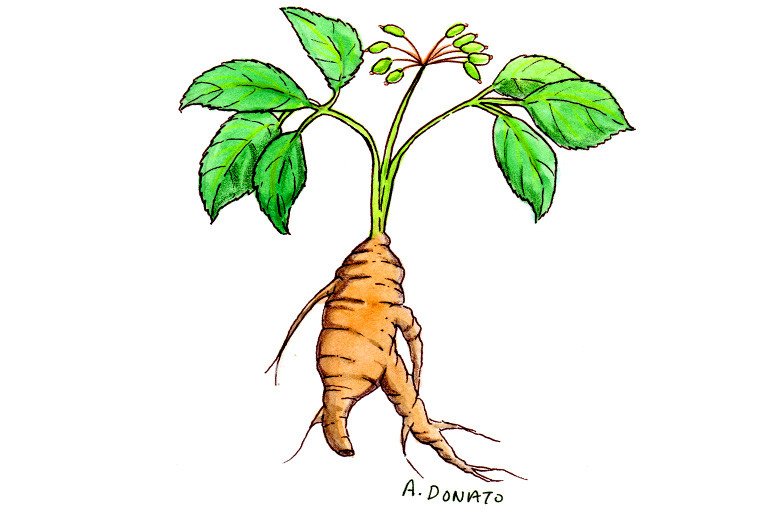
Health Care Professional Information
Scientific Name
Eleutherococcus senticosus, Acanthopanax senticosus
Common Name
Eleuthero, Russian ginseng, devil’s shrub, touch-me-not, wild pepper, shigoka, ci wu ja
Clinical Summary
Siberian ginseng is derived from a perennial plant primarily found in Northern Asia. Although it is not a species of ginseng, it is thought to have comparable activities (1). Siberian ginseng, or eleuthero, has been used traditionally as an adaptogen, performance enhancer, and immunostimulant (2). Active components are thought to include several eleutherosides and polysaccharides (3) (4).
In vitro and in vivo studies suggest that Siberian ginseng extracts have neuroprotective effects (8) and may reduce glucose levels in insulin-deficient animals (9). Eleuthero extract has also been shown to bind to estrogen, progestin, and mineralocorticoid receptors (10), and stimulate T-lymphocyte and natural killer cell production (11).
A small study in patients with knee osteoarthritis found that an herbal mixture containing Siberian ginseng relieved pain and improved physical function (5).
Siberian ginseng may also improve endurance (27); and have beneficial effects on bone remodeling (6) and in managing cholesterol levels in postmenopausal women (7).
Purported Uses
- Chemotherapy side effects
- Health maintenance
- Immunostimulation
- Strength and stamina
Constituents
- Terpenoids: Oleanolic acid
- Glycosides: Eleutheroside A (daucosterin), B1, C - G
- Phytosterols: Beta-sitosterol
- Coumarins: Eleutheroside B1 and B3, isofraxidine
- Polysaccharides: Eleutherans
- Others: Volatile oils, caffeic acid, coniferyl aldehyde, glucose, maltose, sucrose
(1) (3) (4) (14)
Mechanism of Action
In vitro studies indicate that eleuthero contains chemicals that bind to estrogen, progestin, mineralocorticoid, and glucocorticoid receptors (10). In macrophages, a Siberian ginseng extract suppressed LPS-induced iNOS expression and thus nitric oxide production by possibly inhibiting nuclear factor-kappa B activity (15) (16) or Akt and JNK signaling (16), and inhibited reactive oxygen species production (17). Siberian ginseng extract also moderately inhibited breast cancer resistance protein (BCRP)-mediated methotrexate transport in BCRP-expressing membrane vesicles (21). Eleutheroside B, eleutheroside E, and isofraxidin — active constituents of Siberian ginseng — showed protective effects against Aβ(25-35)-induced atrophies of axons and dendrites in rat cultured cortical neurons (22). Isofraxidin also inhibited cell invasion and the expression of matrix metalloproteinase-7 by human hepatoma cell lines HuH-7 and Hep G-2, possibly through the inhibition of ERK1/2 phosphorylation (18). In animal studies, eleuthero root bark was shown to exhibit neuroprotective effects against global cerebral ischemia with recovery of spatial memory in rats, possibly through anti-inflammatory mechanisms of inhibition of COX-2 expression, microglia and astrocyte expression (23). Eleutherosides restored behavioral and biochemical alterations in mice with sleep deprivation (24), and alleviated both physical and mental fatigue in mice possibly due to increased fat utilization, delayed accumulation of blood urea nitrogen, and increased lactate dehydrogenase (25). Siberian ginseng extract also decreased cadmium concentration in the blood and liver of mice as well as cadmium-induced mitotic and apoptotic activity of liver cells (26). Siberian ginseng supplementation reduced LDL cholesterol levels and improved LDL/HDL ratios in postmenopausal women (7). Stimulation of helper/inductor T lymphocytes and natural killer cells also occurs by an unknown mechanism (1).
Adverse Reactions
- Case report: Subarachnoid hemorrhage was reported in a 53-year-old woman following use of a herbal supplement containing red clover, dong quai, and Siberian ginseng for hot flashes associated with perimenopause. Her symptoms resolved after discontinuing use of the supplement (19).
Herb-Drug Interactions
Digoxin: Elevates serum digoxin levels (12).
Herb Lab Interactions
Siberian ginseng may cause falsely elevated digoxin serum assays (12).
Literature Summary and Critique
Hwang YC, et al. The effects of Acanthopanax senticosus extract on bone turnover and bone mineral density in Korean postmenopausal women. J Bone Miner Metab. 2009;27(5):584-90.
This randomized, open-label, controlled study enrolled 81 post-menopausal Korean women (age<65 years) with ostopenia or osteoporosis. Subjects were randomly assigned to a control (n=40) or treatment group (n=41). Both groups received 500 mg/day calcium and the treatment group also received Siberian ginseng extract. After 6 months the treatment group exhibited a significant change in plasma levels of the bone turnover markers, serium osteocalcin (p=0.041) and CTx, (C terminal telopeptide of type 1 collagen, [p<0.0001]), compared with the control group. However, no significant changes in bone density were observed, possibly due to the short treatment duration.. Siberian ginseng extract was well-tolerated and demonstrated a safety profile comparable to the control group. The authors concluded that Siberian ginseng extract is safe and may beneficially affect bone remodeling in Korean post-menopausal women.
Lee YJ, Chung HY, Kwak HK, Yoon S. The effects of A. senticosus supplementation on serum lipid profiles, biomarkers of oxidative stress, and lymphocyte DNA damage in postmenopausal women. Biochem Biophys Res Commun. Oct 10 2008;375(1):44-8.
To determine the effects of Siberian ginseng supplementation on blood lipid levels and oxidative stress, 40 postmenopausal women were randomly divided into either a control group receiving calcium (500 mg/day) or an experimental group receiving both calcium and A. senticosus capsules (500 mg tid). After 6 months, blood lipid profiles, oxidative stress, and lymphocytic DNA damage was assessed along with hepatoxicity. Serum LDL cholesterol, LDL/HDL ratio, lymphocytic DNA damage, and oxidative stress was significantly reduced in the treatment group while the control group did not experience any changes. Furthermore, no side effects were noted during this study. Future studies are required to determine if A. senticosus supplementation produces long term benefits in other study populations.
Dosage (Inside MSKCC Only)
This field is only visible to only Inside MSKCC users.
References
- Schulz V, et al. Rational Phytotherapy: A Physician's Guide to Herbal Medicine, 4th ed. New York: Springer; 2001.
- Harkey MR, Henderson GL, Gershwin ME, et al. Variability in commercial ginseng products: an analysis of 25 preparations. Am J Clin Nutr 2001;73:1101-6.
- Huang KC. The Pharmacology of Chinese Herbs, 2nd ed. New York: CRC Press; 1999.
- Newall C, et al. Herbal Medicines: A Guide for Health-Care Professionals, 1st ed. London: Pharmaceutical Press; 1996.
- Park SH, Kim SK, Shin IH. Effects of AIF on Knee Osteoarthritis Patients: Double-blind, Randomized Placebo-controlled Study. Korean J Physiol Pharmacol. 2009 Feb;13(1):33-7.
- Hwang YC, Jeong IK, Ahn KJ, et al. The effects of Acanthopanax senticosus extract on bone turnover and bone mineral density in Korean postmenopausal women. J Bone Miner Metab. 2009;27(5):584-90.
- Lee YJ, Chung HY, Kwak HK, et al. The effects of A. senticosus supplementation on serum lipid profiles, biomarkers of oxidative stress, and lymphocyte DNA damage in postmenopausal women. Biochem Biophys Res Commun. Oct 10 2008;375(1):44-48.
- Tohda C, Ichimura M, Bai Y, et al. Inhibitory effects of Eleutherococcus senticosus extracts on amyloid beta(25-35)-induced neuritic atrophy and synaptic loss. J Pharmacol Sci. Jul 2008;107(3):329-339.
- Niu HS, Liu IM, Cheng JT, et al. Hypoglycemic effect of syringin from Eleutherococcus senticosus in streptozotocin-induced diabetic rats. Planta Med. Feb 2008;74(2):109-113.
- Pearce PT, Zois I, Wynne KN, et al. Panax ginseng and Eleuthrococcus senticosus extracts—in vitro studies on binding to steroid receptors. Endocrinol Jpn. 1982 Oct;29(5):567-73.
- Szolomicki J, Samochowiec L, Wojcicki J, et al. The influence of active components of Eleutherococcus senticosus on cellular defence and physical fitness in man. Phytother Res. 2000 Feb;14(1):30-5. Erratum in: Phytother Res 2000 May;14(3):225.
- McRae S. Elevated serum digoxin levels in a patient taking digoxin and Siberian ginseng. CMAJ 1996;155:293-5.
- Brinker F. Herb Contraindications and Drug Interactions, 3rd ed. Sandy (OR): Eclectic Medical Publications; 2001.
- Baranov AI. Medicinal uses of ginseng and related plants in the Soviet Union: recent trends in the Soviet literature. J Ethnopharmacol 1982;6:339-53.
- Lin QY, Jin LJ, Cao ZH, et al. Inhibition of inducible nitric oxide synthase by Acanthopanax senticosus extract in RAW264.7 macrophages. J Ethnopharmacol. Jul 23 2008;118(2):231-236.
- Jung CH, Jung H, Shin YC, et al. Eleutherococcus senticosus extract attenuates LPS-induced iNOS expression through the inhibition of Akt and JNK pathways in murine macrophage. J Ethnopharmacol. Aug 15 2007;113(1):183-187.
- Lin QY, Jin LJ, Cao ZH, et al. Acanthopanax senticosus suppresses reactive oxygen species production by mouse peritoneal macrophages in vitro and in vivo. Phytother Res. Jun 2008;22(6):740-745.
- Yamazaki T, Tokiwa T. Isofraxidin, a coumarin component from Acanthopanax senticosus, inhibits matrix metalloproteinase-7 expression and cell invasion of human hepatoma cells. Biol Pharm Bull 2010;33(10) 1716-1722.
- Friedman JA, Taylor SA, McDermott W, et al. Multifocal and recurrent subarachnoid hemorrhage due to an herbal supplement containing natural coumarins. Neurocrit Care. 2007;7(1):76-80.
- Dowling EA, Redondo DR, Branch JD, et al. Effect of Eleutherococcus senticosus on submaximal and maximal exercise performance. Med Sci Sports Exerc. 1996;28:482-9.
- Tamaki H, Satoh H, Hori S, et al. Inhibitory effects of herbal extracts on breast cancer resistance protein (BCRP) and structure-inhibitory potency relationship of isoflavonoids. Drug Metab Pharmacokinet. 2010;25(2):170-9.
- Bai Y, Tohda C, Zhu S, et al. Active components from Siberian ginseng (Eleutherococcus senticosus) for protection of amyloid β(25-35)-induced neuritic atrophy in cultured rat cortical neurons. J Nat Med. 2011;65(3-4):417-23.
- Lee D, Park J, Yoon J, et al. Neuroprotective effects of Eleutherococcus senticosus bark on transient global cerebral ischemia in rats. J Ethnopharmacol. 2011 May 27. [Epub ahead of print]
- Huang LZ, Wei L, Zhao HF, et al. The effect of Eleutheroside E on behavioral alterations in murine sleep deprivation stress model. Eur J Pharmacol. 2011;658(2-3):150-5.
- Huang LZ, Huang BK, Ye Q, et al. Bioactivity-guided fractionation for anti-fatigue property of Acanthopanax senticosus. J Ethnopharmacol. 2011;133(1):213-9.
- Smalinskiene A, Lesauskaite V, Zitkevicius V, et al. Estimation of the combined effect of Eleutherococcus senticosus extract and cadmium on liver cells. Ann N Y Acad Sci. 2009;1171:314-20.
-
Kuo J, Chen KW, Cheng IS, et al. The effect of eight weeks of supplementation with Eleutherococcus senticosus on endurance capacity and metabolism in human.
Chin J Physiol.2010 Apr 30;53(2):105-11.
Consumer Information
How It Works
Bottom Line: Siberian ginseng does not enhance athletic performance nor treat or prevent cancer.
Scientists are unsure how Siberian ginseng works. Compounds from the plant have been shown to stimulate cells of immune system and protect the nervous system but no large scale clinical trials have been conducted. Other studies have shown that Siberian ginseng supplements brought down LDL cholesterol (bad cholesterol) levels and improved the HDL (good cholesterol) levels in postmenopausal women. Small studies have shown that Siberian ginseng may reduce knee osteoarthritis pain and symptoms and benefit bone metabolism in post-menopausal women. More research is needed.
Purported Uses
- To reduce the side effects from chemotherapy
No scientific evidence supports this use.
- To stimulate the immune system
Laboratory studies show that Siberian ginseng can stimulate certain aspects of the immune system, but clinical trials have not been conducted.
- To increase strength and stamina
Clinical trials do not support this use.
- To reduce the pain and symptoms of knee osteoarthritis
One small study showed that Siberian ginseng may reduce the pain and symptoms of knee osteoarthritis. More research is needed.
- To improve bone metabolism in post-menopausal women
One small study showed that Siberian ginseng had a beneficial effect on bone metabolism in post-menopausal women. However, further study is needed to confirm this effect.
Research Evidence
Bone density
Eight-one post-menopausal Korean women over 65 years of age with osteopenia or osteoporosis were randomly assigned to receive 500 mg/day calcium with or without Siberian ginseng extract. After 6 months the treatment group showed a significant change in levels of the bone markers compared with the control group. However, no significant changes in bone density were observed, possibly due to the short treatment time. Siberian ginseng extract was well-tolerated. The authors concluded that Siberian ginseng extract is safe and may benefit bone health.
Do Not Take If
- You are taking digoxin (Eleuthero can elevate the levels of this medication in the blood, which may increase its side effects).
Side Effects
- Case report: Intracranial hemorrhage was reported in a 53-year-old woman following use of a herbal supplement containing red clover, dong quai, and Siberian ginseng for hot flashes associated with perimenopause. Her symptoms resolved after discontinuing use of the supplement.
Last updated: June 13, 2012
Akt
A group of enzymes involved in several processes related to cell growth and survival. Akt enzymes help to transfer signals inside cells. An Akt enzyme is a type of serine/threonine protein kinase. Also called protein kinase B.
Source: The National Cancer Institute's Dictionary of Cancer Terms
(http://www.cancer.gov/dictionary)
anti-inflammatory (AN-tee-in-FLA-muh-TOR-ee)
Having to do with reducing inflammation.
Source: The National Cancer Institute's Dictionary of Cancer Terms
(http://www.cancer.gov/dictionary)
astrocyte (AS-troh-site)
A large, star-shaped cell that holds nerve cells in place and helps them develop and work the way they should. An astrocyte is a type of glial cell.
Source: The National Cancer Institute's Dictionary of Cancer Terms
(http://www.cancer.gov/dictionary)
blood (blud)
A tissue with red blood cells, white blood cells, platelets, and other substances suspended in fluid called plasma. Blood takes oxygen and nutrients to the tissues, and carries away wastes.
Source: The National Cancer Institute's Dictionary of Cancer Terms
(http://www.cancer.gov/dictionary)
bone density (...DEN-sih-tee)
A measure of the amount of minerals (mostly calcium and phosphorous) contained in a certain volume of bone. Bone density measurements are used to diagnose osteoporosis (a condition marked by decreased bone mass), to see how well osteoporosis treatments are working, and to predict how likely the bones are to break. Low bone density can occur in patients treated for cancer. Also called BMD, bone mass, and bone mineral density.
Source: The National Cancer Institute's Dictionary of Cancer Terms
(http://www.cancer.gov/dictionary)
breast (brest)
Glandular organ located on the chest. The breast is made up of connective tissue, fat, and breast tissue that contains the glands that can make milk. Also called mammary gland.
Source: The National Cancer Institute's Dictionary of Cancer Terms
(http://www.cancer.gov/dictionary)
cadmium (KAD-mee-um)
A metallic element that occurs naturally in tiny amounts in air, water, soil, and food. It is a byproduct of zinc refining, and is used to make batteries, pigments, plastics, alloys, and electroplate. It is also found in cigarette smoke. Exposure to high levels of cadmium may cause certain cancers and other health problems.
Source: The National Cancer Institute's Dictionary of Cancer Terms
(http://www.cancer.gov/dictionary)
calcium (KAL-see-um)
A mineral needed for healthy teeth, bones, and other body tissues. It is the most common mineral in the body. A deposit of calcium in body tissues, such as breast tissue, may be a sign of disease.
Source: The National Cancer Institute's Dictionary of Cancer Terms
(http://www.cancer.gov/dictionary)
cancer (KAN-ser)
A term for diseases in which abnormal cells divide without control and can invade nearby tissues. Cancer cells can also spread to other parts of the body through the blood and lymph systems. There are several main types of cancer. Carcinoma is a cancer that begins in the skin or in tissues that line or cover internal organs. Sarcoma is a cancer that begins in bone, cartilage, fat, muscle, blood vessels, or other connective or supportive tissue. Leukemia is a cancer that starts in blood-forming tissue such as the bone marrow, and causes large numbers of abnormal blood cells to be produced and enter the blood. Lymphoma and multiple myeloma are cancers that begin in the cells of the immune system. Central nervous system cancers are cancers that begin in the tissues of the brain and spinal cord. Also called malignancy.
Source: The National Cancer Institute's Dictionary of Cancer Terms
(http://www.cancer.gov/dictionary)
cell (sel)
The individual unit that makes up the tissues of the body. All living things are made up of one or more cells.
Source: The National Cancer Institute's Dictionary of Cancer Terms
(http://www.cancer.gov/dictionary)
chemotherapy (KEE-moh-THAYR-uh-pee)
Treatment with drugs that kill cancer cells.
Source: The National Cancer Institute's Dictionary of Cancer Terms
(http://www.cancer.gov/dictionary)
cholesterol (koh-LES-teh-rol)
A waxy, fat-like substance made in the liver, and found in the blood and in all cells of the body. Cholesterol is important for good health and is needed for making cell walls, tissues, hormones, vitamin D, and bile acid. Cholesterol also comes from eating foods taken from animals such as egg yolks, meat, and whole-milk dairy products. Too much cholesterol in the blood may build up in blood vessel walls, block blood flow to tissues and organs, and increase the risk of developing heart disease and stroke.
Source: The National Cancer Institute's Dictionary of Cancer Terms
(http://www.cancer.gov/dictionary)
clinical (KLIH-nih-kul)
Having to do with the examination and treatment of patients.
Source: The National Cancer Institute's Dictionary of Cancer Terms
(http://www.cancer.gov/dictionary)
collagen (KAH-luh-jen)
A fibrous protein found in cartilage and other connective tissue.
Source: The National Cancer Institute's Dictionary of Cancer Terms
(http://www.cancer.gov/dictionary)
concentration (KON-sen-TRAY-shun)
In science, the amount of a substance, such as a salt, that is in a certain amount of tissue or liquid, such as blood. A substance becomes more concentrated when less water is present. For example, the salt in urine may become more concentrated when a person doesn’t drink enough water.
Source: The National Cancer Institute's Dictionary of Cancer Terms
(http://www.cancer.gov/dictionary)
control group (kun-TROLE groop)
In a clinical trial, the group that does not receive the new treatment being studied. This group is compared to the group that receives the new treatment, to see if the new treatment works.
Source: The National Cancer Institute's Dictionary of Cancer Terms
(http://www.cancer.gov/dictionary)
controlled study (kun-TROLD STUH-dee)
An experiment or clinical trial that includes a comparison (control) group.
Source: The National Cancer Institute's Dictionary of Cancer Terms
(http://www.cancer.gov/dictionary)
COX-2
An enzyme that speeds up the formation of substances that cause inflammation and pain. It may also cause tumor cells to grow. Some tumors have high levels of COX-2 and blocking its activity may reduce tumor growth. Also called cyclooxygenase-2 and prostaglandin-endoperoxide synthase 2.
Source: The National Cancer Institute's Dictionary of Cancer Terms
(http://www.cancer.gov/dictionary)
DNA
The molecules inside cells that carry genetic information and pass it from one generation to the next. Also called deoxyribonucleic acid.
Source: The National Cancer Institute's Dictionary of Cancer Terms
(http://www.cancer.gov/dictionary)
dong quai (dong kwye)
An herb native to China. A substance taken from the roots has been used in traditional Chinese medicine to treat menstrual and menopausal problems. Dong quai may increase the effect of the drug warfarin (a blood-thinner). The scientific name is .
Source: The National Cancer Institute's Dictionary of Cancer Terms
(http://www.cancer.gov/dictionary)
estrogen (ES-truh-jin)
A type of hormone made by the body that helps develop and maintain female sex characteristics and the growth of long bones. Estrogens can also be made in the laboratory. They may be used as a type of birth control and to treat symptoms of menopause, menstrual disorders, osteoporosis, and other conditions.
Source: The National Cancer Institute's Dictionary of Cancer Terms
(http://www.cancer.gov/dictionary)
experimental (ek-SPAYR-ih-men-tul)
In clinical trials, refers to a drug (including a new drug, dose, combination, or route of administration) or procedure that has undergone basic laboratory testing and received approval from the U.S. Food and Drug Administration (FDA) to be tested in human subjects. A drug or procedure may be approved by the FDA for use in one disease or condition, but be considered experimental in other diseases or conditions. Also called investigational.
Source: The National Cancer Institute's Dictionary of Cancer Terms
(http://www.cancer.gov/dictionary)
extract (EK-strakt)
In medicine, a preparation of a substance obtained from plants, animals, or bacteria and used as a drug or in drugs.
Source: The National Cancer Institute's Dictionary of Cancer Terms
(http://www.cancer.gov/dictionary)
fatigue (fuh-TEEG)
A condition marked by extreme tiredness and inability to function due lack of energy. Fatigue may be acute or chronic.
Source: The National Cancer Institute's Dictionary of Cancer Terms
(http://www.cancer.gov/dictionary)
ginseng (JIN-seng)
An herb with a root that has been used in some cultures to treat certain medical problems. It may have anticancer effects.
Source: The National Cancer Institute's Dictionary of Cancer Terms
(http://www.cancer.gov/dictionary)
glucocorticoid (GLOO-koh-KOR-tih-koyd)
A compound that belongs to the family of compounds called corticosteroids (steroids). Glucocorticoids affect metabolism and have anti-inflammatory and immunosuppressive effects. They may be naturally produced (hormones) or synthetic (drugs).
Source: The National Cancer Institute's Dictionary of Cancer Terms
(http://www.cancer.gov/dictionary)
glucose (GLOO-kose)
A type of sugar; the chief source of energy for living organisms.
Source: The National Cancer Institute's Dictionary of Cancer Terms
(http://www.cancer.gov/dictionary)
hemorrhage (HEH-muh-rij)
In medicine, loss of blood from damaged blood vessels. A hemorrhage may be internal or external, and usually involves a lot of bleeding in a short time.
Source: The National Cancer Institute's Dictionary of Cancer Terms
(http://www.cancer.gov/dictionary)
hepatoma (HEH-puh-TOH-muh)
A liver tumor.
Source: The National Cancer Institute's Dictionary of Cancer Terms
(http://www.cancer.gov/dictionary)
herbal (ER-bul)
Having to do with plants.
Source: The National Cancer Institute's Dictionary of Cancer Terms
(http://www.cancer.gov/dictionary)
herbal medicine (ER-bul MEH-dih-sin)
A type of medicine that uses roots, stems, leaves, flowers, or seeds of plants to improve health, prevent disease, and treat illness.
Source: The National Cancer Institute's Dictionary of Cancer Terms
(http://www.cancer.gov/dictionary)
herbal supplement (ER-bul SUH-pleh-ment)
A product made from a plant that is thought to be useful in treating disease or staying healthy. Herbal supplements are taken by mouth.
Source: The National Cancer Institute's Dictionary of Cancer Terms
(http://www.cancer.gov/dictionary)
immune system (ih-MYOON SIS-tem)
The complex group of organs and cells that defends the body against infections and other diseases.
Source: The National Cancer Institute's Dictionary of Cancer Terms
(http://www.cancer.gov/dictionary)
immunostimulant (IH-myoo-noh-STIH-myoo-lunt)
A substance that increases the ability of the immune system to fight infection and disease.
Source: The National Cancer Institute's Dictionary of Cancer Terms
(http://www.cancer.gov/dictionary)
in vitro (in VEE-troh)
In the laboratory (outside the body). The opposite of in vivo (in the body).
Source: The National Cancer Institute's Dictionary of Cancer Terms
(http://www.cancer.gov/dictionary)
in vivo (in VEE-voh)
In the body. The opposite of in vitro (outside the body or in the laboratory).
Source: The National Cancer Institute's Dictionary of Cancer Terms
(http://www.cancer.gov/dictionary)
ischemia (is-KEE-mee-uh)
Lack of blood supply to a part of the body. Ischemia may cause tissue damage due to the lack of oxygen and nutrients.
Source: The National Cancer Institute's Dictionary of Cancer Terms
(http://www.cancer.gov/dictionary)
lactate dehydrogenase (LAK-tayt dee-hy-DRAH-jeh-nays)
One of a group of enzymes found in the blood and other body tissues and involved in energy production in cells. An increased amount of lactate dehydrogenase in the blood may be a sign of tissue damage and some types of cancer or other diseases. Also called lactic acid dehydrogenase and LDH.
Source: The National Cancer Institute's Dictionary of Cancer Terms
(http://www.cancer.gov/dictionary)
lipid (LIH-pid)
Fat.
Source: The National Cancer Institute's Dictionary of Cancer Terms
(http://www.cancer.gov/dictionary)
liver (LIH-ver)
A large organ located in the upper abdomen. The liver cleanses the blood and aids in digestion by secreting bile.
Source: The National Cancer Institute's Dictionary of Cancer Terms
(http://www.cancer.gov/dictionary)
lymphocytic (LIM-foh-SIH-tik)
Refers to lymphocytes (a type of white blood cell).
Source: The National Cancer Institute's Dictionary of Cancer Terms
(http://www.cancer.gov/dictionary)
medication (MEH-dih-KAY-shun)
A legal drug that is used to prevent, treat, or relieve symptoms of a disease or abnormal condition.
Source: The National Cancer Institute's Dictionary of Cancer Terms
(http://www.cancer.gov/dictionary)
membrane (MEM-brayn)
A very thin layer of tissue that covers a surface.
Source: The National Cancer Institute's Dictionary of Cancer Terms
(http://www.cancer.gov/dictionary)
metabolism (meh-TA-buh-lih-zum)
The chemical changes that take place in a cell or an organism. These changes make energy and the materials cells and organisms need to grow, reproduce, and stay healthy. Metabolism also helps get rid of toxic substances.
Source: The National Cancer Institute's Dictionary of Cancer Terms
(http://www.cancer.gov/dictionary)
methotrexate (meh-thuh-TREK-sayt)
A drug used to treat some types of cancer, rheumatoid arthritis, and severe skin conditions, such as psoriasis. Methotrexate stops cells from making DNA and may kill cancer cells. It is a type of antimetabolite. Also called amethopterin, MTX, and Rheumatrex.
Source: The National Cancer Institute's Dictionary of Cancer Terms
(http://www.cancer.gov/dictionary)
nervous system (NER-vus SIS-tem)
The organized network of nerve tissue in the body. It includes the central nervous system (the brain and spinal cord), the peripheral nervous system (nerves that extend from the spinal cord to the rest of the body), and other nerve tissue.
Source: The National Cancer Institute's Dictionary of Cancer Terms
(http://www.cancer.gov/dictionary)
osteopenia (OS-tee-oh-PEE-nee-uh)
A condition in which there is a lower-than-normal bone mass or bone mineral density (the amount of bone mineral contained in a certain amount of bone). Osteopenia is a less severe form of bone loss than osteoporosis.
Source: The National Cancer Institute's Dictionary of Cancer Terms
(http://www.cancer.gov/dictionary)
osteoporosis (OS-tee-oh-puh-ROH-sis)
A condition that is marked by a decrease in bone mass and density, causing bones to become fragile.
Source: The National Cancer Institute's Dictionary of Cancer Terms
(http://www.cancer.gov/dictionary)
oxidative stress (OK-sih-DAY-tiv ...)
A condition in which antioxidant levels are lower than normal. Antioxidant levels are usually measured in blood plasma.
Source: The National Cancer Institute's Dictionary of Cancer Terms
(http://www.cancer.gov/dictionary)
oxide (OK-side)
A type of chemical substance that is a combination of oxygen and another substance. Oxides are found in essential oils.
Source: The National Cancer Institute's Dictionary of Cancer Terms
(http://www.cancer.gov/dictionary)
oxygen (OK-sih-jen)
A colorless, odorless gas. It is needed for animal and plant life. Oxygen that is breathed in enters the blood from the lungs and travels to the tissues.
Source: The National Cancer Institute's Dictionary of Cancer Terms
(http://www.cancer.gov/dictionary)
phosphorylation (fos-FOR-ih-LAY-shun)
A process in which a phosphate group is added to a molecule, such as a sugar or a protein.
Source: The National Cancer Institute's Dictionary of Cancer Terms
(http://www.cancer.gov/dictionary)
plasma (PLAZ-muh)
The clear, yellowish, fluid part of the blood that carries the blood cells. The proteins that form blood clots are in plasma.
Source: The National Cancer Institute's Dictionary of Cancer Terms
(http://www.cancer.gov/dictionary)
postmenopausal (post-MEH-nuh-PAW-zul)
Having to do with the time after menopause. Menopause (“change of life”) is the time in a woman's life when menstrual periods stop permanently.
Source: The National Cancer Institute's Dictionary of Cancer Terms
(http://www.cancer.gov/dictionary)
progestin (proh-JES-tin)
Any natural or laboratory-made substance that has some or all of the biologic effects of progesterone, a female hormone.
Source: The National Cancer Institute's Dictionary of Cancer Terms
(http://www.cancer.gov/dictionary)
protein (PROH-teen)
A molecule made up of amino acids that are needed for the body to function properly. Proteins are the basis of body structures such as skin and hair and of substances such as enzymes, cytokines, and antibodies.
Source: The National Cancer Institute's Dictionary of Cancer Terms
(http://www.cancer.gov/dictionary)
randomized
Describes an experiment or clinical trial in which animal or human subjects are assigned by chance to separate groups that compare different treatments.
Source: The National Cancer Institute's Dictionary of Cancer Terms
(http://www.cancer.gov/dictionary)
red clover (red KLOH-ver)
Trifolium pratense. A plant with flowers that has been used in some cultures to treat certain medical problems. It is being studied in the relief of menopausal symptoms and may have anticancer effects. Also called purple clover, Trifolium pratense, and wild clover.
Source: The National Cancer Institute's Dictionary of Cancer Terms
(http://www.cancer.gov/dictionary)
resistance
Failure of a cancer to shrink after treatment.
Source: The National Cancer Institute's Dictionary of Cancer Terms
(http://www.cancer.gov/dictionary)
serum (SEER-um)
The clear liquid part of the blood that remains after blood cells and clotting proteins have been removed.
Source: The National Cancer Institute's Dictionary of Cancer Terms
(http://www.cancer.gov/dictionary)
significant (sig-NIH-fih-kunt)
In statistics, describes a mathematical measure of difference between groups. The difference is said to be significant if it is greater than what might be expected to happen by chance alone. Also called statistically significant.
Source: The National Cancer Institute's Dictionary of Cancer Terms
(http://www.cancer.gov/dictionary)
stress (stres)
The response of the body to physical, mental, or emotional pressure. This may make a person feel frustrated, angry, or anxious, and may cause unhealthy chemical changes in the body. Untreated, long-term stress may lead to many types of mental and physical health problems.
Source: The National Cancer Institute's Dictionary of Cancer Terms
(http://www.cancer.gov/dictionary)
supplementation (SUH-pleh-men-TAY-shun)
Adding nutrients to the diet.
Source: The National Cancer Institute's Dictionary of Cancer Terms
(http://www.cancer.gov/dictionary)
urea (yoo-REE-uh)
A substance formed by the breakdown of protein in the liver. The kidneys filter urea out of the blood and into the urine. Urea can also be made in the laboratory. A topical form of urea is being studied in the treatment of hand-foot syndrome (pain, swelling, numbness, tingling, or redness of the hands or feet that may occur as a side effect of certain anticancer drugs). Also called carbamide.
Source: The National Cancer Institute's Dictionary of Cancer Terms
(http://www.cancer.gov/dictionary)