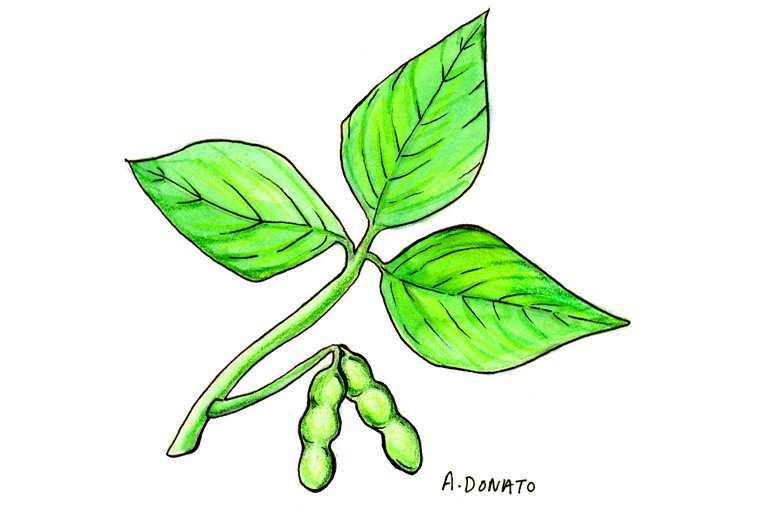
Common Names
- Soybean
- Soya
- Tofu
- Miso
- Tempeh
For Patients & Caregivers
Tell your healthcare providers about any dietary supplements you’re taking, such as herbs, vitamins, minerals, and natural or home remedies. This will help them manage your care and keep you safe.
Soybeans are rich in protein and other important nutrients. Soy is found in foods such as tofu, miso, soy sauce, and tempeh. It contains large amounts of substances known as isoflavones that help treat hot flashes and lower high cholesterol. Isoflavones can also help prevent cancer.
Soy may be useful for:
- Preventing cancer
- Preventing heart disease
- Lowering high cholesterol
- Preventing bone loss
- Managing symptoms caused by menopause (permanent end of menstrual cycles), such as hot flashes
Soy also has other uses that haven’t been studied by doctors to see if they work.
It’s generally safe to use soy in food. Talk with your healthcare providers before taking supplements or higher amounts of soy. Herbal supplements are stronger than the herbs you would use in cooking.
Supplements can also interact with some medications and affect how they work. For more information, read the “What else do I need to know?” section below.
Side effects of using soy may include:
- Gas
- Allergic reactions, such as rashes or hives
- Talk with your healthcare provider if you’re taking tamoxifen (such as Nolvadex® or Soltamox™). Soy supplements can affect how it works.
- Talk with your healthcare provider if you’re taking aromatase inhibitors. Aromatase inhibitors are medications that stop an enzyme called aromatase from changing other hormones into estrogen. Some examples of aromatase inhibitors include letrozole (Femara®) and anastrozole (Arimidex®).
For Healthcare Professionals
Soybeans are rich in protein and other essential nutrients and are widely consumed as food. Soy also contains significant amounts of isoflavones including genistein, daidzein, and glycitein. They are marketed as dietary supplements for hot flashes, high cholesterol, cardiovascular health, and cancer prevention.
Soy isoflavones exhibit both selective estrogen receptor modulator activity and non-hormonal effects. Studies are mixed on whether soy can relieve menopausal symptoms (1) (2) (3) (4) (5) or slow bone loss (6) (7) (8) (9). Other analyses suggest no protective effects against diabetes (10), and lack of benefit in patients with Alzheimer’s disease (11) or poorly controlled asthma (12). However, there may be cardiovascular benefits with soy products (13) (14) (78) as studies show soy intake lowers blood pressure (15) and cholesterol levels (16). Dietary soy intake may also improve sarcopenia by promoting a healthier gut microbiome (79).
Several studies have evaluated soy for its anticancer effects. Although it may reduce risk of prostate (17) (18), lung (19) (20), and endometrial (21) (22) cancers, high or prolonged intakes may increase risk of bladder cancer (23), endometrial hyperplasia (24), and mortality (25). Prior soy intake was associated with prolonged survival among women with lung cancer (26), but no associations were found between soy and risk of liver (27) or colorectal (28) cancers.
Studies in breast cancer patients are mixed. Although it may help prevent breast cancer (29) or reduce mortality (31), soy intake or supplementation did not modulate risk (32), decrease overall risk (33). Data are also conflicting on whether it prevents recurrence (30) (73) (77) or affects mammographic density (34) (70) (71). Other findings suggest potential adverse effects (35) (36) or that supplementation can stimulate over expression of breast cancer genes in some patients (37).
Soy supplementation was also not helpful against prostate cancer progression (38), for high-risk patients post-surgery (39) (40), or for treatment-related hot flashes (41). Other limited data suggest isoflavone supplementation may reduce some side effects from radiation or chemotherapy (42) (43), but larger studies are needed.
Preclinical data suggest higher intakes of soy or specific isoflavones may promote growth or metastasis (44) (45) (46), antagonize the effects of tamoxifen (47) (48), and increase the risk of adverse interactions with non-steroidal aromatase inhibitors (74). Patients should consult their physicians about the use of soy supplements, whose long-term safety remains to be determined.
Raw soybeans, low-fat soy flour, roasted soybeans, dry-roasted soy beans, soy milk, tofu, and soy protein isolate. There are no isoflavones in soy sauce or soy oil.
- Cancer
- Cardiovascular disease
- High cholesterol
- Osteoporosis
- Menopausal symptoms
Soy isoflavones may modulate bone remodeling via estrogen receptors (ER) by regulating target gene expression (49). Isoflavones may inhibit LDL oxidation and alter hepatic metabolism with enhanced removal of LDL and VLDL by hepatocytes (13). Serum lipids may also be regulated via modified transcription factor and downstream gene expression and by promoting antioxidant enzyme activity (50).
Various mechanisms have been proposed for soy’s anticancer effects. Genistein affects microRNA expression-targeted translation inhibitors for multiple proteins implicated in regulating various pathobiological processes (51). It also demonstrated an anti-minichromosome maintenance effect, a gene family upregulated in various cancers and considered a promising drug target (52).
In breast cancer cells, genistein acts as an agonist in ER-alpha-predominant cells, but likely acts as an antiestrogen in cells with ER-beta alone, suggesting therapeutic potential for premenopausal women with ER-alpha-negative/ER-beta-positive tumors (53). However, genistein induces estrogen-dependent MCF-7 tumor cell growth and increases breast cancer-associated aromatase expression/activity, suggesting that soy-based supplements may affect aromatase inhibitor efficacy (54). Genistein is also known to negate tamoxifen’s inhibitory effect on MCF-7 tumor growth and increase expression of estrogen-responsive genes (47). Some benefits ascribed to dietary isoflavones may depend on early life exposure, thereby impacting gene expression at the epigenetic level (55).
In prostate tumors, soy protein reduced androgen receptor expression (56). Both genistein and daidzein affect microRNA regulation (57) and induce decreased methylation of gene promoters including BRCA1 (58). In TNF-related apoptosis-inducing ligand-resistant prostate cancer cells, soy isoflavones enhance TRAIL-mediated apoptosis by engaging apoptotic pathways and regulating NF-κB activity (59). However, in a patient-derived prostate cancer xenograft model, increased proliferation and metastasis in genistein-treated groups were linked to enhanced activities of tyrosine kinases, EGFR, and its downstream Src (45). Both genistein and daidzein also act as radiosensitizers for prostate cancer, but pure genistein increased lymph node metastasis, whereas the combination of genistein, daidzein, and glycitein did not. Daidzein may protect against genistein-induced metastasis, and its ability to inhibit cell growth and potentiate radiation appears to be androgen-receptor-independent (60). In addition, soy isoflavones radiosensitized human A549 NSCLC cells, and decreased hemorrhages, inflammation, and fibrosis caused by radiation suggesting protection of normal lung tissue (61).
- Contraindicated in patients who are hypersensitive to soy products.
- Flatulence, allergic reactions
Case Reports
Severe hypothyroidism: In a 72-year-old woman with thyroid disease who consumed a health drink containing soy isoflavone extracts for 6 months (62).
Gynecomastia: In men, associated with prolonged consumption of soy products (63) (80).
Abnormal uterine bleeding: With endometrial pathology in 3 women after a high intake of soy products (64).
Loss of libido, erectile dysfunction: In a 19-year-old diabetic man following intake of large amounts of soy-based products in a vegan-style diet (65).
Acute pancreatitis: In a woman in her 40s due to ingesting large amounts of soymilk (66).
Food protein-induced enterocolitis syndrome: In two infants after they were fed soy products, with prompt recovery following cessation of the trigger food although one case required rapid intravenous hydration for compensated shock (75).
Intravenous Lipid Emulsion-Induced Soy Allergy and Atopic Dermatitis: In a 9-month-old infant with short bowel syndrome, after being fed total parenteral nutrition. The lesions disappeared when the lipid emulsion cotaining soybean oil was replaced with soy-free component (81).
Soy-dependent exercise-induced anaphylaxis: In a 16-year-old girl, after consuming foods containing hydrolyzed soy protein. Her symptoms resolved after appropriate treatment (82).
Severe cyclical mastalgia and hyperprolactinemia: In a 28-year-old woman, who achieved symptom resolution through strict avoidance of soy foods and certain nuts (83).
Tamoxifen: Animal studies suggest genistein may antagonize tamoxifen effects on estrogen-dependent breast cancer (MCF-7) (47) (48). Clinical relevance has yet to be determined.
Aromatase inhibitors: Genistein-induced MCF-7 tumor cell growth and increased breast cancer-associated aromatase expression and activity in vitro, suggesting that soy-based supplements may affect treatment efficacy (54).
CYP450 substrates: Soymilk and miso induced CYP3A4 in vivo, and may affect the intracellular concentration of drugs metabolized by this enzyme (67). Clinical relevance is not known.
P-Glycoprotein: Soymilk and miso induced P-Gp in vivo, and can affect the intracellular concentration of certain drugs (67). Clinical relevance is not known.
UGT substrates: Soy modulates UGT enzymes in vitro and can increase the side effects of drugs metabolized by them (68). Clinical relevance is not known.
Membrane organic anion-transporting polypeptides (OATPs): Soy isoflavones and their metabolites affected drug transport across tissue barriers via human OATP2B1 in vitro. Clinical relevance is not known (69).
Simvastatin: Repeated administration of soy isoflavones decreased the systemic bioavailability of simvastatin in healthy volunteers (72).
Levothyroxine: A few case reports suggest that soy products may interfere with L-T4 absorption although a cross-over study found no such effect (76).