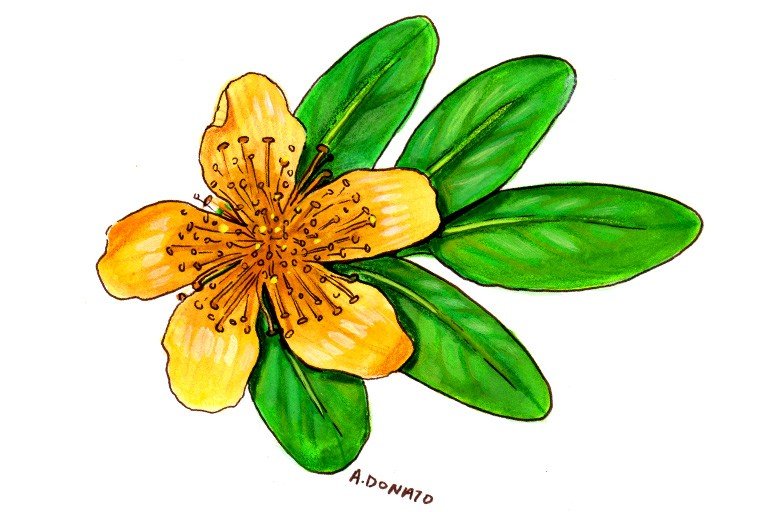
Common Names
- Saint John's wort
- Hypericum
- Goatweed
- God's wonder plant
- Witches herb
For Patients & Caregivers
Tell your healthcare providers about any dietary supplements you’re taking, such as herbs, vitamins, minerals, and natural or home remedies. This will help them manage your care and keep you safe.
St. John’s wort is an herb with yellow flowers used in traditional European medicine. St. John’s wort supplements come as tablets, capsules, liquid extracts, and creams.
St. John’s wort is used to:
- Treat mild and moderate depression
- Treat anxiety
- Manage fatigue (feeling very tired or having less energy than usual)
- Treat insomnia (trouble falling asleep, staying asleep, or waking up too early)
- Manage symptoms caused by menopause (the permanent end of your menstrual cycles), such as hot flashes
- Treat seasonal affective disorder (SAD)
- Treat attention-deficit hyperactivity disorder (ADHD — a condition that can cause unusual levels of hyperactivity and impulsive behaviors)
- Heal wounds
St. John’s wort has other uses, but doctors haven’t studied them to see if they work.
Talk with your healthcare provider before taking St. John’s wort supplements. Herbal supplements can interact with some medications and affect how they work. For more information, read the “What else do I need to know?” section below.
Side effects of using St. John’s wort may include:
- Headache
- Nausea (feeling like you’re going to throw up)
- Dry mouth
- Abdominal (belly) discomfort
- Sleepiness
- Increased sensitivity to sunlight
-
Talk with your healthcare provider if you are:
- Taking a blood thinner, such as warfarin (Coumadin®, Jantoven®). St. John’s wort can affect the way it works.
- Taking a cholesterol-lowering medication, such as simvastatin (FloLipid®, Zocor®). St. John’s wort can make it less effective.
- Taking a heart medication, such as digoxin (Digox®, Lanoxin®). St. John’s wort makes it less effective.
- Taking antidepressants, such as fluoxetine (Prozac®) or paroxetine (Paxil®). St. John’s wort can make them less effective.
- Taking a birth control pill. St. John’s wort can affect the way the pill works in your body.
- An organ transplant patient and are taking cyclosporine (Sandimmune®, Neoral®) or tacrolimus (Prograf®). St. John’s wort can make these medications less effective. This can make your body reject the transplant.
- Taking the chemotherapy medications irinotecan (Onivyde®, Camptosar®) or imatinib (Gleevec®). St. John’s wort can make these less effective.
- Taking indinavir (Crixivan®) to treat HIV (human immunodeficiency virus) infection. St. John’s wort makes it less effective by reducing its level in your blood.
- Don’t take St. John’s wort if you’re pregnant or breastfeeding. It may not be safe for you.
For Healthcare Professionals
St. John’s wort is a perennial herb indigenous to Europe, West Asia, and North Africa, and now prevalent in many parts of the world. The flowering tops are reputed for their medicinal properties and the herb has a centuries-long history as a remedy for headaches, kidney problems, and nerve disorders. St. John’s Wort was also used by Native Americans for wound healing, snakebites, and diarrhea. Today it is used in several European countries as an antidepressant, and to treat anxiety, sleep problems, and seasonal affective disorder. It is also marketed in the US as a dietary supplement to support emotional well-being.
St. John’s wort is one of the most extensively studied herbs, with active constituents hyperforin and hypericin being the focus of most research. Lab studies show that it has neuroprotective properties (1) and may relieve neuropathic pain (2). Clinical studies suggest St. John’s wort may be as effective as SSRIs such as paroxetine (3) (76), fluoxetine (4) (5) and citalopram (6) (7) for mild to moderate depression. It was also shown to be a cost-effective alternative to generic antidepressants (75). Reductions in depression were sustained as well with continued use (8). However, data are inconsistent when all types of depression are analyzed (9) (10) and some randomized trials have found St. John’s wort ineffective for both major (11) and minor depression (12).
A few studies suggest efficacy with St. John’s wort for premenstrual syndrome (13) and vasomotor symptoms in peri- and postmenopausal women (14). It may also enhance the effect of clopidogrel in patients who have undergone percutaneous coronary intervention (17), but more studies are needed. Its use did not improve symptoms in children and adolescents with attention-deficit/hyperactivity disorder (15).
St. John’s wort has many documented interactions with conventional drugs resulting in reduced efficacy or treatment failure, as well as several associated adverse effects. Its use may also cause photosensitivity (18) and has been associated with increased risk of cataracts (19) (20). Therefore, patients should speak with their physician or pharmacist before using this product.
- Depression
- Anxiety
- Fatigue
- Insomnia
- Menopausal symptoms
- Seasonal affective disorder
- ADHD
- Wounds
In vitro studies suggest hypericum inhibits serotonin, norepinephrine, and dopamine reuptake by neurons (22) (23). Although earlier data suggested MOA inhibition, additional findings were insignificant in vivo (24). More recently hyperforin, the main constituent associated with serotonin reuptake inhibition, activated transient receptor potential C6 channels in vitro inducing neurite outgrowth and possibly influencing monoamine uptake (25), and stimulated development and function of oligodendrocytes (26). Hypericin suppresses voltage-dependent calcium channel and mitogen-activated protein kinase activity and evokes glutamate release, adding further clues to its function in the brain (27).
Hypericin-induced phototoxicity appears to be oxygen-dependent and may involve intracellular pH reduction or mediation by TNF-related apoptosis inducing ligand receptor systems (28). Incidental reporting also suggests photoactivated hypericin can cause demyelination of cutaneous axons (29).
Mechanisms by which St. John’s wort induces or modulates different enzymes and alters pharmacokinetics of corresponding drug substrates continue to be evaluated. Hyperforin induces CYP3A4 through activation of the pregnane X receptor (30) and St. John’s wort extract modulates UGT and P-gp activity via protein kinase C (31) (32). Analgesic and CNS activity may be due to its bioflavonoid content (21) as well as through inhibition of protein kinase C isoforms and their phosphorylation (2).
The enolized beta-dicarbonyl system contained in hyperforin may play a central role in its antiangiogenic activity, but chemical and metabolic instability of hyperforin itself has led to the search for more stable derivatives (33). In animal models, hyperforin and its stabilized derivative aristoforin suppress lymphatic endothelial cell growth and lymphangiogenesis by inducing cell cycle arrest or apoptosis (34). Hyperforin also reversed P-gp and breast cancer resistance protein activity in human myeloid leukemia cell lines (35). It exerts neuroprotective effects in PC12 cells via AKT/GSK-3β signal regulation to decrease aluminum-induced Aβ production and tau phosphorylation (82).
- May cause photosensitivity with fair-skinned individuals more at risk (18) or subacute neuropathy (29) in conjunction with sun exposure or other photosensitizing agents or products.
- May reduce efficacy of chemotherapy (37) (38) (39). May enhance skin toxicity of radiation therapy (40) (85).
- St. John’s wort should be discontinued at least one week before surgery or chemotherapy (37) (41).
- Pregnant or nursing women (42) or those on oral contraceptives (43) should not consume St. John’s wort.
- Patients being treated with prescription antidepressants should not consume St. John’s wort as it may create a syndrome of central serotonin excess (44).
- Use of this supplement should also be avoided if taking other supplements such as 5-HTP or SAM-e because these products may also affect serotonin levels.
- Numerous documented interactions with conventional drugs should preclude its use while undergoing chemotherapy, radiation therapy, antiretroviral therapy, immunosuppressive therapy, and anticoagulant therapy.
Common: Headache, nausea, dry mouth, sleepiness, and gastrointestinal upset (5).
Infrequent: Photosensitivity (18), neuropathy (29), increased prothrombin time (21).
Case reports
Acute transplant rejection: In 2 heart transplant patients maintained on immunosuppressives, directly linked to the use of St. John’s wort. After supplement discontinuation, plasma cyclosporin returned to therapeutic values (45). A subsequent report of 45 kidney or liver transplant recipients also describe rejection episodes or declines in trough levels of cyclosporin (average, 49%) linked to ingestion of St. John’s wort. In many cases, these patients did not inform their healthcare team about their use of this supplement (46).
Acute kidney injury: In a patient who used St. John’s wort tea to remedy a sleep disorder (83).
Supraventricular tachycardia: In a 33-year-old female, 1 month after using St. John’s wort for depression as recommended by a psychotherapist (84).
Cardiovascular collapse: Hypotension without anaphylactic symptoms shortly after anesthesia induction was potentially linked to long-term use of St. John’s wort in a patient (47).
Severe drug-induced acute hepatitis: In a 61-year-old woman, linked to use of St. John’s wort during treatment with pegylated interferon α (48).
Mania: In 3 patients with underlying bipolar disorder associated with use of St. John’s wort (36).
Serotonin syndrome: In a patient following 10 days of St. John’s wort use (49). In a case series, 5 elderly patients who combined prescription antidepressants with St. John’s wort were clinically diagnosed with central serotonergic syndrome (44).
Erythroderma: In a patient 4 days after initiation of St. John’s wort, affecting both light- and non-exposed skin (50).
Severe skin toxicity: In a 63-year-old cancer patient undergoing radiation/multimodal treatment while using several other over-the-counter products including topical St. John’s wort skin oil (85).
Radiation recall dermatitis: In a 65-year-old cancer patient who developed unusual skin reactions during RT and erythema half a year later in previously irradiated skin, associated with use of hypericin for depressive mood without informing the physician (40).
Photosensitivity: In 3 individuals who used topical and/or oral St. John’s wort preparations prior to sun exposure or undergoing phototherapy (18).
Subacute toxic neuropathy: In a 35-year-old woman who took St. John’s Wort for mild depression. Stinging pain on sun-exposed areas developed after 4 weeks of use which worsened during and after sun exposure. Pain was also provoked by light touch or air movement (29).
Sexual dysfunction: Decreased sexual libido that normalized following discontinuation of St. John’s wort (51).
Withdrawal syndrome: Nausea, anorexia, retching, dizziness, dry mouth, thirst, chills, and extreme fatigue in a patient who stopped taking St. John’s wort after 32 days of use (52).
Psychosis: Regular ingestion of a St. John’s wort tea was noted as a potential contributing factor in a 25-year-old man who also had a history of drug-induced psychosis and family history of psychotic depression (81).
CYP450 substrate drugs including those metabolized by 3A4 (57) and 2C9 (58) : St. John’s wort induces these isoenzymes, affecting the metabolism of certain medications and reducing serum concentrations (59). Drugs metabolized by these enzymes include:
- HIV protease inhibitors: Blood levels of indinavir and ritonavir can be significantly reduced, resulting in increased HIV viral load and development of viral resistance (60) (61).
- HIV non-nucleoside reverse transcriptase inhibitors: Increased oral clearance and lowered plasma concentrations of nevirapine possibly resulting in antiretroviral resistance and treatment failure (62).
- Cyclosporin / tacrolimus: Blood levels of cyclosporin (45) (46) or tacrolimus (63) (64) can be significantly reduced, resulting in decreased efficacy or acute transplant rejection.
- Diltiazem / nifedipine: Blood levels of diltiazem or nifedipine can be reduced, resulting in decreased efficacy (36).
- Irinotecan: Due to changes in hepatic metabolism caused by St. John’s wort, levels of irinotecan metabolite SN-38 may be lowered by as much as 40% for up to 3 weeks following discontinuation of St. John’s wort (37).
- Imatinib: Increased clearance (38) (39).
- Docetaxel: Subtherapeutic docetaxel concentrations may result when docetaxel is administered to patients who regularly use St. John’s wort (65).
- Warfarin: May increase or decrease activity when administered concomitantly. Internal normalization ratio should be monitored routinely (66).
- Clopidogrel: May enhance clopidogrel-induced platelet inhibition (17).
- Triptans: Increased serotonergic effect and possible serotonin syndrome when combined with sumatriptan, naratriptan, rizatriptan, or zolmitriptan (36).
- SSRIs: Increased serotonergic effect and possible serotonin syndrome when combined with citalopram, fluoxetine, fluvoxamine, paroxetine, or sertraline (49).
- Tricyclic antidepressants: Increased serotonergic effect and possible serotonin syndrome when combined with nefazodone, amitriptyline, or imipramine. Possible reduction in efficacy of antidepressants due to changes in metabolism (36).
- Zolpidem: Decreased plasma concentration (67).
- Oral contraceptives: May reduce blood levels resulting in decreased efficacy (ie, breakthrough bleeding or pregnancy) (43).
- Alcohol: May result in increased sedation (36).
- Alprazolam: May reduce blood levels, resulting in decreased efficacy (57).
- Dextromethorphan: May reduce blood levels, resulting in decreased efficacy (57).
- Statins: Increased clearance and reduced efficacy of simvastatin, atorvastatin, and rosuvastatin (68) (69) (70).
- Oxycodone: Reduces oxycodone plasma concentrations, significantly reducing its effectiveness (71).
- Gliclazide: Increased clearance (58).
- Clozapine: Reduces plasma level of clozapine (73).
- Methotrexate: Increases exposure and toxicity of methotrexate in rats (74).
- Bupropion: Prolonged facial dystonia in a 58-year-old Caucasian woman following concomitant use of St. John’s wort (53).
- Rifampicin: Allodynia, paresthesia, and phototoxic erythrodermia in sun-exposed areas (back of the hands and perioral and nasal area) of female volunteers following coadministration with St. John’s wort (79).
- Ambrisentan: St. John’s wort significantly reduced exposure with ambrisentan, but this interaction was deemed not to be clinically relevant (80).
- Intravenous fentanyl: In a small study of healthy volunteers, St. John’s wort did not alter fentanyl PK/PD or clinical effects (86).
P-gp substrate drugs: St. John’s wort induces intestinal P-gp, resulting in decreased absorption and lowered plasma concentrations of certain drugs including digoxin (54), talinolol (55), and fexofenadine (56). It may also produce severe adverse effects in conjunction with pegylated interferon α (48).
UGT substrates: St. John’s wort modulates UGT enzymes in vitro and may increase the side effects of drugs such as acetaminophen (31).
Dolutegravir: Concomitant administration of a hypericum-containing supplement in an HIV-infected patient had no significant effects on plasma drug trough concentrations of this drug (87). Use of therapeutic drug monitoring and/or viral load is recommended to assess any potential effects with prescribed co-administration.