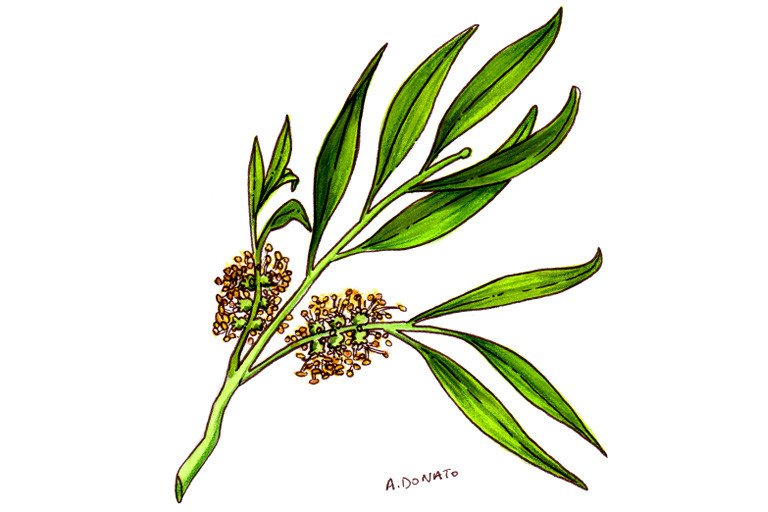
Common Names
- Tea tree
- Melaleuca oil
- Australian tea tree oil
For Patients & Caregivers
Tell your healthcare providers about any dietary supplements you’re taking, such as herbs, vitamins, minerals, and natural or home remedies. This will help them manage your care and keep you safe.
Topical tea tree oil may be effective in treating certain skin conditions, but research is limited.
Tea tree oil is the essential oil distilled from Melaleuca alternifolia, a plant native to Australia. It has been used in traditional medicine for its antiseptic and anti-inflammatory properties to treat various skin conditions and infections. It is also a popular ingredient in skin and hair products. In lab studies, tea tree oil killed several bacteria and fungi most commonly found in skin infections and acne.
Studies on the use of tea tree oil in humans are limited. In healthy volunteers, a topical tea tree oil extract reduced inflammation caused by histamine exposure. It has also shown some benefit in individuals with athlete’s foot, acne, cold sores, and warts, but more studies are needed.
- To treat skin conditions
In a small older study, tea tree oil was as effective as benzoyl peroxide for acne, but additional study is needed. - To treat infections
Studies on whether tea tree oil is effective in treating fungal infections are mixed. A small study suggests it may be helpful for cold sores, but further study is necessary. - To reduce inflammation
Small studies suggest tea tree oil may reduce inflammation related to histamine exposure, or from insect bites or stings. - To treat mucositis (painful mouth sores, swelling)
There are no clinical data to prove this claim. Intake of tea tree oil by mouth can cause severe toxicity.
Case reports
- Topical: Local skin irritation, itching, redness, and swelling; breast tissue enlargement in boys with application of lavender and tea tree oils.
- Oral: Disorientation, systemic body rash, abnormal white blood cell counts, and coma.
Patient Warnings:
- Tea tree oil should not be taken orally, as severe side effects have occurred.
Do Not Take if:
- You have sensitive skin: There have been a number of case reports of skin rash and other reactions with the use of tea tree oil.
For Healthcare Professionals
Tea tree oil is an essential oil distilled from the leaves of Melaleuca alternifolia, a plant native to Australia. It has been used in traditional medicine for its antiseptic and anti-inflammatory properties to treat various skin conditions and infections. It has also been incorporated into many topical formulations to treat cutaneous infections, speed wound healing, and as an ingredient in skin and hair products.
In vitro studies suggest wide-spectrum antimicrobial (2) (12), antiviral (20), antiprotozoal (21), anti-inflammatory (22) and antiproliferative (14) (15) properties. Animal studies also suggest cytotoxic effects (23).
Preliminary studies in humans suggest various topical tea tree oil formulations may help treat acne (5), athlete’s foot (6) (9), fungal nail infections (7), histamine-induced skin inflammation (8), warts (16), cold sores (11), chalazia (26), and dermatitis (18). However, additional studies are needed to confirm under what conditions topical applications may be effective.
- Infections
- Skin conditions
- Inflammation
- Mucositis
Terpinen-4-ol, a major constituent of tea tree oil, exhibited antimicrobial activity against Candida albicans, Escherichia coli, Staphylococcus aureus, and Pseudomonas aeruginosa. Terpin-4-ol, alpha-terpineol, and alpha-pinene also had antimicrobial effects against Staphylococcus epidermidis and Propionibacterium acnes (2). Terpinen-4-ol suppressed inflammatory mediator production by activating human monocytes (8).
A tea tree oil concentrate prevented influenza virus from entering the host cells by disturbing the normal viral membrane fusion procedure (25). Other in vitro studies indicate that tea tree oil has weak estrogenic and antiandrogenic properties that may alter the estrogen and androgen signaling pathways (13). At the same time, the notion that tea tree oil has hormone-modulating properties has been challenged, and further confirmatory research is needed (27).
Skin irritation following use of tea tree oil is due to its auto-oxidation and formation of epoxide intermediates via arene-epoxidation reactions catalyzed by human cytochrome P450 enzymes (17).
- Tea tree oil should not be taken orally, as severe side effects have occurred.
- Patients with sensitive skin should use caution with topical applications, as skin reactions have been reported.