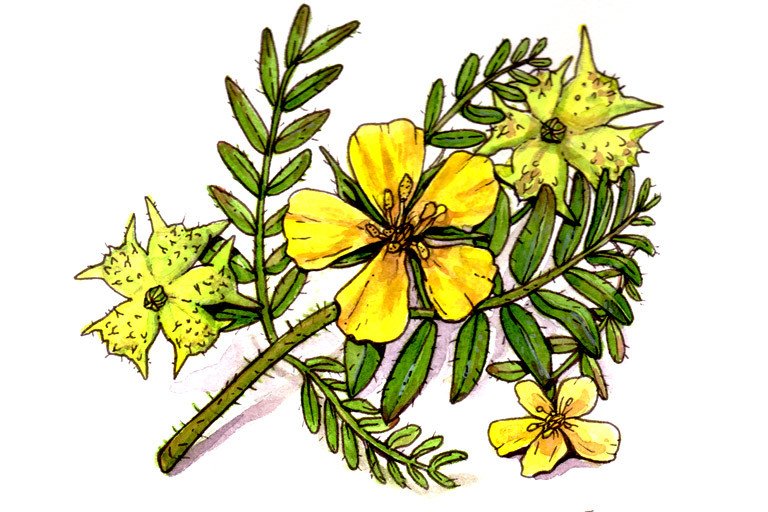
Health Care Professional Information
Common Name
Caltrop, Puncture vine, Gokhru, Al-Gutub, Ba ji li
Clinical Summary
Tribulus is a perennial herb that grows in the subtropical regions of eastern and western Asia, southern Europe, and Africa. It is used in traditional medicine for chest pain, dizziness, skin and eye disorders, and to expel kidney stones. Preliminary studies indicate that tribulus has analgesic (1), antihypertensive (2) (3), anti-inflammatory (4) antioxidant (5) (6), diuretic (7), hypoglycemic (8), antibacterial and antifungal (9) (10), and anticancer properties (11) (12).
Tribulus is marketed as a dietary supplement to enhance sexual function and for body building. It has been shown to increase sperm production in rats. (13) However, its effects on testosterone levels are mixed (14) (15) (16).
Due to its purported hormonal activities, prostate cancer patients should avoid this product.
Purported Uses
- Cancer treatment
- Hypertension
- Infertility in both sexes
- Impotency
- Infections
- Rheumatic pain
- Kidney stone
Constituents
- Protodioscin
- Gitonin
- Tigogenin
- Furostanol
- Beta-Sitosterol
- Stigmasterol
- Spirosta-3,5-diene
- Hecogenin
- Ruscogenin
- Quercetin
- Trubulusamides A and B
(3) (6)
Mechanism of Action
A methanol extract of tribulus demonstrated COX-2 inhibition activity (4) suggesting this herb's anti-inflammatory effects. Tribulus also exerts a protective effect in diabetic rats by inhibiting oxidative stress (6) and by lowering the levels of glycosylated hemoglobin and cholesterols (8). Consumption of tribulus causes motor neuron adverse effects in animals by affecting the gamma-aminobutyric acid (GABA) receptors (18). The methanolic and aqueous extracts of tribulus exert antihypertensive effects via relaxation of the arterial smooth muscle, through nitric oxide release and membrane hyperpolarization (3). The aqueous extract also has angiotensin converting enzyme (ACE)-inhibition activity (2) that can help lower blood pressure.
Tribulus extract was shown to limit the formation of calcium oxalate and calcium hydrogen phosphate dihydrate crystal (21) (22), mineral compounds that can cause kidney stones.
Tribulus increases sperm production in rats (13) but does not alter testosterone levels in animals or humans (15) (16). In a study conducted in rats with ovarian cysts, tribulus extract showed a luteinizing effect related to gonadotropin-like activity (20).
Tribulus extracts induce apoptosis and suppresses cancer cell proliferation by activating caspase 3; dephosphorylating extracellular signal-related kinase (ERK) 1 and 2 (15); and by inhibiting Nuclear Factor (NF-kappa B) signaling (12). Saponins from tribulus inhibit Multiple-Drug Resistance (MDR) of cancer cells (11). In animal models, administration of oral tribulus resulted in a significant reduction in tumor incidence, tumor burden and cumulative number of papillomas (19).
Adverse Reactions
- Case Reports: Hepato-, nephro- and neurotoxicities have been reported with use of tribulus (17).
- Tribulus has been shown to cause motor neuron disease in animals (18).
Herb-Drug Interactions
- Diruetics: Tribulus may increase the effects of other diuretic drugs (7).
- Antihypertensive drugs: Tribulus has angiotensin converting enzyme (ACE)-inhibition activity and therefore, may have an additional hypotensive effect (2) (3).
- Antidiabetics: Tribulus may have additive hypoglycemic effects (8).
- Clopidogrel: May increase the risk of blood clots.
Stent thrombosis has been reported in patients following concurrent use of clopidogrel and an herbal formula containing tribulus (23).
Dosage (Inside MSKCC Only)
This field is only visible to only Inside MSKCC users.
References
- Heidari MR, Mehrabani M, Pardakhty A, et al. The analgesic effect of Tribulus terrestris extract and comparison of gastric ulcerogenicity of the extract with indomethacine in animal experiments.Ann N Y Acad Sci. Jan 2007;1095:418-427.
- Sharifi AM, Darabi R, Akbarloo N. Study of antihypertensive mechanism of Tribulus terrestris in 2K1C hypertensive rats: role of tissue ACE activity. Life Sci. Oct 24 2003;73(23):2963-2971.
- Phillips OA, Mathew KT, Oriowo MA. Antihypertensive and vasodilator effects of methanolic and aqueous extracts of Tribulus terrestris in rats. J ethnopharmacol. Apr 6 2006;104(3):351-355.
- Hong CH, Hur SK, Oh OJ, et al. Evaluation of natural products on inhibition of inducible cyclooxygenase (COX-2) and nitric oxide synthase (iNOS) in cultured mouse macrophage cells. J ethnopharmacol. Nov 2002;83(1-2):153-159.
- Kamboj P, Aggarwal M, Puri S, et al. Effect of aqueous extract of Tribulus terrestris on oxalate-induced oxidative stress in rats. Indian J nephrol. Jul 2011;21(3):154-159.
- Amin A, Lotfy M, Shafiullah M, et al. The protective effect of Tribulus terrestris in diabetes.Ann N Y Acad Sci. Nov 2006;1084:391-401.
- Al-Ali M, Wahbi S, Twaij H, et al. Tribulus terrestris: preliminary study of its diuretic and contractile effects and comparison with Zea mays. J ethnopharmacol. Apr 2003;85(2-3):257-260.
- El-Tantawy WH, Hassanin LA. Hypoglycemic and hypolipidemic effects of alcoholic extract of Tribulus alatus in streptozotocin-induced diabetic rats: a comparative study with T. terrestris (Caltrop). Indian j exp biol. Sep 2007;45(9):785-790.
- Al-Bayati FA, Al-Mola HF. Antibacterial and antifungal activities of different parts of Tribulus terrestris L. growing in Iraq.J Zhejiang Univ Sci B. Feb 2008;9(2):154-159.
- Zhang JD, Cao YB, Xu Z, et al. In vitro and in vivo antifungal activities of the eight steroid saponins from Tribulus terrestris L. with potent activity against fluconazole-resistant fungal pathogens. Biol & pharm bull. Dec 2005;28(12):2211-2215.
- Ivanova A, Serly J, Dinchev D, et al. Screening of some saponins and phenolic components of Tribulus terrestris and Smilax excelsa as MDR modulators. In Vivo. Jul-Aug 2009;23(4):545-550.
- Kim HJ, Kim JC, Min JS, et al. Aqueous extract of Tribulus terrestris Linn induces cell growth arrest and apoptosis by down-regulating NF-kappaB signaling in liver cancer cells. J ethnopharmacol. Jun 14 2011;136(1):197-203.
- Martino-Andrade AJ, Morais RN, Spercoski KM, et al. Effects of Tribulus terrestris on endocrine sensitive organs in male and female Wistar rats. J ethnopharmacol. Jan 8 2010;127(1):165-170.
- Singh S, Nair V, Gupta YK. Evaluation of the aphrodisiac activity of Tribulus terrestris Linn. in sexually sluggish male albino rats.J Pharmacol Pharmacother. Jan 2012;3(1):43-47.
- Neychev VK, Nikolova E, Zhelev N, et al. Saponins from Tribulus terrestris L are less toxic for normal human fibroblasts than for many cancer lines: influence on apoptosis and proliferation. Exp Biol Med (Maywood). Jan 2007;232(1):126-133.
- Saudan C, Baume N, Emery C, et al. Short term impact of Tribulus terrestris intake on doping control analysis of endogenous steroids. Forensic Sci Int. Jun 10 2008;178(1):e7-10.
- Talasaz AH, Abbasi MR, Abkhiz S, et al. Tribulus terrestris-induced severe nephrotoxicity in a young healthy male.Nephrol Dial Transplant.Nov 2010;25(11):3792-3793.
- Bourke CA. Abnormal turning behaviour, GABAergic inhibition and the degeneration of astrocytes in ovine Tribulus terrestris motor neuron disease. Aust Vet J. Jan-Feb 2006;84(1-2):53-58.
- Kumar M, Soni AK, Shukla S, et al. Chemopreventive potential of Tribulus terrestris against 7,12- dimethylbenz (a) anthracene induced skin papillomagenesis in mice. Asian Pac J Cancer Prev. Apr-Jun 2006;7(2):289-294.
- Dehghan A, Esfandiari A, Bigdeli SM. Alternative treatment of ovarian cysts with Tribulus terrestris extract: a rat model.Reprod Domest Anim. Feb 2012;47(1):e12-15.
- Joshi VS, Parekh BB, Joshi MJ, et al. Inhibition of the growth of urinary calcium hydrogen phosphate dihydrate crystals with aqueous extracts of Tribulus terrestris and Bergenia ligulata. Urol Res. May 2005;33(2):80-86.
- Aggarwal A, Tandon S, Singla SK, et al. Diminution of oxalate induced renal tubular epithelial cell injury and inhibition of calcium oxalate crystallization in vitro by aqueous extract of Tribulus terrestris. Int Braz J Urol. Jul-Aug 2010;36(4):480-488; discussion 488, 489.
- Vatankulu MA, Tasal A, Erdogan E, et al. [Three case reports of the use of herbal combinations resulted in stent thrombosis: herbal combinations; friend or foe?].Turk Kardiyol Dern Ars. Apr 2012;40(3):265-268.
- Rogerson S, Riches CJ, Jennings C, et al. The effect of five weeks of Tribulus terrestris supplementation on muscle strength and body composition during preseason training in elite rugby league players.J Strength Cond Res. May 2007;21(2):348-353.
Consumer Information
How It Works
Bottom Line: Tribulus has not been shown to treat or prevent cancer in humans.
Tribulus is an herb that grows in the subtropical regions of eastern and western Asia, southern Europe, and Africa. It is used in traditional medicine for chest pain, dizziness, skin and eye disorders, and to expel kidney stones. Tribulus is also marketed as a dietary supplement to improve sexual function and for body building due to the belief that it acts like testosterone in the body. However, this effect has not been confirmed. Studies done in lab and in animals show tribulus has medicinal effects against high blood pressure, diabetes, inflammation, infection, and cancer. However, there are no large scale studies conducted in humans.
Use of tribulus has been linked to adverse effects. Due to its potential hormonal activities, prostate cancer patients should avoid this herb until more is known about its safety.
Purported Uses
- To treat cancer
Tribulus showed anticancer activities in lab studies. It has not been tested in humans as a cancer treatment.
- To lower blood pressure
Tribulus extract can relax blood vessels and may help to lower blood pressure.
- To enhance sexual function
Tribulus increases sperm production in animal models. However, studies of its effects on testosterone levels gave mixed results.
- To improve muscle strength and muscle mass
A clinical study did not find any significant changes in muscle strength or mass with use of tribulus.
- To treat infections
Tribulus has antifungal activities in lab studies. Human data are lacking.
- To reduce pain
Tribulus extract reduced inflammation in lab studies. But human studies have not been done.
- To treat kidney stones
Tribulus can promote urination and can stop the formation of calcium compounds that cause kidney stones. However, these effects have not been studied in humans.
Do Not Take If
- You are taking diruetics: Tribulus may increase the effects of diuretic drugs.
- You are taking antihypertensive drugs: Tribulus may have an additional blood pressure lowering effect.
- You are taking antidiabetics: Tribulus may have additive blood sugar lowering effects.
- You are taking Clopidogrel: May increase the risk of blood clots.
Side Effects
- Tribulus may cause liver, kidney, and nerve toxicities.
Last updated: September 5, 2012
acid (A-sid)
A chemical that gives off hydrogen ions in water and forms salts by combining with certain metals. Acids have a sour taste and turn certain dyes red. Some acids made by the body, such as gastric acid, can help organs work the way they should. An example of an acid is hydrochloric acid. Acidity is measured on a scale called the pH scale. On this scale, a value of 7 is neutral, and a pH value of less than 7 to 0 shows increasing acidity.
Source: The National Cancer Institute's Dictionary of Cancer Terms
(http://www.cancer.gov/dictionary)
administration (ad-MIH-nih-STRAY-shun)
In medicine, the act of giving a treatment, such as a drug, to a patient. It can also refer to the way it is given, the dose, or how often it is given.
Source: The National Cancer Institute's Dictionary of Cancer Terms
(http://www.cancer.gov/dictionary)
anti-inflammatory (AN-tee-in-FLA-muh-TOR-ee)
Having to do with reducing inflammation.
Source: The National Cancer Institute's Dictionary of Cancer Terms
(http://www.cancer.gov/dictionary)
antibacterial (AN-tee-bak-TEER-ee-ul)
A substance that kills bacteria or stops them from growing and causing disease.
Source: The National Cancer Institute's Dictionary of Cancer Terms
(http://www.cancer.gov/dictionary)
antifungal (AN-tee-FUN-gul)
A drug that treats infections caused by fungi.
Source: The National Cancer Institute's Dictionary of Cancer Terms
(http://www.cancer.gov/dictionary)
antioxidant (AN-tee-OK-sih-dent)
A substance that protects cells from the damage caused by free radicals (unstable molecules made by the process of oxidation during normal metabolism). Free radicals may play a part in cancer, heart disease, stroke, and other diseases of aging. Antioxidants include beta-carotene, lycopene, vitamins A, C, and E, and other natural and manufactured substances.
Source: The National Cancer Institute's Dictionary of Cancer Terms
(http://www.cancer.gov/dictionary)
apoptosis (A-pop-TOH-sis)
A type of cell death in which a series of molecular steps in a cell leads to its death. This is the body’s normal way of getting rid of unneeded or abnormal cells. The process of apoptosis may be blocked in cancer cells. Also called programmed cell death.
Source: The National Cancer Institute's Dictionary of Cancer Terms
(http://www.cancer.gov/dictionary)
aqueous (A-kwee-us)
Having to do with water.
Source: The National Cancer Institute's Dictionary of Cancer Terms
(http://www.cancer.gov/dictionary)
blood (blud)
A tissue with red blood cells, white blood cells, platelets, and other substances suspended in fluid called plasma. Blood takes oxygen and nutrients to the tissues, and carries away wastes.
Source: The National Cancer Institute's Dictionary of Cancer Terms
(http://www.cancer.gov/dictionary)
blood pressure (blud PREH-sher)
The force of circulating blood on the walls of the arteries. Blood pressure is taken using two measurements: systolic (measured when the heart beats, when blood pressure is at its highest) and diastolic (measured between heart beats, when blood pressure is at its lowest). Blood pressure is written with the systolic blood pressure first, followed by the diastolic blood pressure (for example 120/80).
Source: The National Cancer Institute's Dictionary of Cancer Terms
(http://www.cancer.gov/dictionary)
blood sugar (blud SHUH-ger)
Glucose (a type of sugar) found in the blood. Also called glycemia.
Source: The National Cancer Institute's Dictionary of Cancer Terms
(http://www.cancer.gov/dictionary)
calcium (KAL-see-um)
A mineral needed for healthy teeth, bones, and other body tissues. It is the most common mineral in the body. A deposit of calcium in body tissues, such as breast tissue, may be a sign of disease.
Source: The National Cancer Institute's Dictionary of Cancer Terms
(http://www.cancer.gov/dictionary)
cancer (KAN-ser)
A term for diseases in which abnormal cells divide without control and can invade nearby tissues. Cancer cells can also spread to other parts of the body through the blood and lymph systems. There are several main types of cancer. Carcinoma is a cancer that begins in the skin or in tissues that line or cover internal organs. Sarcoma is a cancer that begins in bone, cartilage, fat, muscle, blood vessels, or other connective or supportive tissue. Leukemia is a cancer that starts in blood-forming tissue such as the bone marrow, and causes large numbers of abnormal blood cells to be produced and enter the blood. Lymphoma and multiple myeloma are cancers that begin in the cells of the immune system. Central nervous system cancers are cancers that begin in the tissues of the brain and spinal cord. Also called malignancy.
Source: The National Cancer Institute's Dictionary of Cancer Terms
(http://www.cancer.gov/dictionary)
cell (sel)
The individual unit that makes up the tissues of the body. All living things are made up of one or more cells.
Source: The National Cancer Institute's Dictionary of Cancer Terms
(http://www.cancer.gov/dictionary)
clinical (KLIH-nih-kul)
Having to do with the examination and treatment of patients.
Source: The National Cancer Institute's Dictionary of Cancer Terms
(http://www.cancer.gov/dictionary)
COX-2
An enzyme that speeds up the formation of substances that cause inflammation and pain. It may also cause tumor cells to grow. Some tumors have high levels of COX-2 and blocking its activity may reduce tumor growth. Also called cyclooxygenase-2 and prostaglandin-endoperoxide synthase 2.
Source: The National Cancer Institute's Dictionary of Cancer Terms
(http://www.cancer.gov/dictionary)
diabetes (dy-uh-BEE-teez)
Any of several diseases in which the kidneys make a large amount of urine. Diabetes usually refers to diabetes mellitus in which there is also a high level of glucose (a type of sugar) in the blood because the body does not make enough insulin or use it the way it should.
Source: The National Cancer Institute's Dictionary of Cancer Terms
(http://www.cancer.gov/dictionary)
dietary supplement (DY-uh-TAYR-ee SUH-pleh-ment)
A product that is added to the diet. A dietary supplement is taken by mouth, and usually contains one or more dietary ingredient (such as vitamin, mineral, herb, amino acid, and enzyme). Also called nutritional supplement.
Source: The National Cancer Institute's Dictionary of Cancer Terms
(http://www.cancer.gov/dictionary)
diuretic (DY-yoo-REH-tik)
A drug that increases the production of urine.
Source: The National Cancer Institute's Dictionary of Cancer Terms
(http://www.cancer.gov/dictionary)
enzyme (EN-zime)
A protein that speeds up chemical reactions in the body.
Source: The National Cancer Institute's Dictionary of Cancer Terms
(http://www.cancer.gov/dictionary)
extract (EK-strakt)
In medicine, a preparation of a substance obtained from plants, animals, or bacteria and used as a drug or in drugs.
Source: The National Cancer Institute's Dictionary of Cancer Terms
(http://www.cancer.gov/dictionary)
hemoglobin (HEE-moh-GLOH-bin)
The substance inside red blood cells that binds to oxygen in the lungs and carries it to the tissues.
Source: The National Cancer Institute's Dictionary of Cancer Terms
(http://www.cancer.gov/dictionary)
herbal (ER-bul)
Having to do with plants.
Source: The National Cancer Institute's Dictionary of Cancer Terms
(http://www.cancer.gov/dictionary)
incidence (IN-sih-dents)
The number of new cases of a disease diagnosed each year.
Source: The National Cancer Institute's Dictionary of Cancer Terms
(http://www.cancer.gov/dictionary)
infection (in-FEK-shun)
Invasion and multiplication of germs in the body. Infections can occur in any part of the body and can spread throughout the body. The germs may be bacteria, viruses, yeast, or fungi. They can cause a fever and other problems, depending on where the infection occurs. When the body’s natural defense system is strong, it can often fight the germs and prevent infection. Some cancer treatments can weaken the natural defense system.
Source: The National Cancer Institute's Dictionary of Cancer Terms
(http://www.cancer.gov/dictionary)
infertility (IN-fer-TIH-lih-tee)
The inability to produce children.
Source: The National Cancer Institute's Dictionary of Cancer Terms
(http://www.cancer.gov/dictionary)
inflammation (IN-fluh-MAY-shun)
Redness, swelling, pain, and/or a feeling of heat in an area of the body. This is a protective reaction to injury, disease, or irritation of the tissues.
Source: The National Cancer Institute's Dictionary of Cancer Terms
(http://www.cancer.gov/dictionary)
kidney (KID-nee)
One of a pair of organs in the abdomen. Kidneys remove waste from the blood (as urine), produce erythropoietin (a substance that stimulates red blood cell production), and play a role in blood pressure regulation.
Source: The National Cancer Institute's Dictionary of Cancer Terms
(http://www.cancer.gov/dictionary)
kinase (KY-nays)
A type of enzyme that causes other molecules in the cell to become active. Some kinases work by adding chemicals called phosphates to other molecules, such as sugars or proteins. Kinases are a part of many cell processes. Some cancer treatments target certain kinases that are linked to cancer.
Source: The National Cancer Institute's Dictionary of Cancer Terms
(http://www.cancer.gov/dictionary)
liver (LIH-ver)
A large organ located in the upper abdomen. The liver cleanses the blood and aids in digestion by secreting bile.
Source: The National Cancer Institute's Dictionary of Cancer Terms
(http://www.cancer.gov/dictionary)
M
In chemistry, M is the amount of a substance that has 6.023 x 10(23) atoms or molecules of that substance. Also called mole (chemical).
Source: The National Cancer Institute's Dictionary of Cancer Terms
(http://www.cancer.gov/dictionary)
mass (mas)
In medicine, a lump in the body. It may be caused by the abnormal growth of cells, a cyst, hormonal changes, or an immune reaction. A mass may be benign (not cancer) or malignant (cancer).
Source: The National Cancer Institute's Dictionary of Cancer Terms
(http://www.cancer.gov/dictionary)
medicine (MEH-dih-sin)
Refers to the practices and procedures used for the prevention, treatment, or relief of symptoms of a diseases or abnormal conditions. This term may also refer to a legal drug used for the same purpose.
Source: The National Cancer Institute's Dictionary of Cancer Terms
(http://www.cancer.gov/dictionary)
membrane (MEM-brayn)
A very thin layer of tissue that covers a surface.
Source: The National Cancer Institute's Dictionary of Cancer Terms
(http://www.cancer.gov/dictionary)
mineral (MIH-neh-rul)
In medicine, a mineral is a nutrient that is needed in small amounts to keep the body healthy. Mineral nutrients include the elements calcium, magnesium, and iron.
Source: The National Cancer Institute's Dictionary of Cancer Terms
(http://www.cancer.gov/dictionary)
motor (MOH-ter)
In medicine, having to do with the movement of body parts.
Source: The National Cancer Institute's Dictionary of Cancer Terms
(http://www.cancer.gov/dictionary)
motor neuron disease (MOH-ter NOOR-on dih-ZEEZ)
A type of disease in which the nerve cells in the brain that act on muscle cells break down and stop working. This affects basic activities such as speaking, walking, breathing, and swallowing. Symptoms include muscle weakness, wasting, twitching, trouble swallowing, and slowly becoming paralyzed. Motor neuron diseases are sometimes inherited. Amyotrophic lateral sclerosis (ALS or Lou Gehrig’s disease) is the most common type of motor neuron disease.
Source: The National Cancer Institute's Dictionary of Cancer Terms
(http://www.cancer.gov/dictionary)
MR
A measure of how fast cancer cells are dividing and growing. To find the MR, the number of cells dividing in a certain amount of cancer tissue is counted. MR is used to help find the stage of melanoma (a type of skin cancer) and other types of cancer. Higher MRs are linked with lower survival rates. Also called mitotic rate.
Source: The National Cancer Institute's Dictionary of Cancer Terms
(http://www.cancer.gov/dictionary)
nerve (nerv)
A bundle of fibers that receives and sends messages between the body and the brain. The messages are sent by chemical and electrical changes in the cells that make up the nerves.
Source: The National Cancer Institute's Dictionary of Cancer Terms
(http://www.cancer.gov/dictionary)
neuron (NOOR-on)
A type of cell that receives and sends messages from the body to the brain and back to the body. The messages are sent by a weak electrical current. Also called nerve cell.
Source: The National Cancer Institute's Dictionary of Cancer Terms
(http://www.cancer.gov/dictionary)
oral (OR-ul)
By or having to do with the mouth.
Source: The National Cancer Institute's Dictionary of Cancer Terms
(http://www.cancer.gov/dictionary)
ovarian (oh-VAYR-ee-un)
Having to do with the ovaries, the female reproductive glands in which the ova (eggs) are formed. The ovaries are located in the pelvis, one on each side of the uterus.
Source: The National Cancer Institute's Dictionary of Cancer Terms
(http://www.cancer.gov/dictionary)
oxidative stress (OK-sih-DAY-tiv ...)
A condition in which antioxidant levels are lower than normal. Antioxidant levels are usually measured in blood plasma.
Source: The National Cancer Institute's Dictionary of Cancer Terms
(http://www.cancer.gov/dictionary)
oxide (OK-side)
A type of chemical substance that is a combination of oxygen and another substance. Oxides are found in essential oils.
Source: The National Cancer Institute's Dictionary of Cancer Terms
(http://www.cancer.gov/dictionary)
phosphate (FOS-fayt)
A form of phosphoric acid, which contains phosphorus. In the body, phosphates are found in the bones and teeth. Phosphates may be used to treat a high level of calcium in the blood. Adding or removing phosphate chemical groups may affect the way proteins act in the body.
Source: The National Cancer Institute's Dictionary of Cancer Terms
(http://www.cancer.gov/dictionary)
prostate (PROS-tayt)
A gland in the male reproductive system. The prostate surrounds the part of the urethra (the tube that empties the bladder) just below the bladder, and produces a fluid that forms part of the semen.
Source: The National Cancer Institute's Dictionary of Cancer Terms
(http://www.cancer.gov/dictionary)
prostate cancer (PROS-tayt KAN-ser)
Cancer that forms in tissues of the prostate (a gland in the male reproductive system found below the bladder and in front of the rectum). Prostate cancer usually occurs in older men.
Source: The National Cancer Institute's Dictionary of Cancer Terms
(http://www.cancer.gov/dictionary)
reduction (ree-DUK-shun)
A chemical reaction that takes place when a substance comes into contact with hydrogen or another reducing substance.
Source: The National Cancer Institute's Dictionary of Cancer Terms
(http://www.cancer.gov/dictionary)
resistance
Failure of a cancer to shrink after treatment.
Source: The National Cancer Institute's Dictionary of Cancer Terms
(http://www.cancer.gov/dictionary)
significant (sig-NIH-fih-kunt)
In statistics, describes a mathematical measure of difference between groups. The difference is said to be significant if it is greater than what might be expected to happen by chance alone. Also called statistically significant.
Source: The National Cancer Institute's Dictionary of Cancer Terms
(http://www.cancer.gov/dictionary)
sperm (spurm)
The male reproductive cell, formed in the testicle. A sperm unites with an egg to form an embryo.
Source: The National Cancer Institute's Dictionary of Cancer Terms
(http://www.cancer.gov/dictionary)
stent (stent)
A device placed in a body structure (such as a blood vessel or the gastrointestinal tract) to keep the structure open.
Source: The National Cancer Institute's Dictionary of Cancer Terms
(http://www.cancer.gov/dictionary)
testosterone (tes-TOS-teh-rone)
A hormone made mainly in the testes (part of the male reproductive system). It is needed to develop and maintain male sex characteristics, such as facial hair, deep voice, and muscle growth. Testosterone may also be made in the laboratory and is used to treat certain medical conditions.
Source: The National Cancer Institute's Dictionary of Cancer Terms
(http://www.cancer.gov/dictionary)
thrombosis (throm-BOH-sis)
The formation or presence of a thrombus (blood clot) inside a blood vessel.
Source: The National Cancer Institute's Dictionary of Cancer Terms
(http://www.cancer.gov/dictionary)
tumor (TOO-mer)
An abnormal mass of tissue that results when cells divide more than they should or do not die when they should. Tumors may be benign (not cancer), or malignant (cancer). Also called neoplasm.
Source: The National Cancer Institute's Dictionary of Cancer Terms
(http://www.cancer.gov/dictionary)
tumor burden (TOO-mer BUR-den)
Refers to the number of cancer cells, the size of a tumor, or the amount of cancer in the body. Also called tumor load.
Source: The National Cancer Institute's Dictionary of Cancer Terms
(http://www.cancer.gov/dictionary)