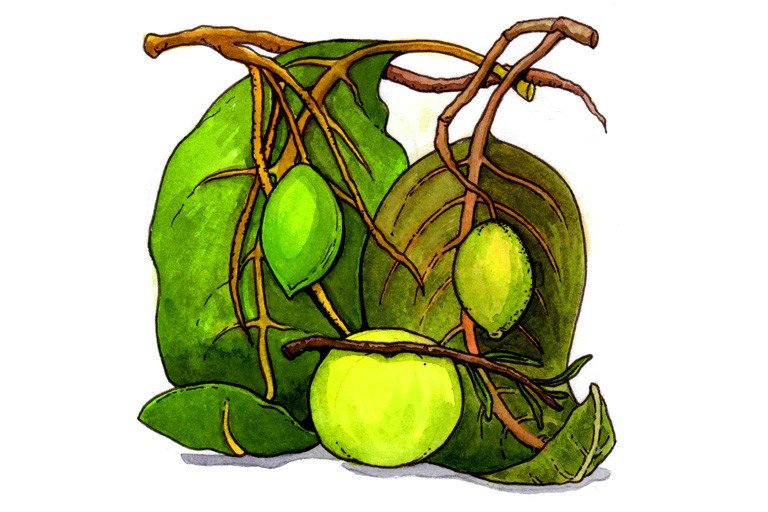
Common Names
- Triphala churna
- Triphala choornam
- Phala trika
For Patients & Caregivers
Tell your healthcare providers about any dietary supplements you’re taking, such as herbs, vitamins, minerals, and natural or home remedies. This will help them manage your care and keep you safe.
Triphala has immunostimulatory effects and may help prevent gingivitis.
Triphala is an herbal formulation used in the Indian medicinal system of Ayurveda. It consists of three medicinal plants: Emblica officinalis, Terminalia chebula, and Terminalia belerica. It may also be combined with guggulu, a tree gum resin, for additional therapeutic effects. Triphala is used for dental caries, anemia, jaundice, constipation, asthma, fever, chronic ulcers, inflammation, obesity, and to strengthen the immune system.
Studies of this formulation for various conditions in humans are limited, and additional studies are needed.
- To treat GI problems
Animal models suggest gastroprotective effects, but human studies are lacking. - To control inflammation
Animal studies suggest that Triphala may reduce inflammation, but human studies are lacking. - To decrease high levels of cholesterol
Clinical studies are limited and mixed. Additional studies are needed. - To strengthen the immune system
Data are limited and larger studies are needed. - To prevent gingivitis
Several clinical studies suggest that Triphala may help reduce dental plaque, but it is not clear if it as effective as chlorhexidine mouthwash. - To treat cancer
Although anticancer properties of Triphala have been observed in the lab, human data are lacking.
Rare: Gastrointestinal side effects
Do Not Take if:
- You are taking CYP substrate drugs: Triphala may increase risk of side effects from drugs that are metabolized by CYP3A4 and CYP2D6 enzymes.
For Healthcare Professionals
Triphala is an herbal formulation used in the Indian medicinal system of Ayurveda (1). It consists of equal portions of dried and powdered fruits of three medicinal plants: Emblica officinalis (Amalaki), Terminalia chebula (Haritaki) and T. belerica (Bibhitaki) (2), and may also be combined with guggulu, a tree gum resin, for additional therapeutic effects. Triphala is used to treat dental caries, anemia, jaundice, constipation, asthma, fever, chronic ulcers, inflammation, obesity, and to strengthen the immune system.
Preclinical studies using Triphala report antibacterial (35), anticancer (36), antiobesity (24), antiarthritic, anti-inflammatory (25) (26) and hypolipidemic properties (10). It may also protect against intestinal damage (14), colitis (22), and nephrotoxicity (23).
Studies in humans are limited. Data suggest Triphala mouthwash has antibacterial effects (37) and that antiplaque efficacy is comparable to chlorhexidine, but data are not definitive (15) (17) (18) (27) (28) (29) (38) (39) (40). Furthermore, Triphala may actually promote oral bacterial biofilm formation (30).
Other preliminary data suggest immunostimulatory effects (31), reversal of oral precancerous lesions (32), and improved HDL cholesterol and blood sugar levels (41). However, a double-blind study of Triphala in combination with guggulu showed no benefit on serum cholesterol levels, BMI, or waist circumference (43).
- GI problems
- Inflammation
- Immune function
- Gingivitis
- High cholesterol
- Cancer
Polyphenolic compounds and flavonoids found in Triphala are thought to be responsible for many of its effects. Gallic acid, a major polyphenol, has antioxidant and immunomodulatory properties (11) (33).
In preclinical studies, Terminalia chebula inhibited hyaluronidase and collagenase to prevent cartilage degradation (7). Antiarthritic and anti-inflammatory effects of Triphala are attributed to NF-kBp65 and COX-2 inhibition (25) (26), whereas the anticolitic effects are attributed to antioxidant properties (22). Nephrotoxic effects were also thought to be attenuated via increased antioxidant activity (23).
Triphala appears to stimulate neutrophil function and decrease corticosterone levels in immunized rats exposed to noise stress (34). It also exerted radioprotective effects (21) by inhibiting oxidative damage. Triphala increased ROS in breast cancer cells resulting in apoptosis (8), protected against X-radiation and bleomycin, both of which generate DNA strand breaks in HeLa cells (42), and appeared to protect mice from radiation-induced mortality (2) (3).
Despite its antibacterial properties, compounds in Triphala may promote the formation of oral bacterial biofilm via activation of glucosyl transferases (30).
In a small study of healthy human volunteers, Triphala increased cytotoxic T cells and NK cells (31).
- CYP450 substrates: Triphala inhibits CYP3A4 and CYP2D6, and may affect the intracellular concentration of drugs metabolized by these enzymes (16).