Health Care Professional Information
Clinical Summary
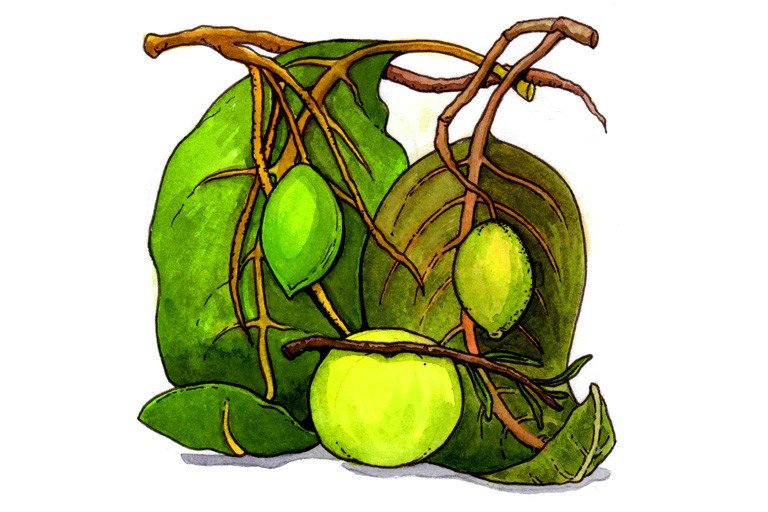
Triphala is an herbal formulation that is widely used in Ayurveda for the treatment of various ailments (1). It consists of equal portions of dried and powdered fruits of three medicinal plants: Emblica officinalis, Terminalia chebula, and Terminalia belerica (2). Triphala is used to treat dental caries, anemia, jaundice, constipation, asthma, fever, chronic ulcers, inflammation, obesity and to promote immunity against infections such as pneumonia, tuberculosis, and AIDS.
It demonstrated antioxidant (3) (2), anti-inflammatory (4), antibacterial (5), immunomodulatory (6), chondroprotective (7), antidiarrhoeal (12), and anticancer (8) (1) (9) (13) properties in vitro. These effects are due to the polyphenols and flavonoids present in its constituents. Triphala also showed hypolipidemic (10) and enteroprotective effects against methotrexate-induced damage in rats (14). However, these effects have not been tested in clinical trials.
A small study did not find significant difference between triphala and chlorhexidine mouthwashes when used for prevention of dental caries in children (15).
Triphala may cause gastrointestinal side effects.
Purported Uses
- Anemia
- Jaundice
- Constipation
- Asthma
- Infections
- Chronic ulcers
- Inflammation
- Obesity
- Hypercholesterolemia
- Cancer
Constituents
- Amla (Emblica officinalis)
- Myrobalan (Terminalia chebula)
- Belleric Myrobalan (Terminalia belerica)
Mechanism of Action
The exact mechanism of action is not known although the polyphenols and flavonoids are thought to be responsible for many of Triphala's effects. Gallic acid, a major polyphenol in Triphala, has antioxidant property (11). Triphala also increased the reactive oxygen species (ROS) in breast cancer cells (MCF-7 and T-47D), resulting in apoptosis (8). Terminalia chebula, one of the components of Triphala, was shown to be a potent hyaluronidase and collagenase inhibitor that prevented degradation of cartilage (7). Triphala also protected mice from radiation-induced mortality (2) (3). Oral administration of Triphala enhanced immune functions in rats (6).
Herb-Drug Interactions
- Cytochrome P450 substrates: Triphala inhibits CYP3A4 and CYP2D6, and can affect the intracellular concentration of drugs metabolized by these enzymes (16).
Dosage (Inside MSKCC Only)
This field is only visible to only Inside MSKCC users.
References
- Sandhya T, Lathika KM, Pandey BN, Mishra KP. Potential of traditional ayurvedic formulation, Triphala, as a novel anticancer drug. Cancer Lett 2006;231(2):206-14.
- Naik GH, Priyadarsini KI, Bhagirathi RG, et al. In vitro antioxidant studies and free radical reactions of triphala, an ayurvedic formulation and its constituents. Phytother Res 2005;19(7):582-6.
- Jagetia GC, Malagi KJ, Baliga MS, et al. Triphala, an ayurvedic rasayana drug, protects mice against radiation-induced lethality by free-radical scavenging. J Altern Complement Med 2004;10(6):971-8.
- Rasool M, Sabina EP. Antiinflammatory effect of the Indian Ayurvedic herbal formulation Triphala on adjuvant-induced arthritis in mice. Phytother Res 2007;21(9):889-94.
- Kumar MS, Kirubanandan S, Sripriya R. Triphala Promotes Healing of Infected Full-Thickness Dermal Wound. J Surg Res 2007.
- Srikumar R, Parthasarathy NJ, Devi SR. Immunomodulatory activity of triphala on neutrophil functions. Biol Pharm Bull 2005;28(8):1398-403.
- Sumantran VN, Kulkarni AA, Harsulkar A, et al. Hyaluronidase and collagenase inhibitory activities of the herbal formulation Triphala guggulu. J Biosci 2007;32(4):755-61.
- Sandhya T, Mishra KP. Cytotoxic response of breast cancer cell lines, MCF 7 and T 47 D to triphala and its modification by antioxidants. Cancer Lett 2006;238(2):304-13.
- Deep G, Dhiman M, Rao AR, Kale RK. Chemopreventive potential of Triphala (a composite Indian drug) on benzo(a)pyrene induced forestomach tumorigenesis in murine tumor model system. J Exp Clin Cancer Res 2005;24(4):555-63.
- Saravanan S, Srikumar R, Manikandan S. Hypolipidemic effect of triphala in experimentally induced hypercholesteremic rats. Yakugaku Zasshi 2007;127(2):385-8.
- Kaur S, Michael H, Arora S, et al. The in vitro cytotoxic and apoptotic activity of Triphala—an Indian herbal drug. J Ethnopharmacol 2005;97(1):15-20.
- Biradar YS, Singh R, Sharma K, et al. Evaluation of anti-diarrhoeal property and acute toxicity of Triphala Mashi, an Ayurvedic formulation. J Herb Pharmacother. 2007;7(3-4):203-12.
- Shi Y, Sahu RP, Srivastava SK. Triphala inhibits both in vitro and in vivo xenograft growth of pancreatic tumor cells by inducing apoptosis. BMC Cancer. 2008 Oct 10;8:294.
- Nariya M, Shukla V, Jain S, Ravishankar B. Comparison of enteroprotective efficacy of triphala formulations (Indian Herbal Drug) on methotrexate-induced small intestinal damage in rats. Phytother Res. 2009 Aug;23(8):1092-8.
- Tandon S, Gupta K, Rao S, Malagi KJ. Effect of Triphala mouthwash on the caries status. Int J Ayurveda Res. 2010 Apr;1(2):93-9.
- Ponnusankar S, Pandit S, Babu R, Bandyopadhyay A, Mukherjee PK. Cytochrome P450 inhibitory potential of Triphala—a Rasayana from Ayurveda. J Ethnopharmacol. 2011 Jan 7;133(1):120-5.
Consumer Information
How It Works
BOTTOM LINE: The anticancer effects of Triphala have not been confirmed in humans.
Triphala is an herbal formulation used in the Indian medicinal system of Ayurveda for the treatment of various ailments. It consists of three medicinal plants: Emblica officinalis, Terminalia chebula, and Terminalia belerica. It is used for dental caries, anemia, jaundice, constipation, asthma, fever, chronic ulcers, inflammation, obesity and to strengthen the immune system against infections such as pneumonia, tuberculosis, and AIDS. Triphala was shown to have beneficial effects in studies done in laboratory and in animals. However human data are lacking.
Purported Uses
- To treat Infections
Studies done in mice showed that triphala can reduce infections. Human data are lacking.
- To decrease high levels of cholesterol
Triphala was shown to reduce cholesterol levels in rats with high cholesterol. However, this has not been studied in humans.
- To strengthen the immune system
Studies in rats have shown that Triphala can improve immune function but human data are lacking.
Research Evidence
Several laboratory studies have shown that Triphala has beneficial effects. However, these effects have yet to be proven in humans.
A small study did not find significant difference between triphala and chlorhexidine mouthwashes when used to prevent dental caries in children.
Do Not Take If
- If you are taking drugs that are substrates of Cytochrome P450 3A4 and CYP2D6 (Triphala may increase the risk of side effects of these drugs).
Side Effects
- Intestinal gas
- Stomach upset
- Diarrhea
Last updated: September 28, 2012
administration (ad-MIH-nih-STRAY-shun)
In medicine, the act of giving a treatment, such as a drug, to a patient. It can also refer to the way it is given, the dose, or how often it is given.
Source: The National Cancer Institute's Dictionary of Cancer Terms
(http://www.cancer.gov/dictionary)
AIDS
A disease caused by the human immunodeficiency virus (HIV). People with AIDS are at an increased risk for developing certain cancers and for infections that usually occur only in individuals with a weak immune system. Also called acquired immunodeficiency syndrome.
Source: The National Cancer Institute's Dictionary of Cancer Terms
(http://www.cancer.gov/dictionary)
anemia (uh-NEE-mee-uh)
A condition in which the number of red blood cells is below normal.
Source: The National Cancer Institute's Dictionary of Cancer Terms
(http://www.cancer.gov/dictionary)
anti-inflammatory (AN-tee-in-FLA-muh-TOR-ee)
Having to do with reducing inflammation.
Source: The National Cancer Institute's Dictionary of Cancer Terms
(http://www.cancer.gov/dictionary)
antibacterial (AN-tee-bak-TEER-ee-ul)
A substance that kills bacteria or stops them from growing and causing disease.
Source: The National Cancer Institute's Dictionary of Cancer Terms
(http://www.cancer.gov/dictionary)
antioxidant (AN-tee-OK-sih-dent)
A substance that protects cells from the damage caused by free radicals (unstable molecules made by the process of oxidation during normal metabolism). Free radicals may play a part in cancer, heart disease, stroke, and other diseases of aging. Antioxidants include beta-carotene, lycopene, vitamins A, C, and E, and other natural and manufactured substances.
Source: The National Cancer Institute's Dictionary of Cancer Terms
(http://www.cancer.gov/dictionary)
apoptosis (A-pop-TOH-sis)
A type of cell death in which a series of molecular steps in a cell leads to its death. This is the body’s normal way of getting rid of unneeded or abnormal cells. The process of apoptosis may be blocked in cancer cells. Also called programmed cell death.
Source: The National Cancer Institute's Dictionary of Cancer Terms
(http://www.cancer.gov/dictionary)
asthma (AZ-muh)
A chronic disease in which the bronchial airways in the lungs become narrowed and swollen, making it difficult to breathe. Symptoms include wheezing, coughing, tightness in the chest, shortness of breath, and rapid breathing. An attack may be brought on by pet hair, dust, smoke, pollen, mold, exercise, cold air, or stress.
Source: The National Cancer Institute's Dictionary of Cancer Terms
(http://www.cancer.gov/dictionary)
breast (brest)
Glandular organ located on the chest. The breast is made up of connective tissue, fat, and breast tissue that contains the glands that can make milk. Also called mammary gland.
Source: The National Cancer Institute's Dictionary of Cancer Terms
(http://www.cancer.gov/dictionary)
cancer (KAN-ser)
A term for diseases in which abnormal cells divide without control and can invade nearby tissues. Cancer cells can also spread to other parts of the body through the blood and lymph systems. There are several main types of cancer. Carcinoma is a cancer that begins in the skin or in tissues that line or cover internal organs. Sarcoma is a cancer that begins in bone, cartilage, fat, muscle, blood vessels, or other connective or supportive tissue. Leukemia is a cancer that starts in blood-forming tissue such as the bone marrow, and causes large numbers of abnormal blood cells to be produced and enter the blood. Lymphoma and multiple myeloma are cancers that begin in the cells of the immune system. Central nervous system cancers are cancers that begin in the tissues of the brain and spinal cord. Also called malignancy.
Source: The National Cancer Institute's Dictionary of Cancer Terms
(http://www.cancer.gov/dictionary)
cartilage (KAR-tih-lij)
A tough, flexible tissue that lines joints and gives structure to the nose, ears, larynx, and other parts of the body.
Source: The National Cancer Institute's Dictionary of Cancer Terms
(http://www.cancer.gov/dictionary)
cholesterol (koh-LES-teh-rol)
A waxy, fat-like substance made in the liver, and found in the blood and in all cells of the body. Cholesterol is important for good health and is needed for making cell walls, tissues, hormones, vitamin D, and bile acid. Cholesterol also comes from eating foods taken from animals such as egg yolks, meat, and whole-milk dairy products. Too much cholesterol in the blood may build up in blood vessel walls, block blood flow to tissues and organs, and increase the risk of developing heart disease and stroke.
Source: The National Cancer Institute's Dictionary of Cancer Terms
(http://www.cancer.gov/dictionary)
chronic (KRAH-nik)
A disease or condition that persists or progresses over a long period of time.
Source: The National Cancer Institute's Dictionary of Cancer Terms
(http://www.cancer.gov/dictionary)
clinical (KLIH-nih-kul)
Having to do with the examination and treatment of patients.
Source: The National Cancer Institute's Dictionary of Cancer Terms
(http://www.cancer.gov/dictionary)
collagenase (KAH-luh-jeh-nays)
A type of enzyme that breaks down the protein collagen.
Source: The National Cancer Institute's Dictionary of Cancer Terms
(http://www.cancer.gov/dictionary)
constipation (KON-stih-PAY-shun)
A condition in which stool becomes hard, dry, and difficult to pass, and bowel movements don’t happen very often. Other symptoms may include painful bowel movements, and feeling bloated, uncomfortable, and sluggish.
Source: The National Cancer Institute's Dictionary of Cancer Terms
(http://www.cancer.gov/dictionary)
fever (FEE-ver)
An increase in body temperature above normal (98.6 degrees F), usually caused by disease.
Source: The National Cancer Institute's Dictionary of Cancer Terms
(http://www.cancer.gov/dictionary)
gastrointestinal (GAS-troh-in-TES-tih-nul)
Refers to the stomach and intestines. Also called GI.
Source: The National Cancer Institute's Dictionary of Cancer Terms
(http://www.cancer.gov/dictionary)
immune function (ih-MYOON FUNK-shun)
Production and action of cells that fight disease or infection.
Source: The National Cancer Institute's Dictionary of Cancer Terms
(http://www.cancer.gov/dictionary)
immune system (ih-MYOON SIS-tem)
The complex group of organs and cells that defends the body against infections and other diseases.
Source: The National Cancer Institute's Dictionary of Cancer Terms
(http://www.cancer.gov/dictionary)
immunity (ih-MYOO-nih-tee)
The condition of being protected against an infectious disease. Immunity can be caused by a vaccine, previous infection with the same agent, or by transfer of immune substances from another person or animal.
Source: The National Cancer Institute's Dictionary of Cancer Terms
(http://www.cancer.gov/dictionary)
in vitro (in VEE-troh)
In the laboratory (outside the body). The opposite of in vivo (in the body).
Source: The National Cancer Institute's Dictionary of Cancer Terms
(http://www.cancer.gov/dictionary)
inflammation (IN-fluh-MAY-shun)
Redness, swelling, pain, and/or a feeling of heat in an area of the body. This is a protective reaction to injury, disease, or irritation of the tissues.
Source: The National Cancer Institute's Dictionary of Cancer Terms
(http://www.cancer.gov/dictionary)
intestinal (in-TES-tih-nul)
Having to do with the intestines.
Source: The National Cancer Institute's Dictionary of Cancer Terms
(http://www.cancer.gov/dictionary)
jaundice (JAWN-dis)
A condition in which the skin and the whites of the eyes become yellow, urine darkens, and the color of stool becomes lighter than normal. Jaundice occurs when the liver is not working properly or when a bile duct is blocked.
Source: The National Cancer Institute's Dictionary of Cancer Terms
(http://www.cancer.gov/dictionary)
mortality (mor-TA-lih-tee)
The state of being mortal (destined to die). Mortality also refers to the death rate, or the number of deaths in a certain group of people in a certain period of time. Mortality may be reported for people who have a certain disease, live in one area of the country, or who are of a certain gender, age, or ethnic group.
Source: The National Cancer Institute's Dictionary of Cancer Terms
(http://www.cancer.gov/dictionary)
obesity (oh-BEE-sih-tee)
A condition marked by an abnormally high, unhealthy amount of body fat.
Source: The National Cancer Institute's Dictionary of Cancer Terms
(http://www.cancer.gov/dictionary)
oral (OR-ul)
By or having to do with the mouth.
Source: The National Cancer Institute's Dictionary of Cancer Terms
(http://www.cancer.gov/dictionary)
oxygen (OK-sih-jen)
A colorless, odorless gas. It is needed for animal and plant life. Oxygen that is breathed in enters the blood from the lungs and travels to the tissues.
Source: The National Cancer Institute's Dictionary of Cancer Terms
(http://www.cancer.gov/dictionary)
pneumonia (noo-MOH-nyuh)
A severe inflammation of the lungs in which the alveoli (tiny air sacs) are filled with fluid. This may cause a decrease in the amount of oxygen that blood can absorb from air breathed into the lung. Pneumonia is usually caused by infection but may also be caused by radiation therapy, allergy, or irritation of lung tissue by inhaled substances. It may involve part or all of the lungs.
Source: The National Cancer Institute's Dictionary of Cancer Terms
(http://www.cancer.gov/dictionary)
prevention (pree-VEN-shun)
In medicine, action taken to decrease the chance of getting a disease or condition. For example, cancer prevention includes avoiding risk factors (such as smoking, obesity, lack of exercise, and radiation exposure) and increasing protective factors (such as getting regular physical activity, staying at a healthy weight, and having a healthy diet).
Source: The National Cancer Institute's Dictionary of Cancer Terms
(http://www.cancer.gov/dictionary)
significant (sig-NIH-fih-kunt)
In statistics, describes a mathematical measure of difference between groups. The difference is said to be significant if it is greater than what might be expected to happen by chance alone. Also called statistically significant.
Source: The National Cancer Institute's Dictionary of Cancer Terms
(http://www.cancer.gov/dictionary)
stomach (STUH-muk)
An organ that is part of the digestive system. The stomach helps digest food by mixing it with digestive juices and churning it into a thin liquid.
Source: The National Cancer Institute's Dictionary of Cancer Terms
(http://www.cancer.gov/dictionary)
tuberculosis (too-BER-kyoo-LOH-sis)
A disease caused by a specific type of bacteria that spreads from one person to another through the air. Tuberculosis can affect many parts of the body, but most often affects the lungs. A person may not have symptoms of tuberculosis for years, but they may appear when the patient becomes ill with a serious condition like diabetes, AIDS, or cancer. Tuberculosis can usually be treated and cured with antibiotics. Also called TB.
Source: The National Cancer Institute's Dictionary of Cancer Terms
(http://www.cancer.gov/dictionary)