Common Names
- Indian saffron
- Curcumin
- Jiang huang
For Patients & Caregivers
Tell your healthcare providers about any dietary supplements you’re taking, such as herbs, vitamins, minerals, and natural or home remedies. This will help them manage your care and keep you safe.
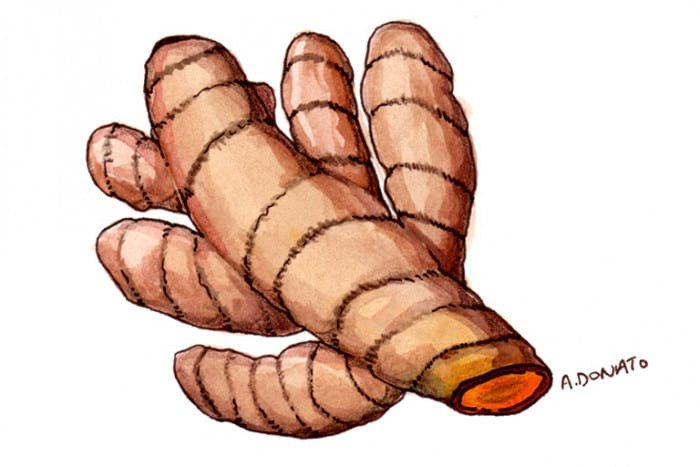
Turmeric is a plant that’s common in South Asia but is grown around the world. The underground part of the stem is a spice that has been used in cooking for hundreds of years. It is used in traditional medicine for many health issues.
Turmeric also comes as a dietary supplement in tablets, capsules and gummies.
The active substance in turmeric is curcumin. Curcumin is a powerful antioxidant. Antioxidants protect your cells from damage. Curcumin can also reduce swelling and pain.
Turmeric is used to:
- Reduce inflammation (swelling and redness)
- Treat joint pain
- Treat infections
Turmeric also has other uses that haven’t been studied by doctors to see if they work.
It’s generally safe to use turmeric in food and tea. Talk with your healthcare providers before taking supplements or higher amounts of turmeric. Herbal supplements are stronger than the herbs you would use in cooking.
Turmeric can also interact with some medications and affect how they work. For more information, read the “What else do I need to know?” section below.
Side effects of using turmeric may include:
- Abdominal pain/discomfort
- Skin rash
- Hives
- Talk with your healthcare providers about using turmeric and foods that contain turmeric if you’re getting chemotherapy. In lab experiments, turmeric stopped some chemotherapy medications from working against breast cancer cells.
- Talk with your healthcare providers about using turmeric and foods that contain turmeric if you have a family history of kidney stones. Taking turmeric supplements may put you at a higher risk of getting kidney stones.
Don’t take turmeric supplements if:
- You’re taking aspirin, ibuprofen (Advil®, Motrin®), or Acetaminophen (Tylenol®). Turmeric may lessen the effects of these medications.
- You’re taking indomethacin (Indocin®). Turmeric may lessen its effects.
- You’re taking warfarin (Coumadin®) or other blood thinners. Turmeric may increase your risk of bleeding.
- You’re taking chemotherapy medications such as camptothecin (Camptosar®), mechlorethamine (Mustargen®), doxorubicin (Adriamycin®, Rubex®), or cyclophosphamide (Cytoxan®, Neosar®). Turmeric may lessen the effects of these medications.
- You’re taking tacrolimus (Prograf®). Curcumin supplements may increase side effects.
For Healthcare Professionals
Prevalent in South Asia, turmeric is now cultivated in tropical areas around the world. Its rhizome is used as a spice in regional cuisines, and as a coloring agent in food and cosmetics. It is also used in traditional medicine systems for improving circulation and digestion. Turmeric extracts are marketed as dietary supplements to improve memory, for arthritis, and for cancer prevention. The active constituents are turmerone oil and water-soluble curcuminoids, among which curcumin has been the focus of research the past few years. Preclinical studies showed that it has weak phytoestrogenic activity, although at a concentration not achievable by oral ingestion (1), and exhibits neuroprotective (2), choleretic (3), anti-inflammatory (4), immunomodulatory (5), anti-proliferative (3), as well as chemopreventive properties (6) (7) (8). Curcumin, its analogs, and liposomal formulations also demonstrated chemosensitizing (9) (10) (11) and radiosensitizing effects (12) (13).
Clinical studies suggest benefits of turmeric for major depressive disorder (62), and epidemiological data indicate improved cognitive performance in elderly Asians who consumed turmeric (14). But there were no benefits of curcumin supplements in patients with Alzheimer’s disease (15). Turmeric may also help alleviate symptoms associated with gastrointestinal issues (81), irritable bowel syndrome (16), and quiescent ulcerative colitis (17) as well as reduce arterial stiffness in patients with type 2 diabetes mellitus (77) and benefit children and adolescents with asthma (78). It was also found safe and as effective as paracetamol (82) or an NSAID (18) for treating osteoarthritis of the knee, but did not affect knee effusion-synovitis or cartilage composition (83). Topical use of turmeric reduced the size of lesions in patients with vitiligo (100).
Studies using curcumin reported benefits for osteoarthritis of knee (87) and sarcopenia in older subjects (84). In postmenopausal women, curcumin combined with aerobic exercise training improved vascular endothelial function (61). But findings of its effects on serum cholesterol levels are mixed (19) (20). A systematic review found that both turmeric and curcumin may benefit patients with non alcoholic fatty liver disease (75). When combined with antipsychotics, curcumin may help control symptoms of chronic schizophrenia (79) and was associated with significant reductions in serum CRP and IL-6 (101) and triglyceride plasma levels (108) in hemodialysis patients. It was also found useful in treating pouchitis in patients with ulcerative colitis (115).
In cancer settings, preliminary findings suggest benefits of turmeric supplements in improving quality of life and hematological parameters in breast cancer patients (85) and in decreasing rates of hand-foot syndrome following capecitabine treatment (71).
Data on curcumin also suggest benefits. A phase II trial of patients with advanced pancreatic cancer found clinically relevant biological activity in two patients despite limited absorption (22); a blend of green tea, pomegranate, broccoli and curcumin led to a reduction in the rate of prostate-specific antigen (PSA) increase among men with prostate cancer following a PSA relapse post-radical treatment (65); and when given to colorectal cancer patients during the pre-surgery waiting period, curcumin improved cachexia (21) and anorexia-cachexia syndrome in patients with advanced head and neck cancer (106) but did not produce similar effects in patients with solid tumors (107). It was also ineffective in lowering intestinal tract adenomas in patients with familial adenomatous polyposis (70).
In early breast cancer patients with aromatase-induced musculoskeletal symptoms, curcumin, combined with hydroxytyrosol and omega-3 fatty acids, helped reduce inflammation and pain (80); and protected against tamoxifen‑induced nonalcoholic fatty liver disease in estrogen receptor-positive breast cancer patients (116).
In pediatric patients, curcumin was reported to reduce the incidence of vincristine-induced peripheral neuropathy (117).
Additionally, mouthwashes containing curcumin (86) (109) were found beneficial against radiation-induced oral mucositis, and a curcumin lozenge affected improvements in patients with oral submucous fibrosis (88). Topical application of either curcumin or turmeric helped control oral mucositis (76) and radiotherapy-induced dermatitis (64) (102). Furthermore, curcumin may serve as a useful adjunct to cancer treatments: When combined with docetaxel (23) and gemcitabine (24) (25), it was found to be safe in early phase studies, but high doses were needed to achieve systemic effect (23) (25). In patients with metastatic colorectal cancer, curcumin was reported as a safe and tolerable adjunct to FOLFOX chemotherapy (72). Another trial is underway to determine whether it can prevent gastric cancer in H.pylori-negative patients (118).
Curcumin is known to interfere with cytochrome P450 enzymes (26) (27) and may interact with chemotherapy drugs like cyclophosphamide and doxorubicin (28). Overall, the development of turmeric for clinical use needs further investigation due to its inherent poor absorption, rapid metabolism, complex mechanistic profile, and largely preclinical data.
Turmeric is a major ingredient in curry powder, a spice mix commonly used in South Asian cuisine.
- Inflammation
- Arthritis
- Infections
The hepatoprotective effects of curcumin, the most researched active constituent in turmeric, may occur via MMP-13 induction and TGF-alpha inhibition (30), as well as anti-apoptotic/anti-necrotic mechanisms (31). However, it has also been shown to inhibit cell-cycle progression during normal liver regeneration (3).
A meta-analysis of randomized clinical trials revealed that curcumin is effective in decreasing the concentration of tumor necrosis factor-alpha, a key mediator in many inflammatory diseases (68). In vitro and animal studies of lung models point to antiproliferative and modulatory mechanisms involving inhibition of the signal transducer and activator of transcription 3 Stat3 pathway (32), matrix metalloproteinase, and vascular endothelial growth factor (33); caspase- and mitochondria-dependent apoptosis (34) (35); and cyclin-dependent kinase downregulation (35). Curcumin also appears to have synergistic effects with isoflavones, suppressing the prostate-specific antigen (PSA) production in prostate cells through anti-androgen effects (36).
Studies done on breast cancer show that curcumin may inhibit chemotherapy-induced apoptosis via inhibition of the c-Jun NH2-terminal kinase (JNK) pathway and generation of reactive oxygen species (ROS) (28). Data also suggest that curcumin induces apoptosis in human colon cancer cells independent of p21 expression (39). Curcumin’s antitumor actions appear to be due to its interactions with arachidonate metabolism and its in vivo antiangiogenic properties (14). Another possible chemopreventive mechanism may be via binding and activating the vitamin D receptor (VDR), thereby protecting the small intestine and colon where VDRs are expressed and vitamin D is known to serve an anticancer function (38). Curcumin also inhibited growth of uterine leiomyosarcoma cells by targeting the AKT-mTOR (RAC-alpha serine-threonine-protein kinase; mTOR (mammalian target of rapamycin) pathway (37). Curcumin may inhibit bladder cancer progression by downregulating the expression of beta-catenin, high levels of which are associated with several cancers (69).
Another study found that CRM1, an important nuclear exportin, is a cellular target of curcumin; and that the inhibition of nuclear traffic by curcumin may be responsible for its many biological effects (63).
Patients predisposed to kidney stone formation (50) should consult their physicians before using turmeric supplements.
Possible gastrointestinal discomfort (18)
Case Reports
- Allergic dermatitis: Associated with the use of curcumin (52) (110).
- Contact urticaria: Two cases, one of which was an occupational exposure, associated with use of curcumin powder (53).
- Paclitaxel toxicity/Acute toxic hepatitis: In a 67-year-old lung cancer patient, related to a possible interaction with turmeric and contaminated chlorella which were taken during active cancer treatment (73). Although other supplements were also being used, increased paclitaxel plasma concentrations were attributed to potential CYP 2C9 and 3A4 inhibition of turmeric as among the causes.
- Autoimmune Hepatitis: Three cases, one with a medical history of Hashimoto’s thyroiditis, associated with chronic consumption of turmeric. Symptoms resolved after discontinuing turmeric use in all cases (89) (90) (111).
- Iron deficiency anemia: In a 66-year-old man, associated with use of high dose turmeric supplements. The condition resolved after stopping turmeric (91).
- Neutropenia: In a 51-year-old breast cancer patient following self medication with large amounts of turmeric root infusions while receiving chemotherapy. Her white blood cell counts returned to normal after stopping the turmeric regimen (92).
- Hepatotoxicity/Liver injury: Associated with use of supplements with low dose curcumin (103) as well as those with increased bioavailability and high dosages of curcumin/curcuminoids. In all cases, symptoms resolved with cessation of turmeric use (93) (94) (95) (96) (97) (112) (113) (119).
- Fatality: Associated with intravenous administration of curcumin solution for the treatment of eczema in a 31-year-old woman. The cause of death was determined to be anoxic brain injury secondary to prolonged resuscitation following an adverse reaction to the curcumin solution (99).
- Oxalate nephropathy: Associated with chronic turmeric supplementation in a 69-year-old man. His condition stabilized after discontinuing turmeric use (114).
Anticoagulants / Antiplatelets: Preclinical studies (54) (55) and a case report (66) suggest that turmeric can increase risk of bleeding.
Camptothecin: Turmeric inhibits camptothecin-induced apoptosis of breast cancer cell lines in vitro (28). Clinical relevance is not known.
Mechlorethamine: Turmeric inhibits mechlorethamine-induced apoptosis of breast cancer cell lines in vitro (28). Clinical relevance is not known.
Paclitaxel: A lung cancer patient suffered liver toxicity while undergoing active treatment with paclitaxel. Although he was taking multiple supplements, one of which was tainted, turmeric was thought to be among the likely causes (73). But in a study of 60 breast cancer patients on treatment with paclitaxel, concurrent administration of 2 g/day turmeric produced only small changes in pharmacokinetic parameters that were deemed clinically irrelevant (104).
Tamoxifen: In a study of ER+ breast cancer patients, curcumin showed a protective effect against tamoxifen-induced nonalcoholic fatty liver disease (NAFLD) (120).
Doxorubicin: Turmeric inhibits doxorubicin-induced apoptosis of breast cancer cell lines in vitro (28). Clinical relevance is not known.
Cyclophosphamide: Dietary turmeric inhibits cyclophosphamide-induced tumor regression in animal studies (28). Clinical relevance is not known.
Norfloxacin: Pretreatment with curcumin resulted in increased plasma elimination half-life, thereby reducing the dosage of norfloxacin in animal model (56). Clinical relevance is not known.
Amphotericin B: Curcumin enhanced the effect, and decreased the toxicity of amphotericin B, in vitro (57). Clinical relevance is not known.
Drugs metabolized by the CYP3A4 enzyme: Curcumin inhibits cytochrome 3A4 enzyme, altering the metabolism of some prescription drugs (26). But according to conflicting data, short-term use of curcumin did not result in a clinically relevant interaction in healthy volunteers (67).
Drugs metabolized by the CYP1A2 enzyme: Curcumin inhibits cytochrome 1A2 enzyme, affecting the metabolism of certain prescription medicines, in vitro. Clinical relevance is not known (27).
Drugs metabolized by the CYP2A6 enzyme: Curcumin enhances cytochrome 2A6 enzyme, and can affect the metabolism of certain prescription drugs (27). Clinical relevance is not known.
Drugs metabolized by the CYP2D6 enzyme: Curcumin inhibits cytochrome 2D6 activity and has the potential to interact with CYP2D6 substrates (74). Clinical relevance is not known.
Celiprolol and Midazolam: Curcumin was shown to downregulate intestinal P-gp levels, thereby increasing the concentrations of celiprolol and midazolam in a murine model (48). Clinical relevance is not known.
Verapamil: Curcumin inhibited intestinal P-gp expression and function, thereby increasing concentrations of verapamil, in vitro (47). Clinical relevance is not known.
Tacrolimus: Pretreatment with turmeric increased the plasma levels of tacrolimus in a murine model (59). Acute calcineurin inhibitor nephrotoxicity was reported in a patient with a history of orthotopic liver transplantation following concurrent use of high amounts of turmeric (98).
Acetaminophen: The cytotoxic effects of curcumin increased significantly in the presence of acetaminophen in vitro (60). Clinical relevance is not known.
Ibuprofen: The cytotoxic effects of curcumin increased significantly in the presence of ibuprofen (60). Clinical relevance is not known.
Aspirin: The cytotoxic effects of curcumin increased significantly in the presence of aspirin (60). Clinical relevance is not known.
Losartan: Curcumin potentiated the blood pressure-lowering effects of losartan in hypertensive rats (105). Clinical significance is yet undetermined.
Curcumin can interfere with thioflavin T assays due to its strong absorptive and fluorescent properties (58).