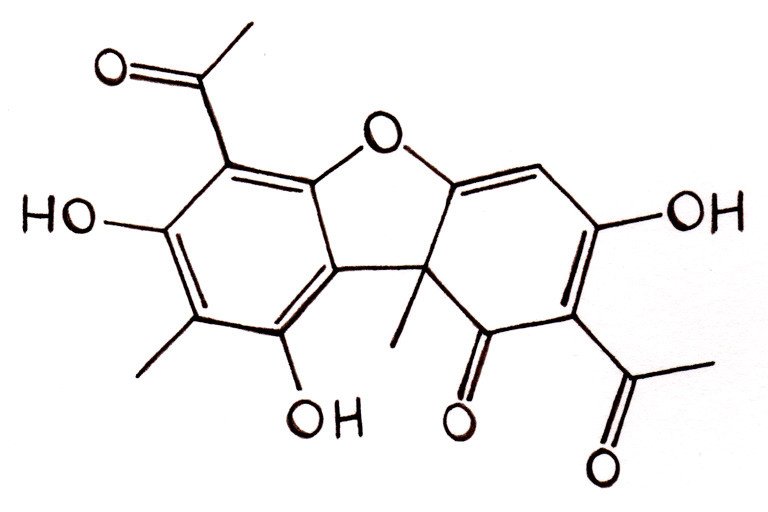
Common Names
- Metabolite of Lichens
For Patients & Caregivers
Tell your healthcare providers about any dietary supplements you’re taking, such as herbs, vitamins, minerals, and natural or home remedies. This will help them manage your care and keep you safe.
There is no scientific evidence on usnic acid for weight loss, and supplements containing it have been associated with severe liver toxicity.
Usnic acid is a compound found in lichens. It has been used as a preservative in moisturizing creams, and as an ingredient in toothpastes, mouthwashes, and deodorants because of its antibacterial properties. Dietary supplements that contain usnic acid are promoted for weight loss, but scientific evidence is lacking. The supplements have also been associated with liver toxicity.
- Weight loss
This claim is not supported by scientific evidence. - Antibacterial
Usnic acid has been used in moisturizing creams, toothpastes, mouthwashes, and deodorants because of its antibacterial properties. - Antiviral
In one small study, an intravaginal formulation of usnic acid and zinc showed favorable results when used along with radiosurgery for HPV infection. - Fever
This claim is not backed by scientific studies. - Pain relief
This use is not supported by scientific evidence.
- Usnic acid can cause liver damage when used in high doses.
- Allergic reactions have been reported with topical use.
Patient Warnings:
Weight loss supplements containing usnic acid are associated with severe liver toxicity.
Do Not Take if:
You are taking anticoagulants: Theoretically, usnic acid may have additive effects with anticoagulant medications.
You are taking CYP450 3A4 substrate drugs: Animal studies suggest usnic acid can decrease the effects of such drugs. Clinical relevance is not known.
For Healthcare Professionals
Usnic acid is a secondary metabolite of lichens. Some species of lichens have been used in traditional medicine for pain relief, fever, and wound healing. Usnic acid is used as a preservative in cosmetic products. In vitro and animal models suggest antioxidant (1), anti-inflammatory (2), antimicrobial (3) (4), antiproliferative (5) (6) (7) (8), and burn-healing (9) properties. In a small clinical study, adjunctive use of an usnic acid and zinc compound had favorable effects against genital human papillomavirus infection (10).
Over-the-counter supplements that contain usnic acid have been promoted for weight loss, but evidence is lacking (11). Misuse of usnic acid products has been associated with severe hepatotoxicity (12) (13) (14).
Usnic acid is found in Kombucha tea (12).
Lichens are not commonly consumed as food.
- Weight loss
- Antibacterial
- Antiviral
- Fever
- Pain
Usnic acid has two enantiomers that are thought to have different biological activities. (+)-Usnic acid has antimicrobial (3) (4), anti-inflammatory (2), and cytotoxic (5) effects while (-)-usnic acid exhibits anti-protozoan properties (15). Usnic acid can induce oxidative stress and inhibit mitochondrial function in liver cells (16) (17), which may contribute to its hepatotoxicity.
Other data suggest that usnic acid may protect gastric cells from drug-induced oxidative damage (1), and inhibit prostaglandin synthesis (2). Antiproliferative effects against breast cancer cells were independent of p53 activity (6). In lung cancer cells, it inhibited cell growth via G0/G1 phase cell cycle arrest and induced cell death via mitochondrial membrane depolarization and apoptotic induction (18).
In 2 case reports, usnic acid dramatically increased ALT, AST, ALK P, and total bilirubin levels, and also prolonged prothrombin time (14).