About Herbs, Botanicals & Other Products

Scientific Name
Salix alba
Common Name

Bay willow, black willow, white willow

Clinical Summary

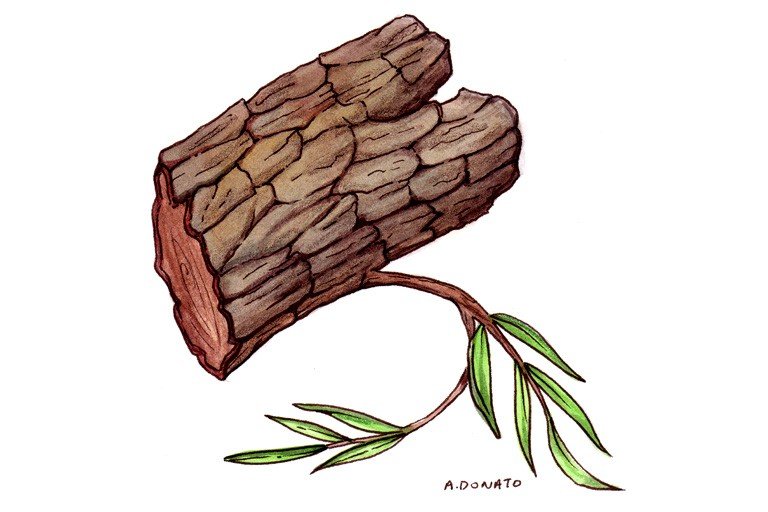
Derived from the bark of the tree, willow bark contains salicin, the phytotherapeutic precursor of aspirin (acetylsalicylic acid). Products should be standardized to the content of salicin with daily doses ranging from 60-120 mg per day. In vitro studies show that willow bark has anti-inflammatory (14) and antiproliferative (15) effects.
Clinical studies demonstrate its efficacy in the management of back pain and osteoarthritis (7) (8), and a systematic review suggests it may also be effective in treating low back pain (1) (10), gonarthrosis and coxarthrosis (9). Topical application of salicin may help reduce aging of the skin (16).

Adverse reactions are analogous to those seen with aspirin, including gastrointestinal bleeding, nausea, and vomiting. May have additive effects with aspirin and NSAIDs, and should therefore not be administered concurrently. Caution should be exercised in patients with known allergies or intolerance to aspirin or non-steroidal antiinflammatory drugs (NSAIDs) (17). Willow bark should not be administered to children with fever due to the risk of Reye’s syndrome.

Purported Uses
  • Fever
  • Headaches
  • Inflammation
  • Influenza
  • Muscle pain
  • Pain
  • Weight loss
Constituents
  • Glycosides: Salicin, salicortin, picein, fragilin, tremulacin and triandrin
  • Esters of salicylic acid
  • Tannins
  • Catechins
  • Flavonoids (6)
Mechanism of Action

All the phenolic glycosides of willow bark have similar physiological and pharmacological effects. In the intestinal tract and the liver, the phenolic glycosides convert to the active principle, salicylic acid. Because of the time required for this conversion, the therapeutic properties of willow bark are expressed more slowly but continue to be effective for a longer time than if salicylate itself were administered. The tannins have astringent properties, and in vitro tests show that salicin and salicortin inhibit cyclooxygenase, and an irreversible inhibition of thrombocytes is unlikely. Therefore, no increased interaction with anticoagulants should occur.
(2) (3)

Pharmacokinetics

In a pharmacokinetic study in humans, three tablets containing willow bark (standardized to a total dose of 55 mg salicin) were administered to 12 male volunteers in three doses over a period of eight hours. The calculated half-life of salicin in the plasma was approximately 2.5 hours.
(5)

Contraindications

Patients with known allergies or intolerance to aspirin should not take willow bark (17).

Adverse Reactions

Infrequent: Nausea, vomiting, gastrointestinal bleeding, tinnitus, and renal damage (4) (12).
Willow bark supplements can affect platelet aggregation (13).

Herb-Drug Interactions

Warfarin: Willow bark may increase the risk of bleeding (11).
NSAIDs: Theoretically, willow bark may increase the risk of bleeding and GI mucosal damage.

Herb Lab Interactions

Due to the unknown salicylate factor, use caution in interpreting test results that are sensitive to salicylates.

Literature Summary and Critique

Few controlled studies have been performed in humans; however, the pharmacological actions of salicylates are well published and applicable to willow bark.

Chrubasik S, et al. Treatment of low back pain exacerbations with willow bark extract: a randomized double-blind study. Am J Med 2000;109:9-14.
Two hundred and ten patients were randomly assigned to receive an oral willow bark extract with either 120 mg or 240 mg of salicin or placebo, with tramadol as the sole rescue medication in a 4-week blinded trial. Principal outcome measured was proportion of patients who were pain-free without tramadol for at least 5 days during the final week of the study. One hundred and ninety one patients completed the study; the number of pain-free patients in the last week of treatment was 27 (39%) of 65 in the group receiving 240 mg salicin, 15 (21%) of 67 in the group receiving 120 mg salicin and 4 (6.8%) of 59 in the placebo group. Significantly, more patients in the placebo group required tramadol during each week of the study.

Schmid B, et al. Efficacy and tolerability of a standardized willow bark extract in patients with osteoarthritis: randomized, placebo-controlled, double blind clinical trial. Phytother Res 2001;15:344-50.
Seventy-eight patients were evaluated in this prospective study. Willow bark standardized to 60 mg salicin or placebo was administered as two tablets twice daily for 14 days. A significant decrease in joint pain was reported in the willow bark treatment group as compared to placebo. No significant change in stiffness or physical function was found. Adverse events were comparable between treatment groups. Willow bark was effective in reducing pain associated with osteoarthritis of the knee or hip.

References
  1. Gagnier JJ, van Tulder MW, Berman B, et al. Herbal medicine for low back pain. Spine 2007;32(1):82-92.
  2. Tyler V. Herbs of Choice: The Therapeutic Use of Phytomedicinals. Binghamton: Pharmaceutical Press; 1994.
  3. Wichtl MW. Herbal Drugs and Phytopharmaceuticals. Boca Raton: Medpharm Scientific Publ; 1994.
  4. Schulz, et al. Rational Phytotherapy: A Physicians Guide to Herbal Medicines, 3rd ed. Berlin (Germany): Springer; 1996.
  5. Blumenthal, et al. Herbal Medicine Expanded Commission E Monographs, 1st ed. Austin: American Botanical Council; 2000.
  6. Newall CA, et al. Herbal Medicines: Guide for Health-Care Professionals, 1st ed. London: Pharmaceutical Press; 1998.
  7. Chrubasik S, et al. Treatment of low back pain exacerbations with willow bark extract: a randomized double-blind study. Am J Med 2000;109:9-14.
  8. Schmid B, et al. Efficacy and tolerability of a standardized willow bark extract in patients with osteoarthritis: randomized, placebo-controlled, double blind clinical trial. Phytother Res 2001;15:344-50.
  9. Beer AM, Wegener T. Willow bark extract (Salicis cortex) for gonarthrosis and coxarthrosis - Results of a cohort study with a control group. Phytomedicine. 2008 Sep 22. [Epub ahead of print].
  10. Vlachojannis JE, Cameron M, Chrubasik S. A systematic review on the effectiveness of willow bark for musculoskeletal pain. Phytother Res. 2009 Jul;23(7):897-900. Review.
  11. Shalansky S, Lynd L, Richardson K, et al. Risk of warfarin-related bleeding events and supratherapeutic international normalized ratios associated with complementary and alternative medicine: a longitudinal analysis. Pharmacotherapy. 2007 Sep;27(9):1237-47.
  12. Rohner Mächler M, Glaus TM, Reusch CE. [Life threatening intestinal bleeding in a Bearded Collie associated with a food supplement for horses].Schweiz Arch Tierheilkd. 2004 Oct;146(10):479-82.
  13. Krivoy N, Pavlotzky E, Chrubasik S, et al. Effect of salicis cortex extract on human platelet aggregation. Planta Med. 2001 Apr;67(3):209-12.
  14. Bonaterra GA, Heinrich EU, Kelber O, et al. Anti-inflammatory effects of the willow bark extract STW 33-I (Proaktiv(®)) in LPS-activated human monocytes and differentiated macrophages. Phytomedicine. 2010 Dec 1;17(14):1106-13.
  15. Bonaterra GA, Kelber O, Weiser D, Metz J, Kinscherf R. In vitro anti-proliferative effects of the willow bark extract STW 33-I. Arzneimittelforschung. 2010;60(6):330-5.
  16. Gopaul R, Knaggs HE, Lephart JF, et al. An evaluation of the effect of a topical product containing salicin on the visible signs of human skin aging. J Cosmet Dermatol. 2010 Sep;9(3):196-201.
  17. Vlachojannis J, Magora F, Chrubasik S. Willow Species and Aspirin: Different Mechanism of Actions. Phytother Res. 2011 Jan 12. [Epub ahead of print]
How It Works

Bottom Line: Willow bark may help relieve muscle and joint pain.

Willow bark is commonly used to treat pain and reduce fevers. In the body, substances in willow bark are converted to salicylic acid, an aspirin-like compound. Because of the time it takes for this conversion to take place, scientists have found that the effects of willow bark take a longer time to appear, but last longer than aspirin. Salicylic acid halts an important step in the inflammatory process, which is why it can reduce swelling. It is not yet known whether willow bark has the same anticoagulant effects as aspirin in humans.

Purported Uses
  • To reduce fever
    Willow bark is thought to act in the same way as aspirin, but no clinical trials have been performed to confirm that this herb can reduce fever.
  • To treat pain, including muscle pain and headaches
    Two clinical trials have shown that willow bark extract is effective in treating low back pain, and one clinical trial suggested that it can reduce the pain of osteoarthritis. Another clinical trial found that it could reduce pain in patients with gonarthritis (arthritis of the knee) and coxarthrosis (arthritis of the hip joint). No other clinical trials have evaluated this use.
  • To reduce inflammation
    Willow bark is converted to salicylic acid in the body; salicylic acid is known to halt the inflammatory process. However, willow bark has not been tested in clinical trials to see if it can reduce inflammation in humans.
Research Evidence

Back pain
A large clinical trial studied the effect of willow bark extract on low back pain. For four weeks, 210 patients were randomly given willow bark extract of two different strengths or a placebo pill. They were allowed to use tramadol as a “rescue” medication if their pain was bad enough. At the end of the study, more patients taking the strongest willow bark extract (240 mg of salicin) reported pain relief (39%) than patients taking the placebo (7%). However, this indicates that willow bark helped less than half of the patients taking it. In addition, more patients in the placebo group needed to take tramadol for pain. This clinical trial gives some support to the use of willow bark for low back pain.

Pain of osteoarthritis
The effect of willow bark extract on the pain of osteoarthritis was assessed in a clinical trial with 78 patients. For two weeks, patients were randomly assigned to receive willow bark containing 240 mg of salicin or a placebo pill. Patients taking willow bark reported a greater decrease in joint pain than those taking placebo, but there was no real difference in their stiffness or ability to get around. These results indicate that willow bark is effective in reducing pain associated with osteoarthritis of the knee or hip.

Patient Warnings
  • This product is regulated by the FDA as a dietary supplement. Unlike approved drugs, supplements are not required to be manufactured under specific standardized conditions. This product may not contain the labeled amount or may be contaminated. In addition, it may not have been tested for safety or effectiveness.
  • Because it can thin the blood, patients should stop taking willow bark two weeks before having surgery to reduce the risk of poor wound healing and excessive bleeding.
Do Not Take If
  • You are taking warfarin or other blood thinners (Willow bark may increase the risk of bleeding).
  • You are taking non-steroidal anti-inflammatory drugs (NSAIDs) (In theory, based on the known effects of aspirin, willow bark may increase the risk of stomach and intestinal damage and bleeding).
  • You are allergic to aspirin.
Side Effects
  • Nausea, vomiting, and gastrointestinal bleeding have been reported.
  • Tinnitus (rare)
  • Kidney damage (rare)
  • Willowbark supplements can affect platelet aggregation.
Dosage (Inside MSKCC Only)
This field is only visible to only Inside MSKCC users.
Aliases
Salix Alba
E-mail your questions and comments to aboutherbs@mskcc.org.