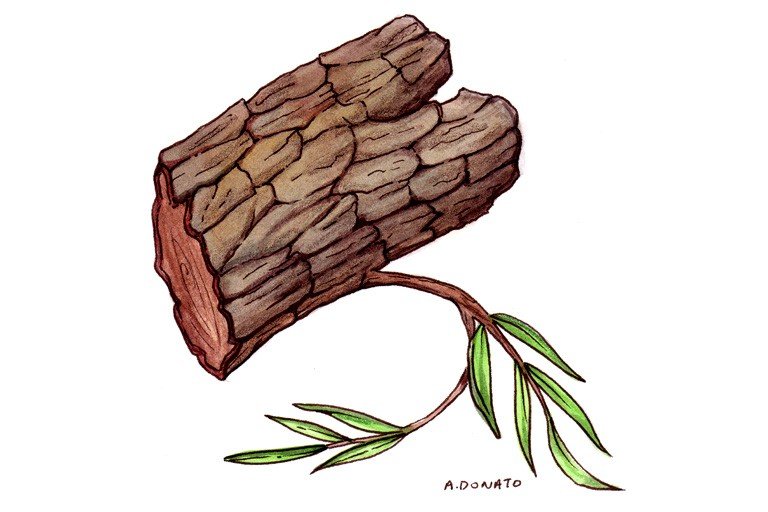
Common Names
- Bay willow
- Black willow
- White willow
For Patients & Caregivers
Tell your healthcare providers about any dietary supplements you’re taking, such as herbs, vitamins, minerals, and natural or home remedies. This will help them manage your care and keep you safe.
Willow bark may help relieve muscle and joint pain, but may have side effects similar to aspirin.
Willow bark is commonly used to treat pain and reduce fevers. It contains a compound called salicin that has been shown to have anti-inflammatory effects. Several studies suggest willow bark extracts can help reduce back pain and osteoarthritis.
Although aspirin is developed from salicin, a direct comparison between aspirin benefits and willow bark benefits cannot be made. At the same time, aspirin-like side effects may occur with willow bark.
- To reduce fever
Willow bark is thought to act in a similar way as aspirin, but clinical trials have not been performed. - To treat pain, including muscle and joint pain
Clinical trials suggest willow bark extract is effective in treating low back pain. Other study results are mixed for osteoarthritis pain. - To aid in weight loss
There are no studies to indicate that willow bark can aid in weight loss. A case of allergic reaction was reported following use of a weight-loss product that contained willow bark.
- Stomach or intestinal discomfort, allergic reaction, sudden rash, or itching
- Salicin in willow bark may affect blood clotting. The clinical significance in patients with impaired platelet functioning is yet to be determined.
Case reports
- Serious allergic reaction: In a 25-year-old woman with a history of aspirin allergy who used a supplement promoted for weight loss that contained willow bark.
- Acute breathing distress: In a 61-year-old woman who suddenly became short of breath and coughed repeatedly after taking willow bark.
- Fatal liver failure: In a 28-month-old boy after being treated for upper respiratory infection with acetaminophen and a tea containing willow bark.
Patient Warnings:
- Due to possible bleeding complications, willow bark should be discontinued before surgery or chemotherapy.
- Children should not be given willow bark because of the potential for developing Reye syndrome, a serious condition associated with the use of aspirin
Do Not Take if:
- You are taking warfarin or other blood thinners: Willow bark may increase the risk of bleeding.
- You are taking non-steroidal anti-inflammatory drugs (NSAIDs): Willow bark may increase the risk of stomach and intestinal damage and bleeding.
- You have sensitivity to aspirin or aspirin-containing products.
- You have asthma, breathing problems, chest tightness, or throat tightness.
- You have stomach problems or an ulcer.
- You are having skin rash, hives, or itchy / swollen skin.
For Healthcare Professionals
Willow is a deciduous tree native to Europe, Asia, and some parts of North America. Its bark has been used for thousands of years in China and Europe as a remedy for fevers and pain. Aspirin is derived from salicin, an active compound in willow bark.
In vitro, willow bark extracts and salicin have exhibited anti-inflammatory and anticancer effects (1) (3) (4) (25) (26) (27), but data in humans are limited. A few studies suggest that willow bark may help manage back pain (5) (6) (24), but studies of osteoarthritis are mixed (7) (8) (9) with negative findings for rheumatoid arthritis (6) (9).
Aspirin has been studied for the prevention of cardiovascular diseases as well as cancer (21). However, willow bark should not be used as a substitute for aspirin because of the variation in its potency.
Children should not be given willow bark because of the potential for developing Reye syndrome, a serious condition associated with the use of aspirin (22).
- Arthritis
- Fever
- Headaches
- Inflammation
- Influenza
- Pain
- Weight loss
Although anti-inflammatory activity is mostly attributed to salicin (13), the main bioactive compound in willow bark, catechol and flavonoid compounds have also been found to be responsible (12). Willow bark inhibits pro-inflammatory cytokines TNF-alpha and COX-2, and nuclear translocation of the transcription factor NF-κB (1). It was also found to significantly raise low glutathione levels, thereby limiting lipid peroxidation (14).
Antiproliferative effects in human colon and lung cancer cells are due to growth inhibition and apoptotic induction (15). In vitro and animal models suggest that salicin can inhibit ROS and ERK signaling pathways to produce antiangiogenic effects (4).
Allergy or sensitivity to salicylates such as aspirin.
Gastrointestinal discomfort; allergic reaction, erythema, pruritus (5) (7) (17)
Salicin affects platelet aggregation, although to a lesser extent compared to acetylsalicylate (2). The clinical significance of this effect on platelet function is yet to be determined.
Case reports
Anaphylaxis: In a 25-year-old woman with history of allergy to acetylsalicylic acid, from using a supplement promoted for weight loss that contained willow bark (18).
Acute respiratory distress syndrome: In a 61-year-old woman with history of hypertension and osteoarthritis after taking a willow bark supplement. Symptoms included sudden dyspnea and nonproductive cough, and there was no history of drug or supplement allergy (19).
Fatal fulminant liver failure: In a 28-month-old boy after being treated for upper respiratory infection with acetaminophen and a tea containing willow bark (28).
Warfarin or other anticoagulants: When used concurrently, willow bark may increase the risk of bleeding (20).