Common Names
- Clinoptilolite
- Erionite
- Phillipsite
- Mordenite
For Patients & Caregivers
Tell your healthcare providers about any dietary supplements you’re taking, such as herbs, vitamins, minerals, and natural or home remedies. This will help them manage your care and keep you safe.
Zeolites have not been shown to treat cancer or other conditions in humans.
Zeolites are minerals that contain mainly aluminum and silicon compounds. They are used as drying agents, in detergents, and in water and air purifiers. Zeolites are also marketed as dietary supplements to treat cancer, diarrhea, autism, herpes, and hangover, and to balance pH and remove heavy metals in the body. However, there are no published human data to support these uses. Further, the FDA has issued several warning letters to distributors for misleading claims about zeolite products. Erionite, a type of fibrous zeolite, can cause certain types of lung cancer when inhaled.
Anticancer therapy
In vitro and animal studies suggest anticancer properties, but there are no clinical data to validate the use of zeolites for cancer prevention or treatment.
To treat diarrhea
Although a drug containing zeolite seems to have been developed in Cuba to treat diarrhea, no published data are available.
To treat autism, herpes, hangover; to balance pH and remove heavy metals in the body
No clinical data have been published to validate zeolites for these uses. In addition, the FDA has sent warning letters to various distributors of zeolite for misleading claims.
Immune function controller
Data from animal studies show that zeolites can both stimulate and suppress the immune system.
- Fibrosis (increase in fibrous tissue)
- Pneumoconiosis (respiratory disease)
- Mesothelioma (exposure to erionite, a type of airborne fibrous zeolite, is associated with high incidence of mesothelioma)
Patient Warnings:
-
Erionite, a type of natural fibrous zeolite, can cause cancer when inhaled. There is no evidence that other forms of zeolite cause cancer.
-
Vulkansandkuren, a zeolite product marketed in Europe, was found to contain high levels of heavy metals including arsenic, lead, mercury, cadmium, nickel, copper, and chromium.
-
Do not apply liquid zeolite directly into eyes or ears.
Do Not Take if:
- You are taking any medications: Zeolites can bind with other substances and may neutralize stomach acid, causing your medications not to be properly absorbed or to be less effective.
- You are a transplant patient and/or taking drugs to suppress the immune system: Zeolites may cause rejection.
- You are using chemotherapy drugs: Zeolites have antioxidant effects and may interfere with the actions of chemo drugs.
- You are using antibiotics or drugs that contain iron: Zeolites may decrease their effectiveness.
Special Point:
A company filed a US patent application for a type of man-made zeolite for use as a cancer drug. Data submitted were based on lab, plant, and animal studies. According to the patent, the substance must be injected directly into the tumor. Zeolites have not been studied as a cancer drug in human clinical trials and zeolite supplements have not been approved as safe or effective.
For Healthcare Professionals
Zeolites are a group of chemically related mineral substances that contain mainly hydrated aluminum and silicon compounds. They occur naturally in volcanic rock and ashes and are also formulated synthetically. Zeolites are marketed as dietary supplements for autism, diarrhea, herpes, hangover, to balance body pH, and as a heavy-metal detoxifier, immunomodulator, and antioxidant.
Industrial and agricultural applications include their use as additives in gravel, detergents, and animal feed, in water and air purifiers, and in some personal care products. Benefits of using zeolites in animal feed include increased mineral utilization (1), reduction of heavy metals-induced anemia (2), and reduction of aflatoxin toxicity (3). However, none of these benefits are applicable to humans. In addition, this use has raised concerns about accumulated tissue aluminum in treated livestock (4) vis-a-vis the known link of aluminum to several morbidities including Alzheimer’s disease (5) (6). Generally, the various forms of zeolite are not significantly toxic in acute, short-term oral, or parenteral toxicity studies in animals. However, inhalation toxicity is readily demonstrated (7), and erionite, a type of airborne fibrous zeolite, has been associated with high incidence of malignant mesothelioma (8) (9) (10) (11), and geologic occurrences of erionite are emerging as a concern for respiratory illness in the United States.
Zeolites have limited use in medicine as an external hemostatic dressing for trauma-related injuries (12), potential for controlled drug delivery, as a suspending agent, or for use in cardiopulmonary bypass and hemodialysis procedures (13) (14) (15). A small pilot study sponsored by the manufacturer of a proprietary oral zeolite supplement in immunodeficient patients suggests some immunomodulatory effects (16), and zeolite formulations reduced symptoms of irritable bowel syndrome (32) (33) and decreased fracture risk in osteoporotic patients (34). In an Alzheimer’s mouse model, zeolite reduced oxidative damage and plaque generation (17).
Animal studies suggest that micronized zeolite may have anticancer benefits (18) (19); and ameliorates malignant mesothelioma caused by asbestos toxicity (31). Preliminary data suggest benefits of zeolite formulations, used as adjuncts to standard treatment, in reducing symptoms of neuroendocrine tumor-related diarrhea (30); and chemo-induced peripheral neuropathy (34).
Special Point: A company filed a U.S. patent application in 2001 for a synthesized form of zeolite as a cancer drug (20). Data submitted were based on in vitro, plant, and animal studies. The patent specified that the substance must be injected directly into the tumor, which rules out any benefits by oral route.
- Anticancer therapy
- Autism
- Balance body pH
- Diarrhea
- Heavy metal detoxification
- Herpes
- Immunomodulation
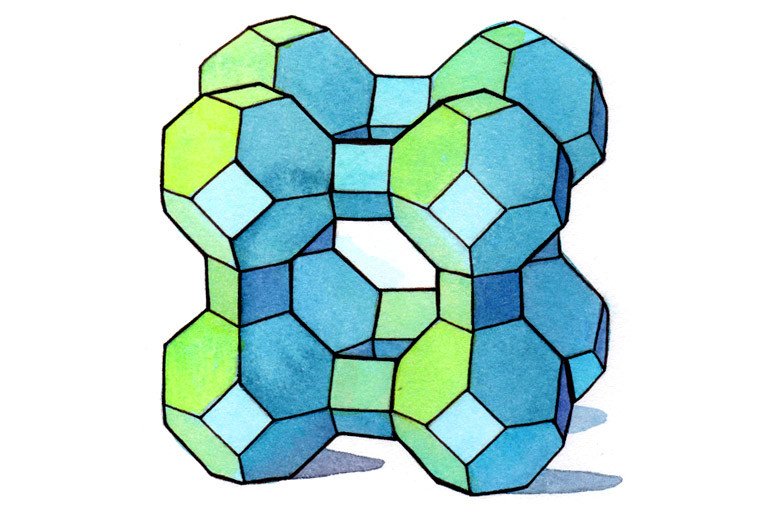
Zeolites are hygroscopic compounds with a fine porous cage-like structure that allows for its ion-exchanging, adsorbent, anticaking, chelating, and desiccant characteristics (22) (23). Its ion-exchanging properties may alter the ionic composition, pH and buffering capacity of the gastrointestinal tract under conditions of overexposure (22).
Zeolite controls bleeding by absorbing water from the hemorrhage site through an exothermic reaction which supports the concentration of coagulation factors and platelets, causing clot formation (12). Zeolite pH buffering effects also adsorb nitrosamines in acidic solution (24), leading to unsubstantiated claims that it could remove carcinogenic substances in the stomach.
In vitro studies indicate that micronized zeolite inhibits protein kinase B, induces expression of tumor suppressor proteins (19), and limits reactive oxygen species effects (15). In animal studies, it reduced metastasis and increased the effect of doxorubicin due to its antioxidant properties (18). Zeolites may also have both immunosuppressive and immunostimulating effects, causing a decline of GM-CFU in the bone marrow (25), but also increasing graft-versus-host (GvH) reaction (26). Zeolite can affect brain serotonergic receptor activities of mammary carcinoma-bearing mice (27), but the clinical implications for humans is unclear. Zeolite supplementation did not prolong survival in tumor-bearing animals (25).
Erionite, a type of fibrous zeolite, is carcinogenic when inhaled (8) (9) (10). Zeolites may also cause local irritation and may alter the ionic composition, pH and buffering capacity of the gastrointestinal tract under conditions of overexposure (22).
Vulkansandkuren, a zeolite product marketed in Europe, was found to contain high levels of heavy metals including arsenic, lead, mercury, cadmium, nickel, copper, and chromium (28). Do not apply liquid zeolite directly into eyes or ears.
- Pulmonary fibrosis (29)
- Pneumoconiosis (7)
- Mesothelioma: A high incidence in humans exposed to erionite, a type of airborne fibrous zeolite, dust (8) (9) (10)
- Aberrant metaphase: Statistically significant increases found in human peripheral blood lymphocytes and cells from exposed mice (7)
- Leukocytosis, decline in bone marrow CFU-GM, and myelopoiesis inhibition in animal studies (25)
- Graft-versus-host (GvH) reaction in animal studies (26)
- General: Since zeolites have chelating properties (23) and may increase gastrointestinal pH (24), they can potentially interact with many prescription drugs when consumed together. In addition, premature disintegration of enteric coated medications may occur with concomitant use.
- Antibiotics and ferrous drugs: Because zeolites have chelating (23) and ion-exchanging effects (16), they can potentially bind to tetracycline derivatives, quinolones, and iron resulting in decreased bioavailability.
- Chemotherapy: Zeolites may have antioxidant effects (18) and can potentially interfere with the actions of some chemotherapy drugs.
- Immunosuppressants: Zeolites may also provoke graft versus host reaction (26) and therefore should not be used with other immunosuppressants or in transplant patients.
In animal studies, oral supplementation of zeolites increased serum potassium levels by 20% (25).