Common Names
- Zyflamend
For Patients & Caregivers
Tell your healthcare providers about any dietary supplements you’re taking, such as herbs, vitamins, minerals, and natural or home remedies. This will help them manage your care and keep you safe.
Zyflamend has not been shown to treat cancer. Studies in humans are very limited.
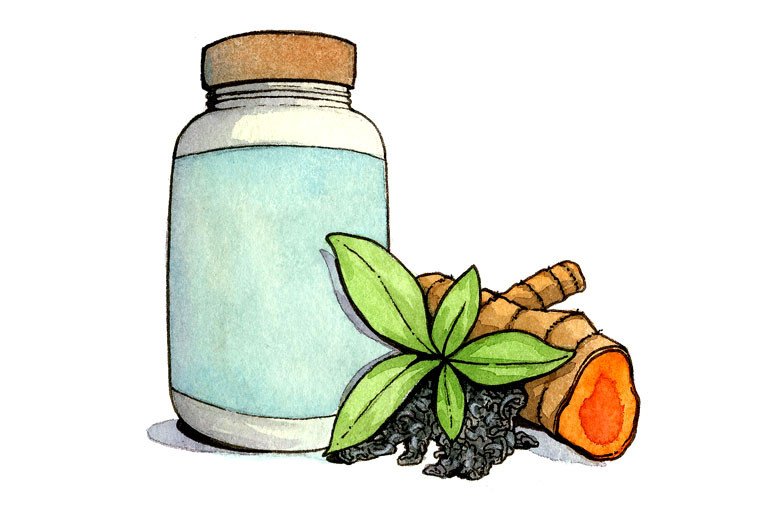
Zyflamend is an herbal supplement consisting of Holy basil, turmeric, ginger, green tea, rosemary, hu zhang, Chinese goldthread, barberry, oregano, and skullcap. Promoters of Zyflamend claim that it has anti-inflammatory and antiaging effects. Lab studies suggest it may reduce inflammation and levels of certain enzymes that produce estrogen. It can also cause cell death. However, studies in humans are quite limited. Results from a small study suggest it may help lower prostate specific antigen (PSA), a marker of prostate cancer. More research is needed.
- Cancer treatment
A few lab studies suggest that Zyflamend can reduce the number of prostate cancer cells and also decrease certain markers related to some types of breast cancer. Zyflamend did not cause serious adverse events in men with prostatic intraepithelial neoplasia and also decreased certain prostate disease-related markers. More research is needed. - Inflammation
A few lab studies suggest that Zyflamend reduces inflammation, but there are no data from clinical trials.
Bad taste in the mouth, heartburn, and diarrhea.
Do Not Take if:
- You have hypersensitivity to any of the constituents.
- You are taking chemotherapy drugs: Preclinical studies suggest Zyflamend may increase their effects. Clinical relevance has yet to be determined.
- You are taking prescription medications: There are many botanicals in Zyflamend, and therefore a greater chance for herb-drug interactions.
For Healthcare Professionals
Zyflamend is a formulation containing 10 different herbs. It is marketed as a dietary supplement for healthy inflammation response and normal cardiovascular and joint function (1).
Laboratory studies suggest that the ingredients in Zyflamend have anti-inflammatory, antiangiogenic, and antiproliferative properties (2) (12) (13) (14). In preclinical studies, Zyflamend inhibits proliferation of oral squamous carcinoma (3), pancreatic cancer (4), and melanoma (5), as well as cisplatin-resistant bladder cancer cells (15). In an animal model, it inhibited growth of both hormone-sensitive/insensitive prostate cancer, and reduced expression of prostate specific antigen (PSA) (6). It also suppressed elevated levels of proinflammatory mediators and aromatase in obese models (7) and significantly reduced adipose tissue in mice (16).
Studies in humans are quite limited. In a phase I trial in men with prostatic intraepithelial neoplasia, Zyflamend did not cause any serious adverse events, and significant reductions in serum C-reactive protein and nuclear factor-kappa B levels were observed (8). There have also been a few cases of clinical response to combination therapy that included a Zyflamend regimen in patients with castration-resistant prostate cancer (17). More studies are warranted to evaluate safety and effectiveness.
Zyflamend may potentiate the cytotoxic effects of certain chemotherapeutic agents including gemcitabine (4), taxol (2), doxorubicin (2), and bicalutamide (9).
- Cancer
- Inflammation
Ingredients in Zyflamend, including holy basil, turmeric, ginger, green tea, rosemary, hu zhang, Chinese gold thread, and Scutellaria, inhibit COX-2 activity and thereby reduce inflammation.
In vitro, Zyflamend inhibited inflammatory enzymes, decreased retinoblastoma protein phosphorylation (10), and induced apoptosis in human prostate cancer cells (2) (3) (4) (11). It also reduced androgen receptor signaling and enhanced bicalutamide-induced apoptosis (9). Other studies in prostate cancer cell lines suggest that Zyflamend inhibits class I and class II histone deacetylase expression, upregulates p21 expression (13), and regulates upstream kinases LKB1 and CaMKK2 via AMPK activation (14).
In melanoma cells, Zyflamend induced autophagy and apoptosis sequentially by activating the intrinsic caspase cascade. Cell migration and COX-2 expression were also suppressed (5). It also inhibited NF-kappa B activation in myeloid leukemia, lung adenocarcinoma (2), pancreatic (4), and cisplatin-resistant bladder cancer cells (15). In leukoplakia and skin cell lines, both Zyflamend and carnosol, an antioxidant phenolic constituent, inhibited mutagenesis via Hsp90 ATPase inhibition, which led to reduced aryl hydrocarbon receptor levels and CYP1A1 and CYP1B1 suppression (12).
Both a cellular model of obesity-related inflammation and an obese animal model indicate that Zyflamend blocks proinflammatory mediators and aromatase induction as well as Akt and NF-kB activation. Increased aromatase mRNA levels and mammary gland activity were also partially inhibited (7). Reduction of adiposity was attributed to AMPK activation (16).
In a murine xenograft model of prostate cancer, Zyflamend inhibited androgen-dependent tumor growth and histone deacetylase-5, biomarkers linked to prostate cancer progression (6). It also reduced the number of inflammatory cells, hyperplasia and dysplasia, and tumor incidence and number, and inhibited cell proliferation in an animal model of oral squamous cell carcinoma (3).
Hypersensitivity to any of the constituents
Bad taste in the mouth, heartburn, and diarrhea (8)
Chemotherapy drugs (gemcitabine, taxol, doxorubicin, bicalutamide): Preclinical studies suggest Zyflamend may have additive effects (2) (4) (9). Clinical relevance has yet to be determined.
Other prescriptions drugs: Because Zyflamend contains many herbal constituents, it can potentially interact with prescription drugs.