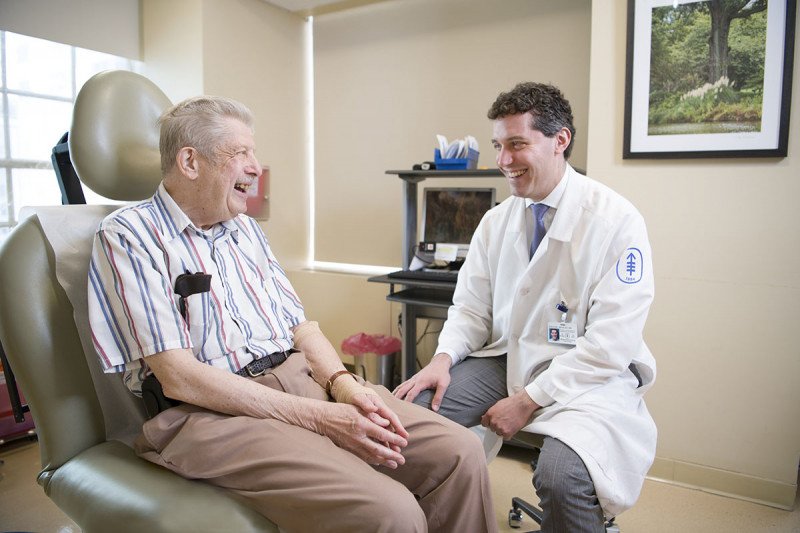
Melanoma is a type of cancer that usually begins in the skin. Specifically, it begins in cells called melanocytes. These are cells that produce melanin. Melanin is the pigment that gives skin, hair, and eyes their color.
Melanoma is among the most serious forms of skin cancer. If you or someone you care about has been diagnosed with this condition, you may be coping with a lot of difficult questions and concerns — plus the stress of the unknown. Where should you go for care? What are your treatment options?
Reading this guide is a good place to begin. Our goal is to provide you with information that can ease your fears and help you make the right plan. From here, you can visit other sections of this melanoma guide to learn about specific melanoma subtypes, the stages of melanoma, and treatment options. You can also watch our recent information session, “Spotting Melanoma: Risks, Treatments & Research,” in which a panel of MSK experts answer commonly asked questions about melanoma and its treatment.
Spotting Melanoma: Risks, Treatments & Research
- Where in the body does melanoma begin?
- What does skin melanoma look like?
- What are the causes of melanoma?
- Who is most at risk for melanoma?
- Is melanoma different for people with dark or black skin?
- What are the types of melanoma?
- What are the stages of melanoma?
- What tests are done to diagnose melanoma?
- How serious is melanoma?
- Where does melanoma spread?
- What is the best treatment for melanoma?
- How does MSK care for people with melanoma?
- Does MSK offer telemedicine visits for people with melanoma?
Where in the body does melanoma begin?
Most melanoma develops in the skin. This is known as skin melanoma or cutaneous melanoma. (“Cutaneous” means “related to the skin.”) The face, scalp, neck, arms, legs, chest, belly, and back are common areas where melanoma develops. Cutaneous melanoma can also start on the bed of a fingernail or toenail.
Other noncutaneous forms of melanoma can begin in the eye or in the membranes lining the eyes, sinuses, anus, and vagina.
What does skin melanoma look like?
The most common sign of melanoma is an unusual mole or spot on your skin that appears to be growing or changing over time. Melanoma often has an irregular or uneven border. It may not resemble other markings on your skin. The spot can be one that you’ve had for years, or it may be a new spot.
Learn more about the signs and symptoms of melanoma.
What are the causes of melanoma?
Many skin and eye melanomas are thought to occur as a result of exposure to ultraviolet (UV) light. UV light comes from the sun and indoor tanning beds or booths. Doctors believe that repeated exposure to UV rays can damage the DNA in melanin (the skin’s pigment-producing cells), giving rise to cancer cells.
However, not every melanoma is linked to a history of sun exposure or tanning bed use. Researchers are still working to understand the causes of these rare cancers.
Learn more about melanoma risk factors.
Who is most at risk for melanoma?
People who spend a lot of time in the sun or have a history of using tanning beds are at the highest risk for melanoma. But some people are at greater risk than others. These include people who have a light complexion and light eyes, many moles, atypically shaped moles, or a family history of melanoma. The risk for melanoma also increases with age.
Learn more about the ways you can protect yourself from melanoma.
Is melanoma different for people with dark or black skin?
Skin cancer prevention often focuses on exposure to the sun and harmful UV radiation. People of color rarely develop melanoma from UV radiation, because dark skin has melanin that filters the UV. Melanoma can develop in any color skin though, including black, brown, and olive. It can start in places that get little sun. It’s important to be familiar with how your skin usually looks so that you can quickly spot any changes, talk with your doctor, and have your skin examined.
Learn more about melanoma skin cancer on dark or black skin.
What are the types of melanoma?
There are four main types of skin melanoma:
In addition, there are a number of extremely rare types of skin melanoma. These include the following:
Melanoma that develops in the eye is sometimes referred to as uveal melanoma or ocular melanoma.
Mucosal melanoma is the type that grows in the membranes lining the eyes, sinuses, anus, and vagina.
Knowing the type of melanoma you have is important. Each type has unique characteristics that can affect the treatment plan your care team recommends.
What are the stages of melanoma?
The stages of melanoma are used to describe the extent of the cancer at the time of diagnosis. There are five stages of melanoma, starting at zero (the earliest stage) and going up to four (the most advanced stage). Knowing the stage helps guide your treatment plan.
Learn more about melanoma staging.
What tests are done to diagnose melanoma?
The first step in diagnosing skin melanoma is usually a biopsy. A tissue sample is taken during a biopsy and sent to a pathologist (a doctor who specializes in diagnosing disease). The pathologist examines the cells under a microscope and will determine the type of melanoma and the stage.
There are also several noninvasive techniques that can help doctors make a diagnosis. For example, in dermoscopy, doctors use a handheld device to magnify a suspicious area of skin. Doctors can also use highly advanced imaging technologies that can map melanoma in precise detail.
Learn more about melanoma diagnosis.
How serious is melanoma?
When diagnosed and treated early, melanoma is highly curable. But melanoma tends to grow very quickly. Left untreated, it can enter the bloodstream and spread to other parts of the body. Melanoma that has spread is much more difficult to treat than earlier stages of the disease.
Where does melanoma spread?
When melanoma spreads, it tends to travel to certain places in the body. Common areas where melanoma spreads are the lymph nodes, liver, lungs, bone, and brain.
What is the best treatment for melanoma?
The best treatment for melanoma varies from person to person. Someone with a very early-stage melanoma may require surgery alone to cure the disease. However, a person diagnosed with an aggressive type of melanoma or a late-stage melanoma may benefit from drug therapies, such as immunotherapy or targeted therapy, or even a combination of approaches. Radiation can be a good option for some people.
Get a complete overview of treatment options for people with melanoma.
How does MSK care for people with melanoma?
If you have a suspected melanoma, Memorial Sloan Kettering’s experts can make or confirm your diagnosis. If cancer is found, we’ll work with you to determine which treatment is the best. Treatments for melanoma include surgery, drug therapies, radiation therapy, or a combination of approaches.
If you’ve been diagnosed with advanced disease, we may recommend immunotherapy or targeted therapy. These approaches were pioneered at MSK and have improved the outlook for people with melanoma all over the world. We may be able to offer you new drug treatments, or combinations of treatments, through our program of clinical trials.
Working as a team, our experts will:
- quickly provide the most precise diagnosis possible
- design a customized treatment plan
- start your care with surgery, drug therapies, or other treatments right away
- offer you lifelong follow-up care, melanoma surveillance, skin care recommendations, and the resources of a survivorship program with support groups and integrative medicine offerings. Watch a video to learn more about MSK’s Adult Survivorship Program.
Learn more about our full complement of melanoma treatment options.
Does MSK offer telemedicine visits for people with melanoma?
MSK offers telemedicine, otherwise known as phone and/or video technology, for visits with melanoma specialists. If your doctor thinks your appointment can be conducted as a televisit, it may be recommended as an option for you. A televisit allows us to use technology in order to provide you care while you are at home, minimizing your travel during this time.


