
Learn more about MSK’s team approach to treating ovarian cancer
About Ovarian Cancer
You may be reading this because you or someone you care about has been diagnosed with ovarian cancer. Learning as much as you can about the disease can help you feel better prepared to speak with doctors about your condition, possible treatment, and care. Below are answers to some frequently asked questions about ovarian cancer. From here, you can visit other sections of this guide with more in-depth information.
- What is ovarian cancer?
- What are the different types of ovarian cancer?
- Am I at risk for getting ovarian cancer?
- Is ovarian cancer a genetic disease?
- What are the symptoms of ovarian cancer?
- How do you test for ovarian cancer?
- How is ovarian cancer diagnosed?
- What are the treatments for ovarian cancer?
- Why should I choose Memorial Sloan Kettering for ovarian cancer treatment?
What is ovarian cancer?
Ovarian cancer is a disease in which cells in the ovaries multiply and grow abnormally. The ovaries are almond-sized female reproductive organs that produce eggs, as well as the female hormones estrogen and progesterone. Women usually have two ovaries located in the pelvis — one on each side of the uterus. If the genes that control cell growth in the ovaries no longer work properly, the cell divides uncontrollably and may form a tumor.
What are the different types of ovarian cancer?
Ovarian cancer can develop in different types of cells that make up the ovaries. These include:
- surface epithelial cells, which cover the outer surface of the ovaries
- germ cells, which ultimately form eggs
- stromal cells, which help hold the ovary together and release estrogen and progesterone
Ninety percent of ovarian tumors develop in the surface epithelial cells. Cancer in these cells often arises at the end of the fallopian tubes, which are located on each side of the uterus. The eggs travel through the fallopian tubes to the uterus. Cancer also can develop in the peritoneum, the tissue linking the wall and covering the organs of the abdomen. Ovarian, fallopian tube, and peritoneal cancer are basically treated the same way.
Am I at risk for getting ovarian cancer?
Ovarian cancer affects 1 in 70 women across their lifetime and is the second most common type of gynecologic cancer in the United States. The most common risk factor is age. About two-thirds of all ovarian cancers are diagnosed in women between ages 50-75. Only 5 percent of ovarian cancers diagnosed occur in women under the age of 30.
Is ovarian cancer a genetic disease?
About 1 in 10 women who are diagnosed will have either a strong family history of ovarian cancer or a mutation in a gene that increases risk of the disease.
Genetic tests performed by Memorial Sloan Kettering experts can help you determine if you are at increased risk and if you are, the experts can speak to you about your options, such as preventive ovary removal.
Learn more about ovarian cancer risk factors.
What are the symptoms of ovarian cancer?
Ovarian cancer rarely has noticeable symptoms when it is in its earliest stages. As the cancer progresses, subtle signs begin to appear, but you might not notice them right away, or they may be blamed on other common conditions.
The symptoms of ovarian cancer include:
- abdominal bloating or swelling
- pain in the abdomen or pelvis
- difficulty eating, or feeling full quickly
- lack of appetite
- feeling an urgent need to urinate
- needing to urinate frequently
- change in bowel habits (constipation or diarrhea)
- change in menstrual periods
- vaginal bleeding between periods
- back pain
- weight gain or loss
Although the symptoms of ovarian cancer may be vague, particularly in the early stages, they are usually fairly constant and represent a change from how you normally feel. Symptoms also worsen as the cancer progresses. If you experience any of these symptoms every day, or almost every day, for more than two to three weeks, speak with your doctor and specifically ask if you could have ovarian cancer. If it is ovarian cancer, the earlier we can diagnose it, the better the chances for an effective treatment.
How do you test for ovarian cancer?
For most women, there is no effective way to screen for cancer in the ovaries, peritoneum, or fallopian tubes. Current tests are not reliable or accurate enough, especially for early-stage disease — and our experts have concluded that the risks generally outweigh potential benefits. This is one reason why it’s important for all women to be aware of the risk factors for this illness, and to stay sensitive to changes that might be symptoms of it.
How is ovarian cancer diagnosed?
To check for ovarian cancer, your doctor will likely perform a pelvic exam to feel for lumps or changes in and around the ovaries, and order additional tests if you’ve been experiencing persistent abdominal bloating, discomfort, or other symptoms, or if you have risk factors for this cancer. If you do have ovarian cancer, surgery can give us crucial information about your diagnosis, from the type of tumor you have to its stage (if it has spread and if so, how far). This information helps your team of specialists decide which treatments are best for you.
Learn more about ovarian cancer diagnosis.
What are the treatments for ovarian cancer?
Surgery is the main treatment for ovarian cancer, regardless of whether the disease is early or advanced. The type of surgery you receive depends on several factors, including the type and stage of your cancer, your general health, and whether you plan on having children in the future. Our experts recommend that most women undergo chemotherapy as a preventative measure after surgery.
Learn more about ovarian cancer treatment.
Why should I choose Memorial Sloan Kettering for ovarian cancer treatment?
We’re recognized internationally as a leader in pioneering new ways to treat ovarian cancer, resulting in optimal outcomes for the 200 new ovarian cancer patients who consult us each year. Memorial Sloan Kettering’ specialists have vast depth and breadth of experience and are among the best in the world.
Choose Memorial Sloan Kettering because we offer:
-
A multidisciplinary team of specialists that includes surgeons, medical oncologists, radiation oncologists, radiologists, and pathologists. Many of them are nationally or internationally recognized in their field.
-
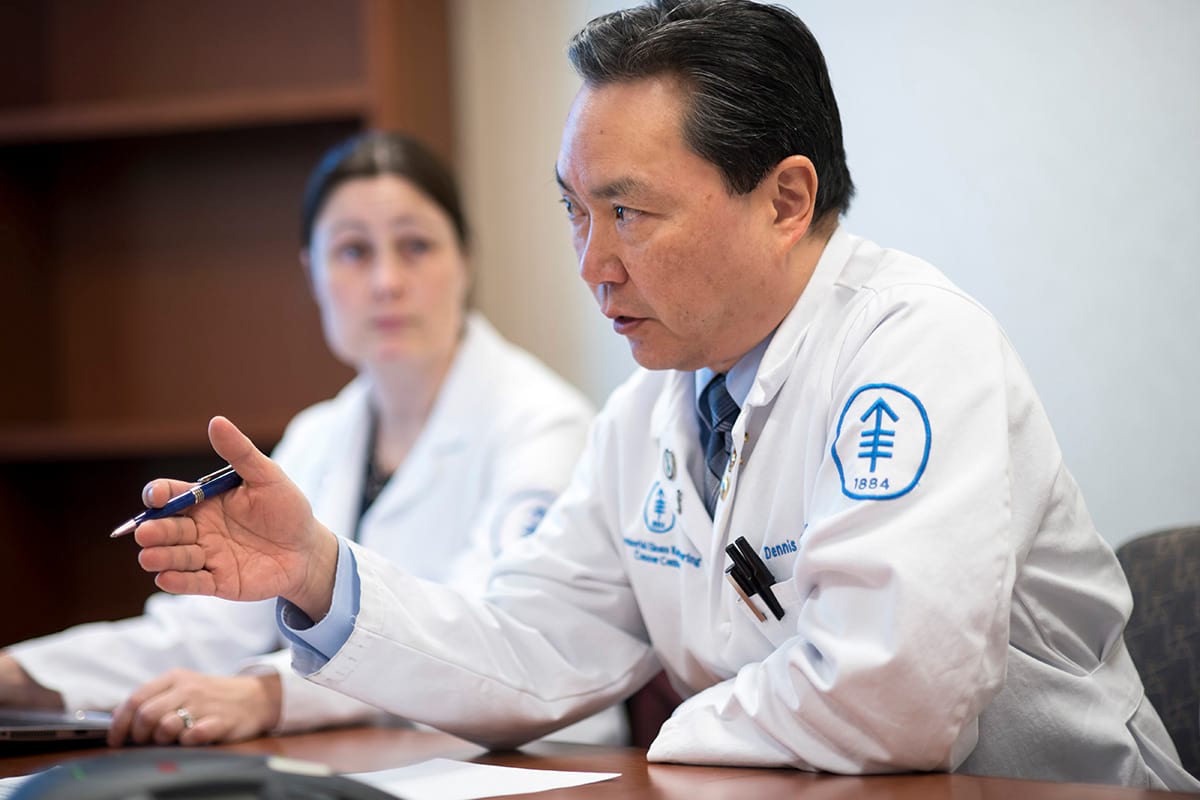
Collaboration among these experts, who meet weekly to confer on each individual case and draw on their vast experience to determine the best treatment options.
-
Unparalleled expertise at treating even the most difficult cases. For example, our ovarian cancer surgery team is the nation’s only group solely dedicated to the removal of metastatic ovarian cancer that has spread beyond the pelvis. We are proficient in radical debulking surgery, in which we remove as much ovarian tumor tissue as possible to boost the effectiveness of chemotherapy in reaching and destroying cancer. Studies have repeatedly shown that patient survival is highest at institutions whose surgeons do a high number of operations. We also perform minimally invasive surgery, which involves smaller incisions, to stage early disease.
-
We do many procedures at the Josie Robertson Surgery Center, a state-of-the-art facility for short-stay cancer surgery. This allows our patients to return home as soon as possible — either the same day or the next — to complete their recovery.
-
Personalized treatment. We use state-of-the-art genetic testing and other tests to predict which treatments are likely to be most effective for our patients.
-
A comprehensive program to support the well being of every patient physically, emotionally, spiritually, and otherwise, during and after treatment. This includes approaches to preserve fertility and programs to help you regain strength, flexibility and mobility after treatment. Our doctors work with a team of specialists who address any needs that arise during the diagnosis, treatment, follow-up, and survivorship of our patients. In addition, our comprehensive Adult Survivorship Program can help you adjust during and after cancer treatment. Watch a video to learn more about MSK’s Adult Survivorship Program.
-
Specialists and treatments that are conveniently located not just in Manhattan but also at our regional outpatient locations in New Jersey, as well as Westchester County, Long Island, and Brooklyn.
-
Access to clinical trials with new treatment options that are not available at other hospitals and could turn out to be tomorrow’s cures.
- An active research program focusing on the most promising new approaches to diagnosing and treating ovarian cancer, including immune therapy, genomic profiling, and combination therapies targeting specific molecular targets.
We’re available 24 hours a day, 7 days a week


