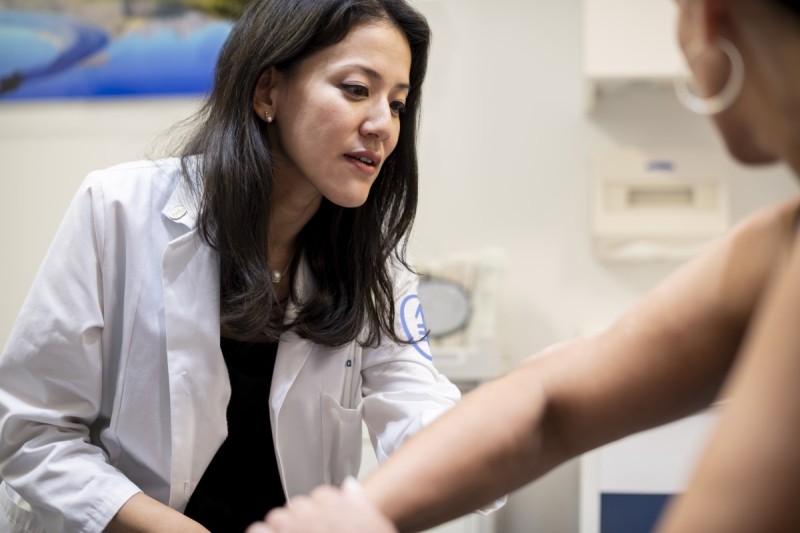
If you’ve been diagnosed with skin cancer, you are facing many decisions — choices that can be overwhelming and hard. Where should you go for care? What’s your first step? At Memorial Sloan Kettering, we too are constantly thinking of those questions — and how we can be the answer to all of them. Each member of your team at MSK is an expert in skin cancer and is dedicated to giving you the best outcome and quality of life possible.
Reading this guide is a good place to begin learning more about skin cancer and how we diagnose and treat it. From here, you can visit other sections of our skin cancer guide for more in-depth information.
Skin cancer is a disease in which malignant (cancer) cells form in the tissue of the skin. It is the most common type of cancer, diagnosed in one in five Americans by age 70. If skin cancer is detected early, it can usually be treated with topical medications, procedures done in the office by a dermatologist, or an outpatient surgery. More advanced skin cancer may require surgery, radiation therapy, or treatment with drugs.
There are four main types of skin cancer:
Click on the name to read more about these different skin cancer types and how they are treated.