History & Overview Annual Report President's Pages Center News Community Affairs
Make a Gift Yankees Universe Fund Fred's Team Donating Blood & Platelets Volunteering Thrift Shop Park Avenue Potluck Cookbook
Press Releases Information for Journalists News@MSKCC
Manhattan New Jersey Long Island Westchester
Working at Memorial Sloan-Kettering Work Sites College Recruitment About Nursing Job Fairs & Career Days Job Search & Apply Online
Making an Appointment
Cancer Screening Guidelines

The American Cancer Society estimates that more than half of all cancer deaths could be prevented if people adopted cancer prevention measures, including receiving routine check-ups, living a healthy lifestyle, and having an awareness of the early signs of cancer. Cancer can be discovered early or prevented altogether through periodic check-ups and screening procedures.

Cancer screening tests are recommended to the public at certain baseline ages to detect and remove cancer in its earliest and most curable stage. Rigorously evaluated before they are recommended, screening tests are offered to the general population even in the absence of any cancer symptoms. The age at which screening begins and the frequency of screening may be adjusted when there is a strong family history of a particular cancer or where there is a genetic predisposition. Screening tests are recommended to large numbers of healthy people, therefore any potential harm from the tests has to be outweighed by the potential benefits.

Visit the links below to learn more about screening procedures, risk groups, and Memorial Sloan-Kettering's recommended screening guidelines, divided into the following cancer types: breast, cervical, colorectal, head and neck, ovarian, prostate, and skin.

  • Breast Cancer Screening Guidelines
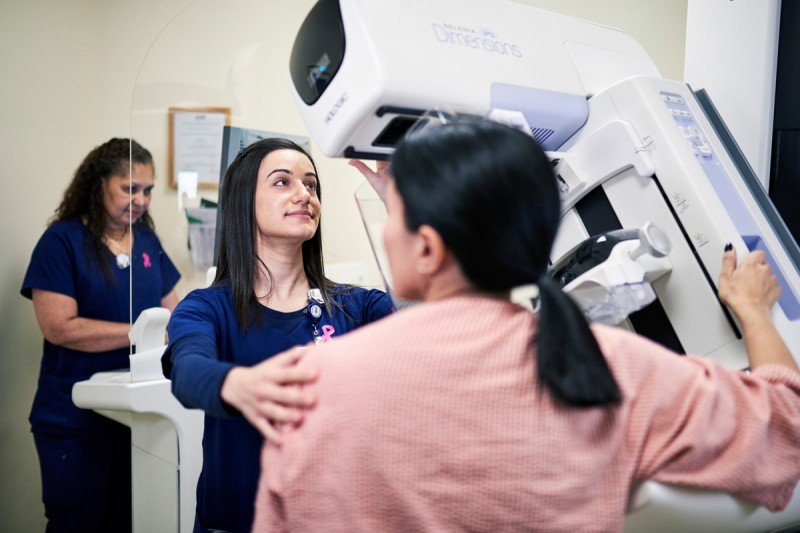
    The average American woman has a one-in-seven chance of developing breast cancer during her lifetime. Due to the results of recent studies, Memorial Sloan-Kettering investigators have developed separate breast cancer screening guidelines for women at average and above-average risk of the disease.
  • Cervical Cancer Screening Guidelines
    The incidence of cervical cancer has dramatically decreased since the introduction of widespread screening by a vaginal smear test commonly known as the "Pap smear." Cervical cancer usually grows slowly over many years. Detection of cervical cancer in its earliest stages is essential and lifesaving.
  • Colorectal Cancer Screening Guidelines
    The average American has approximately a six percent chance of developing colorectal cancer within his or her lifetime. Routine screening of symptom-free men and women will lead to a reduction in the number of colorectal cancer cases and the number of deaths from colorectal cancer.
  • Head and Neck Cancer Screening Guidelines
    The term "head and neck cancer" encompasses a wide range of tumors that occur in several areas of the head and neck region, including the nasal passages, sinuses, mouth, throat, larynx (voice box), swallowing passages, salivary glands, and the thyroid gland. Our doctors recommend a yearly physical examination of the head and neck and oropharynx conducted by their primary care physician, as well as a yearly routine dental evaluation.
  • Ovarian Cancer Screening Guidelines
    Ovarian cancer is the fifth most common cancer in women and the most common cause of gynecologic cancer deaths. Approximately one in 70 women will develop ovarian cancer in her lifetime.
  • Prostate Cancer Screening Guidelines
    With more than 230,000 men diagnosed with prostate cancer in the US in 2005, it is the most commonly diagnosed invasive cancer and the second leading cause of cancer death among American men. Choosing to pursue screening for the early detection of prostate cancer is a complex decision.
  • Skin Cancer Screening Guidelines
    Each year more than a million people in the U.S. are diagnosed with the most common forms of skin cancer -- basal cell carcinoma and squamous cell carcinoma. There were approximately 62,000 new cases of melanoma, the most serious form of skin cancer, in the U.S. in 2005. Periodic skin examinations are the key to diagnosing skin cancer at its earliest stage, when it is most easily cured.
PrintEmail This Page