Common Names
- Himematsutake
- Agarikusutake
- Kawarihiratake
- Cogumelo do Sol
- Sun mushroom
For Patients & Caregivers
Tell your healthcare providers about any dietary supplements you’re taking, such as herbs, vitamins, minerals, and natural or home remedies. This will help them manage your care and keep you safe.
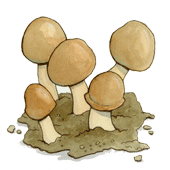
Agaricus is a mushroom. It’s used to treat many health issues. Agaricus comes as liquid extracts, teas, and capsules.
Agaricus is used to:
- Treat arteriosclerosis (build-up of fats and cholesterol in and on the walls of your arteries)
- Treat chronic hepatitis
- Treat diabetes
- Lower high cholesterol
Agaricus also has other uses that haven’t been studied by doctors to see if they work.
It’s generally safe to use agaricus in food and tea but talk with your doctor before taking agaricus supplements.
Herbal supplements are stronger than the herbs you would use in cooking. They can also interact with some medications and affect how they work. For more information, read the “What else do I need to know?” section below.
Side effects of using agaricus may include:
- Abnormal liver function
- Swelling of the lip
- Do not take agaricus if you’re allergic to mushrooms.
For Healthcare Professionals
Agaricus blazei is an edible mushroom native to Brazil and is cultivated in Japan for medicinal uses. It has been used to treat arteriosclerosis, hepatitis, hyperlipidemia, diabetes, dermatitis, and cancer. Preclinical studies suggest antidiabetic (8) (9), antiangiogenic, apoptotic, and antiproliferative effects (3) (4) (6) (21) (22) (24).
Studies in humans are limited. A few suggest that agaricus extracts improved insulin resistance in diabetic patients (10) (11), reduced weight, body fat, glucose, and cholesterol levels in healthy individuals (12), and improved quality of life in patients with ulcerative colitis (30). An oral agaricus extract improved natural killer cell activity and quality of life in gynecological cancer patients undergoing chemotherapy (7). Other preliminary data show that daily intake of agaricus powder improves quality of life among cancer patients in remission (26). Although no survival improvements were reported with an agaricus extract in multiple myeloma patients, immunomodulatory effects were observed (29). However, agaricus extract did not confer any benefits in elderly women (25). Larger studies are needed to resolve the ambiguity.
Whereas a small study reported that agaricus extract may improve liver function in patients with hepatitis B (13), liver damage and deaths (14) along with cheilitis (15) have been reported following consumption. In addition, laboratory samples of agaricus had high levels of inorganic arsenic (31). Brefeldin A, a compound isolated from agaricus, was shown to have estrogenic activity, but did not stimulate growth of breast cancer cells (27).
Agaricus is an edible fungus. It is available as freeze-dried mushrooms or as concentrated liquid extracts, teas, or capsules. The whole mushroom is often added to soups, sauces, or hot teas.
- Arteriosclerosis
- Hepatitis
- Diabetes
- High Cholesterol
Agaricus extract was shown to exert estrogen-like activity and may help prevent atherosclerosis via dual roles in cell signaling, macrophage development suppression and endothelial cell recovery from vascular damage (16). Both aqueous and organic extracts of agaricus offered protection to cells exposed to methyl methanesulphonate, a mutagenic agent. The stimulus produced by linoleic acid on beta-DNA polymerase, an enzyme involved in repair mechanism following exposure of DNA to alkylating agents, is thought responsible for such an effect (19).
Ergosterol, a major constituent of agaricus, was found to inhibit tumor growth in mice via direct inhibition of tumor-induced angiogenesis (6). Other studies demonstrated that polysaccharides present in agaricus extract caused activation of macrophages (5) or natural killer cells (17) and induced cytotoxic T-lymphocyte activity in tumor-bearing mice. Specifically, activation of natural killer cells was mediated through IL-12-induced IFN-gamma expression (18). Agaricus extract stimulates caspase 3 activation and reduces telomerase activity (19) possibly through regulation of Akt signaling (20) thereby inducing apoptosis in cancer cell lines. Blazeispirol A, produced by agaricus fermentation, causes both caspase-dependent and -independent cell death in human Hep 3B cells (21). Agaritine, a hydrazine-containing constituent also exhibits antitumor activity toward U937 leukemic cells mediated through apoptosis (22). In another study, polysaccharides isolated from agaricus were shown to induce apoptosis in HL-60 cells through a signaling cascade of mitochondrial caspase-3-dependent pathway (28).
- Hypersensitivity to mushrooms such as agaricus.
- In vitro, agaricus extract has estrogen-like activity (16). Therefore, patients with hormone-sensitive cancers should discuss its use with their physician.
- CYP450 substrates: In vitro, agaricus inhibits CYP3A4 and may affect the intracellular concentration of drugs metabolized by this enzyme (23). Clinical relevance has yet to be determined.