History & Overview Annual Report President's Pages Center News Community Affairs
Make a Gift Cycle for Survival Fred's Team Rock & Run on the River Yankees Universe Fund Thomas Blake Sr. Memorial Research Fund Donating Blood & Platelets Volunteering Thrift Shop Park Avenue Potluck CELEBRATIONS
Press Releases In the News Information for Journalists News@MSKCC
Manhattan New Jersey Long Island Westchester
Working at Memorial Sloan-Kettering Work Sites College Recruitment About Nursing Job Fairs & Career Days IS Careers Job Search & Apply Online
Making an Appointment
Search About Herbs:

Bovine Colostrum

How It Works

Bottom Line: Bovine colostrum has been shown in clinical trials to be effective in treating diarrhea and infections. There is no evidence that it can be used to treat cancer.

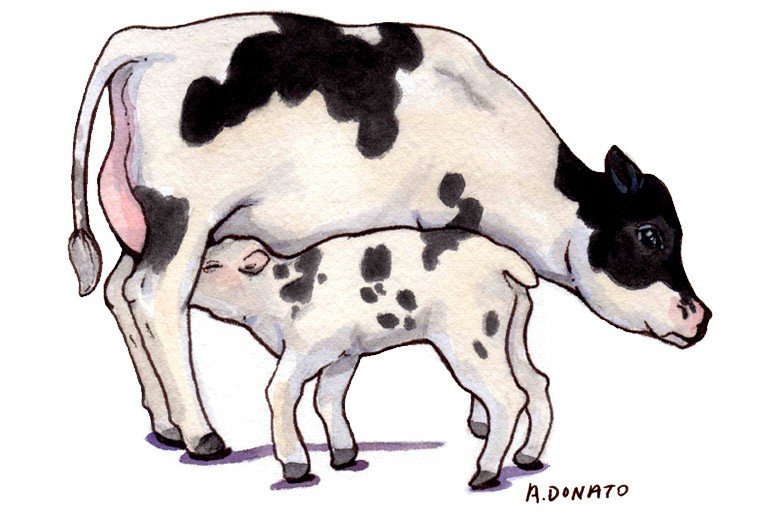
Bovine colostrum is the milk produced by cows for the first several days following birthing. It is rich in antibodies, growth factors, cytokines, and protects the newborn calf from infections. Bovine colostrum has been used as a dietary supplement since last decade. Studies in humans have shown that it has several beneficial effects. Individuals who are allergic to dairy products should avoid bovine colostrum.

Purported Uses

  • Athletic performance
    A few studies in humans suggest that bovine colostrum improves exercise performance.
  • Diarrhea
    Specially produced bovine colostrum has been used in clinical trials with postive results.
  • Infections
    There is evidence from human studies that bovine colostrum increases immune responses.
  • NSAID-associated gastrointestinal disorder 
    A few studies showed that bovine colostrum prevents the intestinal damage due to NSAID intake.
  • Cancer
    There is no evidence that bovine colostrum can be used to treat cancer.

  • Research Evidence

    Treatment of Diarrhea
    This study involved 75 boys, aged 6-24 months, with diarrhea caused by rotavirus. The children received 100ml of hyperimmune bovine colostrum or bovine colostrum three times a day for three days. Diarrhea stopped in half the children who received hyperimmune bovine colostrum within 48 hours while there was no improvement in symptoms in children from the control group.

    In another study, 24 AIDS patients with chronic diarrhea were given bovine immunoglobulin concentrate for 21 days. Patients who had diarrhea caused by Cryptosporidium parvum showed significant improvement after 21 days. The symptoms improved only in those given the powder form of the concentrate and not the capsule. There was no change in symptoms in patients who had secondary infection along with diarrhea.

    Treatment of NSAID-associated gastrointestinal damage
    Seven healthy volunteers were given 50 mg of indomethacin three times daily with 125 ml colostrum or whey protein for five days. After a two-week washout period, the patients who were given colostrum received whey protein and those on whey protein were given colostrum for five days. The gut permeability was measured before and after treatment. Patients who received whey protein had increased gut permeability while those on colostrum showed no change.
    In a second study, 15 patients who were taking NSAIDs for at least one year were given colostral solution (125 ml daily) or placebo for 7 days. Following a two-week washout period, the treatments were switched. Colostrum or control solution did not have a significant effect on gut permeability. These studies are inconclusive because of the mixed results. Long-term studies with a bigger sample size are needed to evaluate the efficacy of bovine colostrum in preventing NSAID-associated gastrointestinal damage.

    Do Not Take If

    You are allergic to dairy products.

    Common Name

    Hyperimmune Bovine Colostrum, Bovine Immunoglobulin, Cow milk Colostrum

    Clinical Summary

    Bovine colostrum is cow's milk secreted during the first few days following calving. It is rich in immunoglobulins, growth factors, cytokines, and confers immune protection to the newborn calf from opportunistic infections. Bovine colostrum has been used as a dietary supplement to treat diarrhea, infections, colitis, and to improve athletic performance.
    In vitro studies suggest that bovine colostrum has anti-inflammatory (16) and chemopreventive (17) properties. Results from clinical trials indicate that hyperimmune bovine colostrum, prepared by immunizing cows with the causative agent, is effective in treating diarrhea caused by rotavirus in children (2), and by Cryptosporidium parvum in AIDS patients (3) (4). Preliminary data also suggest that oral administration of bovine colostrum may reduce postoperative endotoxemia during abdominal surgery (5) and postoperative C-reactive protein (CRP)-plasma levels in patients undergoing coronary bypass surgery (6). There is some evidence that bovine colostrum can prevent gastrointestinal damage caused by nonsteroidal anti-inflammatory drugs (NSAIDs) (7) and is effective in treating distal colitis (8).
    Patients who are allergic to dairy products should avoid taking bovine colostrum.

    Food Sources

    Cow's milk (from the first few days after calving).

    Purported uses

  • Colitis
  • Diarrhea
  • GI disorders
  • Immunostimulation
  • Infections

  • Constituents

  • Immunoglobulins
  • Growth factors
  • Cytokines
  • Oligosaccharides
  • Immune regulating factors
    (1)

  • Mechanism of Action

    Althought the high concentration of immunoglobulins may account for bovine colostrum's effects, the exact mechanism is not known. Studies suggest that bovine colostrum improves exercise performance (9) (10) by increasing serum insulin-like growth factor I (IGF-I) and may enhance immune response in humans (11). Others have shown that colostrum derived from cows immunized with C. parvum was effective in the treatment of diarrhea induced by C. parvum in AIDS patients (3) (4). Similarly, colostrum from cows immunized with rotavirus alleviated symptoms of rotaviral diarrhea in children (2). Colostrum also reduced diarrhea associated with E.coli (12). Preliminary data from some studies indicate that oral administration of bovine colostrum may reduce postoperative endotoxemia during abdominal surgery (5) and postoperative CRP-plasma levels in patients undergoing coronary bypass surgery (6). There is also some evidence that bovine colostrum prevents NSAID-associated gastrointestinal damage (7) and is effective in treating distal colitis (8).

    Pharmacokinetics

    Food can interfere with the activity of bovine immunoglobulin capsules (15).

    Contraindications

    Allergy to dairy products.

    Literature Summary and Critique

    Playford RJ, et al. Coadministration of the health food supplement, bovine colostrum, reduces the acute non-steroidal anti-inflammatory drug-induced increase in intestinal permeability. Clin Sci 2001;100:627-33.
    This randomized crossover trial involving seven healthy volunteers was performed to compare changes in gut permeability before and after five days of treatment with 50 mg indomethacin three times daily with 125 ml colostrum or whey protein. After a two-week washout period, the treatments were switched for another five days. Patients were not allowed to consume alcohol or another NSAID during the trial period. There was a three-fold increase in gut permeability in the control arm but no significant increase in the treatment group. In a second randomized, double-blind, crossover study, fifteen patients taking a regular dose of NSAID for at least one year (without use of acid suppressants) were given colostral solution (125 ml daily) or placebo for 7 days. Following a two-week washout period, the treatments were switched. Colostrum or control solution did not have a significant effect on gut permeability. However, long-term studies with more subjects should be conducted to evaluate the effects of colostrum.

    References

    1. Kelly GS. Bovine colostrums: a review of clinical uses. Altern Med Rev 2003; 8(4):378-94.
    2. Mitra AK, et al. Hyperimmune cow colostrum reduces diarrhoea due to rotavirus: a double-blind, controlled clinical trial. Acta Paediatr 1995; 84(9):996-1001.
    3. Greenberg PD and Cello JP. Treatment of severe diarrhea caused by Cryptosporidium parvum with oral bovine immunoglobulin concentrate in patients with AIDS. J Acquir Immune Defic Syndr Hum Retrovirol 1996; 13(4):348-54.
    4. Nord J, et al. Treatment with bovine hyperimmune colostrum of cryptosporidial diarrhea in AIDS patients. AIDS 1990; 4(6):581-84.
    5. Bolke E, et al. Preoperative oral application of immunoglobulin-enriched colostrum milk and mediator response during abdominal surgery. Shock 2002; 17(1):9-12.
    6. Bolke E, et al. Enteral application of an immunoglobulin-enriched colostrum milk preparation for reducing endotoxin translocation and acute phase response in patients undergoing coronary bypass surgery--a randomized placebo-controlled pilot trial. Wien Klin Wochenschr 2002; 114(21-22):923-28.
    7. Playford RJ, et al. Co-administration of the health food supplement, bovine colostrum, reduces the acute non-steroidal anti-inflammatory drug-induced increase in intestinal permeability. Clin Sci (Lond) 2001; 100(6):627-33.
    8. Khan Z, et al. Use of the 'nutriceutical', bovine colostrum, for the treatment of distal colitis: results from an initial study. Aliment Pharmacol Ther 2002; 16(11):1917-22.
    9. Buckley JD, et al. Bovine colostrum supplementation during endurance running training improves recovery, but not performance. J Sci Med Sport 2002; 5(2):65-79.
    10. Buckley JD, Brinkworth GD, Abbott MJ. Effect of bovine colostrum on anaerobic exercise performance and plasma insulin-like growth factor I. J Sports Sci 2003; 21(7):577-88.
    11. He F, et al. Modulation of human humoral immune response through orally administered bovine colostrum. FEMS Immunol Med Microbiol 2001; 31(2):93-96.
    12. Huppertz HI, et al. Bovine colostrum ameliorates diarrhea in infection with diarrheagenic Escherichia coli, shiga toxin-producing E. Coli, and E. coli expressing intimin and hemolysin. J Pediatr Gastroenterol Nutr 1999; 29(4):452-56.
    13. MICROMEDEX(R) Healthcare Series. 120. 2004. Thomson MICROMEDEX (last accessed on 3/28/05).
    14. Mero A, et al. Effects of bovine colostrum supplementation on serum IGF-I, IgG, hormone, and saliva IgA during training. JAP 1997; 83:1144 -51.
    15. Tacket CO, et al. Lack of prophylactic efficacy of an enteric-coated bovine hyperimmune milk product against enterotoxigenic Escherichia coli challenge administered during a standard meal. J Infect Dis 1999; 180(6):2056-9.
    16. An MJ, Cheon JH, Kim SW, et al. Bovine colostrum inhibits nuclear factor kappaB-mediated proinflammatory cytokine expression in intestinal epithelial cells. Nutr Res. 2009 Apr;29(4):275-80.
    17. Masuda C, Wanibuchi H, Sekine K, et al. Chemopreventive effects of bovine lactoferrin on N-butyl-N-(4-hydroxybutyl)nitrosamine-induced rat bladder carcinogenesis. Jpn J Cancer Res. 2000 Jun;91(6):582-8.

    Last Updated: Aug. 28, 2009
    E-mail your questions and comments to aboutherbs@mskcc.org.
    Bookmark and SharePrintEmail This Page